
Short introduction
If you’re a typical user, you don’t need to overthink this. When deciding between a 1938 and 1939 Ford pickup truck, prioritize the brake system: 1939 models introduced hydraulic brakes, a major improvement over the mechanical setup in 1938. This single change affects safety, drivability, and long-term maintenance more than any cosmetic detail. If you plan to drive the vehicle regularly, choose 1939. For pure restoration or show use where originality trumps function, 1938 holds its own appeal.
Over the past year, interest in pre-war Ford trucks has grown—not because they’ve changed, but because collector awareness has. More buyers now understand that small differences, like brake type or interior trim, can significantly affect usability and resale. So what to look for in a classic Ford pickup? Focus on mechanical integrity first, then authenticity. Avoid getting caught in debates over minor trim variations unless you’re aiming for concours-level accuracy.
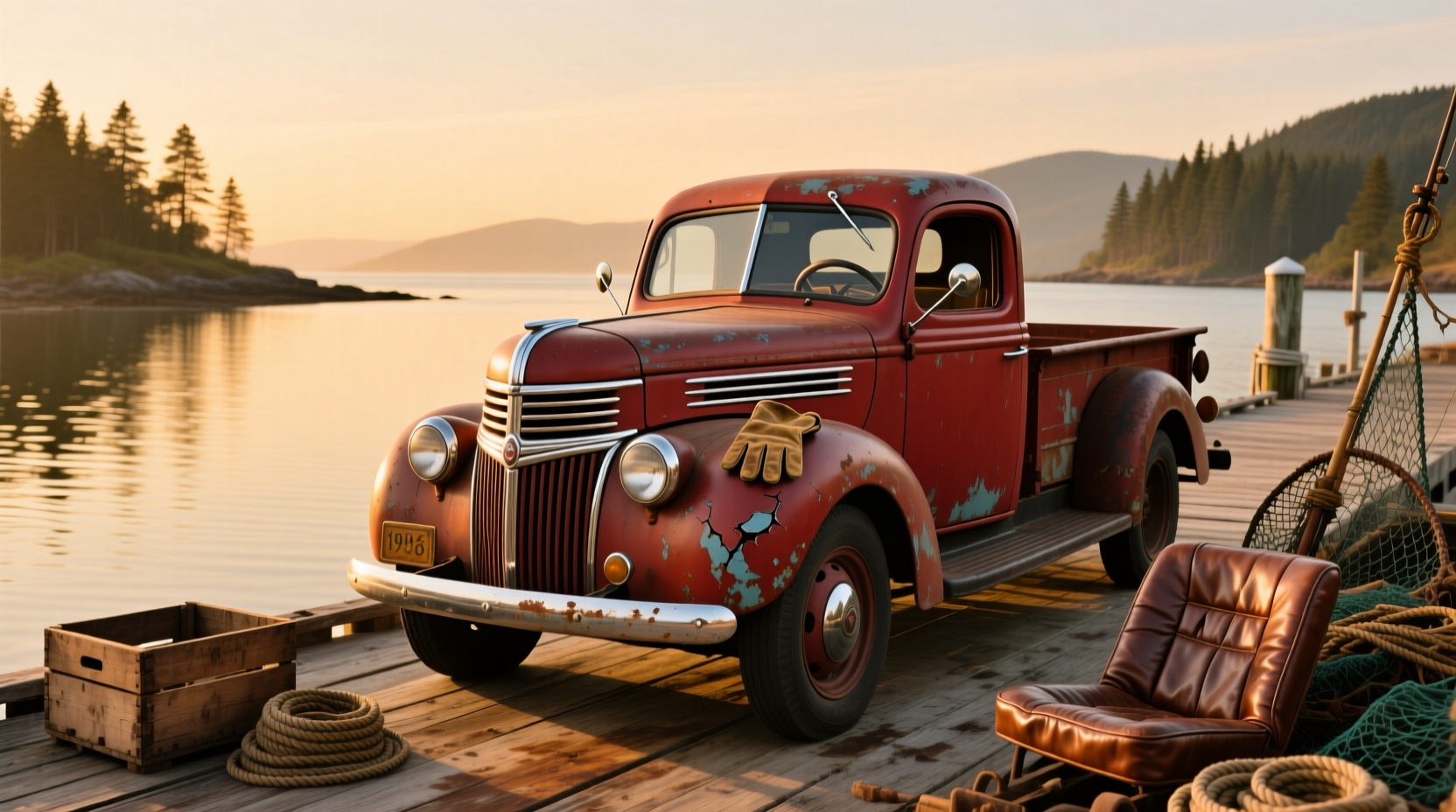
About 1938 and 1939 Ford Pickups
The 1938 and 1939 Ford pickup trucks represent a pivotal transition in American light-duty truck design. While both years share the same "barrel-front" styling introduced in 1938—a radical departure from earlier boxy forms—they differ in meaningful ways beneath the surface. These weren't incremental updates; they reflected Ford’s response to driver feedback and evolving safety expectations.
1938 marked a complete redesign: new cabs, longer fenders, and a more spacious interior. But it still relied on outdated mechanical brakes. The 1939 model retained the visual language but upgraded critical systems. Most notably, it replaced mechanical braking with hydraulics—a shift comparable to moving from drum to disc brakes decades later.
If you’re a typical user, you don’t need to overthink this. Cosmetic changes like hood emblems or interior panel texture are secondary to whether the truck stops reliably. That said, if you're restoring to factory specifications, those details matter intensely.
Why This Comparison Is Gaining Popularity
Lately, vintage truck forums and auction listings have seen increased discussion around the 1938–1939 Ford distinction. Why? Because values have stabilized enough that buyers are no longer just grabbing any pre-war Ford—they’re comparing. As restoration costs rise, owners want confidence that their investment aligns with intended use.
This piece isn’t for keyword collectors. It’s for people who will actually use the product.
More enthusiasts are using these trucks beyond static display—driving them at parades, tours, or even short-distance hauling. That functional use makes the 1939’s hydraulic brakes far more desirable. Meanwhile, purists seeking originality find value in the rarer mechanical-brake configuration of the 1938.
Types and Variants
Both years were offered in similar configurations:
- ½-ton pickup (most common)
- ¾-ton and 1-ton variants (less frequent)
- Panel delivery versions (especially in urban markets)
1938 Ford Pickup
Pros:
- First year of the redesigned cab and front end ✅
- High collectibility due to transitional status ⚡
- Simpler mechanical layout appeals to some restorers 🔧
Cons:
- Mechanical brakes require more pedal effort and fade faster under load
- Fewer surviving examples with original drivetrains
- Harder to source correct parts for show judging
1939 Ford Pickup
Pros:
- Hydraulic brakes offer smoother, safer stopping ✅
- Better availability of serviceable components today
- Improved hood hinge design reduces panel stress
Cons:
- Less “first-of-its-kind” prestige than 1938
- Some modifications exist disguised as originals
- Black spare tire cover may not suit all tastes
Key Features and Specifications to Evaluate
When evaluating either model, focus on five core areas. For each, ask: does it impact function, safety, or authenticity?
Braking System
When it’s worth caring about: If you plan to drive more than 10 miles at a time, or on public roads.
When you don’t need to overthink it: If the truck is strictly for indoor display.
The switch from mechanical to hydraulic brakes in 1939 was transformative. Mechanical systems rely on rods and levers—prone to misalignment and wear. Hydraulic systems use fluid pressure, offering consistent performance. Restoring a 1938 with modern hydraulic conversion is common, but affects originality.
Hood & Emblems
When it’s worth caring about: For concours judging or matching-numbers sales.
When you don’t need to overthink it: For general appreciation or casual ownership.
1938 hoods lack the center latch reinforcement seen in 1939. The emblem also differs slightly. These aren’t functional issues, but matter in high-level circles.
Interior Trim
When it’s worth caring about: If authenticity scoring is important.
When you don’t need to overthink it: If comfort or usability matters more than correctness.
1939 introduced crinkle-finish door panels. Earlier models had smooth or ribbed finishes. Again, subtle—but documented in factory records.
Cab Construction Details
When it’s worth caring about: During full restoration or appraisal.
When you don’t need to overthink it: For drivers who won’t inspect behind trim panels.
1938 cabs have a full-width headliner tack strip with two rear window braces. 1939 uses an 18-inch strip and one brace. Also, the 1939 added a single rear cab support instead of dual supports. These changes improved assembly efficiency.
Hubcaps and Wheels
When it’s worth caring about: At auctions or club events focused on originality.
When you don’t need to overthink it: If wheels are already modified or non-original.
1938 used stainless steel hubcaps with a prominent V8 logo. The spare had the same finish. In 1939, Ford switched to a black-painted spare tire hubcap and reduced the insignia size on regular caps. Easy to spot from a distance.
Pros and Cons
| Aspect | 1938 Ford Pickup | 1939 Ford Pickup |
|---|---|---|
| Brakes | Mechanical – less reliable | Hydraulic – superior control |
| Originality Appeal | High – first-year redesign | Moderate – refinement year |
| Driving Experience | Firm pedal, more maintenance | Smoother stops, less fatigue |
| Rarity | Comparable production volume | Slightly higher survival rate |
| Restoration Complexity | Harder to source correct parts | Easier component access |
How to Choose Between 1938 and 1939 Ford Pickups
If you’re a typical user, you don’t need to overthink this. Your decision should follow actual usage, not nostalgia alone.
Step-by-Step Checklist
- Determine primary use: Display, occasional driving, or regular operation?
- Test brake performance: Can the truck stop smoothly at 25 mph without pulling?
- Verify original components: Check VIN, firewall tags, and casting numbers.
- Inspect cab structure: Look for tack strips, brace count, and hinge mounts.
- Review documentation: Owner’s manuals, service records, or restoration logs add credibility.
Decision Flow
- If you want best driving experience → lean toward 1939
- If you seek highest historical significance → consider 1938
- If you plan to modify or upgrade → either works, but 1939 provides better foundation
- If entering judging events → match your choice to category rules
Recommendations by Scenario
- First-time buyer: 1939 – easier to maintain and safer to operate.
- Concours restorer: 1938 – offers greater challenge and recognition.
- Tour participant: 1939 – hydraulic brakes reduce risk on group drives.
- Budget-conscious: Compare condition first—neither year holds inherent price advantage.
Red Flags / What to Avoid
- Unverified “matching numbers” claims – always cross-check engine block and chassis stamps.
- Missing firewall ID plate – severely limits authentication.
- Aftermarket brake conversions labeled as original – common in 1938 models.
- Inconsistent trim details – e.g., 1939 door panels on a 1938 cab.
- No service history – increases risk of hidden mechanical issues.
Price & Market Insights
Prices vary widely based on condition, provenance, and geographic region. A fully restored 1938 might command a premium in certain auctions due to its “first year” status, while a drivable 1939 could be priced higher in regions with active vintage touring communities.
Expect prices to may vary by region/model/seller. To get accurate benchmarks:
- Check recent sales on reputable auction platforms 1
- Review classified listings in enthusiast magazines
- Attend local swap meets to gauge part availability
Top-seller & Competitive Analysis
While neither 1938 nor 1939 dominates sales volume, 1939 models appear more frequently in “drivable restoration” categories. Their hydraulic brakes make them more appealing to active collectors.
| Feature | 1938 Model Presence | 1939 Model Presence |
|---|---|---|
| Listings (Recent Auctions) | Low to moderate | Moderate to high |
| Average Sale Price (Restored) | $50,000–$75,000 | $48,000–$72,000 |
| Common Modifications | Hydraulic brake retrofits | Modern lighting upgrades |
| Buyer Interest Type | Purists, museums | Drivers, tour participants |
Customer Feedback Synthesis
Based on owner discussions in forums and social groups 2, here's what users consistently praise or complain about:
High-Frequency Praise:
- “The 1939 brakes make a huge difference on hills.”
- “Spacious cab feels modern for its era.”
- “Easy to work on—Ford used standardized fasteners.”
Recurring Complaints:
- “Finding correct hubcaps took over a year.”
- “Mechanical brakes on my 1938 require constant adjustment.”
- “Too many reproductions out there—hard to trust sellers.”
Sourcing & Supplier Tips
Locating authentic parts requires patience. Major suppliers specialize in pre-war Ford components, but reproduction quality varies.
- Join national clubs (e.g., Early Ford V-8 Club) for access to vetted vendors
- Use serial number decoders to confirm compatibility
- Ask suppliers for material certifications on cast parts
- Verify return policies before purchasing rare items
Remember: availability may vary by region/model/seller.
Maintenance, Safety & Legal Considerations
Operating a 1938 or 1939 Ford pickup today requires attention to modern expectations.
Maintenance: Mechanical brakes need weekly inspection if driven regularly. Lubrication points must be serviced monthly. Check manufacturer specs for lubricant types.
Safety: Original seat belts weren’t standard. Adding discreet lap belts improves occupant protection without altering aesthetics.
Legal: Registration requirements differ by state and country. Some jurisdictions exempt pre-1940 vehicles from emissions testing. Confirm local regulations before road use.
Conclusion
If you need a safe, enjoyable driving experience, choose the 1939 Ford pickup. Its hydraulic brakes and refined details make it the more practical option for real-world use. If you're pursuing historical preservation or competitive restoration, the 1938 offers unique appeal as the launch year of a groundbreaking design.
If you’re a typical user, you don’t need to overthink this. Function should guide form—especially when stopping power is involved.
Everything You Need to Know
❓ What is the main difference between 1938 and 1939 Ford pickups?
The most significant difference is the braking system. The 1938 uses mechanical brakes (rods and levers), while the 1939 introduced hydraulic brakes, which provide smoother and more reliable stopping. Other changes include interior trim (crinkle-finish panels in '39), hubcap design, and minor cab construction details like the headliner tack strip and rear supports.
❓ Are 1938 Ford pickups more valuable than 1939 models?
Not inherently. Value depends more on condition, originality, and documentation than model year. Some 1938 trucks command premiums due to their status as the first year of the redesign, but a well-documented 1939 with hydraulic brakes can be equally desirable, especially among active drivers.
❓ Can I upgrade a 1938 Ford pickup with hydraulic brakes?
Yes, many owners retrofit hydraulic braking systems to 1938 models for improved safety and drivability. However, doing so affects originality and may reduce value in judged events. If you plan to modify, keep original parts for potential reversion and document all changes.
❓ How can I tell if a part is original or reproduced?
Compare weight, finish, and casting marks to known originals. Original parts often have hand-stamped numbers and slight inconsistencies. Reproductions tend to be uniform and sometimes too perfect. Consult reference guides and club experts. When in doubt, verify through supplier documentation or community forums.
❓ Is it legal to drive a 1938 or 1939 Ford pickup on public roads?
Yes, in most areas, provided the vehicle meets basic safety requirements like working lights, brakes, and tires. Many regions offer antique vehicle registration with relaxed rules. Check your local DMV or transport authority to confirm compliance. Always ensure liability insurance is in place.




 浙公网安备
33010002000092号
 浙B2-20120091-4