Short introduction
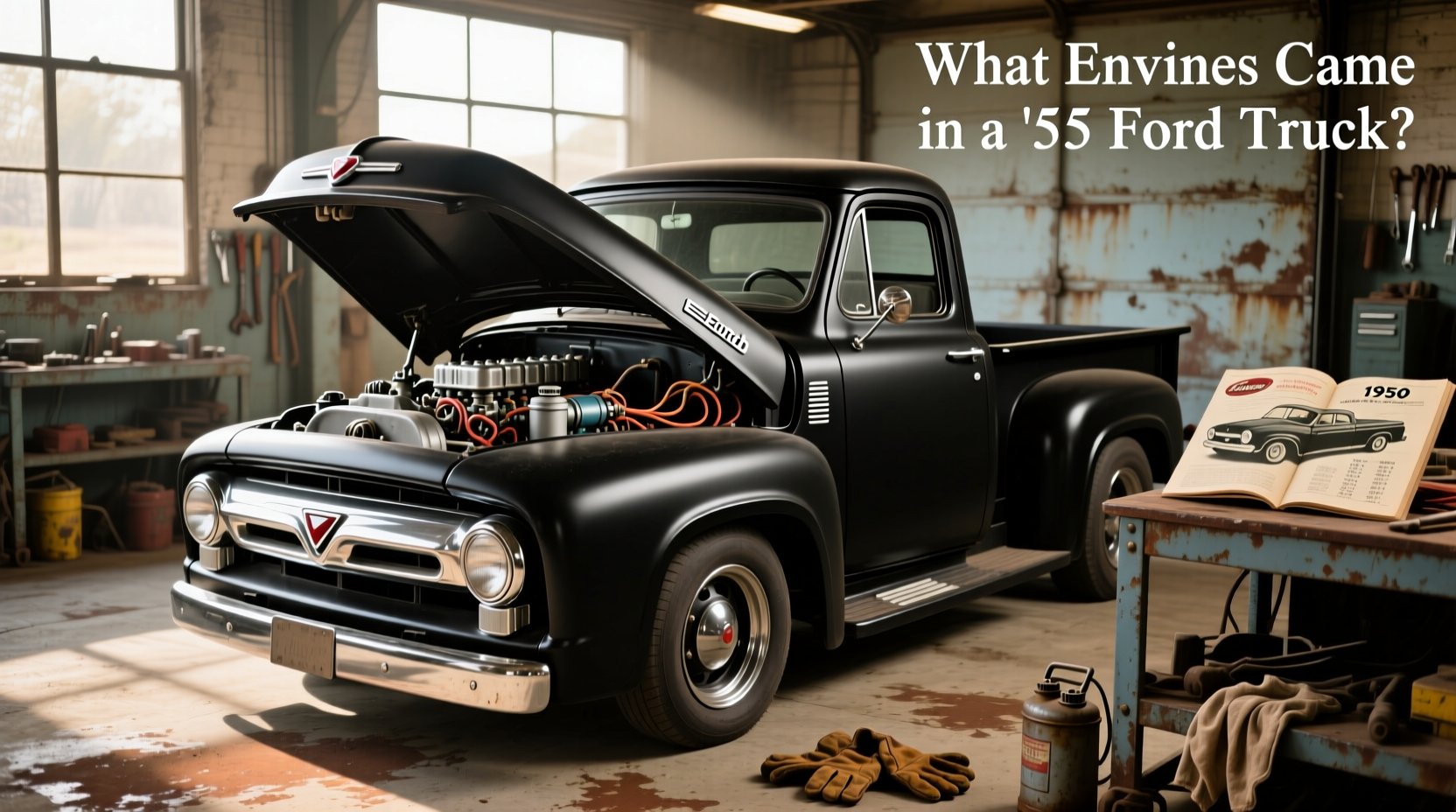
Lately, more collectors and restorers have been asking: what engines came in a '55 Ford truck? If you’re looking at a 1955 Ford F-100, here’s how to choose: most models came with the 223 cu in Mileage Maker I6 or the 272 cu in Y-block V8. The rare 292 V8 was available in select builds. If you’re a typical user, you don’t need to overthink this—stick with the I6 if you want reliability and simpler maintenance; go for the V8 only if you plan to drive it frequently or tow. Avoid trucks with non-original engine swaps unless documentation is clear. Over the past year, interest has grown due to rising demand for drivable classics—not just showpieces.
About 1955 Ford Pickup Trucks
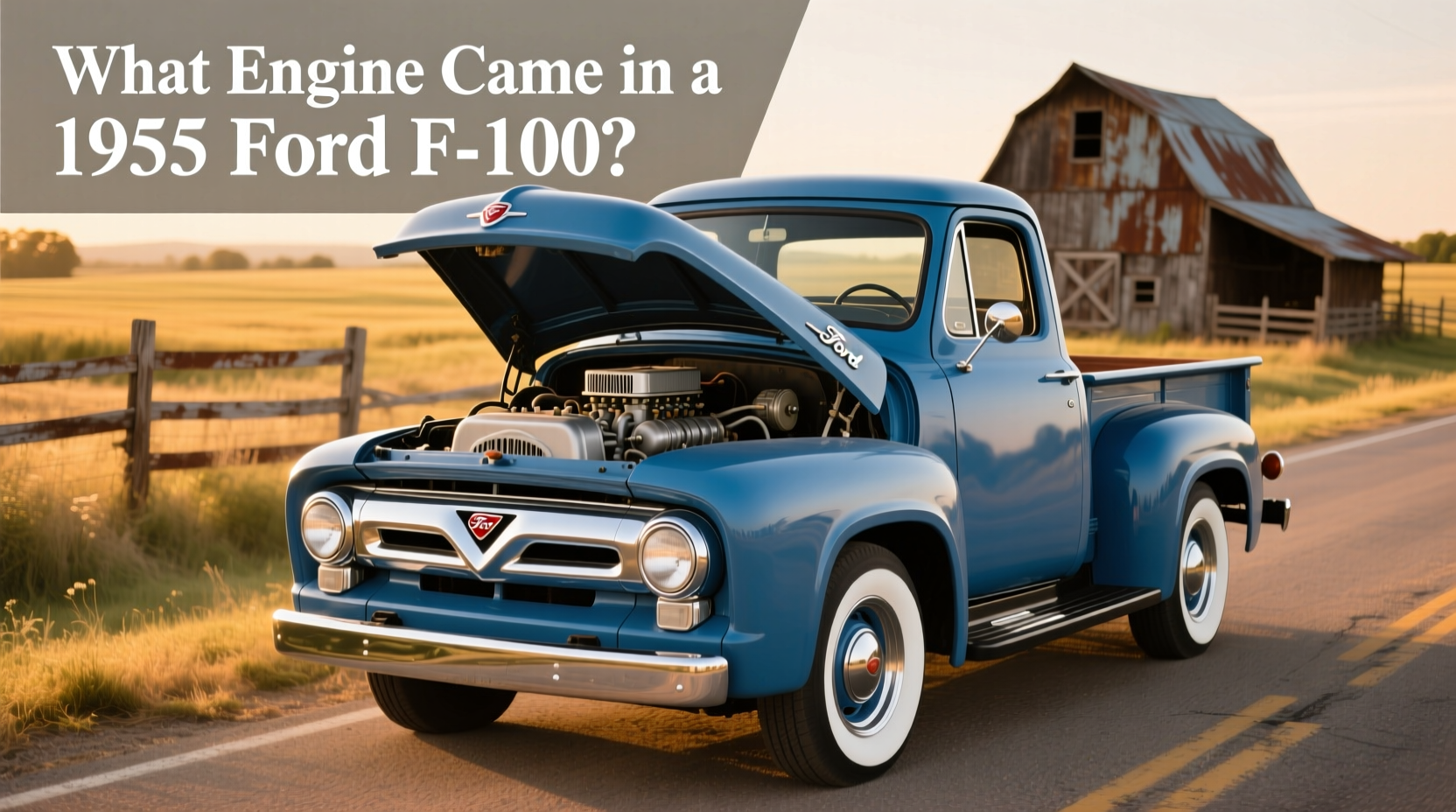
The 1955 Ford F-100 belongs to the second generation of the F-Series (1953–1956), marking a shift toward modern styling and improved usability. This model introduced a curved body design, wraparound windshield, and better interior ergonomics compared to earlier flat-faced trucks. It was marketed as a work vehicle but built with enough comfort to appeal to private owners. While originally designed for utility, today’s market values these trucks primarily as restoration projects or lifestyle vehicles.
Two core trims existed: standard F-100 and heavier-duty variants like the F-250 (less common in ’55). Most surviving examples today are F-100s. Body styles included Styleside and Flareside beds, with cab configurations limited to a two-door, bench-seat layout. If you’re a typical user, you don’t need to overthink this—your decision will hinge more on mechanical condition than trim differences.
Why the 1955 Ford Truck Is Gaining Popularity
Over the past year, searches and social engagement around the 1955 Ford pickup truck have increased noticeably. Enthusiast groups on platforms like Facebook1 report higher activity in buying, selling, and restoring these models. The reason isn’t nostalgia alone—it’s practicality. Unlike earlier trucks, the ’55 has a relatively modern suspension, wider track, and usable cabin space. That makes it easier to modify with modern brakes, steering, or even hidden AC systems without compromising aesthetics.
This piece isn’t for keyword collectors. It’s for people who will actually use the product.
Another factor driving interest: availability of reproduction parts. Companies now offer exact-fit sheet metal, trim, and interior components, reducing restoration time and cost. Combined with strong community support, this lowers the barrier to entry for first-time classic owners.
Types and Variants
The 1955 Ford truck lineup wasn’t highly segmented by today’s standards, but there were meaningful variations based on engine, bed style, and factory options.
Engine Types
- 223 cu in (3.7L) Mileage Maker I6: Standard engine, known for durability and fuel efficiency by 1950s standards. Produced ~137 hp. Ideal for light-duty use and weekend driving.
- 272 cu in (4.5L) Y-block V8: Optional upgrade. Delivered ~162–167 hp. Better acceleration and hill climbing. Required more frequent maintenance.
- 292 cu in (4.8L) Y-block V8: Rare, higher-output version (~188 hp), sometimes called the “Interceptor.” Found mostly in fleet or performance-oriented builds.
Bed Styles
- Styleside: Smooth-sided bed, cleaner look. More common in urban or suburban deliveries.
- Flareside: Wider fenders over the bed rails. Preferred by collectors for its bold appearance, though less practical for large cargo.
Transmission Options
- 3-speed manual (column shift): Standard equipment. Simple, robust, but less convenient in traffic.
- Fordomatic 2-speed automatic: Optional. Smoother daily driving experience, though less efficient and rarer today.
If you’re a typical user, you don’t need to overthink this—engine choice matters more than bed style unless you have a specific aesthetic goal.
Key Features and Specifications to Evaluate
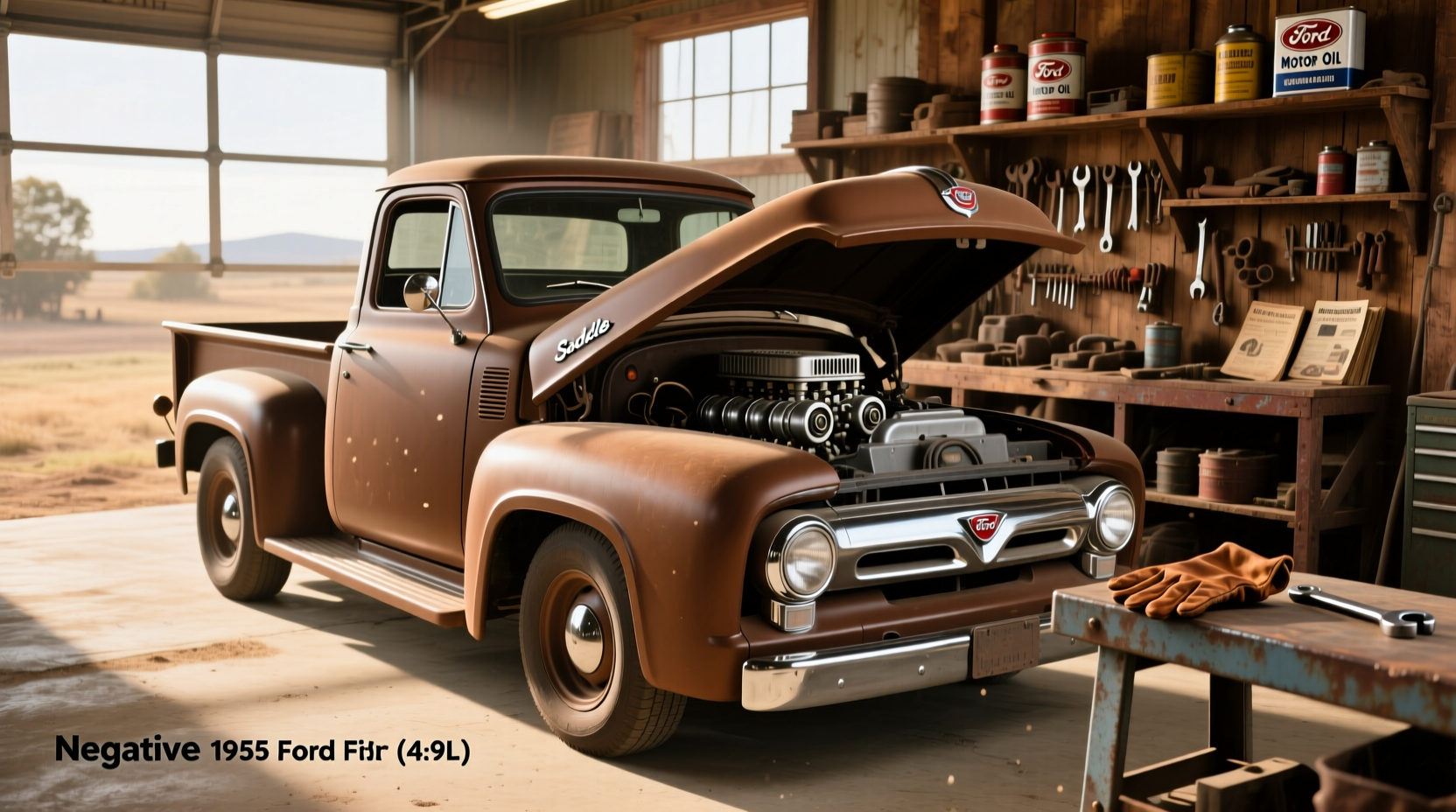
When assessing a 1955 Ford truck, focus on four areas: drivetrain authenticity, frame condition, electrical system, and rust level.
Drivetrain Authenticity
Many trucks have been re-powered with modern engines. That’s fine—if disclosed. But verify whether the current engine matches the build sheet or VIN tag. A mismatch doesn’t disqualify a purchase, but it affects value and resale clarity.
Frame and Floor Condition
Rust is the biggest enemy. Check the frame rails, cab corners, and floor pans. Surface rust can be treated; structural corrosion requires costly repair. Use a magnet to test for bondo or improper patchwork.
Electrical System
Original 6-volt systems are outdated and underpowered. Many owners convert to 12 volts. If already converted, ensure wiring is clean and fused properly. If still 6V, budget for an upgrade.
Suspension and Brakes
Stock suspension used leaf springs front and rear. Drum brakes were standard. Upgrades to disc brakes or independent front suspension improve safety and handling—but assess integration quality.
When it’s worth caring about: if you plan to drive more than 1,000 miles per year or carry loads regularly.
When you don’t need to overthink it: if the truck is a garage-kept showpiece driven occasionally.
Pros and Cons
✅ Pros
- Simple mechanics make repairs accessible to DIYers
- Strong aftermarket support for restoration parts
- Balanced proportions—neither too big nor too small for modern roads
- High collector visibility without extreme rarity premiums
❌ Cons
- Outdated braking and steering without upgrades
- Limited cabin comfort (no insulation, basic seats)
- Fuel economy typically 10–14 mpg, depending on engine
- Parts for original specs (like Fordomatic) are scarce
How to Buy a 1955 Ford Truck
Buying a classic truck isn’t just about finding one you like—it’s about avoiding preventable mistakes. Follow this checklist.
Step-by-Step Checklist
- Define your purpose: display, occasional driving, or regular use?
- Determine budget including restoration costs (often equal to purchase price)
- Verify VIN and check for matching-numbers engine
- Inspect for rust, especially under carpet and along frame seams
- Test drive to evaluate transmission smoothness and brake feel
- Review service history or restoration documentation
- Check title status (clean, salvage, rebuilt)
Decision Flow
- If you want low-maintenance ownership → choose a documented I6 model with recent rust repair
- If you want stronger performance → prioritize a V8 with known service history
- If you're on a tight budget → consider a project truck with solid metal but non-running engine
- If you plan to modify → confirm local regulations allow modified classics for registration
Recommendations by Scenario
- First-time buyer: Look for a running 223 I6 with updated 12V electrical system and seat belts.
- Restoration enthusiast: Target a Flareside V8 with original trim and minimal prior welding.
- Driver-focused owner: Seek one with disc brake conversion, modern heater, and balanced tires.
Red Flags / What to Avoid
- Unexplained gaps in ownership history
- Repainted interiors hiding water damage
- Non-functioning gauges or warning lights
- Aftermarket air conditioning routed through original vents (may indicate poor installation)
- VIN tags that look newly attached or misaligned
- Pricing significantly below market average—likely major hidden issues
If you’re a typical user, you don’t need to overthink this—spend more time inspecting metal and drivetrain than debating paint codes.
Price & Market Insights
Prices vary widely based on condition, location, engine type, and provenance. As of recently, a driver-quality F-100 with I6 engine may sell between $18,000 and $30,000. Restored V8 models range from $35,000 to $55,000. Fully authenticated ‘Interceptor’ builds with documentation can exceed $60,000.
These figures may vary by region/model/seller. Always compare listings on established platforms like RK Motors2 or enthusiast forums before committing. Also, note that trucks advertised as “matching numbers” should include photographic evidence of engine stampings aligned with chassis records.
Top-seller & Competitive Analysis
While no single seller dominates the 1955 Ford truck market, certain dealerships and online communities consistently list high-quality examples. RK Motors Charlotte is frequently cited for verified restorations and transparent histories.
| Model Type | Avg. Price Range | Availability | Resale Liquidity |
|---|---|---|---|
| 223 I6, Styleside, Driver Condition | $18k–$30k | High | High |
| 272 V8, Flareside, Restored | $35k–$50k | Moderate | High |
| 292 V8, Matching Numbers | $55k+ | Low | Moderate |
| Project Truck (non-running) | $8k–$15k | High | Moderate |
When it’s worth caring about: if you’re investing for appreciation or planning to resell within five years.
When you don’t need to overthink it: if you’re buying purely for personal enjoyment and long-term holding.
Customer Feedback Synthesis
Based on owner discussions in public forums and video comment sections, two themes dominate feedback.
Positive remarks: Owners appreciate the straightforward mechanics, ease of sourcing replacement panels, and strong community knowledge base. Many highlight the satisfaction of working on their own vehicles without needing specialized tools.
Common complaints: Lack of power steering and weak stock brakes top the list. Some regret buying trucks with undocumented modifications, leading to unexpected repair costs. Others note difficulty finding skilled labor familiar with Y-block V8 tuning.
Sourcing & Supplier Tips
Buy from sellers who provide full photo documentation of undercarriage, engine bay, and title. Reputable sources include specialty classic car dealers, trusted auction houses (e.g., Mecum, Barrett-Jackson), and long-standing members of Ford-specific enthusiast groups.
Avoid private sellers who refuse pre-purchase inspections. For parts, rely on companies specializing in 1950s Ford trucks—not generic auto suppliers. Verify return policies and shipping terms before ordering critical components.
If you’re a typical user, you don’t need to overthink this—prioritize transparency over perfection.
Maintenance, Safety & Legal Considerations
Maintain fluid levels monthly, especially in older transmissions. The Fordomatic requires specific Type-F fluid; using modern equivalents can cause slippage. Y-block V8s need regular valve adjustments and timing checks.
Safety upgrades like seat belts, turn signals, and brake lights are strongly advised—even if not required by law in your area. Classic trucks weren’t built to modern crash standards.
Legal compliance varies by jurisdiction. To verify roadworthiness: check state DMV rules for antique vehicles, emissions exemptions, and lighting requirements. Documentation helps during registration, particularly for modified builds.
Conclusion
If you need a reliable, easy-to-maintain classic for occasional drives, choose a 1955 Ford F-100 with the 223 I6 and documented service history. If you want stronger performance and plan to invest in upkeep, a verified 272 or 292 V8 model makes sense. If you’re a typical user, you don’t need to overthink this—focus on condition, not configuration.




 浙公网安备
33010002000092号
 浙B2-20120091-4