Short introduction
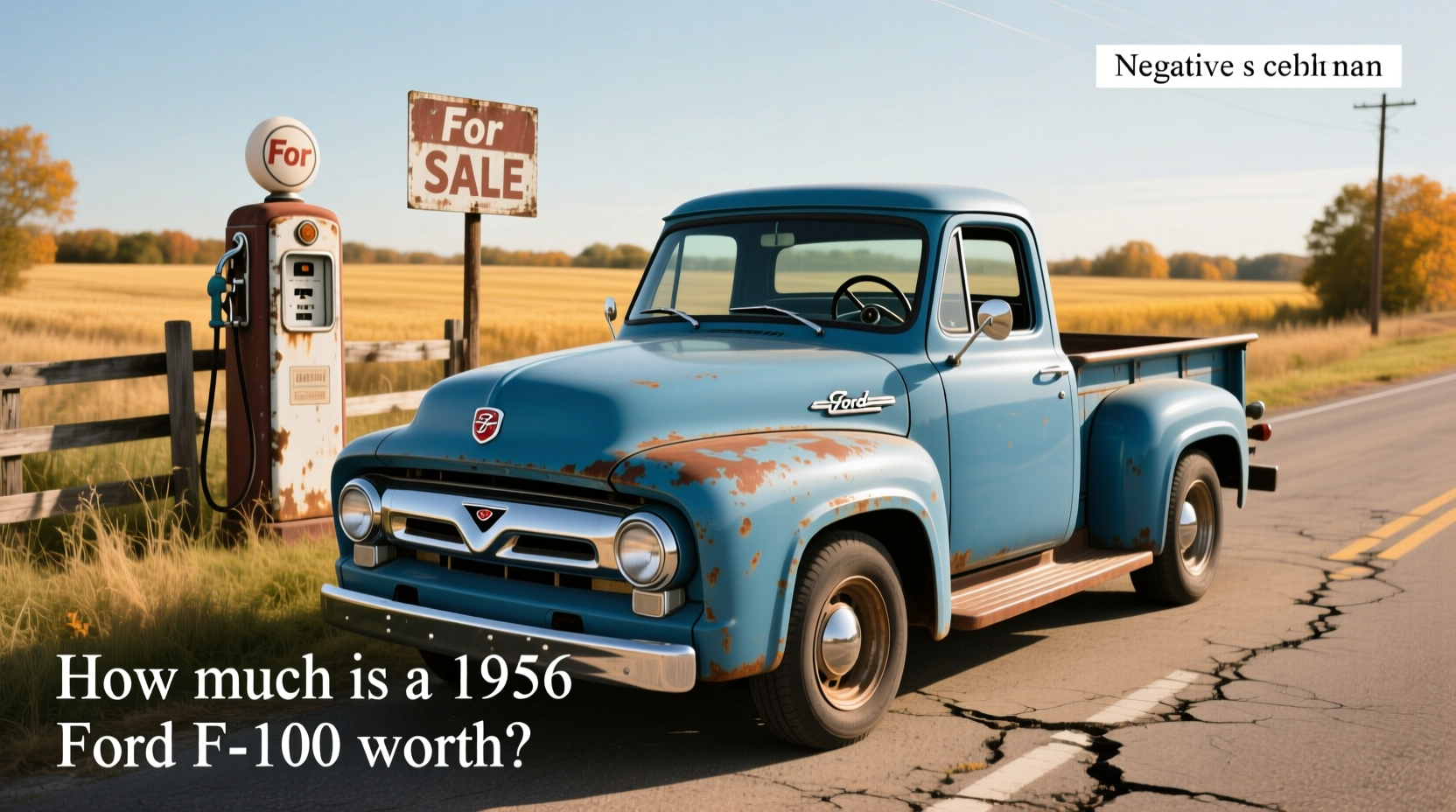
If you’re looking at a 1956 Ford F-100, here’s what matters: condition, originality, and whether it’s a restomod or stock build. Over the past year, interest in classic trucks has grown—not just among collectors but also drivers who want a usable vintage vehicle with modern reliability. How to choose a 1956 Ford F-100? Focus on mechanical soundness first, then body style (Flareside vs Stepside), and decide early whether you value period correctness or upgraded performance. If you’re a typical user, you don’t need to overthink this. Most people will be better off with a solid-running example in the $30,000–$60,000 range than chasing concours perfection or extreme modifications.
Avoid trucks with hidden rust, mismatched VINs, or poorly executed engine swaps. What to look for in a 1956 Ford F-100? Prioritize drivability over show shine unless you’re entering judged events. This piece isn’t for keyword collectors. It’s for people who will actually use the product.
About 1956 Ford F-100
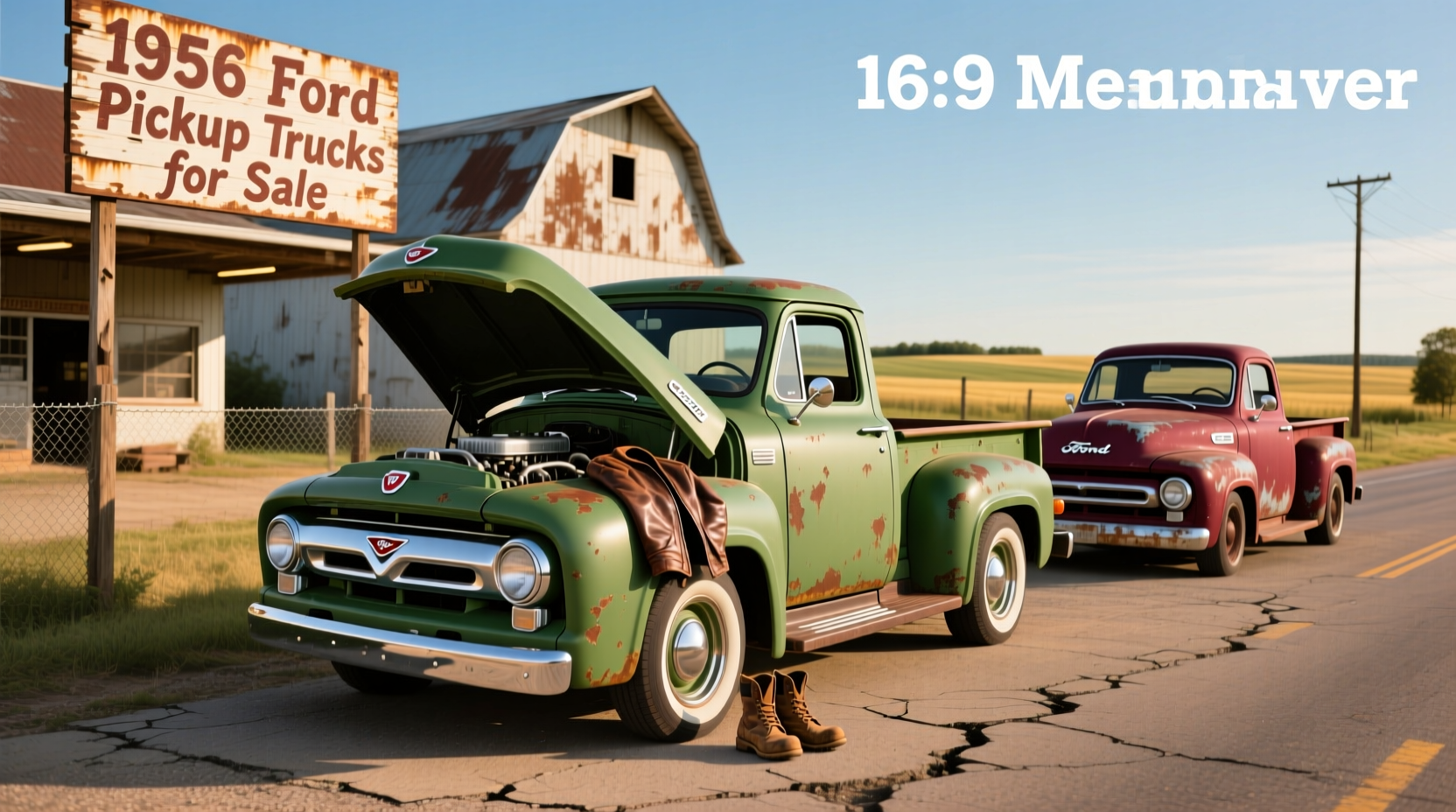
The 1956 Ford F-100 was part of the second generation of Ford's postwar pickup line, known as the 'Task Force' series. While technically introduced in 1953, the 1956 model carried forward refined styling, improved suspension, and updated engine options compared to earlier versions. It featured a more integrated cab design, improved dashboard ergonomics, and stronger frames. Available in both short- and long-bed configurations, the F-100 served as a half-ton workhorse but has since become one of the most sought-after classic trucks for restoration and customization.
Two primary cab styles existed: the 'Small Window' and the more desirable 'Big Window'—the latter featuring a wrap-around rear glass that significantly improves visibility and aesthetic appeal. Engine options included inline-six and V8 variants, though many surviving examples today have been modified with modern powertrains. Originality plays a major role in valuation, but so does usability—especially for buyers planning regular driving.
Why 1956 F-100 is gaining popularity
Lately, the 1956 F-100 has seen increased demand due to its balance of vintage charm and manageable size. Unlike larger, heavier classics from the late 1960s and 1970s, the '56 F-100 fits well in garages, handles predictably on modern roads, and offers easier access for maintenance. Its clean lines and chrome detailing make it a favorite at car shows, while its adaptability makes it ideal for restomod projects.
Another change signal: younger buyers are entering the classic truck market, drawn not by pure preservation but by the idea of a functional heirloom—a vehicle they can drive weekly, not just trailer to events. Platforms like eBay Motors and Hemmings have made transactions more transparent, increasing confidence in private sales. If you’re a typical user, you don’t need to overthink this. The trend favors usable classics, not museum pieces.
Types and variants
The 1956 F-100 came in several configurations, each with distinct appeal and trade-offs.
Small Window vs Big Window Cab
- Small Window: Standard on base models; narrower rear window reduces rear visibility but retains originality for purists.
- Big Window: Optional upgrade; full-width rear glass enhances aesthetics and functionality. Often commands a 20–40% price premium.
Flareside vs Stepside Bed
- Flareside: Integrated fenders provide a smoother profile. Easier to maintain structurally but less common than Stepside.
- Stepside: External fenders create a stepped appearance. Preferred by many collectors for its traditional look, though more prone to rust at wheel wells.
Restomod vs Original
- Original (Stock): Retains factory specs. Lower maintenance complexity if unmodified, but may lack modern braking, cooling, or comfort features.
- Restomod: Restored with modern components—overhead fuel injection, electronic ignition, overdrive transmissions, AC, etc. Higher upfront cost but greater daily usability.
This piece isn’t for keyword collectors. It’s for people who will actually use the product.
Key features and specifications to evaluate
When assessing a 1956 F-100, focus on these core areas:
- Frame and floor integrity: Check for rust under the cab and along frame rails. Structural corrosion is expensive to repair.
- VIN and component matching: Verify engine, transmission, and axle numbers match factory records if authenticity matters to you.
- Engine type and reliability: Original Y-block V8s require specialized knowledge. Many owners swap in small-block V8s or even crate engines for reliability.
- Braking system: Original drum brakes are inadequate by modern standards. Upgraded disc conversions improve safety significantly.
- Interior condition: Original gauges and trim add value, but cracked seats or non-functional HVAC reduce practicality.
If you’re a typical user, you don’t need to overthink this. A functional heater and working turn signals matter more than correct date-coded bolts.
Pros and cons
- Iconic mid-century American design
- Compact footprint suits urban and suburban use
- High aftermarket support for parts and upgrades
- Strong resale potential if well-maintained
- Eligible for classic insurance rates with limited usage
- No factory seatbelts or crumple zones
- Poor fuel economy (10–14 mpg typical)
- Limited cargo capacity compared to modern trucks
- Rust-prone floor pans and cab corners
- Specialty repairs require niche mechanics
How to buy a 1956 Ford F-100
Follow this checklist to avoid costly mistakes.
Step-by-step checklist
- Define your goal: daily driver, weekend cruiser, or showpiece?
- Determine budget including taxes, shipping, and immediate repairs.
- Search listings on Classics on Autotrader1, Hemmings2, and eBay Motors3.
- Narrow by body style, window type, and modification level.
- Request full photo sets and service history.
- Schedule an in-person inspection—or hire a third-party evaluator.
- Verify title status (clean, salvage, rebuilt).
- Arrange transport if purchasing remotely.
Decision flow
- If you want to drive regularly: prioritize restomods with modern suspensions and disc brakes ✅
- If you want maximum appreciation: seek original Big Window Flareside with documentation ⚙️
- If budget is tight (<$25K): consider a project truck only if you have skills or shop access 🧰
- If comfort matters: confirm HVAC works or plan for retrofitting ✨
Recommendations by scenario
- First-time buyer: Aim for a running, insured example between $35,000–$50,000 with recent mechanical updates.
- Enthusiast builder: Look for solid donor trucks around $20,000–$30,000; avoid those with prior botched restorations.
- Show circuit: Target frame-off restorations with NOS (New Old Stock) parts and correct finishes.
Red flags / what to avoid
- ✅ Rust holes in cab floor or firewall
- ✅ Mismatched VIN or undocumented engine swap
- ✅ Non-operational electrical system or seized engine
- ✅ Seller refuses pre-purchase inspection
- ✅ Prices significantly below market average (indicates hidden issues)
If you’re a typical user, you don’t need to overthink this. A truck that starts, drives, and stops safely is worth more than a shiny shell with mechanical doubts.
Price & market insights
Values vary widely based on condition, location, and configuration. According to recent listings:
- Low end ($14,000–$25,000): Non-running, heavy rust, or heavily modified without quality execution.
- Average range ($30,000–$60,000): Drivable trucks with some restoration, possibly updated brakes or engine.
- Premium ($80,000–$160,000+): Show-quality restorations or high-end restomods with luxury/modern performance features.
Data from Hagerty Valuation Tools4 suggests average transaction prices have risen moderately over the last 18 months, driven by restomod demand rather than pure collector bidding. Regional differences exist—dry climate states like Arizona and Colorado often yield cleaner examples, while Northeastern trucks may carry higher risk of structural rust. Always verify current asking prices across multiple platforms before offering.
| Variant | Avg. Price Range | Best For | Caution |
|---|---|---|---|
| Big Window Restomod | $90,000–$160,000 | Daily drivers wanting style + reliability | Check for quality of hidden wiring/plumbing |
| Small Window Original | $25,000–$45,000 | Budget-conscious purists | May need frequent maintenance |
| Flareside Stepside (Stock) | $35,000–$70,000 | Collectors valuing authenticity | Inspect bed wood and fender alignment |
| Project Truck (unrestored) | $15,000–$25,000 | DIY builders with time/skills | Factor in $20K+ labor/materials |
Top-seller & competitive analysis
While no single 'top seller' dominates the 1956 F-100 space, certain types consistently attract attention:
- Restomods with LS swaps: High demand due to reliability and power. Often listed on eBay Motors with prices above $100,000.
- Big Window Flaresides: Rare and visually striking; appear frequently on Classics on Autotrader with strong bidding.
- Unmodified originals: Steady niche demand, especially with documented histories.
Compared to similar-era trucks like the Chevrolet Advance Design or Dodge Power Wagon, the F-100 holds stronger appeal among U.S.-based buyers due to brand familiarity and broader parts availability. However, it typically commands higher prices than equivalent Chevys, making value comparisons essential.
Customer feedback synthesis
Based on owner testimonials and forum discussions:
- 'Timeless design turns heads everywhere.'
- 'Surprisingly comfortable for a truck this age once upgraded.'
- 'Parts are easy to find—even for non-Ford specialists.'
- 'Original brakes feel dangerous at highway speeds.'
- 'Floor pans rust out faster than expected.'
- 'Some sellers exaggerate restoration quality.'
If you’re a typical user, you don’t need to overthink this. Real-world satisfaction correlates more with mechanical preparedness than cosmetic perfection.
Sourcing & supplier tips
Buy from reputable sources whenever possible. Private sellers offer lower prices but come with higher risk. Dealers specializing in classics often provide warranties or return windows. When sourcing:
- Use Hagerty or Collector Car Insurance appraisals to benchmark fair pricing.
- Contact Ford-specific clubs (e.g., Lincoln & Ford Antique Auto Club) for referrals.
- Ask about return policies—many online auctions are 'as-is'.
- Confirm whether spare parts (like hubcaps or trim) are included.
If buying internationally, verify import regulations and conversion costs (e.g., lighting, emissions). May vary by region/model/seller.
Maintenance, safety & legal considerations
These trucks were built before modern safety standards. Consider:
- Adding seatbelts—even if not legally required for vehicles of this age.
- Upgrading to front disc brakes and dual-circuit master cylinder.
- Installing modern turn signals and LED lighting for visibility.
Maintenance needs include regular lubrication of steering linkages, checking kingpin wear, and monitoring aging rubber hoses. Cooling system upgrades help prevent overheating in traffic. To stay compliant:
- Check state-specific requirements for classic vehicle registration.
- Verify emissions exemptions—if applicable in your area.
- Ensure license plates meet local display rules.
Always confirm local regulations through official DMV channels. Do not assume grandfather clauses apply universally.
Conclusion
If you need a reliable, head-turning classic truck for weekend drives or light hauling, choose a well-documented 1956 F-100 with mechanical upgrades. If you're focused on investment potential, prioritize originality, rare configurations, and provenance. But if you’re a typical user, you don’t need to overthink this. A solid, drivable example beats an overpriced show queen for real-world enjoyment.
Everything You Need to Know
Value ranges from $14,000 for project trucks to over $150,000 for top-tier restomods or fully restored models. Most running, well-kept examples sell between $30,000 and $60,000. Condition, originality, window type, and modifications are key determinants.
The Big Window model has a full-width rear glass panel, improving visibility and curb appeal. It's rarer and typically commands a higher price. Small Window cabs have a narrower rear window and are more common. When it’s worth caring about: if you plan to show the truck or resell quickly. When you don’t need to overthink it: if you're building a personal driver and prefer other features.
Restomods often cost more upfront but deliver better usability and resale appeal among drivers. They may not appreciate as reliably as original, numbers-matching trucks in collector circles. When it’s worth caring about: if you want modern comfort and reliability. When you don’t need to overthink it: if you're emotionally attached to period-correct builds.
Check Classics on Autotrader1, Hemmings2, and eBay Motors3. Dealer lots offer more protection; private sellers may offer better prices. Always insist on a pre-purchase inspection.
Not necessarily. Many owners preserve patina or perform partial updates instead of full restorations. When it’s worth caring about: if you're aiming for concours judging or maximum resale. When you don’t need to overthink it: if you're using the truck casually and enjoy its character as-is.




 浙公网安备
33010002000092号
 浙B2-20120091-4