
If you’re looking for a classic American subcompact from the 1970s, focus on three core factors: mechanical simplicity, parts availability, and rust condition. Models like the Ford Pinto, Chevrolet Vega, and AMC Gremlin offer period-correct styling and modest running costs—but each comes with well-documented weaknesses. How to choose a 1970s compact car? Prioritize vehicles with documented maintenance history and avoid those rebuilt with non-OEM panels, which often misalign. If you’re a typical user, you don’t need to overthink this: pick one with a clean floorpan and a known engine replacement.
Over the past year, interest in 1970s economy cars has grown—not because they’re reliable, but because they represent a turning point in automotive history. Recently, younger collectors have begun reevaluating these cars not as failures, but as honest responses to oil shocks and shifting consumer needs. This piece isn’t for keyword collectors. It’s for people who will actually use the product.
About 1970s Compact Cars
The 1970s marked a dramatic shift in American car design. After decades of increasing size and power, the oil crisis of 1973 forced automakers to downsize. The result was a new category: the domestic subcompact. Unlike the larger compacts of the 1960s—like the Ford Falcon or Rambler American—these were smaller, lighter, and built to deliver better fuel economy.
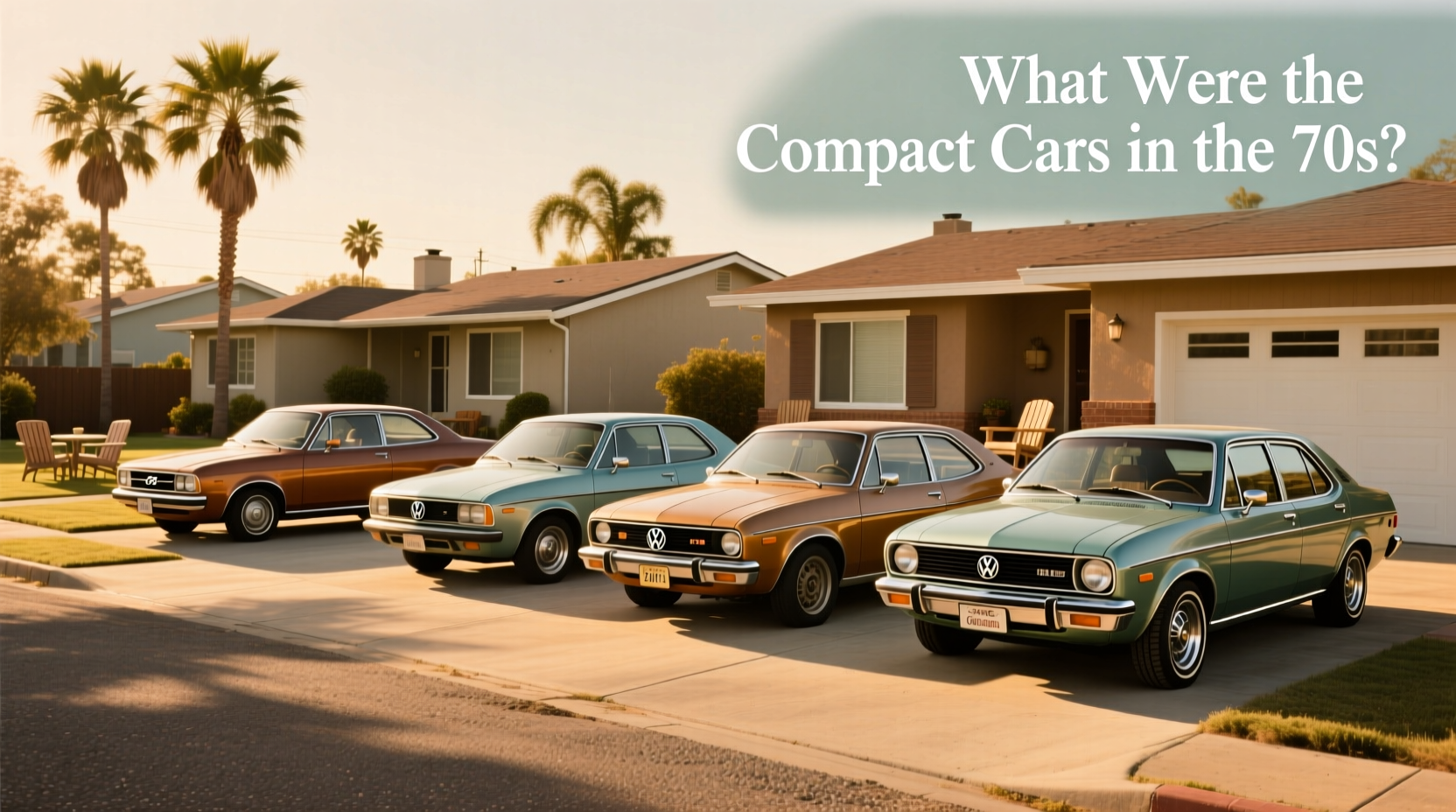
Popular models included the Ford Pinto 1, Chevrolet Vega 2, and AMC Gremlin. These cars competed directly with imports like the Volkswagen Beetle and Toyota Corolla. While many were criticized for safety or durability, they filled a real market need during a turbulent economic period.
Why 1970s Compact Cars Are Gaining Popularity
Lately, there’s been a quiet resurgence in demand for 1970s subcompacts. This isn’t driven by nostalgia alone. Several factors contribute:
- Cultural reappraisal: These cars are now seen as symbols of adaptation, not failure.
- Lower entry cost: Compared to muscle cars or luxury classics, many 1970s compacts remain affordable.
- Simplicity: With fewer electronic systems, they’re easier for DIY owners to maintain.
- Unique character: Their quirky designs stand out in an era of homogenized styling.
If you’re a typical user, you don’t need to overthink this: rising interest means better aftermarket support and more community knowledge available online.
Types and Variants
Three main American manufacturers led the 1970s subcompact wave, each taking a different approach.
Ford Pinto (1971–1980)
The Pinto was Ford’s first North American subcompact. Available as a coupe or station wagon, it used a simple inline-four engine and rear-wheel drive.
Pros:
- Widely produced, so parts are relatively easy to find
- Simple mechanical layout
- Strong enthusiast community
Cons:
- Negative safety reputation due to fuel tank design
- Prone to rust, especially in floorboards and rocker panels
- Engine durability issues without regular maintenance
Chevrolet Vega (1970–1977)
The Vega featured an aluminum-block inline-four engine—a bold move at the time. Offered as a hatchback, notchback, and even a Kammback wagon, it aimed at youthful buyers.
Pros:
- Innovative engine design for its era
- Smooth ride and responsive handling
- Base for the sporty Cosworth 2300 model
Cons:
- Aluminum engine prone to overheating and head gasket failure
- Extremely susceptible to corrosion
- Poor long-term reliability without major rebuilds
AMC Gremlin (1970–1978)
Built by American Motors Corporation, the Gremlin had a distinctive truncated rear end. It shared components with the larger Hornet platform.
Pros:
- Unique styling with cult appeal
- Available with inline-six engine for better durability
- Lightweight, contributing to decent fuel economy
Cons:
- Cramped rear seating
- Noise and vibration levels higher than competitors
- Limited factory service documentation today
Key Features and Specifications to Evaluate
When assessing any 1970s compact car, certain features matter more than others. Focus only on what impacts usability and ownership cost.
Engine Type and Condition
When it’s worth caring about: If you plan to drive the car regularly, engine health is critical. The Vega’s aluminum engine requires special attention to cooling systems. The Pinto’s four-cylinder is simpler but benefits from an overhaul. The Gremlin’s six-cylinder is often the most durable option.
When you don’t need to overthink it: Originality matters less than functionality. A professionally rebuilt engine with modern upgrades (e.g., electronic ignition) is often preferable to a failing original.
Rust and Structural Integrity
When it’s worth caring about: Floor pans, rocker panels, and trunk floors on these cars commonly rot out. Severe rust compromises safety and increases repair costs exponentially.
When you don’t need to overthink it: Surface rust on fenders or hoods can be repaired affordably. Don’t reject a car for minor cosmetic corrosion if the frame and floor are solid.
Parts Availability
When it’s worth caring about: Some trim-specific parts (e.g., dash clusters, badging) are scarce. If you’re restoring to show condition, sourcing becomes a major project.
When you don’t need to overthink it: Mechanical components like alternators, carburetors, and suspension parts are widely reproduced. If you’re driving, not showing, compatibility trumps authenticity.
Pros and Cons
Overall Advantages:
- Low purchase price compared to other classic categories
- Simple mechanics allow for owner maintenance
- Distinctive appearance appeals to niche collectors
- Fuel requirements match modern pump gasoline
Major Drawbacks:
- High likelihood of rust damage in older examples
- Limited safety features by today’s standards
- Resale value remains flat despite growing interest
- Some models have reputations that affect insurance or public perception
How to Choose a 1970s Compact Car
Selecting the right 1970s compact car doesn’t require deep historical knowledge—just clear priorities. Follow this step-by-step checklist to avoid costly mistakes.
Step-by-Step Checklist
- Define your goal: Will you restore, display, or drive regularly?
- Inspect for rust: Check under carpets, wheel wells, and along seams.
- Verify engine status: Look for signs of overheating, oil leaks, or recent rebuilds.
- Test drive thoroughly: Listen for transmission noise, brake performance, and steering response.
- Review ownership history: Service records add value more than low mileage alone.
- Check parts support: Search forums and suppliers for key components before buying.
Decision Flow
- If you want ease of maintenance → lean toward AMC Gremlin with six-cylinder
- If you prioritize parts availability → Ford Pinto is the safest bet
- If you value engineering curiosity → consider a Vega, but budget for engine work
- If you care about resale liquidity → none are strong; buy only if you’ll enjoy ownership
Recommendations by Scenario
- First-time classic buyer: Avoid full restoration projects. Look for a drivable Pinto with minimal rust.
- Diy mechanic: The Vega offers learning opportunities but demands patience with cooling system tuning.
- Urban collector with limited space: These small footprints fit well in garages or storage units.
Red Flags / What to Avoid
- Unexplained gaps in ownership: May indicate abandonment due to mechanical issues.
- Replaced floor panels with mismatched metal: Often signals advanced decay hidden beneath.
- "Original survivor" claims without documentation: Hard to verify; treat with skepticism.
- Modified suspensions or engines without receipts: Could mean poor workmanship or legal compliance risks.
If you’re a typical user, you don’t need to overthink this: walk away from any car where the seller won’t allow an independent inspection.
Price & Market Insights
Pricing varies significantly based on condition, location, and model. As of 2024, here’s a general range:
- Project-grade (needs full restoration): $1,500 – $4,000
- Drivable but rough: $4,000 – $8,000
- Restored or well-maintained driver: $8,000 – $15,000
Prices may vary by region/model/seller. High-horsepower variants like the Cosworth Vega can exceed $20,000 in concours condition. To get accurate valuations, check recent completed listings on collector platforms and verify against physical inspections. There is no standardized pricing index for these models, so comparisons must be granular.
Top-Seller & Competitive Analysis
While no single 1970s compact dominates the market, some models appear more frequently in listings and attract stronger buyer interest.
| Model | Production Years | Engine Options | Common Issues | Aftermarket Support |
|---|---|---|---|---|
| Ford Pinto | 1971–1980 | 2.3L I4, 2.8L V6 | Fuel tank safety, rust | ⭐⭐⭐⭐☆ |
| Chevrolet Vega | 1970–1977 | 2.3L I4 (aluminum) | Head gasket failure, rust | ⭐⭐⭐☆☆ |
| AMC Gremlin | 1970–1978 | 2.0L I6, 2.8L V6 | Noise, cramped interior | ⭐⭐⭐☆☆ |
| Chevy Monza | 1975–1980 | 2.5L I4, 3.8L V6 | Complex front suspension | ⭐⭐☆☆☆ |
Note: Aftermarket support ratings reflect availability of reproduction parts and active owner communities. Ratings may vary by region/model/seller.
Customer Feedback Synthesis
Based on owner testimonials from enthusiast groups and restoration forums, two patterns emerge:
Most frequent positive comments:
- “Surprisingly fun to drive once sorted”
- “People always stop me to talk about it”
- “Easy to work on—I changed the brakes in my driveway”
Most common complaints:
- “Spent twice what I paid just to make it reliable”
- “Can’t leave it outside—the rust came back in six months”
- “No one wants to insure it at a reasonable rate”
If you’re a typical user, you don’t need to overthink this: satisfaction correlates strongly with realistic expectations, not vehicle rarity.
Sourcing & Supplier Tips
Finding a trustworthy example requires diligence. Private sellers dominate this segment, but specialty dealers occasionally list restored models.
- Search regional classifieds and Facebook Marketplace using specific model names.
- Join online forums like AMC Forums or Pinto Registry for leads and advice.
- Attend local car shows or swap meets—owners often sell through word-of-mouth.
- Use VIN decoders to confirm original specs, especially for high-value variants.
Always request a pre-purchase inspection from a mechanic familiar with vintage domestics. Verify title status and ensure there are no liens. Shipping costs may vary by distance and carrier type—get quotes before committing.
Maintenance, Safety & Legal Considerations
These vehicles were built to 1970s standards, which differ significantly from today’s requirements.
Maintenance: Regular fluid changes, tune-ups, and rust treatment are essential. Use modern oils compatible with older engines. Keep spare belts and hoses on hand.
Safety: No airbags, weak crumple zones, and basic braking systems mean lower crash protection. Drive defensively and avoid high-speed highways when possible.
Legal considerations: Registration rules vary by state and country. Some jurisdictions require annual safety inspections for vehicles over 25 years old. To confirm local regulations, contact your motor vehicle department directly. Modifications (e.g., seat belts, lighting) may be required to pass inspection.
This piece isn’t for keyword collectors. It’s for people who will actually use the product.
Conclusion
If you need a conversation-starting classic with manageable ownership costs, a well-sorted 1970s compact car can deliver. If you need daily reliability or high resale value, look elsewhere. Among the options, the Ford Pinto offers the best balance of parts support and simplicity. The AMC Gremlin suits those who appreciate offbeat design. The Chevrolet Vega is best approached as a technical challenge. If you’re a typical user, you don’t need to overthink this: choose based on condition, not badge appeal.
Everything You Need to Know
Start with structural rust—especially under the carpets, around the wheel wells, and along the rocker panels. Next, check engine operation: listen for knocking, look for smoke, and test all gears. Finally, verify ownership history and service records. Always conduct a test drive and, if possible, get a professional inspection. Remember, condition outweighs originality for practical ownership.
They can be, depending on condition and model. Common repairs like carburetor tuning or brake servicing are affordable and doable at home. However, rust repair or engine rebuilds can cost thousands. Parts for Fords tend to be cheaper and more available than for AMCs or Chevrolets. Budget for ongoing maintenance, especially if the car has been idle for years.
Yes, most 1970s compacts run fine on unleaded regular gasoline. The engines were designed for leaded fuel, but hardened valve seats or additives mitigate wear. If the engine has been rebuilt, it likely includes modern components compatible with today’s fuel. Always check compression and valve train noise after switching fuels.
It varies by insurer and usage. Many companies offer classic car policies with agreed-value coverage and usage restrictions (e.g., limited miles, garage storage). Expect higher premiums than standard vehicles due to perceived risk and repair complexity. Provide documentation of condition and maintenance to secure better rates.
In most U.S. states, vehicles over 25 years old can qualify for antique or classic registration, which may offer reduced fees or emissions exemptions. Requirements vary by location—some mandate periodic inspections or restrict usage. Confirm eligibility with your local DMV or transportation authority before purchase.




 浙公网安备
33010002000092号
 浙B2-20120091-4