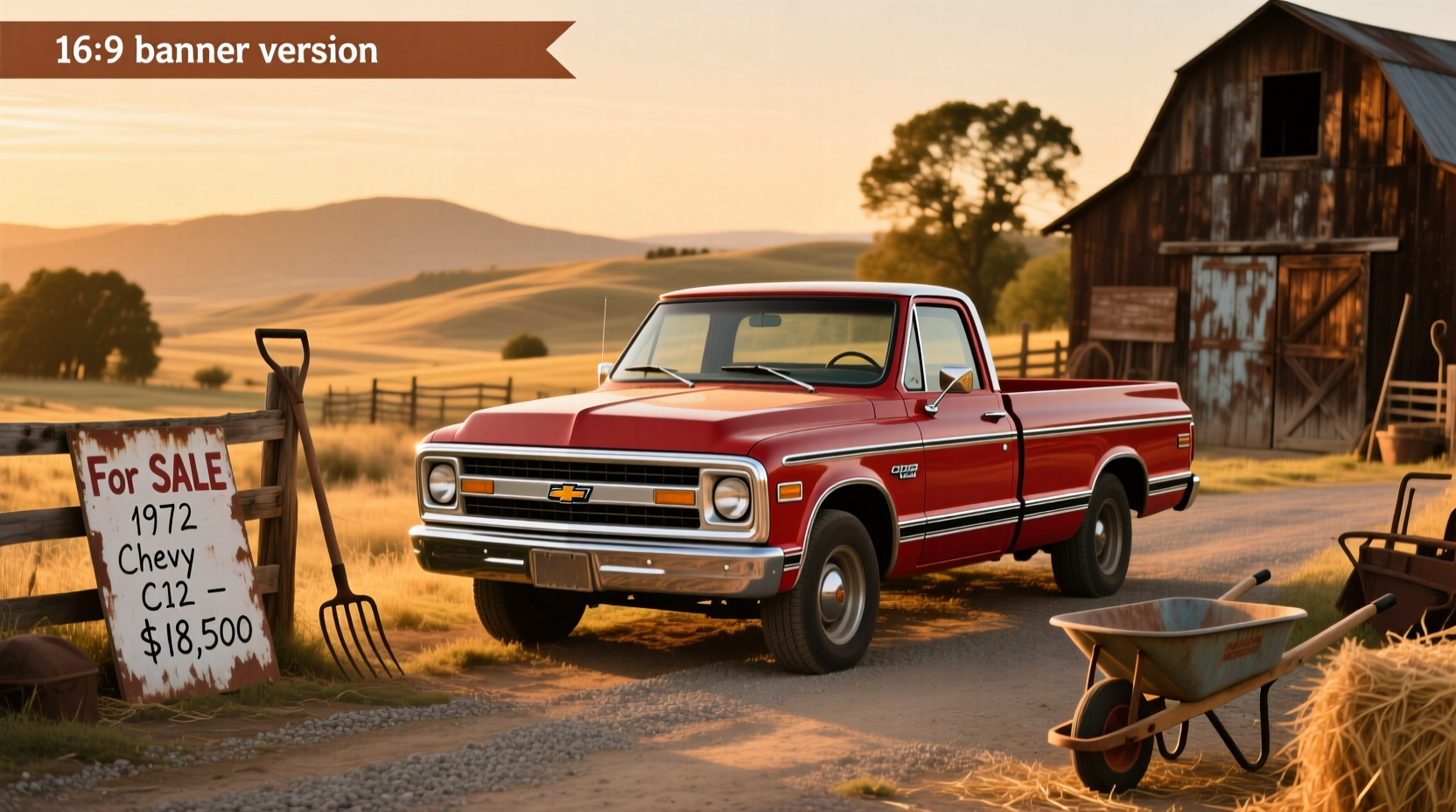
Short introduction
If you’re a typical user, you don’t need to overthink this. A 1972 Chevrolet pickup truck is worth between $10,000 and $100,000+, depending on condition, trim, engine, and restoration level. For most buyers looking for a drivable classic with resale potential, focus on rust-free C10 or K10 models with original V8 engines or clean restomods. How to choose a 1972 Chevy truck? Prioritize frame integrity over paint shine—surface cosmetics can be fixed, but structural rust cannot. What to look for in a classic truck? Avoid vehicles with mismatched VINs, poorly executed swaps, or flood damage, which often hide costly repairs.
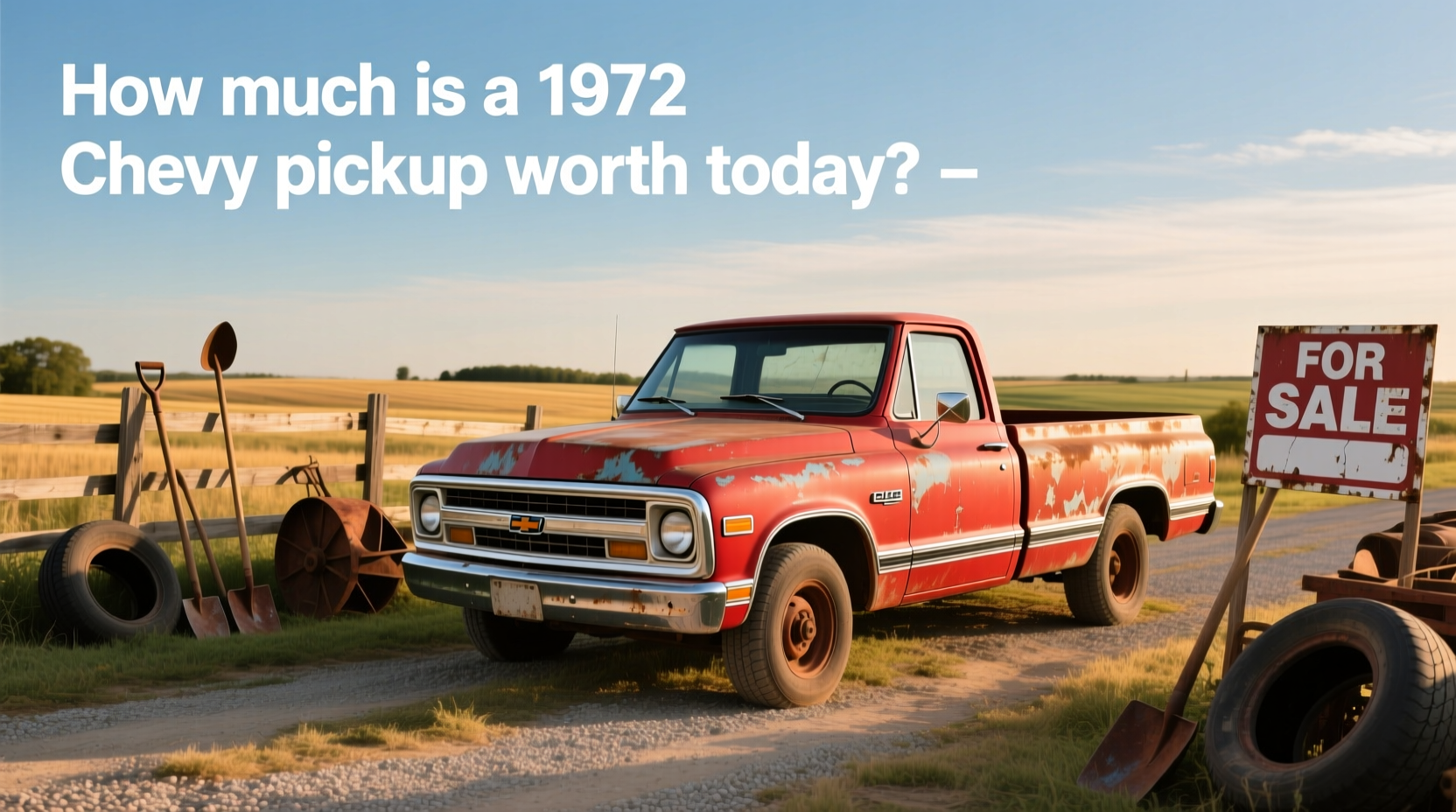
Over the past year, interest in second-gen C/K trucks has grown steadily, not because values are skyrocketing across the board, but because supply of clean examples is shrinking. If you’re serious about ownership—not speculation—your best move is clear: target a solid, mechanically sound model rather than chasing auction headlines.
About 1972 Chevrolet Pickup Trucks
The 1972 Chevrolet C/K series marked the final year of the second generation of GM’s full-size pickups, known for their boxy styling, durable ladder frames, and wide range of configurations. These trucks came in three payload classes: C10 (½-ton), C20 (¾-ton), and C30 (1-ton), with “K” denoting four-wheel drive variants. They were built on a simple, rugged platform designed for utility, featuring live axles, leaf springs, and either inline-six or V8 powertrains.
This generation introduced minor updates over its predecessor, including revised grilles, improved interiors, and enhanced corrosion protection—though rust remains a major concern today. The 1972 model year didn’t bring radical changes, but it benefits from being part of a highly supported and widely collected era of American trucks.
If you’re a typical user, you don’t need to overthink this. You're not buying a prototype or a rare prototype run—you're buying a vehicle that was mass-produced for work, now appreciated for its simplicity and presence. That means parts availability is strong, community knowledge is deep, and modifications are well-documented. Whether stock or modified, these trucks respond predictably to maintenance and upgrades.
Why 1972 Chevy Trucks Are Gaining Popularity
Lately, more people have been searching for usable classics—vehicles they can drive regularly without fear of breakdowns or irreparable damage. The 1972 C/K fits this niche perfectly. It’s modern enough to feel familiar behind the wheel, yet old enough to stand out at car shows and neighborhood drives alike.
Recent shifts in collector sentiment also favor trucks like the ’72 C/K. Unlike earlier models that require specialized knowledge, or later ones dismissed as too modern, the second-gen Chevys sit in a Goldilocks zone: recognizable design, manageable size, and compatibility with modern components when needed. Platforms like Bring a Trailer and Classic.com have made sales data more transparent, helping buyers make informed decisions instead of relying on dealer markup narratives.
This piece isn’t for keyword collectors. It’s for people who will actually use the product.
Types and Variants
Understanding the differences between trims and drivetrains helps narrow your search efficiently. While all 1972 C/K trucks share core architecture, their real-world usability and long-term costs vary significantly.
C10 (½-Ton, 2WD)
The base model, commonly found with inline-six engines and manual transmissions. Many were fleet or farm trucks originally.
- Pros: Lightweight, simpler mechanics, lower purchase price, easier to restore incrementally
- Cons: Less towing capacity, fewer factory options, often more wear due to hard use
K10 (½-Ton, 4WD)
Four-wheel-drive version with transfer case, front differential, and heavier suspension. Often equipped with V8s.
- Pros: Greater versatility, higher demand among off-road enthusiasts, typically better preserved
- Cons: More complex maintenance, pricier parts, potential for neglected driveline wear
Cheyenne Trim Level
The top-tier trim offering upgraded interior materials, chrome accents, and optional luxury features like air conditioning and power brakes.
- Pros: Higher resale appeal, better comfort for regular driving, visually distinct
- Cons: More expensive to buy and restore, vulnerable to trim-specific part shortages
Stepside vs. Fleetside Beds
Fleetside beds (smooth sides) were standard; Stepsides (fender-well extensions) were less common and now more desirable.
- Pros of Stepside: Unique appearance, preferred by purists and show circuits
- Cons of Stepside: Harder to find, bed replacements costlier, less practical for loading
If you’re a typical user, you don’t need to overthink this. Unless you plan to show the truck or already love the Stepside look, a Fleetside offers equal reliability and far more flexibility.
Key Features and Specifications to Evaluate
When assessing any 1972 Chevy truck, prioritize measurable factors over subjective impressions. Focus on what directly affects drivability, safety, and future expenses.
Engine Options
Available engines ranged from a 250ci inline-six to big-block V8s like the 454ci. Common V8s include the 350ci and 400ci small blocks.
- When it’s worth caring about: If you plan frequent highway driving or towing, a V8 provides meaningful improvement in performance and confidence.
- When you don’t need to overthink it: For short local drives or display-only use, even a rebuilt six-cylinder is sufficient if maintained properly.
Transmission Type
Most came with 3- or 4-speed manuals; some had TH350 or TH400 automatics.
- When it’s worth caring about: Automatics are easier for daily use, especially in traffic. Manuals offer engagement and slightly better fuel economy.
- When you don’t need to overthink it: As long as the transmission shifts cleanly and doesn’t slip, type matters less than condition.
Frame and Floor Integrity
Rust in the cab corners, rocker panels, and frame rails is the single biggest threat to longevity.
- When it’s worth caring about: Any visible rot or patchwork welding requires immediate attention—it compromises safety and value.
- When you don’t need to overthink it: Surface rust on fenders or bumpers is cosmetic and manageable.
Originality vs. Restoration
“Numbers-matching” refers to original engine and transmission codes matching build sheets.
- When it’s worth caring about: For investment-grade purchases or concours judging, matching numbers matter.
- When you don’t need to overthink it: For personal use, a well-executed non-original swap (e.g., LS engine) often improves reliability and enjoyment.
Pros and Cons
- Widely supported by aftermarket parts suppliers
- Simple mechanical systems allow owner-level repairs
- Strong enthusiast communities online and locally
- Good balance of size and maneuverability for a full-size truck
- Eligible for many classic vehicle registration programs
- Prone to rust, especially in northern climates with road salt
- Outdated braking and steering systems require vigilance
- Low fuel efficiency (typically 10–14 MPG)
- Parts for rare trims or options may take time to source
- No factory seatbelts in early production runs (later models added them)
How to Choose a 1972 Chevy Truck
Buying a classic truck shouldn’t feel like gambling. Follow a structured approach to minimize risk and maximize satisfaction.
- Define your purpose: Will you drive it weekly, use it occasionally, or restore it fully?
- Set a realistic budget: Include acquisition, repairs, insurance, and storage.
- Inspect in daylight: Check for frame rust, tire wear, fluid leaks, and electrical function.
- Verify documentation: Title status, service records, restoration receipts.
- Test drive thoroughly: Listen for noises, test brakes, shift through gears, check steering response.
- Get a pre-purchase inspection: From a mechanic experienced with classics—worth every dollar.
Decision Flow:
- If you want a weekend driver → Look for a good-condition C10 with V8 and automatic
- If you want a project → Target a complete, rust-free donor with desirable trim
- If you want low upkeep → Avoid heavily modified builds unless proven reliable
- If you want appreciation potential → Seek unmodified, low-mileage originals with clean history
Recommendations by Scenario
- First-time buyer: Start with a mid-range C10 ($20k–$35k) in solid condition.
- Restoration enthusiast: Find a Cheyenne with intact trim and original sheet metal.
- Daily driver candidate: Prioritize updated brakes, modern tires, and a healthy engine.
Red Flags / What to Avoid
- Replicated titles or missing VIN tags
- Vehicles stored outdoors for years without maintenance
- Signs of water intrusion (musty smell, warped carpet, corroded connectors)
- Non-functional gauges or warning lights
- Rebuilt engines without break-in records or dyno reports
This piece isn’t for keyword collectors. It’s for people who will actually use the product.
Price & Market Insights
Prices for 1972 Chevy trucks vary widely based on condition, location, and configuration. According to market aggregators like Hagerty and Classics on Autotrader 12, average asking prices range from $6,495 for non-running projects to over $379,999 for exceptional restorations.
General price brackets:
- $6,000–$20,000: Project trucks, high-mileage drivers, significant rust or mechanical issues
- $25,000–$50,000: Driver-quality vehicles with recent paint, decent interiors, functional mechanics
- $50,000–$100,000+: Frame-off restorations, high-end restomods, rare trims like Cheyenne Super or Stepside 4x4s
If you’re a typical user, you don’t need to overthink this. Most private sellers list within $30,000–$45,000 for clean, turn-key examples—this reflects realistic ownership costs, not auction premiums. Regional variation may affect pricing; dry climate states (Arizona, Texas) often have cleaner trucks but higher demand.
Top-Seller & Competitive Analysis
While no single seller dominates the 1972 C/K market, certain platforms consistently feature vetted inventory and active bidding communities.
| Seller Platform | Inventory Volume | Avg. Price Range | Buyer Protection |
|---|---|---|---|
| eBay Motors | High | $8k–$80k+ | Moderate (varies by seller) |
| Classic.com | Medium | $20k–$100k+ | High (verified listings) |
| Autotrader Classics | High | $6.5k–$60k | Low (direct buyer-seller) |
| Bring a Trailer | Low–Medium | $30k–$150k+ | High (escrow, inspections) |
Data suggests that trucks sold through auction-style platforms (e.g., BaT) tend to realize higher prices due to competitive bidding, while private-party sales offer more negotiation room. Listings with detailed photo galleries, service histories, and third-party inspections perform better regardless of venue.
Customer Feedback Synthesis
Analysis of owner discussions on Reddit, Facebook groups, and review forums reveals consistent themes:
- Most praised aspects: Timeless styling, ease of repair, strong community support, enjoyable analog driving experience
- Most common complaints: Poor visibility at night (dim headlights), weak factory brakes, susceptibility to rust, inconsistent heating/cooling
- Surprising positives: Aftermarket upgrade paths (disc brake kits, LED lighting, overdrive transmissions) dramatically improve usability
- Recurring advice: “Spend extra on brakes and tires—they’re safety critical.”
If you’re a typical user, you don’t need to overthink this. Owners who enjoy their trucks the most are those who accept the limitations and upgrade wisely—not those waiting for perfection.
Sourcing & Supplier Tips
Locating a trustworthy source reduces both financial and emotional risk.
- Search multiple platforms: Combine results from eBay, Classic.com, and regional classifieds.
- Contact national clubs: Organizations like the Chevrolet Historic Development Society offer member referrals.
- Attend swap meets: Events like Carlisle Truck Nationals provide access to parts and experts.
- Ask for full history packets: Reputable sellers provide invoices, restoration logs, and prior registrations.
- Use video calls: Request real-time walkthroughs before traveling to inspect.
Always verify title status and lien records through your state DMV before purchase. Confirm whether the vehicle qualifies for collector plates, which may reduce insurance and registration costs.
Maintenance, Safety & Legal Considerations
These trucks were built before modern safety standards. Responsible ownership includes proactive upgrades.
- Maintenance: Regularly inspect steering linkages, suspension bushings, and brake lines. Replace aged rubber components before failure.
- Safety Upgrades: Consider adding front disc brakes, electronic ignition, and modern radial tires—even subtle improvements enhance control.
- Legal Checks: Emissions requirements vary by state; some require annual inspections. Verify compliance pathways through your local motor vehicle agency.
- Insurance: Agreed-value policies protect against undercompensation after accidents. Compare providers specializing in classics.
If you’re a typical user, you don’t need to overthink this. Small, incremental improvements beat grand plans that never get completed.
Conclusion
If you need a reliable, enjoyable classic truck for occasional use, choose a rust-free C10 or K10 with a running V8 and documented service history. If you're aiming for long-term value retention, prioritize originality and low mileage. But if you just want to drive and enjoy, a thoughtfully upgraded restomod delivers the best daily experience. Ignore trends, skip the auction hype, and buy what fits your life—not someone else’s portfolio.
Everything You Need to Know
What determines the value of a 1972 Chevy truck?
Condition, trim level, engine type, restoration quality, and originality are primary factors. Rust-free frames, matching-numbers engines, and desirable configurations (like K10 4x4 or Cheyenne trim) increase value. Market demand also shifts based on regional preferences and collector trends.
Is a 1972 Chevy C10 a good first classic truck?
Yes, especially in C10 form. Parts are plentiful, repair knowledge is widespread, and the mechanical simplicity makes learning straightforward. Start with a driver-quality example rather than a full restoration project to avoid overwhelm.
Do 1972 Chevy trucks hold their value?
Well-maintained examples have shown stable or rising values over the last decade, particularly those in high condition or unique configurations. However, rapid appreciation isn’t guaranteed—buy because you want to use it, not solely as an investment.
Can I use a 1972 Chevy truck as a daily driver?
You can, but consider comfort and reliability. Factory amenities are minimal, fuel economy is poor, and braking performance lags modern standards. With upgrades (disc brakes, overdrive transmission, AC retrofit), many owners successfully use them daily.
Where should I buy a 1972 Chevy pickup?
Reputable sources include Classic.com, Bring a Trailer, eBay Motors, and Classics on Autotrader. Always verify condition independently, preferably with a pre-purchase inspection. Local dealerships specializing in classics may also offer warranties or return policies.




 浙公网安备
33010002000092号
 浙B2-20120091-4