
If you’re restoring a classic compact from the early ’70s, the 1972 Ford Pinto hatchback offers simple mechanics and nostalgic styling. How to choose one? Focus on engine type—either the base 1.6L (around 54–62 hp) or optional 2.0L OHC (86 hp)—and verify if original powertrain components remain. Over the past year, interest in pre-midsize era American economy cars has grown, especially among collectors seeking affordable entry points. If you’re a typical user, you don’t need to overthink this. Most daily drivers won’t feel a meaningful difference between the two engines unless pushing highway speeds regularly. Watch for rust in floor pans and frame rails—a common failure point that outweighs minor performance gaps.
About the 1972 Ford Pinto
The 1972 Ford Pinto was part of Ford’s response to rising demand for fuel-efficient compact vehicles amid shifting consumer preferences and early emissions regulations. Introduced in 1971, the Pinto competed with imports like the Toyota Corolla and Volkswagen Beetle. It came in multiple body styles, including coupe, sedan, and hatchback—the latter offering practical cargo access rare in its class at the time. The hatchback model combined retro-futuristic lines with utilitarian function, appealing to young buyers and budget-conscious families alike.
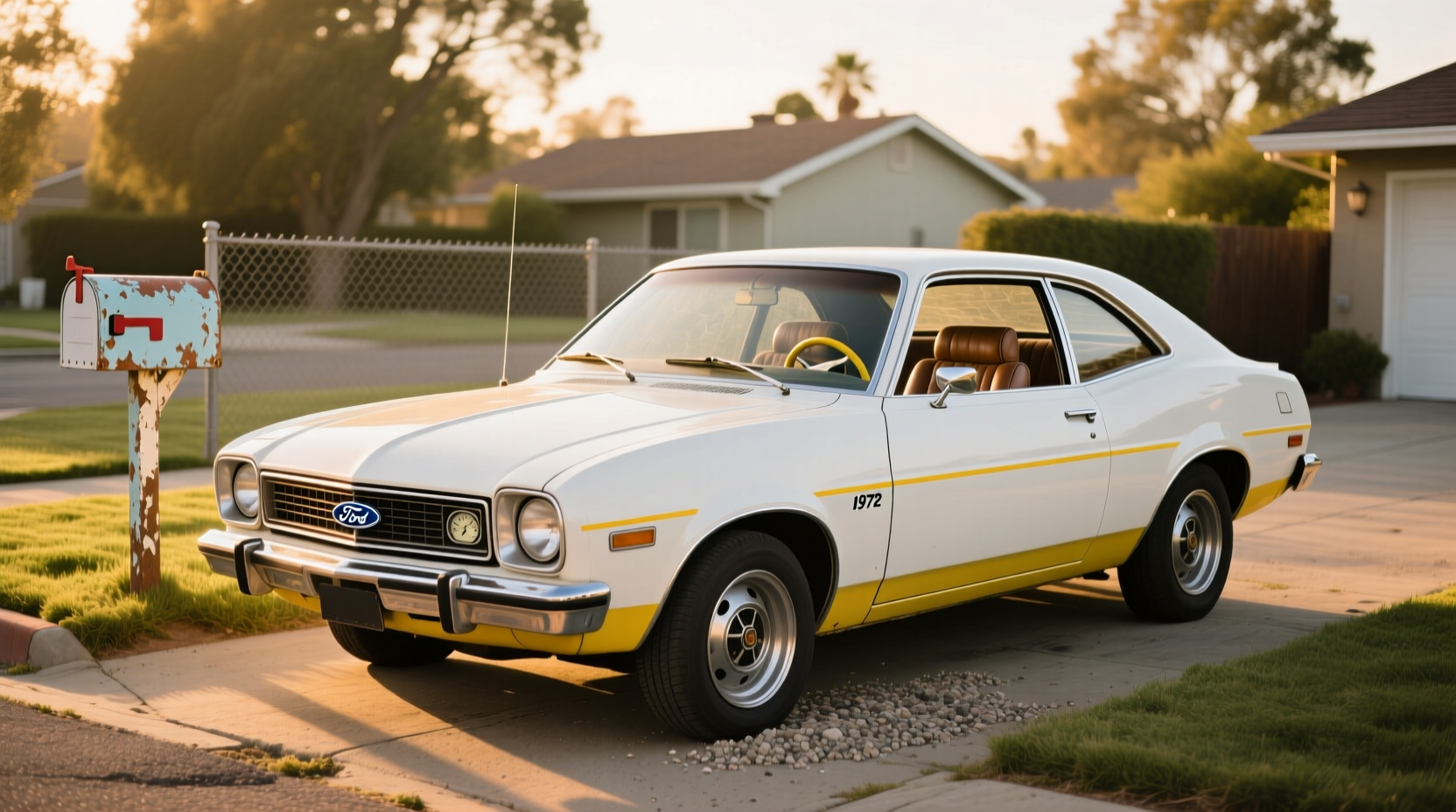
Despite its small footprint, the Pinto featured a unibody construction and independent front suspension, contributing to predictable handling for its era. Its interior prioritized simplicity over comfort, with vinyl seats and minimal sound insulation. While not designed for performance, it represented an accessible form of personal mobility during a transformative period in automotive history.
Why the 1972 Pinto Is Gaining Popularity
Lately, vintage American compacts have seen renewed attention due to their mechanical simplicity and low acquisition cost. Unlike modern vehicles burdened with complex electronics, the 1972 Pinto can be maintained with basic hand tools and widely available parts. Recently, online communities focused on analog driving experiences and DIY restoration have elevated interest in models like the Pinto hatchback.
This resurgence isn’t driven by nostalgia alone. For new collectors, the Pinto presents a forgiving platform to learn foundational skills—engine tuning, rust repair, electrical diagnostics—without risking high-value investments. Additionally, emissions rules in some regions still exempt vehicles manufactured before 1975, making them easier to register than later models. If you’re a typical user, you don’t need to overthink this. Entry-level classics are now as much about learning as they are about ownership.
Types and Variants
The 1972 Pinto offered several configurations, but only two engine options were available in the U.S. market:
1.6L Kent Inline-4 (Base Engine)
- Pros: Simpler design, lower parts cost, adequate for city driving
- Cons: Lower output (~54–62 hp), less responsive acceleration, harder to maintain at sustained highway speeds
2.0L OHC Inline-4 (Optional Upgrade)
- Pros: Higher horsepower (~86 hp), smoother operation, better hill climbing
- Cons: More complex valvetrain, slightly higher maintenance needs, rarer today
Transmission choices included a four-speed manual (standard) or three-speed automatic (optional). Body styles ranged from two-door sedan to station wagon, but the hatchback stood out for versatility. This piece isn’t for keyword collectors. It’s for people who will actually use the product.
Key Features and Specifications to Evaluate
When assessing a 1972 Pinto, focus on these measurable factors:
| Feature | 1.6L Model | 2.0L Model |
|---|---|---|
| Horsepower (SAE Net) | ~54–62 hp | ~86 hp |
| Engine Type | Kent SOHC | OHC Inline-4 |
| Compression Ratio | Low (LC variant) | Moderate |
| Fuel System | Single-barrel carburetor | Single-barrel carburetor |
| Top Speed (Est.) | 85 mph | 95 mph |
| 0–60 mph (Est.) | 14–16 sec | 11–13 sec |
When it’s worth caring about: Horsepower differences matter most if you plan regular highway use or towing. The 2.0L provides noticeably better passing ability and reduced engine strain.
When you don’t need to overthink it: For short commutes or show appearances, both engines perform similarly under light loads. If you’re a typical user, you don’t need to overthink this. Real-world drivability often depends more on tune-up quality than rated output.
Pros and Cons
- Simple mechanical systems allow owner-level repairs
- Affordable purchase price compared to other 1970s icons
- Hatchback layout offers usable cargo space
- Parts availability remains decent thanks to enthusiast support
- Lightweight chassis enhances fuel efficiency (for era)
However, known limitations persist:
- Poor structural rigidity by modern standards
- Minimal safety features (no airbags, weak crumple zones)
- Rust-prone floorboards and rocker panels
- Outdated braking system (drum rear, manual assist)
- Lower resale value than muscle cars or luxury classics
How to Buy a 1972 Ford Pinto Hatchback
Follow this step-by-step checklist to avoid costly oversights:
Step-by-Step Checklist
- Verify VIN and trim code: Confirm originality and engine match using factory data tags.
- Inspect for rust: Check floor pans, trunk pan, and frame rails—common corrosion sites.
- Test drive: Listen for knocking, check clutch engagement, assess transmission smoothness.
- Review service history: Look for evidence of timing chain or head gasket work.
- Confirm title status: Ensure clean title; beware salvage or flood records.
Decision Flow
If your goal is daily driving, prioritize the 2.0L engine and recent mechanical refresh. For restoration projects, any solid-body example may suffice—even with non-running engine. Budget-focused buyers should accept cosmetic flaws but insist on structural integrity.
Recommendations by Scenario
- First-time restorer: Choose a complete 1.6L model with intact interior.
- Weekend driver: Seek a well-maintained 2.0L with upgraded exhaust and ignition.
- Investment potential: Limited—focus instead on enjoyment and usability.
Price & Market Insights
As of late 2024, average asking prices range from $3,000 to $9,000 depending on condition, location, and engine type. Fully restored 2.0L hatchbacks may reach $12,000 in premium markets. However, values may vary by region/model/seller—especially where climate affects rust levels. Private-party sales dominate; few dealers specialize in Pintos. Always check seller reputation and request third-party inspection if buying sight-unseen.
Top-Seller & Competitive Analysis
The Pinto faced direct competition from the AMC Gremlin, Chevrolet Vega, and Dodge Colt. While each offered similar size and price positioning, the Pinto distinguished itself with standard front disc brakes and wider dealer network.
| Model | Engine Output | Weight | Notable Weakness |
|---|---|---|---|
| Ford Pinto (2.0L) | 86 hp | 2,200 lbs | Floor rust |
| Chevrolet Vega | 70–85 hp | 2,300 lbs | Aluminum block durability |
| AMC Gremlin | 76–95 hp | 2,400 lbs | Rear suspension noise |
| Dodge Colt | 60–70 hp | 2,100 lbs | Import reliability myths |
The Pinto’s balance of weight and simplicity gives it slight edge in long-term ownership ease. Still, none command strong appreciation. If you’re a typical user, you don’t need to overthink this. These cars are best valued for fun, not finance.
Customer Feedback Synthesis
Based on owner forums and marketplace reviews, recurring themes emerge:
- Positive: “Easy to work on,” “great first project car,” “turns heads at cruise nights.”
- Negative: “Rusted beyond repair,” “parts took months to find,” “feels unsafe at high speed.”
Satisfaction correlates strongly with buyer expectations. Those who treat the Pinto as a functional antique report higher fulfillment than those expecting modern performance or reliability.
Sourcing & Supplier Tips
Locate used examples through enthusiast classifieds, regional swap meets, or online auctions. Reputable suppliers for reproduction parts include specialized vintage Ford vendors—not general auto chains. Before purchasing, verify compatibility with 1972-specific mounting points and wiring harnesses. Consider joining the Pinto Club of America for networking and technical guidance. This piece isn’t for keyword collectors. It’s for people who will actually use the product.
Maintenance, Safety & Legal Considerations
Routine upkeep includes carburetor adjustments, brake fluid flushes, and suspension lubrication. Due to age, inspect fuel lines and master cylinder regularly. Safety upgrades—such as seatbelt retrofitting or electronic turn signals—are legal in most areas but confirm local regulations before modification. While original equipment lacked many modern safeguards, responsible driving compensates significantly. Verify compliance through state DMV resources or historic vehicle associations.
Conclusion
If you need a manageable, mechanically transparent classic for occasional drives or restoration practice, the 1972 Ford Pinto hatchback—with either engine—is a reasonable pick. Choose the 2.0L model if you frequently drive on highways or carry passengers. Opt for the 1.6L if minimizing complexity and cost is your priority. If you’re a typical user, you don’t need to overthink this. Prioritize condition over specs, and enjoy the process.




 浙公网安备
33010002000092号
 浙B2-20120091-4