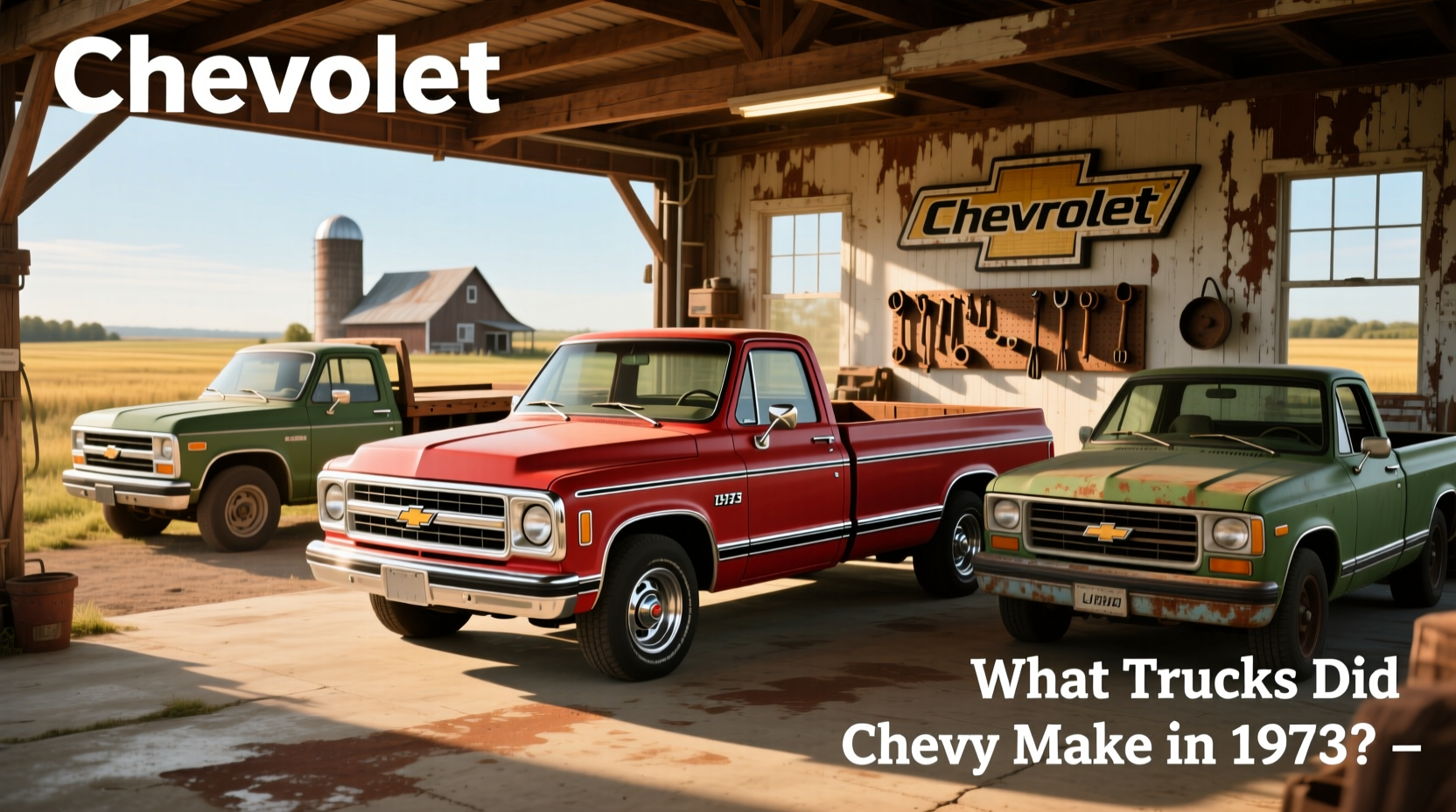
Short introduction
If you’re looking at a 1973 Chevrolet pickup truck, here’s what matters: it’s the first year of the third-generation C/K series—commonly called the “Square Body.” This model came in 1/2-ton, 3/4-ton, and 1-ton variants, with two-wheel drive (C-Series) or four-wheel drive (K-Series). How to choose a classic Chevy truck? Focus on trim level (Custom, Custom Deluxe, Cheyenne, or Cheyenne Super), body style (stepside vs. fleetside, regular vs. crew cab), and drivetrain condition. Over the past year, interest in these trucks has grown due to rising demand for restorable classics with simple mechanics and strong aftermarket support.
If you’re a typical user, you don’t need to overthink this. Most buyers fall into two camps: those wanting a driver-quality restoration project and those seeking a show-ready piece. The sweet spot is a well-documented 1973 C10 or K10 with original sheet metal and a solid frame. Avoid rusted floors, patchwork welds, and mismatched VIN tags. What to look for in a 1973 Chevy pickup? Prioritize structural integrity over cosmetic details—everything else can be replaced. If you’re a typical user, you don’t need to overthink this.
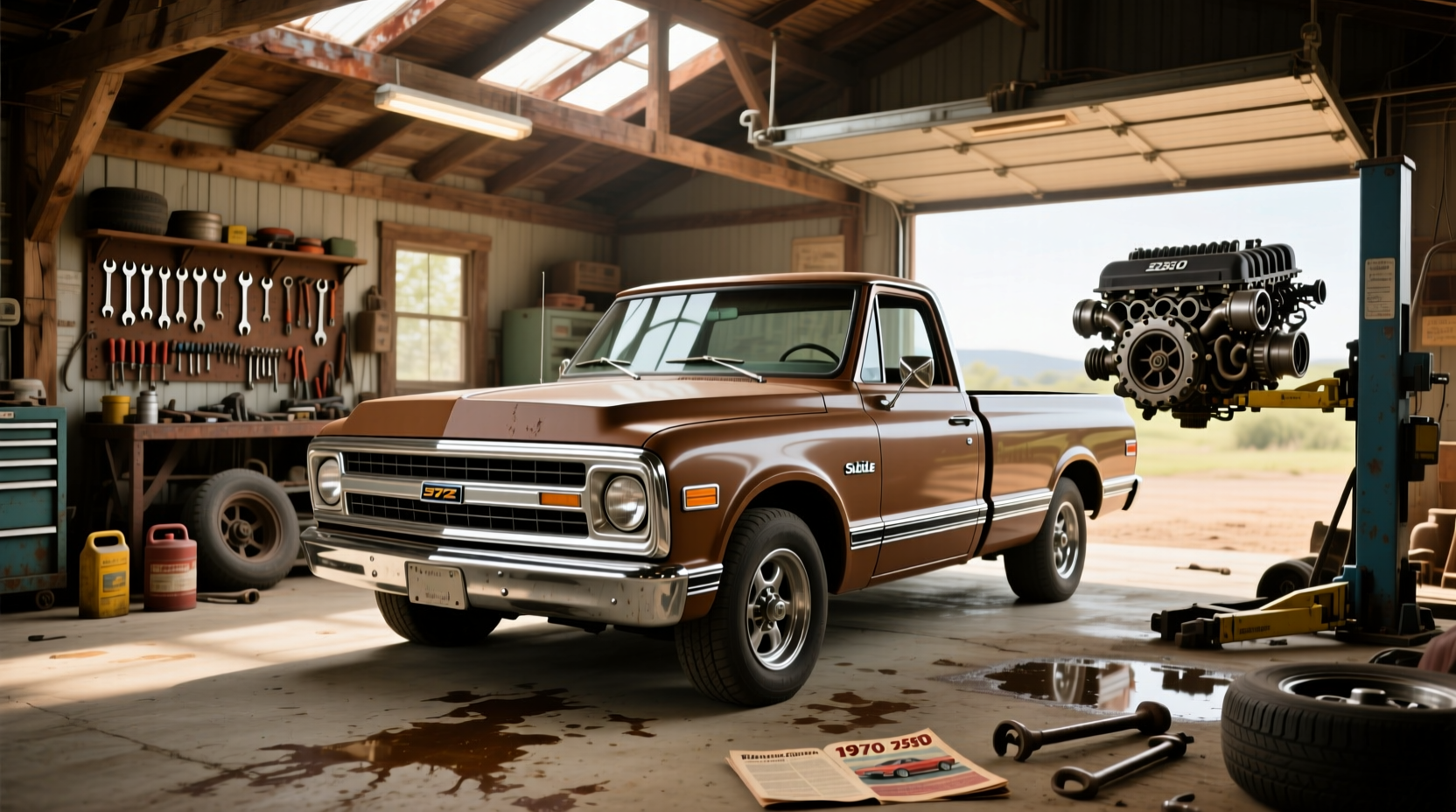
About 1973 Chevrolet Pickup Trucks
The 1973 model year marked a turning point for Chevrolet’s full-size pickups. It introduced the third-generation C/K series—the start of the “Square Body” era that would last through 1987. Though still boxy by modern standards, this generation was the first GM truck designed using computer-aided modeling and wind tunnel testing, aimed at improving aerodynamics and ride comfort.
Chevrolet offered multiple configurations under the C/K umbrella. The "C" designation meant two-wheel drive; "K" meant four-wheel drive. These were available in three payload classes: 1/2-ton (C10/K10), 3/4-ton (C20/K20), and 1-ton (C30/K30). For the first time, a factory four-door crew cab was available, expanding utility for families and workers needing rear passenger access.
This generation also saw the debut of the dual-rear-wheel (DRW) option on 1-ton models—nicknamed “Big Dooley”—giving owners increased load capacity and stability. Trim levels were clearly tiered: Custom (base), Custom Deluxe (mid), Cheyenne (upgraded personal-use trim), and Cheyenne Super (top-tier luxury variant).
Why 1973 Chevy Trucks Are Gaining Popularity
Lately, vintage truck enthusiasm has shifted toward vehicles that balance authenticity with usability. The 1973 Chevrolet pickup fits perfectly: it predates complex emissions systems and electronic controls, yet offers more interior comfort than earlier models. Its mechanical simplicity makes repairs accessible to DIYers, while its clean lines appeal to traditionalists.
Recently, online communities and social media have spotlighted restored Square Bodies as ideal weekend drivers or light haulers. Unlike high-strung muscle cars, these trucks offer practicality—bed space, towing ability, and real-world durability. Restoration parts are widely available from niche suppliers and reproduction manufacturers, reducing long-term ownership friction.
This piece isn’t for keyword collectors. It’s for people who will actually use the product.
Types and Variants
| Model | Drive Type | Tonnage | Pros | Cons |
|---|---|---|---|---|
| C10 / K10 | 2WD / 4WD | 1/2-ton | Lightweight, easy to restore, abundant parts | Limited towing/hauling vs heavier models |
| C20 / K20 | 2WD / 4WD | 3/4-ton | Better payload, stronger axles, good off-road potential | Heavier steering without power assist |
| C30 / K30 | 2WD / 4WD | 1-ton | Dually option, highest towing capacity, rugged build | Poor fuel economy, wide turning radius, rare today |
| Crew Cab (all tonnages) | 2WD / 4WD | All | Four full doors, family-friendly, unique collector appeal | Rare, often modified, higher price tag |
Trim Levels Explained
- Custom: Base model. Vinyl seats, minimal chrome, basic instrumentation. When you don’t need to overthink it: this is fine for a work truck rebuild.
- Custom Deluxe: Added bright trim, upgraded door panels, better gauges. Worth caring about if matching-numbers accuracy matters.
- Cheyenne: Carpeting, headliner insulation, courtesy lights. A step toward car-like comfort.
- Cheyenne Super: Full woodgrain trim (on some), premium upholstery, optional power accessories. When it’s worth caring about: for concours-level restorations.
Key Features and Specifications to Evaluate
When assessing a 1973 Chevy pickup, focus on five core areas:
1. Frame and Structural Integrity
Rust is the biggest threat. Check the frame rails, cab corners, floor pans, and bed mounts. Surface rust can be treated, but perforated metal requires replacement. If you’re a typical user, you don’t need to overthink this—just verify no major structural rot exists.
2. Drivetrain Configuration
Engines ranged from inline-sixes to big-block V8s. Common options included:
- 250ci I6 (economical, low power)
- 307ci V8 (smooth, common in California models)
- 350ci V8 (ideal balance of power and parts availability)
- 400ci/454ci V8 (rare, high performance, costly to maintain)
When it’s worth caring about: if you plan to tow or modify. Otherwise, a 350ci with TH350 is a reliable combo. When you don’t need to overthink it: assume most running examples have been updated or rebuilt.
3. Axle Ratios and Towing Capacity
Axle ratios varied by engine and application. Lower ratios (e.g., 3.08:1) favored highway driving; higher (4.10:1+) helped off-road or hauling. Original window stickers or cowl tags can confirm specs. If no documentation exists, check axle tube stamps.
4. Body Style: Fleetside vs. Stepside
Fleetside beds have smooth sides—easier to maintain and more common. Stepside beds feature fender flares extending outside the bed rails—visually striking but harder to keep clean. When it’s worth caring about: aesthetics matter for shows. When you don’t need to overthink it: fleetside is more practical for daily use.
5. Interior Condition and Options
Look for intact dashboards, functional gauges, and original trim. Missing emblems or cracked plastic are fixable. Aftermarket radios or seat swaps aren’t red flags unless authenticity is your goal.
Pros and Cons
- Solid, predictable engineering with decades of proven reliability
- Extensive aftermarket support for restoration and upgrades
- Versatile: usable as a daily driver, hauler, or show truck
- Simple mechanical systems—accessible for home mechanics
- Prone to rust, especially in northern climates with road salt
- Low fuel efficiency (10–15 mpg typical)
- Heavy steering and braking without modern assists
- Increasing prices for clean, unmodified examples
How to Choose a 1973 Chevrolet Pickup Truck
Follow this checklist when evaluating a purchase:
Step-by-Step Checklist
- Inspect for rust—especially under carpet, behind wheel wells, and along frame seams.
- Verify VIN and trim tag match; mismatched numbers reduce value.
- Start the engine cold—listen for knocks, smoke, or hesitation.
- Test all lights, gauges, and accessories.
- Lift the bed if possible to inspect frame and fuel tank.
- Check for alignment between doors, hood, and bed gaps.
- Review service history—if none, assume worst-case maintenance.
Decision Flow
- Need a driver? → Prioritize mechanical soundness over cosmetics.
- Restoring for show? → Seek original paint codes, correct badging, and factory options.
- On a budget? → Consider a Custom model with a solid frame—even if rough outside.
- Want 4x4 capability? → Confirm transfer case operation and front differential health.
Recommendations by Scenario
- First-time owner: Look for a 1973 C10 Fleetside with 350ci V8 and automatic transmission. Easy to drive, plentiful parts.
- Off-road builder: Target a K20 with high-ratio gears and leaf-spring suspension—good base for lift kits.
- Investment-focused: Find a low-mileage Cheyenne Super with original interior and documented history.
Red Flags / What to Avoid
- Rust holes in cab floor or rocker panels
- Replaced firewall or patched frame sections
- Inconsistent VIN and trim tags
- Engine swap without supporting documentation
- Overpriced listings citing “rarity” without proof
Price & Market Insights
Prices vary significantly based on condition, location, and configuration. As of 2024, a driver-quality 1973 C10 may sell for $15,000–$25,000 USD. Restored examples range from $35,000 to $60,000+, especially for Cheyenne Super trims with rare options. Four-wheel-drive and dually models command premiums due to lower production volume.
Region affects pricing: dry southwestern U.S. states tend to have cleaner trucks (less rust), increasing baseline values. Coastal or northern regions may offer lower prices but carry higher risk of corrosion. Always check seller reputation, return policy (if buying online), and local title laws before transferring ownership.
Top-Seller & Competitive Analysis
The 1973 Chevrolet C/K competed directly with the Ford F-Series and Dodge D-Series. While Ford led in sales volume, Chevy’s new “Rounded Line” design emphasized improved ergonomics and quieter cabins. GM marketed the Square Body as more refined than its predecessor—positioning it between utilitarian work gear and lifestyle vehicle.
| Truck Model (1973) | Key Strength | Weakness | Aftermarket Support |
|---|---|---|---|
| Chevrolet C/K | Strong V8 options, wide cabin, crew cab availability | Prone to frame rust | ★★★★★ |
| Ford F-Series | Durability, resale popularity, simple layout | Fewer factory comfort features | ★★★★☆ |
| Dodge D-Series | Aggressive styling, torsion-bar suspension (light models) | Lower production numbers, fewer parts today | ★★★☆☆ |
Customer Feedback Synthesis
Based on owner forums, auction reviews, and community discussions:
- Most praised: Ease of repair, comfortable seating (for era), availability of reproduction trim and badges.
- Common complaints: Wind noise at speed, vague steering, brake fade during extended downhill driving.
- Surprising positives: Many report excellent heater performance and radio clarity—even with factory AM units.
- Owner sentiment: High satisfaction among DIY restorers; mixed feelings from buyers who underestimated restoration costs.
Sourcing & Supplier Tips
Buy from private sellers when possible—they often provide more honest disclosures than dealers. If purchasing online, request a third-party inspection via services like Lemon Squad or Vehicle Inspection Portal. Verify title status (clean, salvage, rebuilt) through state DMV records.
For parts, reputable suppliers include LMC Truck 1 and Classic Parts 2. Both offer OEM-style reproductions for sheet metal, trim, and hardware. Join enthusiast clubs like the Tri-Five Forum or Squarebody subreddit for leads on rare components.
Maintenance, Safety & Legal Considerations
These trucks lack modern safety features: no airbags, ABS, or crumple zones. Drive defensively and consider upgrading brakes to disc conversions. Periodically inspect steering linkages and suspension bushings—failure can lead to loss of control.
Maintenance is straightforward but labor-intensive. Oil changes, carburetor adjustments, and tune-ups follow vintage procedures. Cooling system upkeep is critical—older radiators clog easily.
Legal compliance varies by region. Some areas require emissions testing or safety inspections for registration. Confirm local requirements before purchase. Modifications (lifts, lighting) may affect street legality—verify regulations beforehand.
Conclusion
If you need a mechanically simple, restorable full-size truck with strong community backing, the 1973 Chevrolet C/K is a logical choice. For casual drivers, a C10 with a 350ci engine and automatic transmission offers the best blend of usability and affordability. Enthusiasts aiming for authenticity should prioritize original trim tags and matching numbers. If you’re a typical user, you don’t need to overthink this—focus on structure, drivetrain, and provenance, and you’ll make a sound decision.
Everything You Need to Know
What trucks did Chevy make in 1973?
Chevrolet produced the third-generation C/K series in 1973, available as C (2WD) and K (4WD) models in 1/2-ton, 3/4-ton, and 1-ton configurations. Body styles included regular cab, crew cab, fleetside, and stepside. Trim levels were Custom, Custom Deluxe, Cheyenne, and Cheyenne Super.
What engine options came in a 1973 Chevy pickup?
Available engines included the 250ci inline-six, 307ci V8, 350ci V8, 400ci V8, and the high-performance 454ci V8. Transmission choices were 3- or 4-speed manual or Turbo Hydra-Matic 350 automatic. Engine availability depended on model and region.
How much is a 1973 Chevy pickup worth today?
Values vary widely. Driver-quality trucks sell for $15,000–$25,000. Fully restored models range from $35,000 to over $60,000, especially for top trims or rare configurations like dually or crew cab. Prices may vary by region, condition, and market demand.
Are 1973 Chevy trucks reliable for daily driving?
Yes, if properly maintained. Their mechanical simplicity makes them dependable, though they lack modern conveniences and fuel efficiency. Regular oil changes, brake checks, and cooling system maintenance are essential. Many owners use them as weekend drivers or light-duty haulers.
Where can I find parts for a 1973 Chevrolet pickup?
Specialty suppliers like LMC Truck and Classic Parts offer reproduction and OEM-equivalent components. Online marketplaces and salvage yards also provide used parts. Enthusiast forums and Facebook groups often list hard-to-find items. Always verify compatibility with your model and year before purchasing.




 浙公网安备
33010002000092号
 浙B2-20120091-4