
If you’re looking at a 1980 Ford pickup truck, start with this: most buyers should focus on the F-150 or F-250 in standard cab form with the 5.8L V8. These models balance parts availability, drivability, and collector interest better than rarer trims. When choosing a 1980 Ford pickup, prioritize rust condition over mileage—surface corrosion under fenders and frame rails is common and can be expensive to fix. If you’re a typical user, you don’t need to overthink this. The seventh-generation F-Series (1980–1986) was built for durability, not complexity.
What to look for in a 1980 Ford pickup? Focus on three things: cab configuration, drivetrain reliability, and body integrity. Over the past year, demand for pre-OBS (Old Body Style) trucks has risen slightly among DIY restorers and rural utility users. This isn’t due to performance—it’s about mechanical simplicity and ease of repair. Recently, more buyers are shifting from late-model used trucks to early classics because older electronics mean fewer diagnostic headaches. But not all 1980 Ford trucks are equal. Know the differences before you commit.
About the 1980 Ford Pickup Truck
The 1980 Ford pickup marked the debut of the seventh-generation F-Series, a major redesign that introduced a slimmer, more aerodynamic profile compared to its boxy predecessor 1. This generation ran from 1980 to 1986 and included multiple configurations: F-100, F-150, F-250, F-350, and the Bronco SUV. It was also the first year Ford offered the SuperCab extended cab option, which added rear-hinged jump seats for occasional passengers.
The design update included a new front grille, improved interior ergonomics, and independent front suspension (IFS) on four-wheel-drive models—an upgrade that enhanced ride comfort without sacrificing off-road capability. The 1980 model year also saw the continuation of the compact Ford Courier, aimed at buyers needing lighter-duty hauling.
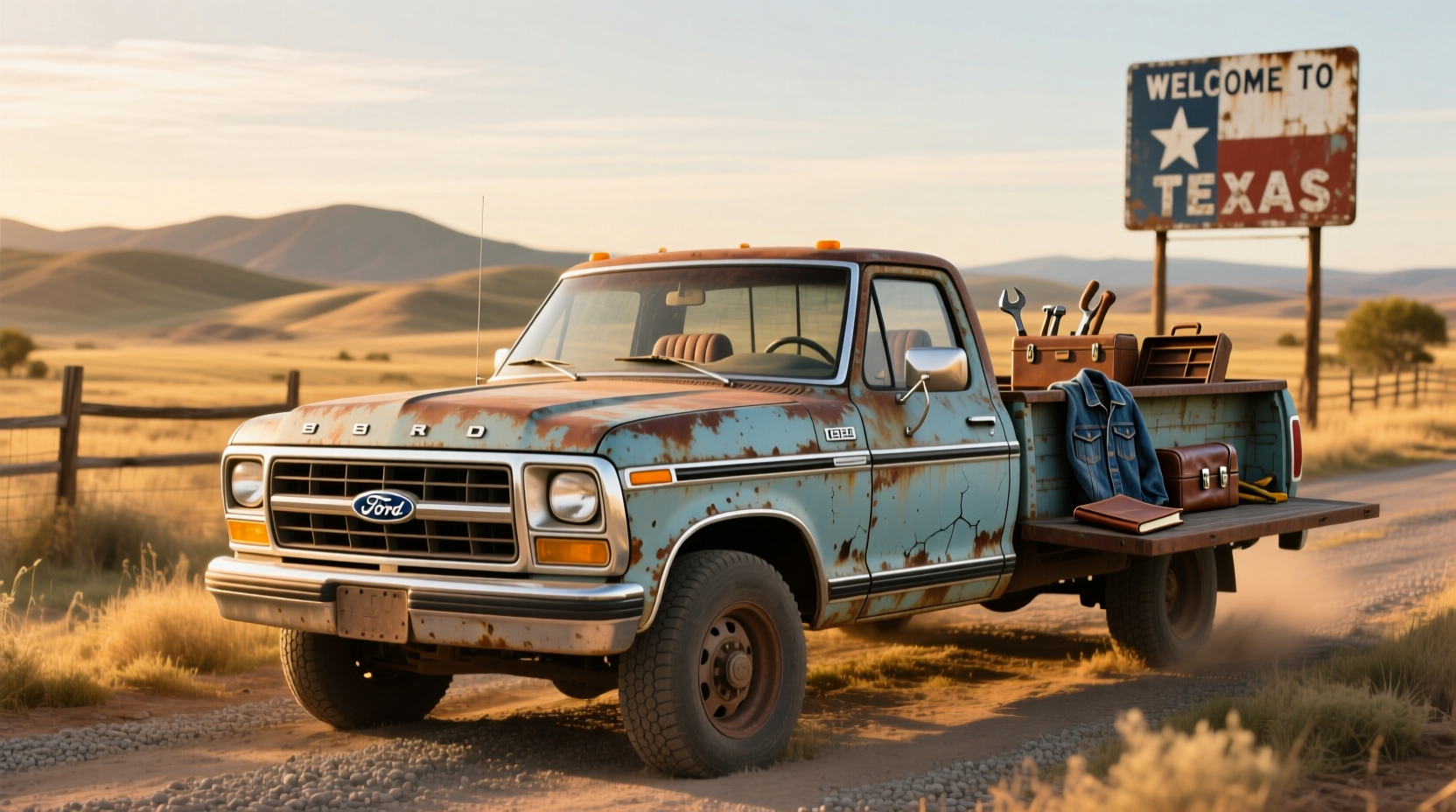
Why the 1980 Ford Pickup Is Gaining Popularity
Lately, there’s been a quiet shift in classic truck interest. Over the past year, search volume and forum activity around 1980–1986 F-Series pickups have increased—not because they’re rare, but because they hit a sweet spot between usability and nostalgia. Unlike earlier models with outdated engineering or later ones burdened by emissions systems, the 1980 F-Series offers simple carbureted engines, straightforward wiring, and widely available aftermarket support.
This piece isn’t for keyword collectors. It’s for people who will actually use the product.
For rural owners, farmers, and weekend mechanics, these trucks are practical: easy to tow with, simple to maintain, and capable of handling moderate loads. Enthusiasts appreciate the clean lines of the early OBS (Old Body Style) era before chrome trim became excessive. And unlike high-dollar muscle cars, many 1980 Ford pickups remain affordable—though prices vary significantly based on condition and location.
Types and Variants
The 1980 Ford lineup included several distinct models, each serving different needs. Here’s a breakdown of the main variants:
- F-100: Light-duty half-ton pickup, ideal for urban use or light farm work. Discontinued after 1983 in favor of F-150.
- F-150: The most common model. Rated for heavier payloads than the F-100, with stronger axles and frames.
- F-250/F-350: Three-quarter and one-ton models built for towing and heavy hauling. Often equipped with dual rear wheels (DRW) on F-350.
- Bronco: Full-size SUV sharing the F-Series chassis. Available in two-door hardtop or convertible styles.
- Courier: Compact pickup based on Mazda designs. Smaller engine options, lower payload capacity.
| Model | Pros | Cons |
|---|---|---|
| F-100 | Lighter weight, easier to park, simpler systems | Less durable frame, harder to find today |
| F-150 | Best parts availability, balanced size, strong resale | Common target for theft/restoration scams |
| F-250/F-350 | Heavy-duty axles, higher towing capacity, durable construction | Lower fuel economy, larger turning radius |
| Bronco | High collector appeal, off-road heritage, iconic status | Premium pricing, rust-prone floor pans |
| Courier | Fuel-efficient, nimble handling, low purchase cost | Limited power, poor snow/mud traction |
If you’re a typical user, you don’t need to overthink this. Most daily drivers or utility-focused buyers benefit most from the F-150 or F-250 in standard cab configuration. Extended cabs offer more space but add structural complexity and potential rust zones near the rear doors.
Key Features and Specifications to Evaluate
When evaluating a 1980 Ford pickup, focus on mechanical integrity and originality rather than cosmetic perfection. Key specs include:
- Engine Options: 4.9L I6, 5.8L V8 (351M), 6.6L V8 (400), and diesel variants (rare). The 5.8L V8 is the most reliable and commonly supported.
- Transmission: 3-speed automatic (C6), 4-speed manual (NP435), or overdrive manual (optional).
- Drivetrain: RWD standard; 4x4 models feature Borg-Warner transfer cases and IFS up front.
- Cab Style: Standard cab (most durable), SuperCab (added interior room, more rust risk).
- Bed Type: Styleside (common) or Flareside (less common, higher collector value).
Independent front suspension was new for 1980 4x4 models and improved ride quality, but bushings and ball joints wear out over time. Check for play in the steering and uneven tire wear. If you plan to drive it regularly, avoid trucks with mismatched components—engine swaps may look appealing but complicate future repairs.
If you’re a typical user, you don’t need to overthink this. Stick with factory-spec drivetrains unless you're experienced with vintage modifications.
Pros and Cons
| Aspect | Pros | Cons |
|---|---|---|
| Reliability | Simple mechanical systems, few electronic issues | Ancient brake technology, prone to fluid leaks |
| Maintenance | Wide parts availability, many mechanics familiar with platform | Carburetor tuning required seasonally |
| Ride Quality | IFS improves comfort on rough roads | Soft springs lead to body roll in corners |
| Value Retention | Stable market for well-maintained examples | Over-restored trucks don’t recoup costs |
| Utility | Solid towing capacity (up to 7,500 lbs on F-250) | Fuel economy averages 10–14 MPG |
The biggest advantage of the 1980 Ford pickup is its mechanical transparency. You can diagnose most problems without a scan tool. However, rust remains the single largest threat to long-term ownership. Floor pans, rocker panels, and frame rails often degrade faster than the engine or transmission.
How to Choose a 1980 Ford Pickup: A Step-by-Step Buying Guide
Selecting the right 1980 Ford pickup comes down to purpose. Are you restoring it? Using it as a work truck? Or adding it to a collection? Follow this checklist:
Step-by-Step Checklist
- Determine your primary use case: daily driver, weekend project, or investment.
- Set a budget including $1,000–$3,000 for immediate maintenance.
- Narrow to F-150 or F-250 unless you need compact size (Courier) or SUV space (Bronco).
- Verify VIN matches original drivetrain (ask for documentation).
- Inspect for rust—especially under carpets, behind wheel wells, and along frame edges.
- Test drive: listen for transmission clunks, check steering response, verify smooth idle.
- Review service history if available; absence doesn’t disqualify, but gaps raise questions.
Decision Flow
- If you want reliability → choose F-150 with 5.8L V8 and automatic.
- If you tow frequently → go for F-250 with manual transmission and Dana 60 rear axle.
- If you’re on a tight budget → consider a non-running F-100 or Courier for parts reuse.
- If you care about resale → avoid custom paint jobs and non-factory lifts.
Recommendations by Scenario
- First-time owner: F-150 Custom trim, standard cab, automatic, 5.8L V8.
- Farm/utility use: F-250 with long bed and heavy-duty suspension.
- Restoration project: Bronco or Flareside model with minimal rust.
- Fuel-conscious buyer: Courier with 2.8L V6—but expect limited power.
Red Flags / What to Avoid
- Rust through floorboards or frame: Repair costs can exceed vehicle value.
- Rebuilt title without full disclosure: May hide flood or accident damage.
- Mismatched VIN and engine: Could indicate theft or improper swap.
- No proof of ownership: Skip private sales without title verification.
- "Low miles, never driven": Long storage often causes seized brakes and dry seals.
If you’re a typical user, you don’t need to overthink this. A drivable, rust-free F-150 from 1980 is worth more than a "pristine" show truck with hidden issues.

Price & Market Insights
Prices for 1980 Ford pickups vary widely by region, condition, and model. As of now, a functional F-150 in fair condition typically ranges from $3,000 to $7,000 in the U.S. Well-maintained F-250 models command $5,000–$9,000. Broncos start around $15,000 and can reach $30,000+ if restored. Courier trucks usually sell under $4,000.
These figures may vary by region/model/seller. In rust-belt states, prices tend to be lower due to higher corrosion rates. Conversely, Southwest-dry stored trucks often carry premiums. Always check recent local listings and compare like-for-like conditions. Avoid online price guides as definitive benchmarks—they often reflect outliers.
Top-Seller & Competitive Analysis
In the 1980 full-size truck market, Ford competed directly with Chevrolet C/K series and Dodge D/W models. While GM offered similar payload ratings, Ford’s introduction of the SuperCab gave it an edge in versatility. The independent front suspension on 4x4 models also differentiated it from rivals still using solid front axles.
| Model | Ford F-150 (1980) | Chevrolet C10 (1980) | Dodge D150 (1980) |
|---|---|---|---|
| Engine Options | 4.9L I6, 5.8L/6.6L V8 | 4.1L I6, 5.0L/5.7L V8 | 3.7L I6, 5.2L/5.9L V8 |
| Transmission | C6 Auto, NP435 Manual | TH350 Auto, SM465 Manual | 904 Auto, A833 Manual |
| 4x4 System | IFS with BW1345 TC | Solid axle, NP205 TC | Solid axle, NP203 TC |
| Key Advantage | Cabin space, smoother ride | Strong V8 torque, wide dealer network | Simple design, durable manuals |
| Common Issue | Frame rust, carb icing | Electrical gremlins, smog pumps | Oil leaks, weak starters |
Ford’s marketing emphasized comfort and innovation, while Chevrolet leaned into proven toughness. Dodge appealed to budget-focused buyers. Today, Ford’s OBS generation maintains steady demand due to part interchangeability across years.
Customer Feedback Synthesis
Based on owner forums, restoration blogs, and review aggregators, here’s what users consistently praise and complain about:
Most Frequent Praise
- “Easy to work on—everything is accessible.”
- “The SuperCab makes a real difference for family use.”
- “Parts are still easy to find online or at junkyards.”
- “Handles winter roads better than expected thanks to IFS.”
Most Common Complaints
- “Rust appears fast even with garage storage.”
- “Carburetor floods in humid weather.”
- “Seats sag after 10+ years—foam deteriorates.”
- “Brake pedal feels soft; needs frequent bleeding.”
This feedback aligns with mechanical expectations: strength in drivability, weakness in longevity of body materials. Owners who perform seasonal maintenance report high satisfaction.
Sourcing & Supplier Tips
When sourcing a 1980 Ford pickup, prioritize vehicles stored indoors or in dry climates. Arizona, New Mexico, and Texas often yield cleaner examples. Use niche platforms like ClassicCars.com, BringATrailer, or Facebook groups focused on OBS Fords rather than general marketplaces.
For parts, OEM replacements are scarce, but reproduction components are widely available from suppliers like LMC Truck, National Parts Depot, and RockAuto. Verify compatibility using your VIN before ordering. If restoring, join the OBS Ford community on forums like Bronco Graveyard or FSB Forums—members often sell rare trim pieces or share repair templates.
If you’re a typical user, you don’t need to overthink this. Buy from someone who provides records and allows a third-party inspection.
Maintenance, Safety & Legal Considerations
Maintenance on a 1980 Ford pickup is manageable with basic tools. Routine tasks include oil changes, carburetor adjustments, brake fluid flushes, and suspension lubrication. Because these trucks lack modern safety features (ABS, airbags, stability control), defensive driving is essential.
Safety upgrades—such as seat belts (if missing), LED lighting, or dual-circuit brake systems—are legal in most regions but must comply with local regulations. To verify compliance, consult your state’s motor vehicle department or a certified inspection shop.
Emissions rules vary by state. Some require annual testing even for antiques; others exempt vehicles over 25 years old. Confirm local requirements before registering. This piece isn’t for keyword collectors. It’s for people who will actually use the product.
Conclusion
If you need a durable, easy-to-repair pickup for light hauling or nostalgic driving, the 1980 Ford F-150 or F-250 is a sound choice. If you’re seeking a collectible with growth potential, consider a Bronco or low-mileage Flareside. But for most users, practicality outweighs rarity. If you’re a typical user, you don’t need to overthink this. Focus on condition, not cosmetics. Prioritize rust-free frames and matching-numbers drivetrains. A solid 1980 Ford pickup isn’t a financial investment—it’s a functional machine that rewards careful ownership.
Everything You Need to Know
❓ What was the name of the 1980 Ford truck?
The main 1980 Ford trucks were part of the seventh-generation F-Series lineup, including the F-100, F-150, F-250, and F-350. The full-size SUV version was called the Ford Bronco, and the compact pickup was the Ford Courier.
❓ Did 1980 Ford trucks have independent front suspension?
Yes, but only on four-wheel-drive models. The 1980 F-Series introduced independent front suspension (IFS) for 4x4 variants, improving ride comfort. Two-wheel-drive models retained a solid front axle.
❓ What engine options came in the 1980 Ford F-150?
The 1980 F-150 offered several engines: a 4.9L inline-six (300 CID), a 5.8L V8 (351M), and a 6.6L V8 (400). Diesel options were rare. The 5.8L V8 was the most popular due to its balance of power and parts availability.
❓ How much is a 1980 Ford pickup worth today?
Values vary widely. A drivable F-150 typically sells for $3,000–$7,000. F-250 models range from $5,000–$9,000. Broncos start around $15,000. Prices depend heavily on condition, location, and originality. May vary by region/model/seller.
❓ What should I watch for when buying a 1980 Ford truck?
Check for rust—especially in floor pans, rocker panels, and frame rails. Verify the VIN matches the engine and transmission. Test drive for transmission smoothness and steering play. Avoid trucks with rebuilt titles unless fully documented. If possible, get a pre-purchase inspection.




 浙公网安备
33010002000092号
 浙B2-20120091-4