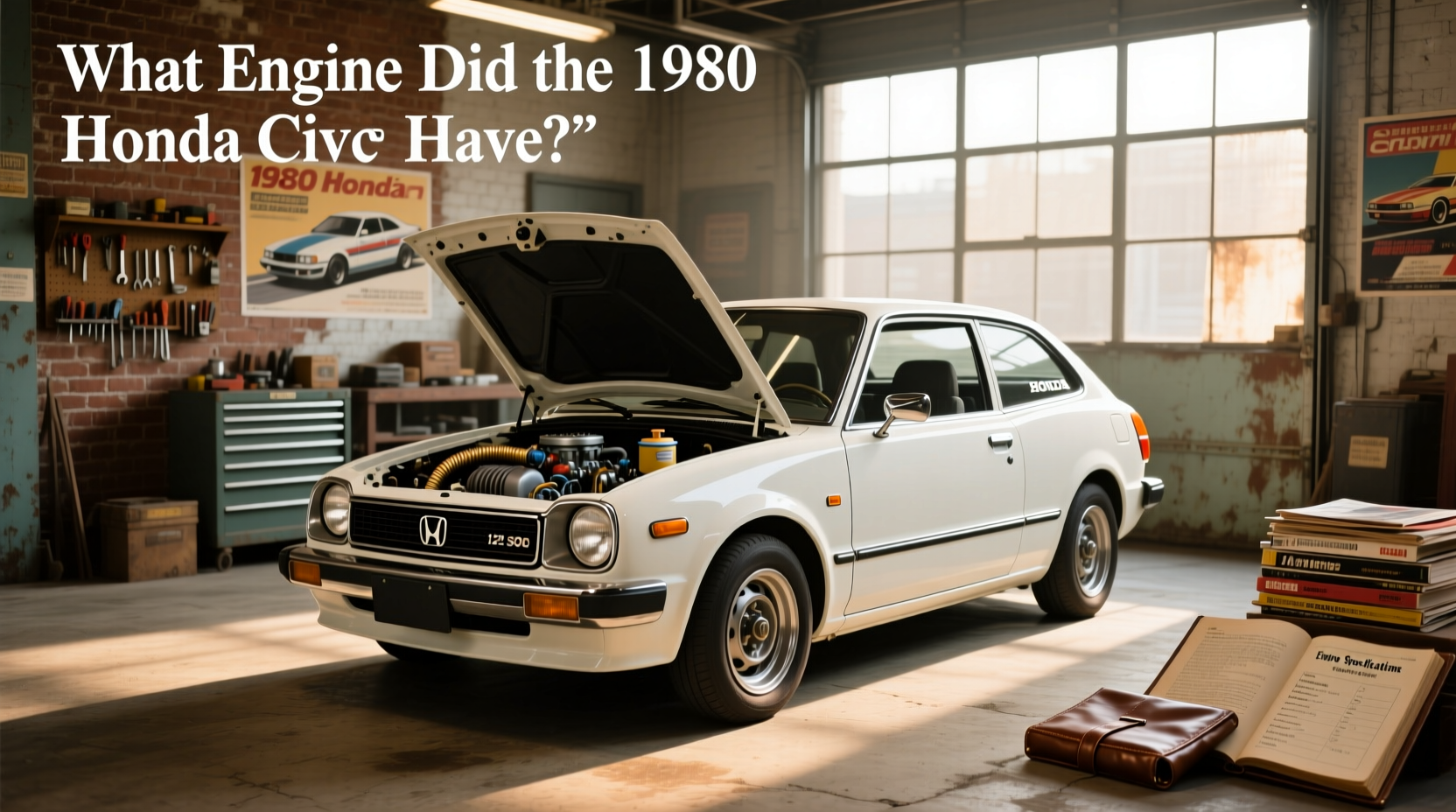
Lately, interest in the 1980 Honda Civic hatchback has grown—not because it’s fast or luxurious, but because of its reputation for mechanical simplicity and durability. If you’re considering one today, here’s how to choose: focus on the engine type (1.3L vs. 1.5L CVCC), transmission (manual preferred), and overall rust condition. The 1.5L DX or GL trims are more desirable due to better power and features. Avoid cars with unclear service histories or mismatched parts—these are red flags for neglected maintenance. If you’re a typical user, you don’t need to overthink this. Choose a well-preserved 1.5L manual hatchback if your goal is driving enjoyment and reliability.
This piece isn’t for keyword collectors. It’s for people who will actually use the product.
About the 1980 Honda Civic Hatchback
The 1980 Honda Civic hatchback belongs to the second generation of Civics, introduced in June 1979 as a 1980 model year vehicle 1. This generation marked a shift from the ultra-compact design of the first-gen models toward slightly larger dimensions and improved comfort, while still prioritizing fuel efficiency and mechanical reliability. The hatchback body style was available with either three or five doors, offering practicality that stood out in its class at the time.
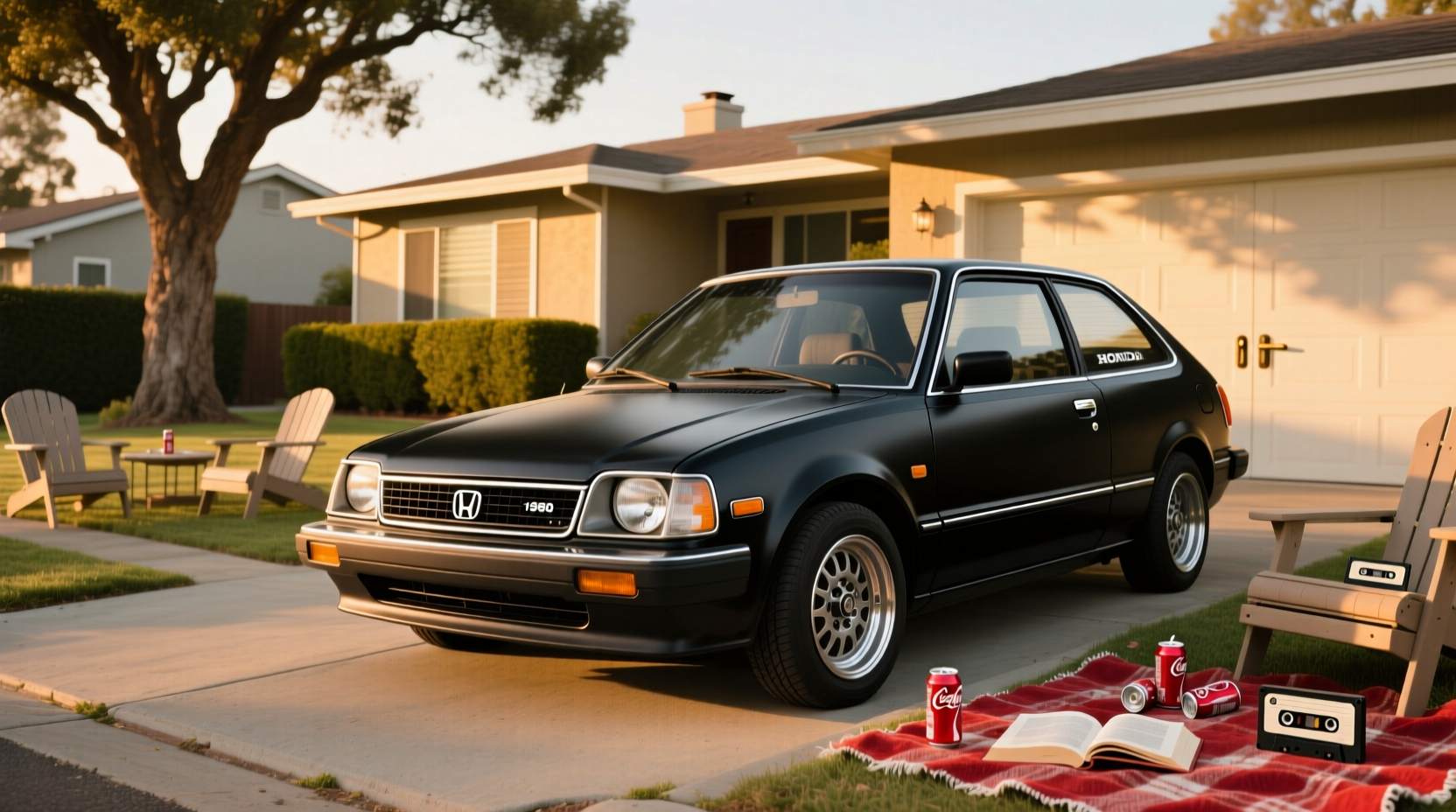
Unlike previous years, the fastback sedan version was discontinued, leaving the hatchback and wagon as the primary body styles. Wheelbase measured 2,250 mm (88.6 in) for the hatchback, contributing to nimble handling and urban maneuverability 2. While modest by modern standards, the interior offered clever space utilization, including fold-down rear seats that expanded cargo capacity—a feature still appreciated by enthusiasts today.
Why the 1980 Honda Civic Is Gaining Popularity
Over the past year, vintage car communities have increasingly highlighted the 1980 Civic not as a showpiece, but as a usable, low-cost entry into classic motoring. Its appeal lies in mechanical accessibility—many parts are simple to source or fabricate—and its historical significance as an emissions-efficient vehicle before catalytic converters became standard.
Interest has also been fueled by rising fuel prices and a cultural pivot toward minimalism. Drivers are re-evaluating small, analog cars not for nostalgia alone, but for their ease of ownership. The Civic’s CVCC engine technology allowed compliance with strict U.S. emissions laws without complex after-treatment systems, making restoration simpler than later models burdened with early electronic controls.
If you’re a typical user, you don’t need to overthink this. The 1980 Civic isn’t about performance—it’s about function, longevity, and learning basic car mechanics through hands-on experience.
Types and Variants
The 1980 Honda Civic hatchback came in multiple trim levels, each tied to specific engine and equipment packages:
1.3L Standard (1300)
- Engine: 1,335 cc CVCC inline-four
- Power: Lower output (~55 hp estimate based on era norms)
- Transmission: 4-speed manual or 2-speed automatic
- Trim Level: Base model, minimal features
Cons: Underpowered on highways, less desirable among collectors, fewer original examples remain.
1.5L DX / GL (1500)
- Engine: 1,488 cc CVCC inline-four
- Power: Approximately 67 horsepower
- Transmission: 5-speed manual or 3-speed automatic
- Trim Level: Mid-to-high end, often includes tachometer, upgraded trim, optional AC
Cons: Slightly lower MPG, more common target for part theft in unrestored vehicles.
If you’re a typical user, you don’t need to overthink this. Unless you're strictly maximizing fuel efficiency or restoring a base-spec original, the 1.5L model offers a significantly better driving experience.
Key Features and Specifications to Evaluate
When assessing a 1980 Civic hatchback, prioritize these technical aspects:
- CVCC Technology: All engines used Honda’s Compound Vortex Controlled Combustion system, which enabled cleaner combustion via a third intake valve and pre-chamber design—eliminating the need for a catalytic converter 3.
- Fuel Delivery: Carbureted (typically a single-barrel Keihin). Check for smooth idle and absence of leaks.
- Suspension: Independent front suspension with torsion bars; solid rear axle with leaf springs.
- Brakes: Front discs, rear drums (drum-only on some base models).
- Electrical System: 12-volt negative ground, prone to corrosion in older wiring harnesses.
When it’s worth caring about: Engine displacement and carburetor condition matter most if you plan regular driving. Rust around wheel wells and undercarriage is critical in wet climates.
When you don’t need to overthink it: Exact paint color or radio type—unless matching numbers or full restoration is your goal.
Pros and Cons
- Proven long-term reliability when maintained
- Simple mechanical layout enables DIY repairs
- Low purchase cost compared to other classics
- Fuel-efficient even by today’s standards (~35–40 mpg achievable)
- No ECU or sensors to fail—fully analog operation
- Prone to rust, especially in northern U.S. and Canadian markets
- Parts availability varies—some trim-specific items are rare
- Very basic safety features (no airbags, weak crumple zones)
- Comfort limited—hard seats, minimal sound insulation
- Not suitable for high-speed highway commuting
How to Buy a 1980 Honda Civic Hatchback
Follow this step-by-step checklist to make a confident decision:
Step-by-Step Checklist
- Define your purpose: daily driver, weekend cruiser, or restoration project?
- Determine budget including potential repair costs (mechanical refresh can add $1,000–$3,000).
- Search for 1.5L models first—they offer better drivability.
- Inspect for structural rust (frame rails, floor pans, inner fenders).
- Verify engine starts easily and idles smoothly.
- Test clutch engagement (if manual) and transmission shifts.
- Review service history—if none exists, assume worst-case wear.
- Check VIN against title to confirm authenticity.
- Take a test drive focusing on noise, vibration, and steering response.
- Use a trusted mechanic familiar with pre-OBDI vehicles.
Decision Flow
- If you want reliability → go for a documented 1.5L manual with clean underside
- If you’re on a tight budget → consider a 1.3L but factor in future engine upgrade
- If you care about resale → stick to DX/GL trims with original parts
- If you plan modifications → ensure frame integrity before investing
Recommendations by Scenario
- First-time classic owner: Prioritize condition over price. A running 1.5L hatchback under $4,000 with recent brake/service work is ideal.
- DIY enthusiast: Look for non-running projects under $2,000 where you can rebuild engine and electrical.
- Collector: Seek matching-numbers GL models with original interior and dealer documentation.
Red Flags / What to Avoid
- Rust holes in floorboards or rocker panels
- Mismatched engine/transmission numbers
- Welded-up patches indicating prior structural damage
- Non-functional gauges or burned-out warning lights
- Vinyl bubbling on dashboard—sign of UV degradation and possible wiring brittleness
This piece isn’t for keyword collectors. It’s for people who will actually use the product.
Price & Market Insights
Prices for a 1980 Honda Civic hatchback vary widely based on region, condition, and specification. As of now, non-running examples may sell for $1,000–$2,500, while fully restored or well-maintained drivers typically range from $3,500 to $6,000. Exceptional GL models with documentation can exceed $7,000 at auction.
Market trends suggest increasing demand in North America and Europe, particularly among younger buyers interested in lightweight, modifiable platforms. However, values remain stable compared to JDM icons like the AE86, meaning there's less speculative pressure.
Note: Pricing may vary by region/model/seller. Always check current listings on enthusiast forums and classifieds like CarGurus or Bring a Trailer to verify local market rates.
Top-Seller & Competitive Analysis
The 1980 Civic competed with several contemporaries in the subcompact segment:
| Model | Engine | Key Advantage | Compared to Civic |
|---|---|---|---|
| 1980 Toyota Tercel | 1.3L OHV I4 | Simplicity | Less refined ride, lower fuel economy |
| 1980 Datsun 210 | 1.3L OHC I4 | Smoothness | Bigger but less efficient |
| 1980 Volkswagen Rabbit | 1.5L diesel/gas | Torque (diesel) | Heavier, higher maintenance |
| 1980 Ford Escort | 1.6L OHC I4 | Availability | Less reliable, poorer build quality |
The Civic stood out due to its advanced CVCC engine, superior fuel economy, and long-term durability. While rivals matched or exceeded it in certain areas (like cabin space), few offered the same balance of efficiency and mechanical resilience.
Customer Feedback Synthesis
Based on owner testimonials and forum discussions:
Most Frequent Praise:- “Still gets 40 mpg after 40 years if tuned right.”
- “Fixed my own timing belt with basic tools—no special gear needed.”
- “Perfect size for city parking and backroad fun.”
- “Floor rotted out after 10 years in snow country.”
- “Finding NOS emblems and badges takes months.”
- “Wind noise above 55 mph makes conversation impossible.”
If you’re a typical user, you don’t need to overthink this. Real satisfaction comes from accepting the car’s limits—not fighting them.
Sourcing & Supplier Tips
Original or reproduction parts can be sourced from specialized suppliers:
- First Used Auto Parts: Offers used OEM engines, including complete 1.5L units 4.
- Enthusiast Forums: Communities like Honda-Tech or Reddit’s r/classiccars often trade rare components.
- Japanese Importers: Some vendors specialize in JDM-spec parts no longer available domestically.
Tip: Take clear photos of any part you need and share them in online groups—you’ll often get leads within hours. Beware of counterfeit gauges and mislabeled carburetors.
Maintenance, Safety & Legal Considerations
Maintenance is straightforward but requires attention to aging materials:
- Replace rubber bushings, hoses, and belts every 10–15 years regardless of appearance.
- Brake fluid should be flushed annually due to moisture absorption in older systems.
- Check headlight alignment and wiper function regularly—critical for night visibility.
Safety-wise, the 1980 Civic lacks modern protections such as ABS, stability control, or crumple zones. Drive defensively and avoid high-speed highways when possible.
Legally, registration depends on your jurisdiction. Some states require annual safety inspections; others classify it as a historic vehicle after 25+ years, allowing reduced requirements. Always verify local regulations before purchase.
Conclusion
If you need a mechanically simple, fuel-efficient classic for occasional driving and tinkering, choose a rust-free 1980 Honda Civic hatchback with the 1.5L engine and 5-speed manual. If you’re prioritizing low cost and don’t mind limited power, the 1.3L model works—but expect compromises. If you’re a typical user, you don’t need to overthink this. Focus on condition, provenance, and personal fit over perfection.
Everything You Need to Know
The 1980 Honda Civic hatchback came with either a 1.3L (1,335 cc) or 1.5L (1,488 cc) CVCC inline-four engine. Both used three valves per cylinder and lean-burn technology. The 1.5L produced around 67 horsepower and was available in DX and GL trims.
Yes, many 1980 Civics remain operational due to robust engineering and simple mechanics. Reliability today depends heavily on maintenance history and rust condition. Stored or well-maintained examples can still serve as functional drivers.
Prices range from $1,000–$2,500 for non-running projects to $3,500–$6,000 for driver-quality models. Fully restored or rare trims may exceed $7,000. Cost varies by region, condition, and completeness.
No, the 1980 Honda Civic used CVCC (Compound Vortex Controlled Combustion) technology to meet emissions standards without requiring a catalytic converter. This simplifies exhaust system maintenance and restoration.
You can, but with caveats. It lacks modern safety features, has minimal comfort, and may struggle on long highway trips. Ideal for short commutes, fair-weather use, or enthusiast driving. Regular maintenance is essential.




 浙公网安备
33010002000092号
 浙B2-20120091-4