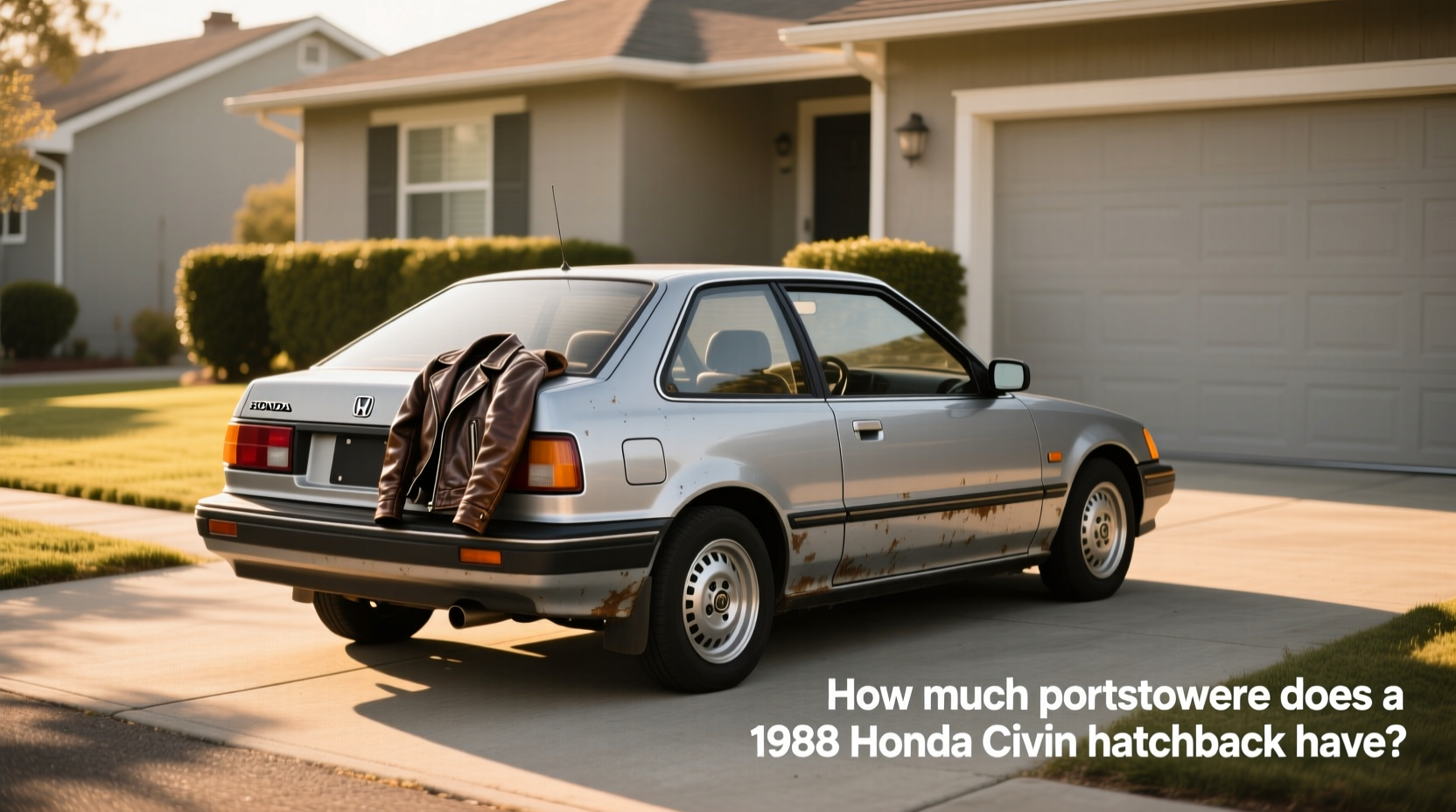
If you’re looking for a classic compact car with proven durability, the 1988 Honda Civic hatchback remains a practical choice. How to choose one? Start by identifying the trim—DX, HF, or Si—as each delivers different performance and fuel economy. The base DX model typically has a 1.5L engine producing around 70–75 hp, while the Si variant comes with a D16A6 16-valve SOHC engine rated at 108 hp (81 kW). If you’re a typical user, you don’t need to overthink this. Focus on drivetrain condition, rust presence, and service history rather than chasing peak output numbers. Avoid models with mismatched VINs or undocumented engine swaps—these raise red flags about long-term care.
About the 1988 Honda Civic Hatchback
The fourth-generation Honda Civic launched in 1988 marked a shift toward cleaner styling, improved aerodynamics, and better interior ergonomics. Available as a three-door hatchback, it was marketed as an efficient daily driver with nimble handling and low running costs. This generation introduced fuel injection across most trims, replacing carburetors and improving cold starts and emissions. While not powerful by modern standards, its lightweight design and reliable mechanicals made it ideal for urban commuting and first-time buyers.
Three main hatchback trims were offered: the economy-focused HF, the standard DX, and the sportier Si. All used front-wheel drive and four-cylinder engines, but power outputs varied significantly based on tuning and displacement. The chassis featured independent suspension at all four corners—an uncommon trait in its class—and rack-and-pinion steering for responsive feedback.
Why the 1988 Civic Hatchback Is Gaining Popularity
Lately, interest in late-’80s Hondas has grown among budget-conscious collectors and DIY mechanics. Over the past year, search volume for vintage Civics has trended upward, driven by affordability, modularity, and strong community support. Unlike many cars from that era, the 1988 Civic benefits from simple electronics, widely available parts, and compatibility with later-model D-series engines—a key factor for restorers.
This piece isn’t for keyword collectors. It’s for people who will actually use the product.
Its appeal lies in usability, not nostalgia alone. A well-maintained example can still serve as a functional beater or city runabout. Additionally, lightweight platforms like this are popular for grassroots track days and fuel-efficiency challenges. With rising prices for newer classics, the ’88 Civic offers entry-level access without high upfront cost.
Types and Variants
DX (Standard Trim)
The base model came with a 1.5-liter SOHC inline-four (D15B7), producing approximately 70–75 hp depending on market and emissions tuning. It prioritized fuel economy over performance.
- Pros: Lightweight, excellent fuel efficiency (~40 mpg highway), low insurance cost
- Cons: Minimal sound insulation, basic interior features, slower acceleration
HF (High Fuel Economy)
Engineered specifically for maximum mileage, the HF used a lean-burn system and lower final drive ratio. Output was slightly reduced—around 68 hp—but real-world economy could exceed 50 mpg under ideal conditions.
- Pros: Best-in-class fuel economy, long driving range per tank
- Cons: Underpowered for highway merging, limited availability today
Si (Sport Injection)
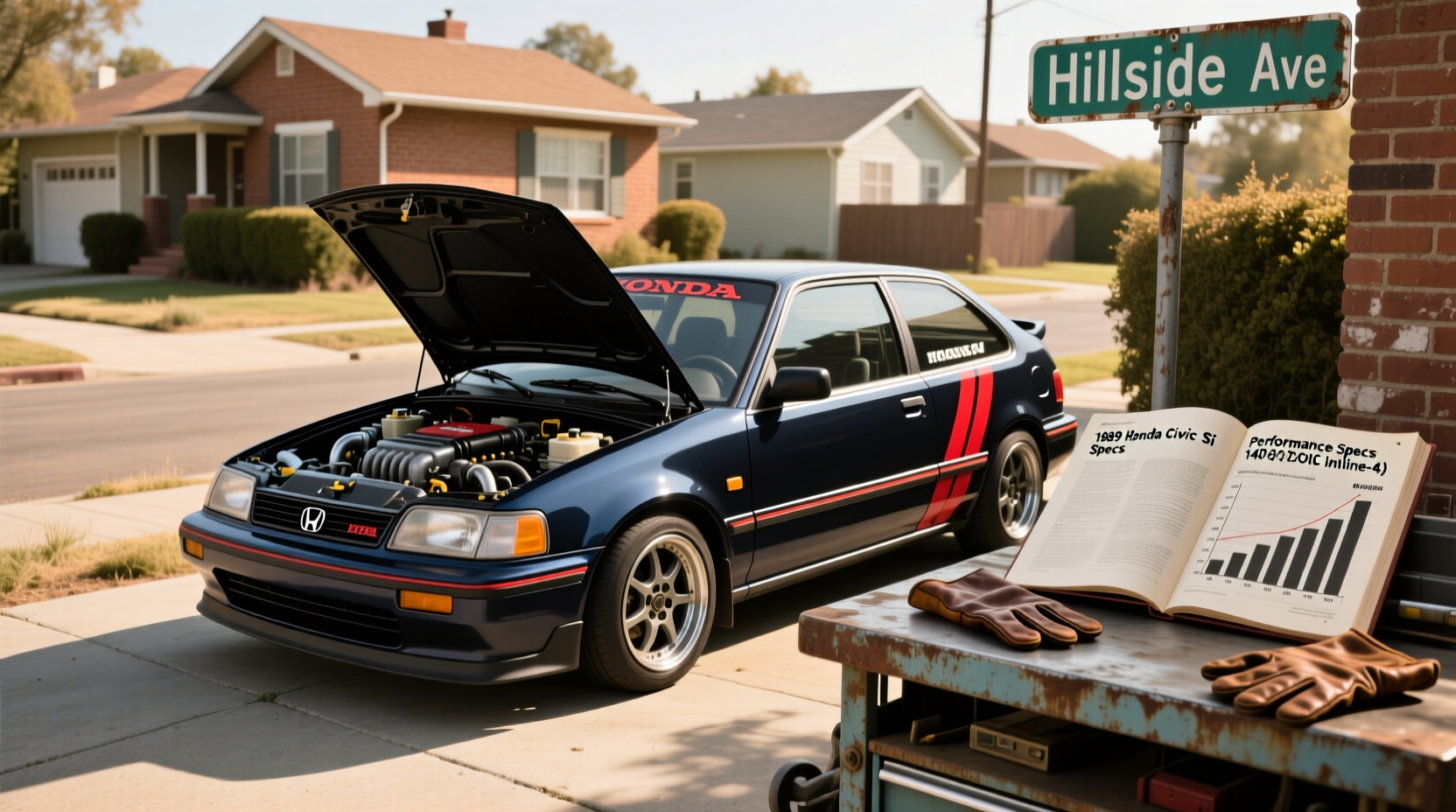
The top-tier Si trim featured the D16A6 engine: a 1.6L 16-valve SOHC unit with port fuel injection, delivering 108 hp and 100 lb-ft of torque. It included sport suspension, rear disc brakes, and optional moonroof.
- Pros: Noticeably quicker response, higher redline, better braking
- Cons: Higher fuel consumption, more expensive to insure, sought-after = higher resale
If you’re a typical user, you don’t need to overthink this. Most buyers should prioritize condition over trim—even a tired Si is less valuable than a clean DX.
Key Features and Specifications to Evaluate
When evaluating a 1988 Civic hatchback, focus on these measurable factors:
Engine Output: Ranges from 68 hp (HF) to 108 hp (Si). Verify via VIN decoder or factory plate. If advertised power seems too high, suspect modifications.
Fuel System: All U.S.-spec models used fuel injection. Carbureted versions exist elsewhere but may lack emissions compliance in North America.
Transmission: Five-speed manual was standard; three- or four-speed automatics were options. Manual gearboxes are preferred for engagement and reliability.
Suspension & Brakes: Si models have stiffer springs, thicker sway bars, and rear discs. Non-Si trims use drum brakes in back—acceptable if maintained.
When it’s worth caring about: If you plan frequent highway driving or towing (even light trailers), the extra 30+ hp of the Si makes a noticeable difference. For local errands only, the DX suffices.
When you don’t need to overthink it: Unless you're modifying the car, small variations in horsepower between non-Si models won't affect daily usability.
Pros and Cons
- Proven long-term reliability with proper maintenance
- Low purchase price compared to other vintage compacts
- Excellent parts availability through OEM and aftermarket channels
- Lightweight = easier parking, lower tire wear
- No airbags or ABS—safety systems are 1980s-basic
- Rust prone in northern climates, especially wheel wells and floor pans
- Ancient HVAC systems often fail; replacement parts scarce
- Limited cargo space behind rear seats
How to Buy a 1988 Honda Civic Hatchback
Beyond knowing how much horsepower a 1988 Honda Civic hatchback has, your real task is assessing real-world drivability and ownership cost.
Step-by-Step Checklist
- Verify VIN matches title and engine block stamping
- Inspect for structural rust—especially under carpets and fenders
- Test start when cold; hesitation suggests fuel or sensor issues
- Check clutch engagement point (if manual); slipping indicates wear
- Review service records—timing belt changes every 60k miles critical
- Take a test drive focusing on transmission smoothness and noise
- Confirm lights, gauges, and wipers function properly
Decision Flow
If you want:
• Daily transportation → Prioritize condition and fuel economy
• Weekend fun or mild modification → Seek Si trim with manual trans
• Lowest possible cost → Consider HF or DX, even with higher mileage
Recommendations by Scenario
- First Car for Teen: Choose a DX with recent safety inspection. Keep insurance costs down with older body style.
- Project Vehicle: Target a complete Si with original engine. These respond well to bolt-ons like headers or intake upgrades.
- City Commuter: HF model wins for fuel savings, provided AC and heater still work.
Red Flags / What to Avoid
- Car shows no visible wear but claims “only 50,000 miles”—likely stored poorly or tampered with
- Oil leaks near timing cover—could mean neglected water pump or impending belt failure
- Aftermarket ECU or wiring harness splices—indicates attempted performance mods without documentation
- Priced significantly above average without justification (e.g., no restoration receipts)
If you’re a typical user, you don’t need to overthink this. A $2,000 Civic that runs well is better than a $5,000 show queen that needs constant attention.
Price & Market Insights
As of now, prices vary widely by region, condition, and trim. Clean DX or HF models sell between $1,500 and $3,500 in the U.S., while unrestored Si examples range from $3,000 to $6,000. Fully restored Si hatchbacks with documented history may reach $8,000+.
These figures may vary by region/model/seller. Always check completed listings on local marketplaces to gauge fair value. Enthusiast forums like Honda-Tech or Reddit’s r/elementalswap can also provide recent sale data.
Top-Seller & Competitive Analysis
The 1988 Civic competed with the Toyota Corolla, Nissan Sentra, and Ford Festiva. While rivals offered comparable fuel economy, few matched the Civic’s blend of responsiveness and mechanical longevity.
| Model | Engine Output | Fuel Economy (Est.) | Current Avg. Price |
|---|---|---|---|
| 1988 Honda Civic Si Hatchback | 108 hp | 33 mpg combined | $4,000–$7,000 |
| 1988 Toyota Corolla LE | 96 hp | 30 mpg combined | $3,000–$5,500 |
| 1988 Nissan Sentra XE | 88 hp | 31 mpg combined | $2,000–$4,000 |
| 1988 Ford Festiva L | 62 hp | 34 mpg combined | $1,500–$3,000 |
Data sourced from aggregated classifieds and enthusiast reports 1. Note: Values assume operable condition with no major structural damage.
Customer Feedback Synthesis
Based on owner discussions across forums and marketplace reviews:
- Most Praised: Reliability when maintained, ease of DIY repairs, surprising interior room for size
- Most Complained About: Poor heater performance in winter, weak stock stereo, squeaky dash at speed
- Surprising Perks: Strong resale among niche buyers, ability to run on regular unleaded despite high compression
If you’re a typical user, you don’t need to overthink this. Many complaints stem from age-related wear, not inherent flaws.
Sourcing & Supplier Tips
For spare parts, consider:
- OEM dealerships (for NOS components like badges or switches)
- Online marketplaces specializing in Japanese domestic parts
- Local salvage yards with import sections
- Community-driven suppliers via Facebook groups or club chapters
Always verify interchangeability using chassis codes (e.g., EF3 for hatchback). Some parts from 1989–1991 models fit directly, expanding sourcing options.
Maintenance, Safety & Legal Considerations
Routine upkeep includes oil changes every 3,000–5,000 miles, coolant flushes every two years, and timing belt replacement every 60,000 miles. The D16A6 engine is interference-type—failure risks valve damage.
Safety-wise, expect minimal crash protection. No airbags, weak side-impact structure, and narrow tires limit emergency handling. Drive defensively and avoid high-speed highways if possible.
Legally, ensure the vehicle meets your state/province’s emissions and safety inspection requirements. In some areas, pre-OBD1 vehicles are exempt. Confirm locally before purchase.
Conclusion
If you need reliable, low-cost transportation with character, the 1988 Honda Civic hatchback is a solid pick. Choose the Si if you value driving engagement and potential for upgrades. Opt for the DX or HF if budget and efficiency come first. Condition outweighs all other factors—drive it, inspect it, then decide.
Everything You Need to Know
How much horsepower does a 1988 Honda Civic hatchback have?
Horsepower varies by trim. The base DX and HF models produce around 70–75 hp, while the Si trim features a 1.6L D16A6 engine rated at 108 hp (81 kW). Always confirm engine type using the VIN or factory data plate, as replacements are common.
Is the 1988 Honda Civic hatchback fuel efficient?
Yes, especially the HF model, which was designed for maximum economy. Real-world fuel efficiency ranges from 35 mpg (Si) to over 50 mpg (HF) under optimal conditions. Driving habits and maintenance play a big role in actual results.
What are common problems with the 1988 Honda Civic?
Common issues include rust in floor pans and fenders, failing ignition switches, worn suspension bushings, and aging electrical connectors. The timing belt must be replaced on schedule to prevent engine damage.
Can I still find parts for a 1988 Honda Civic hatchback?
Yes. Due to strong enthusiast support and global production, many mechanical and cosmetic parts remain available through OEM channels, aftermarket suppliers, and salvage networks. Some trim-specific items may require hunting.
Is the 1988 Honda Civic Si rare today?
Not extremely rare, but well-preserved Si models are increasingly scarce. High demand from modifiers and collectors keeps values rising. Unmodified examples with full service history are particularly valued.




 浙公网安备
33010002000092号
 浙B2-20120091-4