
1988 Honda Civic Hatchback Buying Guide
If you’re looking for a classic compact car that balances reliability, driving fun, and modularity, the 1988 Honda Civic hatchback stands out. What to look for in a 1988 Honda Civic includes the double-wishbone suspension (standard on most trims), fuel-injected D-series engine (D15B2 in North America), 5-speed manual transmission feel, body integrity (especially rear wheel arches), and whether it’s a clean example or already modified. If you're restoring or daily-driving, avoid models with patchy rust or mismatched VIN-tagged parts. For tuners, Japanese-market compatibility (like early VTEC head availability) matters more than originality. If you’re a typical user, you don’t need to overthink this—choose one with a solid chassis and a smooth-shifting gearbox, then build from there.
About the 1988 Honda Civic Hatchback
The fourth-generation Honda Civic (1988–1991) marked a turning point in compact car design. Unlike earlier models, the 1988 Civic hatchback was larger, wider, and featured a fully independent double-wishbone suspension at all four corners—a rarity in its class 1. This generation moved away from the boxy look of the 1980s, adopting smoother lines and improved aerodynamics. Available in DX, HF, and Si trims, the hatchback version offered practicality without sacrificing efficiency.
In North America, all 1988 Civics came with fuel injection, improving cold starts and throttle response over carbureted predecessors. The base DX used a 92-horsepower 1.5L D15B2 engine, while the Si trim upgraded to a 108-hp 1.6L SOHC 16-valve unit. Transmission options were limited to 5-speed manual or 4-speed automatic, with the manual being far more desirable today due to its precision and durability.
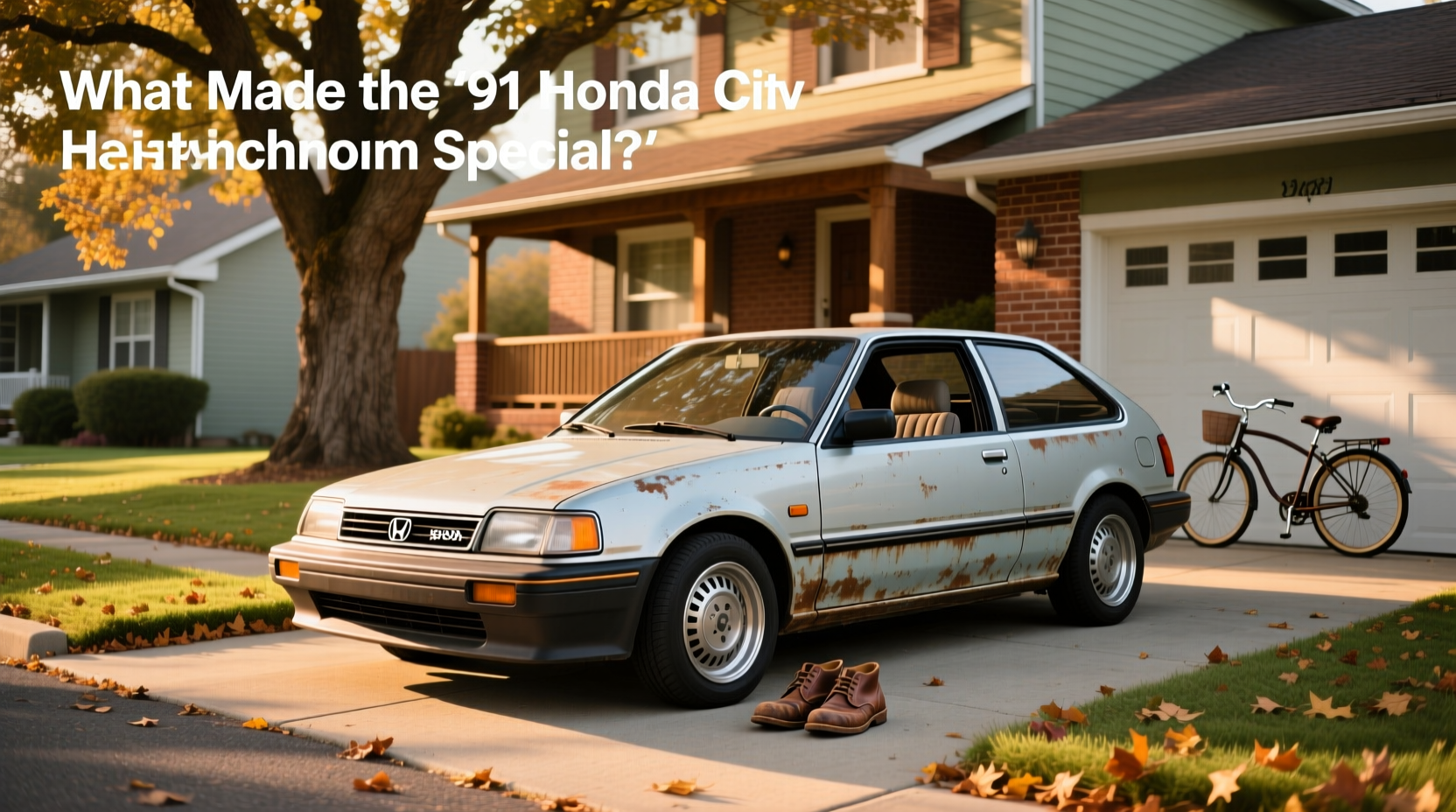
Why the 1988 Civic Is Gaining Popularity
Lately, interest in analog-era compacts has surged. Over the past year, search volume for '88 Civic restoration and purchase guides has grown steadily—not because of nostalgia alone, but due to rising demand for simple, repairable vehicles. With modern cars packed with software-dependent systems, the 1988 Civic offers mechanical transparency. Its lack of complex electronics means owners can diagnose and fix issues without proprietary tools.
This resurgence isn’t just among collectors. Enthusiasts are drawn to the Civic’s lightweight platform and aftermarket support. The D-series engine is well-documented, widely cloned, and compatible with numerous performance upgrades. Swapping in a B-series VTEC motor remains a common path, but even stock examples deliver satisfying responsiveness. If you’re a typical user, you don’t need to overthink this—driving engagement starts with mechanical honesty, not horsepower figures.
Emotion tension: There’s a quiet rebellion here—not against progress, but against opacity. This piece isn’t for keyword collectors. It’s for people who will actually use the product.
Types and Variants
The 1988 Civic hatchback came in three main trims, each serving different priorities:
- DX: Base model with 1.5L D15B2 engine, steel wheels, manual windows
- HF: High Fuel Economy variant, optimized for efficiency with lighter components and lower final drive ratio
- Si: Sport-oriented trim with 1.6L 16-valve engine, stiffer suspension, alloy wheels, and sport seats
| Trim | Engine | Horsepower | Key Features | Best For |
|---|---|---|---|---|
| DX | D15B2 1.5L 12v | 92 hp | Fuel injection, basic interior | Budget restorations, learners |
| HF | D15B2 1.5L 12v | 92 hp | Aerodynamic tweaks, lightened body | Fuel economy seekers |
| Si | D16A6 1.6L 16v | 108 hp | Sport suspension, close-ratio gearbox | Driving enthusiasts, tuners |
Outside North America, additional variants existed—most notably the Japanese-market EF Civic with optional VTEC engines. While no 1988 U.S. model had VTEC, the cylinder head design on the Si made future swaps easier. This laid groundwork for Honda’s tuning legacy.
Key Features and Specifications to Evaluate
When assessing a 1988 Civic hatchback, focus on these elements—and know when they matter:
1. Suspension System
When it’s worth caring about: If you plan to drive the car regularly or modify it, the double-wishbone setup provides superior cornering stability and ride compliance compared to strut-based rivals.
When you don’t need to overthink it: On low-mileage, unmodified examples likely used only for display, suspension wear may be minimal. But inspect bushings and ball joints regardless.
2. Engine Type and Condition
When it’s worth caring about: The D15B2 (DX/HF) is durable but modest in power. The D16A6 (Si) responds better to intake/exhaust tuning. Check for oil leaks, compression test results, and timing belt history.
When you don’t need to overthink it: If the engine runs cleanly and idles smoothly, minor cosmetic wear (like paint discoloration on valve covers) is normal. Avoid engines with knocking or excessive smoke.
3. Transmission Feel
When it’s worth caring about: A crisp, short-throw shift pattern indicates good syncro health. The Si’s close-ratio box enhances driving enjoyment.
When you don’t need to overthink it: Slight notchiness during cold starts is typical. Only worry if gears grind consistently or the clutch slips under load.
4. Body Integrity and Rust
When it’s worth caring about: Structural rust—especially around rear wheel wells, subframes, and floor pans—can compromise safety and value. Repair costs often exceed the car’s worth.
When you don’t need to overthink it: Surface rust on undercarriage components may be manageable. Use a magnet to check for bondo or poor repairs.
5. Interior and Electronics
When it’s worth caring about: Functional gauges, working HVAC, and intact seat foam affect usability. Replace non-critical items like cracked lens covers later.
When you don’t need to overthink it: Faded trim or worn carpets are expected. These are affordable fixes compared to engine or frame issues.
Pros and Cons
| Aspect | Pros | Cons |
|---|---|---|
| Reliability | Simple mechanics, proven D-series engine longevity | Older rubber seals and hoses degrade over time |
| Handling | Double-wishbone suspension outperforms contemporaries | Stock tires are narrow and outdated by modern standards |
| Tuning Potential | Lightweight chassis accepts many engine swaps | VTEC requires sourcing JDM parts or conversion kits |
| Fuel Efficiency | HF model achieves ~40 mpg on highway | Lower power output limits high-speed comfort |
| Parts Availability | Aftermarket support remains strong | Original trim-specific parts (badges, switches) are scarce |
How to Choose a 1988 Honda Civic Hatchback
Follow this step-by-step checklist to make an informed decision:
Step-by-Step Checklist
- ✅ Verify vehicle history (accidents, title status)
- ✅ Inspect for rust (rear quarters, rocker panels, trunk floor)
- ✅ Test drive: listen for suspension noises, evaluate shift quality
- ✅ Review service records (timing belt, fluids, brake work)
- ✅ Confirm engine compression and leak-down test results
- ✅ Check alignment of body panels and door gaps
- ✅ Assess interior condition (seat wear, dash cracks, gauge function)
Decision Flow
- Define your goal: daily driver, weekend cruiser, or project car?
- Set budget including potential repairs (mechanical + cosmetic)
- Narrow to trim: Si for performance, DX/HF for simplicity
- Source listings via enthusiast forums, classifieds, or auctions
- Schedule inspection (preferably with independent mechanic)
- Negotiate based on verified condition, not emotional appeal
Recommendations by Scenario
- First-time owner: Look for a well-maintained DX with recent maintenance. Lower cost reduces risk while teaching fundamentals.
- Daily commuter: Prioritize HF models with documented oil changes and tire rotations. Lightweight helps city driving.
- Performance builder: Target Si trim with clean title. The 1.6L block is a better foundation for forced induction or VTEC swaps.
- Show car candidate: Seek low-mileage examples stored indoors. Originality adds value, but verify mechanical soundness too.
Red Flags / What to Avoid
❗ Major rust penetrating metal surfaces
Avoid any sign of bubbling paint near wheel arches or under carpeting.
❗ Mismatched VIN components
Steering column, ECU, or transmission not matching chassis number suggests salvage rebuild.
❗ No service history
Especially critical for timing belt—failure destroys interference engines.
❗ Modified exhaust or intake with poor craftsmanship
Indicates prior owner skipped basics in favor of aesthetics.
If you’re a typical user, you don’t need to overthink this. Focus on structural integrity first, mechanical health second, and cosmetics last.
Price & Market Insights
Pricing varies significantly by region, condition, and trim. As of 2024, unrestored but functional 1988 Civics range from $2,000 to $5,000 in the U.S. Clean Si models command $6,000–$9,000, especially if modified tastefully. Fully restored show-quality examples may reach $12,000+, though these are rare.
European and Japanese markets often list higher due to stricter emissions rules and preservation culture. Prices may vary by region/model/seller—always check local listings and compare similar conditions. Verify seller reputation through community feedback or third-party verification platforms.
Top-Seller & Competitive Analysis
The 1988 Civic competed with the Toyota Corolla, Ford Escort, and Chevrolet Nova. While those offered similar economy, none matched the Civic’s handling refinement or long-term durability.
| Model | Suspension | Engine Output | Tuning Support | Current Resale Trend |
|---|---|---|---|---|
| 1988 Honda Civic Si | Double-wishbone (all around) | 108 hp | Extensive (D/B-series swaps) | Steady increase |
| 1988 Toyota Corolla | MacPherson front / torsion beam rear | 96 hp | Moderate (4A-GE swaps) | Gradual appreciation |
| 1988 Ford Escort | Strut front / semi-trailing arm rear | 90 hp | Limited | Flat/stagnant |
| 1988 Chevrolet Nova | Same as Corolla (GM-Toyota joint venture) | 96 hp | Low | Minimal collector interest |
The Civic’s engineering advantage—particularly its suspension layout—translated into real-world driving satisfaction. That edge still influences buyer preference today.

Customer Feedback Synthesis
Based on owner testimonials and forum discussions:
✅ Frequent Praise
- “The steering feels connected—even at low speeds.”
- “I’ve replaced hoses and belts, but the engine still runs like new.”
- “Perfect size for city parking, yet stable on highways.”
❌ Common Complaints
- “Finding OEM-style hubcaps is nearly impossible.”
- “Rear visibility suffers with the high trunk line.”
- “Factory radio lacks output for modern speakers.”
Long-term owners appreciate mechanical consistency, while newer buyers sometimes underestimate maintenance needs of 35-year-old rubber and electrical systems.
Sourcing & Supplier Tips
For parts and support:
- Use online forums (Honda-Tech, EF Coupe Club) to source NOS (New Old Stock) trim pieces
- Check salvage yards specializing in JDM imports for rare components
- Order reproduction badges and interior trim from specialty repro vendors
- Join regional Civic clubs for networking and group buys
If you’re a typical user, you don’t need to overthink this. Start with trusted suppliers who offer return policies and clear compatibility charts.
Maintenance, Safety & Legal Considerations
Routine maintenance includes timing belt replacement every 60,000–90,000 miles (interference engine), coolant flushes, and suspension bushing checks. Brake system should be inspected annually, especially rubber lines prone to cracking.
Safety-wise, the 1988 Civic lacks airbags, ABS, or electronic stability control. Drive accordingly—avoid high-speed maneuvers on wet roads. Upgrade to modern tires for better grip, but retain factory width for authenticity.
Legally, ensure the vehicle meets your state or country’s requirements for registration. Classic car exemptions may apply depending on age and usage. Always confirm local regulations before purchasing, especially if importing from abroad.
Conclusion
If you need a mechanically straightforward, engaging-to-drive compact with lasting appeal, the 1988 Honda Civic hatchback delivers. Choose the Si trim if performance matters; opt for DX or HF if simplicity and economy are priorities. If you’re a typical user, you don’t need to overthink this—focus on a rust-free body, healthy engine, and honest ownership history. Everything else can be improved over time.
Everything You Need to Know
❓ What engine did the 1988 Honda Civic hatchback come with?
The base DX and HF models used a 1.5L D15B2 12-valve engine producing 92 horsepower. The Si trim featured a 1.6L D16A6 16-valve engine rated at 108 horsepower. All North American versions were fuel-injected. Engine specs may vary by region—for example, Japanese-market EF Civics had access to early VTEC variants not sold in the U.S.
❓ Is the 1988 Civic reliable today?
Yes, provided it has been maintained. The D-series engines are known for longevity if serviced regularly. Critical points include timing belt replacement, cooling system integrity, and rust prevention. Many 1988 Civics remain on the road due to their simple design and widespread parts availability.
❓ Can you install VTEC on a 1988 Civic?
Not natively—the 1988 U.S. models did not come with VTEC. However, the Si’s 16-valve head design makes it compatible with later B-series VTEC engines (like B16A) through a swap. These conversions are common and well-documented in the enthusiast community. Ensure proper wiring harness, ECU, and mounting solutions are used.
❓ How much does a 1988 Honda Civic cost now?
Prices vary by condition and location. Unrestored running examples typically sell for $2,000–$5,000. Well-maintained Si models range from $6,000–$9,000. Fully restored or professionally built versions may exceed $10,000. Always verify condition independently before paying premium prices.
❓ What makes the 1988 Civic special compared to other compacts?
Its double-wishbone suspension provided superior ride and handling for its class. Combined with fuel injection, precise manual gearboxes, and lightweight construction, it set a benchmark for driving engagement. The platform also became foundational for grassroots motorsports and tuning culture, influencing decades of Honda performance development.




 浙公网安备
33010002000092号
 浙B2-20120091-4