Short introduction
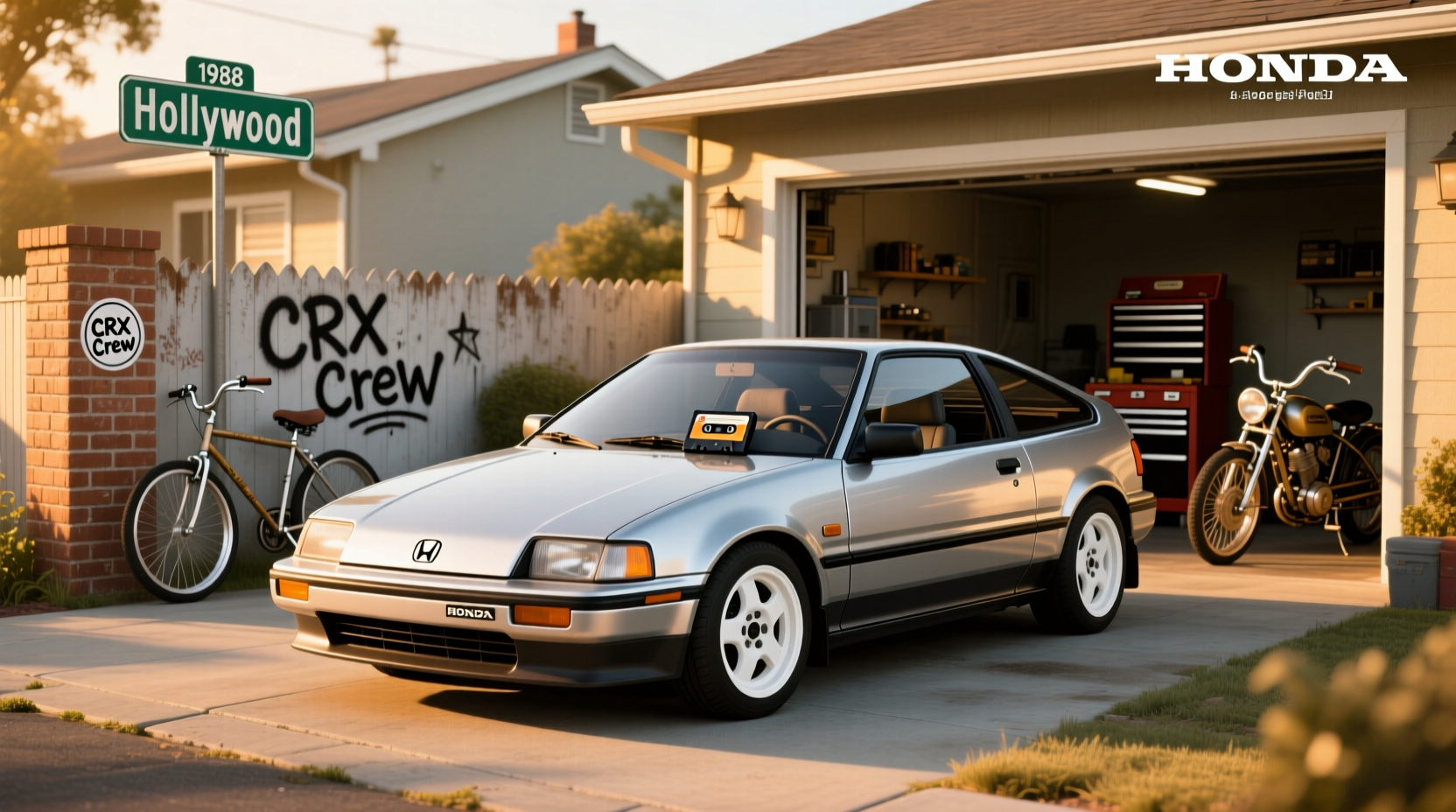
If you're looking for a lightweight, driver-focused classic that doesn't demand high ownership costs, the 1988 Honda CRX is worth serious consideration—especially the Si trim. How to choose a reliable daily-driver classic? Focus on rust condition, drivetrain history, and originality. Typical users don’t need to overthink this: if it runs well, isn’t heavily modified, and hasn’t been stored poorly, it’s likely a solid buy. The base model offers better fuel economy (up to 46 mpg highway), while the Si delivers more engaging performance with its 1.6L fuel-injected engine. Avoid cars with mismatched VINs or rebuilt titles—these are red flags. Over the past year, interest in analog front-wheel-drive hatchbacks has grown as drivers seek simpler alternatives to modern tech-heavy compacts.
About the 1988 Honda CRX
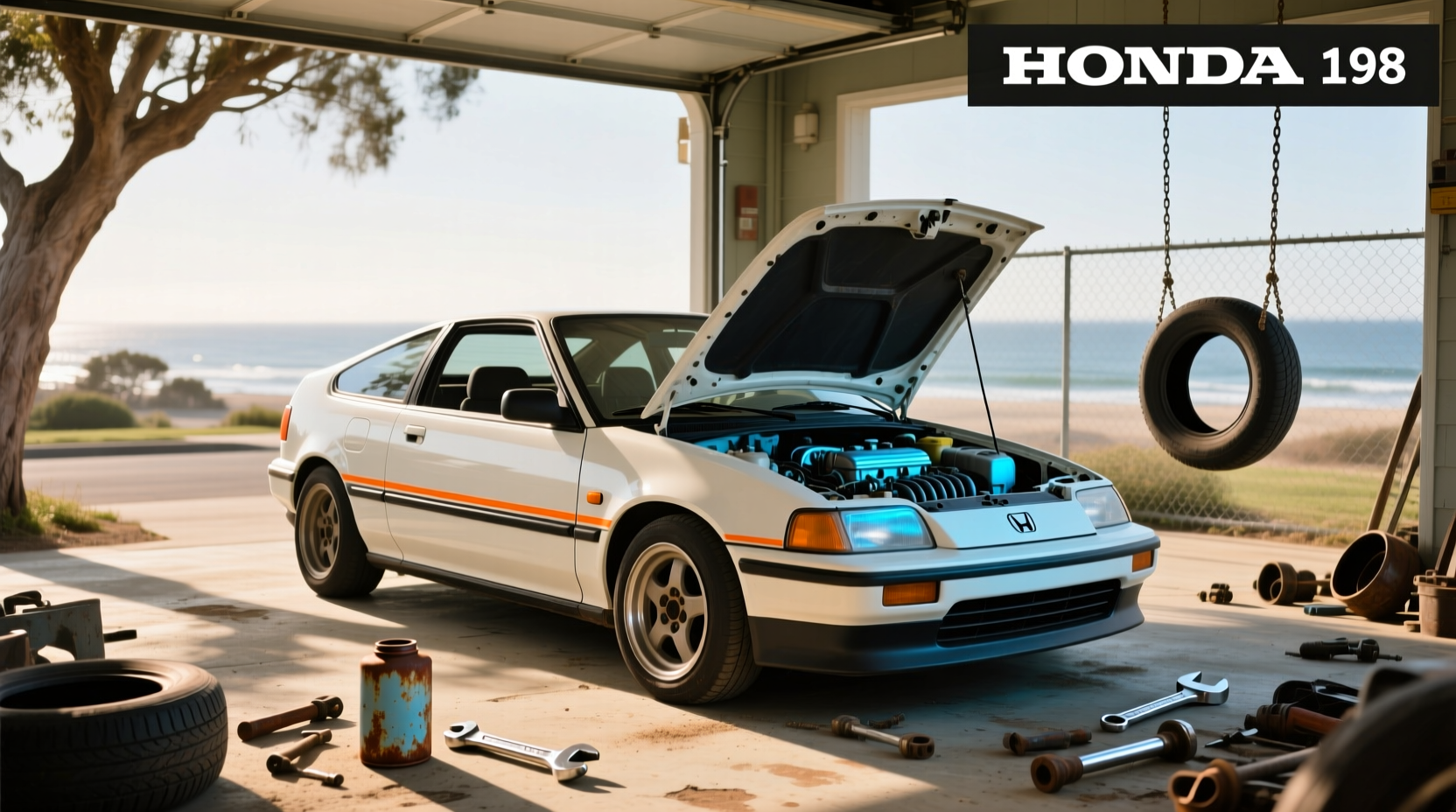
The 1988 Honda CRX marked the second generation of Honda’s lightweight sports hatchback, transitioning from an economy-focused runabout to a refined, fun-to-drive coupe. It was part of Honda’s broader strategy to offer engaging driving dynamics without relying on large engines or forced induction. Available in DX, HF, and Si trims, the CRX combined minimal curb weight (around 2,000 lbs) with precise handling thanks to its double-wishbone suspension at all four corners—a rare feature in its class. This generation introduced a longer wheelbase, wider track, and improved aerodynamics (Cd 0.30), enhancing both stability and cabin space.
It represented a shift in how small cars could deliver excitement. Unlike heavier hot hatches of the era, the CRX prioritized balance and responsiveness. Its engineering emphasized mechanical feedback over raw power, making it a favorite among purists. If you’re a typical user, you don’t need to overthink this: the CRX wasn’t built for luxury or speed records—it was built for involvement.
Why the 1988 CRX is gaining popularity
Lately, there's been a quiet resurgence in demand for unassisted, analog driving experiences. Drivers tired of adaptive cruise control, lane-keeping alerts, and touchscreen dependency are turning to older vehicles like the 1988 CRX. Its appeal lies in simplicity: no traction control, no drive modes, no connectivity features. Just a manual gearbox, a light clutch, and direct steering feedback.
This trend isn’t driven by nostalgia alone. Rising insurance costs for modern performance cars and increasing repair complexity make lightweight classics more practical than many assume. Enthusiast communities have also grown around preservation rather than restoration, valuing original miles and service history over show finishes. Platforms like Reddit 1 highlight owners keeping CRXs running past 200,000 miles with basic maintenance.
If you’re a typical user, you don’t need to overthink this: the growing attention reflects real usability, not just collector hype.
Types and variants
The 1988 CRX came in three main trims, each targeting different priorities:
DX (Base Model)
✅ Pros:
- Best fuel economy (~46 mpg highway)
- Simpler systems, easier to maintain
- Lower purchase price
❗ Cons:
- 1.5L carbureted engine (less responsive)
- Fewer standard features (no rear wiper, basic interior)
When it’s worth caring about: If your priority is low-cost commuting or maximizing efficiency.
When you don’t need to overthink it: Unless you’re tracking originality, minor variations between early and late DX models won’t affect daily use.
HF (High Fuel Economy)
✅ Pros:
- Optimized for fuel savings (similar to DX but with tuning tweaks)
- Slightly better sound insulation
❗ Cons:
- Nearly identical to DX in performance
- Rarely commands higher resale value
When it’s worth caring about: Only if you plan long-distance driving and want every extra mile per gallon.
When you don’t need to overthink it: Differences between HF and DX are marginal for most buyers.
Si (Sport Injection)
✅ Pros:
- 1.6L fuel-injected DOHC engine (108 hp)
- Faster acceleration and higher rev limit
- Better brakes, stiffer suspension, standard rear wiper
❗ Cons:
- Higher initial cost and slightly lower fuel economy
- More sought-after, so prices rising
When it’s worth caring about: If you want spirited driving and better resale.
When you don’t need to overthink it: Even non-experts notice the difference in throttle response and handling precision.
Key features and specifications to evaluate
When assessing a 1988 CRX, focus on these measurable factors:
- Engine type: DX/HF = 1.5L A15A1 (carbureted); Si = 1.6L D16A6 (fuel-injected DOHC)
- Transmission: Standard 5-speed manual; optional 4-speed automatic (avoid unless necessary)
- Suspension: All-independent double-wishbone setup—check for worn bushings or leaking shocks
- Weight: Ranges from 1,975 lbs (DX) to 2,075 lbs (Si)—lighter models feel nimbler
- Fuel economy: EPA ratings vary: DX ~36 city / 46 hwy; Si ~31 city / 38 hwy
- Interior space: Minimal rear seating; cargo area is shallow but usable for small loads
If you’re a typical user, you don’t need to overthink this: prioritize mechanical integrity over cosmetic perfection. A car with honest wear but clean fluids and tight suspension will serve better than a glossy repaint with unknown history.
Pros and cons
Advantages
- Exceptional reliability when maintained
- Low operating costs (parts widely available)
- Fun, connected driving experience
- High fuel efficiency across all trims
- Compact size ideal for city driving
Drawbacks
- Minimal crash protection by modern standards
- Prone to rust in floor pans and subframes (especially in snowy regions)
- Cabin noise increases at highway speeds
- Limited cargo and passenger space
- Parts for Si-specific components (like injectors) may require sourcing
How to buy a 1988 Honda CRX
This piece isn’t for keyword collectors. It’s for people who will actually use the product.
Step-by-step checklist
- Verify title status: Confirm clean title; avoid salvage or flood-damaged records.
- Inspect for rust: Check rocker panels, floorboards, and suspension mounts—common failure points.
- Test drive thoroughly: Listen for suspension clunks, transmission grinding, or hesitation under acceleration.
- Review service history: Look for timing belt changes every 60k miles and regular oil changes.
- Check originality: Matching numbers and factory-correct parts increase long-term value.
- Scan for modifications: Aftermarket ECUs or exhausts aren’t dealbreakers but require deeper vetting.
Decision flow
- Need maximum efficiency? → Prioritize DX or HF trim
- Want engaging driving dynamics? → Focus on Si with manual transmission
- On a tight budget? → Accept minor cosmetic flaws but insist on mechanical soundness
- Planning to keep long-term? → Choose one with documented maintenance
Recommendations by scenario
- First-time classic buyer: Start with a well-documented Si under $6,000.
- Daily commuter: DX model with recent brake and suspension work.
- Weekend driver: Original-condition Si with low mileage (under 100k).
Red flags / what to avoid
- Car shows signs of water damage (musty smell, warped trim)
- No service records despite high age
- Replaced dashboard or repaired welds (indicates major structural work)
- Engine overheated previously (check for warped head)
- Priced significantly above market without justification
Price & market insights
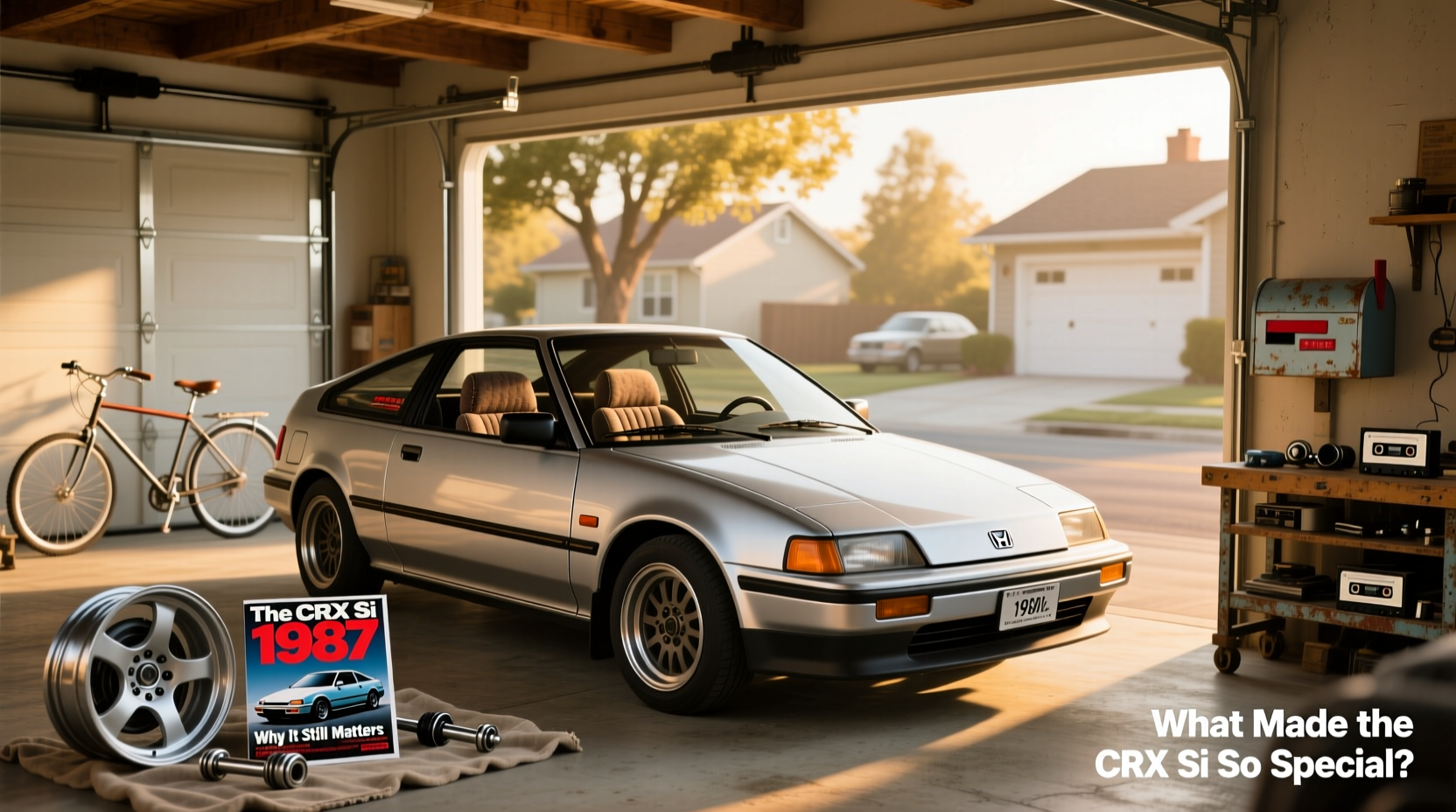
As of 2025, average asking prices range from $3,500–$5,000 for drivable DX/HF models and $5,500–$9,000 for well-maintained Si trims. Prices may vary by region/model/seller depending on climate (rust exposure), local demand, and originality. Vehicles with verified low mileage or continuous ownership often command premiums. Hagerty 2 listed the 1988–91 CRX Si as a Bull Market pick due to rising enthusiast interest. However, most transactions occur through private sellers or niche forums rather than dealerships.
If you’re a typical user, you don’t need to overthink this: pay for condition, not rarity. A $7,000 Si in good shape is a better investment than a $10,000 project car unless you have restoration skills.
Top-seller & competitive analysis
The CRX competed with the Ford Escort GT, Toyota Tercel, and Volkswagen Golf GTI—but carved its own niche by emphasizing lightness over power.
| Model | Engine | HP | Weight (lbs) | Notable Trait |
|---|---|---|---|---|
| 1988 Honda CRX Si | 1.6L DOHC I4 | 108 | 2,075 | All-independent suspension |
| 1988 Ford Escort GT | 1.9L SOHC I4 | 90 | 2,450 | Affordable handling package |
| 1988 VW Golf GTI | 1.8L I4 | 100 | 2,440 | Legendary hot hatch reputation |
| 1988 Toyota Tercel | 1.5L I4 | 75 | 2,050 | Reliability focus, less sporty |
The CRX stands out for its near 50/50 weight distribution and agile turn-in, despite modest horsepower. While others relied on displacement or marketing, the CRX delivered balance. MotorTrend 3 noted its “surprising poise” even by modern standards.
Customer feedback synthesis
Based on owner discussions and reviews:
- Most praised: Driving engagement, ease of DIY repairs, fuel economy, durability
- Most criticized: Rust progression, lack of sound deadening, limited utility for families
- Common surprise: How comfortable it is for short commutes despite firm ride
- Regret patterns: Buyers who ignored rust only to face costly frame repairs later
If you’re a typical user, you don’t need to overthink this: satisfaction correlates strongly with realistic expectations. Those who treat it as a weekend toy or solo commuter report highest joy.
Sourcing & supplier tips
Most parts for the 1988 CRX remain available through OEM suppliers, online catalogs, and junkyards. Common consumables (filters, belts, brake pads) are still produced by multiple brands. For Si-specific items (injectors, ECU), consider pulling from donor cars or checking specialty vendors like Majestic Honda.
- Join CRX-specific forums (e.g., CRXSI.com) for leads on NOS parts
- Use VIN decoding to confirm factory specs before ordering components
- Verify return policies when buying electrical parts online
Maintenance, safety & legal considerations
Maintenance is straightforward: replace timing belt every 60,000 miles, check suspension bushings annually, and monitor coolant levels due to potential head gasket stress under hard use. Oil changes every 3,000–5,000 miles extend engine life significantly.
Safety-wise, the CRX lacks airbags, ABS, or electronic aids. It performs poorly in collisions with larger modern vehicles. Use it accordingly—ideal for low-speed urban environments or recreational drives.
Legally, ensure the vehicle meets your state’s emissions and safety inspection requirements. Some states exempt vehicles over 25 years old. Confirm via official DMV channels.
Conclusion
If you need a simple, efficient, and enjoyable car to drive without modern distractions, the 1988 Honda CRX—particularly the Si—is a strong choice. If your priority is ultra-low running costs and don’t care about sporty response, the DX or HF trims suffice. If you’re a typical user, you don’t need to overthink this: focus on rust-free examples with clean histories, and you’ll likely find a durable companion.




 浙公网安备
33010002000092号
 浙B2-20120091-4