
If you're looking at a 1988 Toyota pickup, here's what matters most: condition, rust level, and originality. Most well-maintained models in good shape sell between $4,000 and $12,000, while project trucks can go for under $3,000 1. High-end, low-mileage 4WD SR5s with the V6 engine have sold for over $20,000 at auction 2. If you’re a typical user, you don’t need to overthink this. Focus on drivetrain reliability and frame integrity—everything else is secondary. When shopping, know what to look for in a classic truck: avoid surface-cleaned vehicles hiding structural rust. This piece isn’t for keyword collectors. It’s for people who will actually use the product.
About the 1988 Toyota Pickup
The 1988 Toyota pickup belongs to the fifth generation of the Hilux (known as the Pickup in North America), a model line celebrated for durability and mechanical simplicity. This year marked a transition point: it was the last model year before a full redesign and introduced the 3.0L V6 engine option alongside the long-running 22R-E four-cylinder 3. Available in rear-wheel drive (2WD) or part-time four-wheel drive (4WD), the truck came in multiple trims including Standard, Deluxe, and SR5.
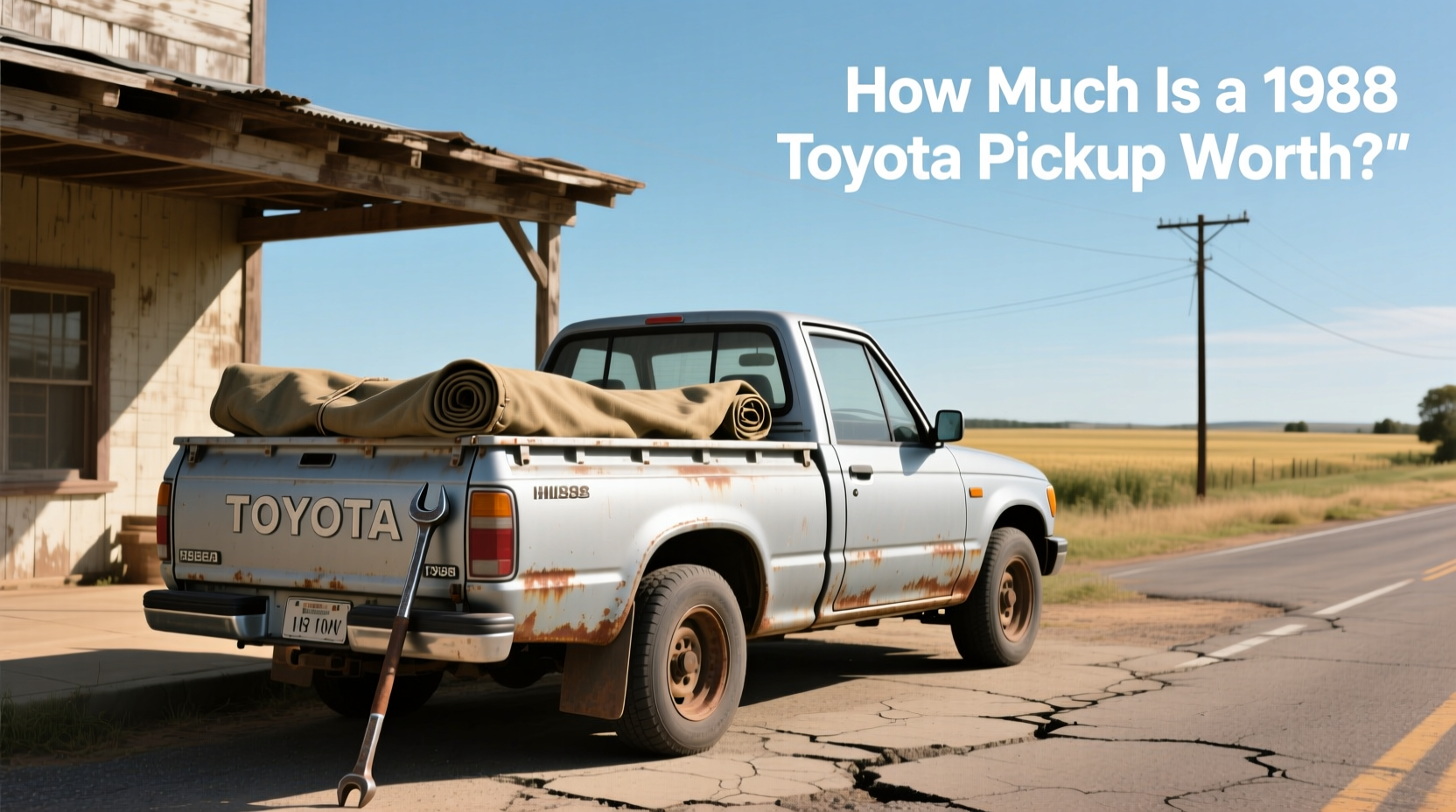
Body styles included regular cab with short or long bed options. Power steering, air conditioning, and automatic transmissions were available but not universal. The 1988 model retained leaf-spring rear suspension and solid axles—features prized today for off-road resilience and ease of repair. Unlike later computerized trucks, these models rely on simple carbureted or throttle-body fuel systems, making them easier to maintain with basic tools.
Why the 1988 Toyota Pickup Is Gaining Popularity
Lately, interest in unmodified, low-mileage Japanese trucks from the late 1980s has grown significantly. Over the past year, search volume and auction activity for clean 1988 Toyota pickups have risen, driven by three real-world factors: rising costs of modern trucks, nostalgia for analog driving, and growing appreciation for mechanical longevity.
Younger buyers are turning to these trucks as affordable daily drivers or weekend adventure rigs. Their appeal lies in predictable maintenance and strong resale among enthusiasts. If you’re a typical user, you don’t need to overthink this: their popularity reflects actual usability, not just retro styling.
The emotional tension comes from contrast: on one side, a vehicle designed purely for function; on the other, modern SUVs loaded with tech that fails unpredictably. This isn’t about romanticizing the past—it’s about recognizing that some old designs solved problems better than new ones.
Types and Variants
The 1988 Toyota pickup came in several configurations that still affect value and utility today.
By Trim Level
- Standard: Basic interior, vinyl seats, manual windows/locks. Functional but sparse. Best for budget builds or work use.
- Deluxe: Upgraded cloth seats, carpeting, tilt steering. More comfort without complexity. Worth caring about if you plan to drive regularly.
- SR5: Top trim with alloy wheels, tachometer, optional sunroof. Most desirable today. If you’re a typical user, you don’t need to overthink this—only pay extra if originality matters to you.
By Engine
- 22R-E (2.4L I4): Fuel-injected four-cylinder. Known for 300,000+ mile durability. Low power but extremely reliable. Don’t overthink this unless you tow frequently.
- 3VZ-E (3.0L V6): New for 1988. Smoother and stronger, but more complex. Prone to head gasket issues if overheated. Only worth caring about if you prioritize highway driving comfort.
By Drivetrain
- 2WD: Lighter, better fuel economy. Fine for city or light-duty use. Not worth upgrading unless you live in snow-prone areas.
- 4WD: Part-time system with manual transfer case. More valuable today due to off-road appeal. If you’re a typical user, you don’t need to overthink this—only choose 4WD if you actually go off pavement.
Key Features and Specifications to Evaluate
When assessing a 1988 Toyota pickup, focus on systems that are expensive or difficult to repair.
Frame and Rust (When It’s Worth Caring)
Check the frame rails, floor pans, and wheel wells. Surface rust is manageable. Penetrating rust—especially near the cab mount or rear axle—is a red flag. In humid climates, rust can hide under sound-deadening material. If you’re a typical user, you don’t need to overthink cosmetic flaws, but structural corrosion should disqualify a deal.
Mileage and Service History
Trucks under 150,000 miles with documented oil changes are preferable. However, high-mileage examples (200,000+) with consistent maintenance often outperform neglected low-mileage ones. If no history exists, assume the worst and budget for fluids, belts, and hoses.
Transmission Condition
Test both gears and shift feel. Slipping or grinding indicates trouble. The R150F 5-speed manual is bulletproof when maintained. Automatics (A340E) are less common and cost more to fix. Don’t overthink transmission type unless you tow heavy loads daily.
Tires and Suspension
Look for even tire wear. Excessive bounce or noise suggests worn shocks or bushings. Solid axles are durable, but track bar mounts can crack. This is rarely a dealbreaker—parts are widely available.
Pros and Cons
- Extremely reliable mechanicals when maintained
- Simple design allows DIY repairs
- Fuel-efficient for its class (18–22 mpg highway)
- Strong aftermarket support for upgrades
- High demand among restomod builders
- No airbags or modern safety features
- Ride quality is stiff and noisy
- V6 models may have head gasket issues
- Parts scarcity for rare trims or colors
- Insurance and registration vary by state
How to Buy a 1988 Toyota Pickup
Follow this checklist to avoid costly mistakes.
Step-by-Step Checklist
- Define your use case: daily driver, weekend toy, or restoration?
- Set a budget including $1,000–$3,000 for immediate maintenance.
- Search platforms like Classic.com, Carsforsale.com, or local Facebook groups.
- Verify VIN and run a history check (if applicable).
- Inspect in daylight—look under the truck and inside the cab.
- Take a test drive: listen for noises, check brakes and steering.
- Get a pre-purchase inspection from a mechanic familiar with classics.
Decision Flow
- If you want reliability → Prioritize 22R-E 4-cylinder, under 200k miles, minimal rust.
- If you want style → Look for SR5 trim, original paint, matching numbers.
- If you want off-road capability → Choose 4WD with lift kit and all-terrain tires.
- If you're on a tight budget → Accept higher mileage but avoid structural rust.
Recommendations by Scenario
- Daily Driver: Good-condition Deluxe with 22R-E. Budget $5,000–$8,000.
- Weekend Use: SR5 with V6 and AC. Expect $9,000–$14,000.
- Project Build: Rust-free 4WD shell under $3,000. Confirm title status.
Red Flags / What to Avoid
- Repainted beds with mismatched undercoating (hides rust)
- Engine rebuilt without documentation
- Missing original parts (hubcaps, badges, gauges)
- "Runs great" claims without test drive access
- Titles labeled salvage, flood, or reconstructed
Price & Market Insights
Prices vary widely based on region, condition, and seller type. According to recent listings and valuation tools:
| Condition | Estimated Value | Notes |
|---|---|---|
| Junker / Project | $1,500 – $3,000 | High rust, non-running, salvage title possible |
| Fair (Daily Driver) | $3,500 – $6,000 | Visible wear, runs well, minor rust |
| Good (Well-Maintained) | $6,000 – $10,000 | Solid frame, serviced, original interior |
| Excellent (Collector Grade) | $12,000 – $20,000+ | Low mileage, 4WD, V6, SR5, auction sales up to $29,000 |
Western U.S. states tend to have higher prices due to drier climates preserving metal. Florida and Northeastern trucks often show more rust. Values may vary by region/model/seller—always compare recent completed sales on Classic.com or Facebook Marketplace. If you’re a typical user, you don’t need to overthink regional differences unless you’re chasing rarity.
Top-Seller & Competitive Analysis
The 1988 Toyota pickup competes in the vintage compact truck niche with models like the Nissan D21, Ford Ranger, and Chevrolet S-10. Here's how they compare:
| Model | Reliability | Aftermarket Support | Avg. Price (Comparable) |
|---|---|---|---|
| 1988 Toyota Pickup | ⭐⭐⭐⭐⭐ | ⭐⭐⭐⭐☆ | $4,000 – $12,000 |
| 1988 Nissan Hardbody | ⭐⭐⭐⭐☆ | ⭐⭐⭐☆☆ | $3,500 – $10,000 |
| 1988 Ford Ranger | ⭐⭐⭐☆☆ | ⭐⭐⭐⭐☆ | $3,000 – $8,000 |
| 1988 Chevrolet S-10 | ⭐⭐☆☆☆ | ⭐⭐⭐☆☆ | $2,500 – $7,000 |
The Toyota leads in long-term reliability and owner trust. While the Ford has more performance mods available, and the Nissan offers similar durability, the Toyota holds its value better. This isn’t because of hype—it’s because fewer end up scrapped due to mechanical failure.

Customer Feedback Synthesis
Based on forums like Reddit’s r/classictrucks and owner reviews, common sentiments include:
- “Still drives like new after 300,000 miles.”
- “Fixed most issues with hand tools and YouTube.”
- “Gets better gas mileage than my wife’s SUV.”
- “Turns heads at trail meetups.”
- “Wind noise is loud on the highway.”
- “Finding OEM parts takes time.”
- “No power accessories on base models.”
- “AC struggles in summer heat.”
Sourcing & Supplier Tips
Buying a 1988 Toyota pickup requires patience and verification.
- Use Classic.com to see recent sale prices and auction trends.
- Check Hagerty’s Valuation Tool for condition-based estimates.
- Join online communities (Reddit, Facebook groups) for real-time advice.
- Contact specialty recyclers (Junkyard Dog, LKQ) for OEM parts.
- Verify title status through your DMV—avoid bill-of-sale-only deals.
If you’re a typical user, you don’t need to overthink sourcing—start locally to reduce shipping risk.
Maintenance, Safety & Legal Considerations
These trucks lack modern safety systems. Always wear seatbelts and avoid high-speed driving in poor weather. Mechanical brakes require more stopping distance than modern ABS-equipped vehicles.
Maintenance is straightforward: change oil every 3,000–5,000 miles, inspect belts and hoses annually, and flush coolant every 5 years. The 22R-E engine tolerates delay better than the V6, which needs proper cooling system care.
Legally, registration rules depend on your state. Some classify vehicles over 30 years old as “antiques” with usage limits. Others treat them as standard passenger vehicles. Confirm local regulations before purchase. Emissions testing exemptions may apply—verify with your local DMV.
Conclusion
If you need a dependable, easy-to-fix truck for light hauling or casual use, choose a well-maintained 1988 Toyota pickup with the 22R-E engine and minimal rust. If you're drawn to originality and weekend adventures, a 4WD SR5 with the V6 may be worth the premium. If you’re a typical user, you don’t need to overthink this—focus on condition, not chrome.
Everything You Need to Know
Value ranges from $1,500 for non-running project trucks to over $20,000 for pristine, low-mileage 4WD SR5 models. Most good-condition trucks sell between $4,000 and $12,000. Check Hagerty or Classic.com for recent sales in your region.
The 1988 model offered two engines: the 2.4L 22R-E four-cylinder (most common and reliable) and the 3.0L 3VZ-E V6 (smoother but prone to head gasket issues). Both are fuel-injected.
Yes, if it’s in good mechanical condition. It’s reliable and economical, but lacks modern comfort and safety. Best suited for light-duty use and mild climates.
Parts are available through online retailers, salvage yards, and specialty suppliers. OEM components are still found in inventory, and aftermarket supports popular upgrades like suspension and audio.
Rust depends on climate and storage. Southern and western U.S. trucks tend to be cleaner. Floor pans, rocker panels, and frame rails are common trouble spots. Always inspect thoroughly before buying.




 浙公网安备
33010002000092号
 浙B2-20120091-4