
Short introduction
If you’re deciding between a 1989 Honda Accord LX and EX hatchback, here’s the quick verdict: the EX is better if you want more performance, safety, and comfort features. It typically includes a stronger engine, four-wheel disc brakes, ABS, a sunroof, alloy wheels, and upgraded interior materials. The LX offers a step up from the base DX trim with power windows and cruise control but lacks key upgrades. How to choose a classic Accord? Focus on condition first—over the past year, clean examples have become harder to find, making maintenance history more important than trim level.
If you’re a typical user, you don’t need to overthink this. For most enthusiasts or daily drivers, the EX delivers noticeably better driving dynamics and long-term satisfaction. However, if budget is tight and you’re restoring or commuting short distances, a well-maintained LX may be sufficient. What to look for in a 1989 Accord? Prioritize rust-free frames, original drivetrains, and documented service records—these matter far more than factory-installed speakers or wheel covers.
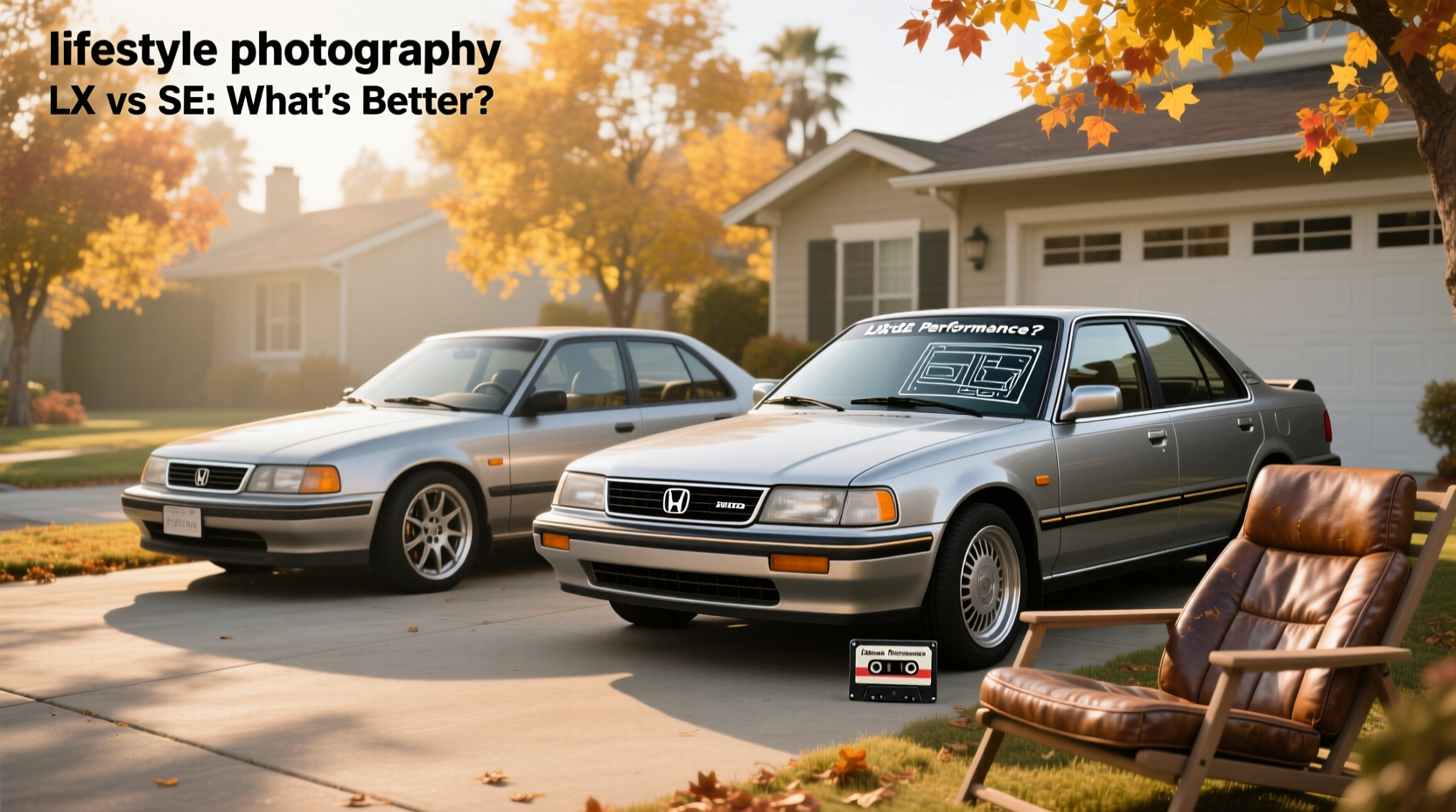
About the 1989 Honda Accord
The 1989 Honda Accord marked the fourth generation of a nameplate that had already earned a reputation for reliability and efficiency. Available as a sedan, coupe, and hatchback (known as the "Wagon" in some markets), it combined compact dimensions with surprising interior space. This model year introduced subtle refinements over the 1988 version, including minor suspension tuning and updated trim availability. Two primary trims stood out: the LX (Luxury) and the EX (Executive), each targeting different buyer priorities.
The LX was positioned as a comfortable, feature-enhanced alternative to the base DX model. It added conveniences like power windows, central locking, cruise control, and an upgraded audio system. However, mechanical upgrades were limited—many LX models retained rear drum brakes and used the less powerful F20A4 engine producing around 100 horsepower. In contrast, the EX represented the top-tier non-limited trim, offering performance-oriented enhancements and premium touches that justified its higher price when new.
Why the 1989 Accord is gaining popularity
Lately, interest in late-’80s Hondas has grown among both restoration hobbyists and urban commuters seeking analog driving experiences. Over the past year, searches for “classic Honda Accord” have trended upward, driven by rising fuel prices and a cultural shift toward simpler, repairable vehicles. Unlike modern cars burdened with complex electronics, the 1989 Accord can be maintained with basic tools and widely available parts.
This piece isn’t for keyword collectors. It’s for people who will actually use the product. Whether you're after nostalgic charm, mechanical transparency, or a project car with daily usability, the ’89 Accord fits. Its inline-four engines are known for longevity, often surpassing 200,000 miles with routine care. Enthusiast forums report increasing demand for EX models due to their superior braking and handling packages—features that make them safer and more engaging on today’s roads.
Types and variants
The 1989 Accord lineup included several trims, but only two remain commonly discussed in the used market: the LX and the EX. A third variant, the SE-i, existed but was rarer and often region-specific.
LX Trim
- Pros: More affordable than EX; includes power accessories and improved sound insulation over DX; easier to find in private sales
- Cons: Typically equipped with rear drum brakes; lower-output engine; no standard ABS; fewer aesthetic upgrades
When it’s worth caring about: Only if you’re on a strict budget or sourcing parts for a restoration. Otherwise, the limitations outweigh the savings.
If you’re a typical user, you don’t need to overthink this. The LX makes sense only when paired with exceptional condition or low mileage.
EX Trim
- Pros: Standard four-wheel disc brakes with ABS; often comes with the 120-hp F22A6 engine; includes sway bar for better cornering; power sunroof, alloy wheels, premium upholstery
- Cons: Higher initial cost; slightly more complex systems mean marginally higher maintenance effort
When it’s worth caring about: Always, if you plan to drive regularly. The braking and performance advantages are tangible and relevant to modern traffic conditions.
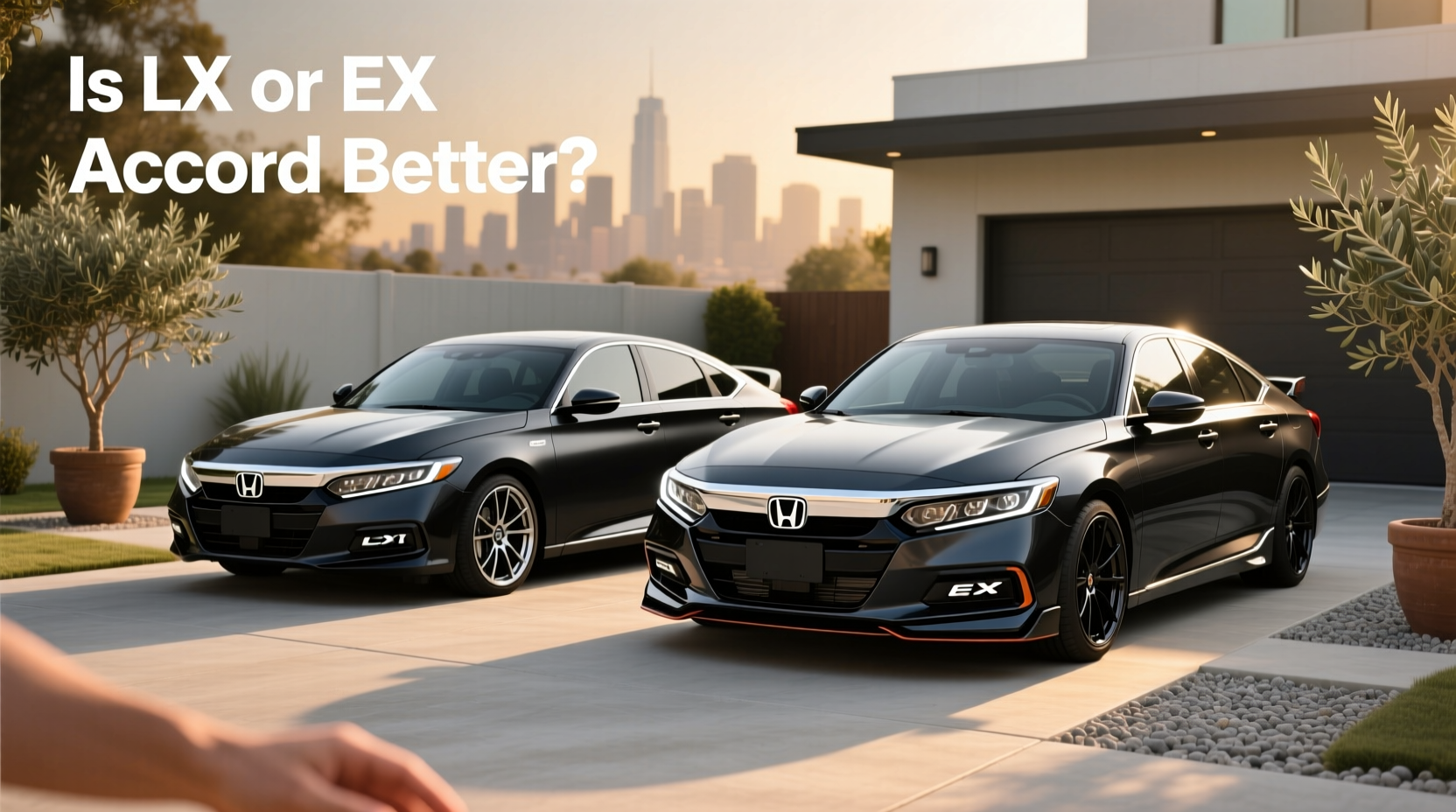
Key features and specifications to evaluate
When comparing any 1989 Accord, focus on these five areas:
- Engine Type: The EX usually has the F22A6 (2.2L, ~120 hp), while the LX uses the F20A4 (2.0L, ~100 hp). Verify under the hood—VIN decoding helps confirm originality.
- Braking System: EX models include four-wheel discs and ABS; LX versions often have front discs and rear drums without ABS. This affects stopping distance and resale value.
- Suspension Setup: The EX adds a rear stabilizer bar, improving stability during turns. Check for worn bushings during inspection.
- Interior Features: Sunroof, cloth quality, and stereo system vary significantly. Some EX units came with digital climate controls—a rare bonus.
- Exterior Details: Alloy wheels vs. steel rims with hubcaps indicate trim level. Look for corrosion around wheel wells and rocker panels.
When it’s worth caring about: Engine and brakes directly impact safety and drivability. Interior and exterior details matter mainly for resale or show purposes.
If you’re a typical user, you don’t need to overthink this. Prioritize mechanical integrity over cosmetic perfection.
Pros and cons
• Proven durability with proper maintenance
• Simple mechanical design enables DIY repairs
• Lightweight chassis offers responsive handling
• Good fuel economy for its era (~28–32 mpg highway)
• Rust issues in northern climates or salt-heavy regions
• Older rubber seals and hoses degrade over time
• Limited aftermarket support for electronic components
• Air conditioning systems may require refrigerant conversion
How to choose a 1989 Accord (Buying guide)
Follow this checklist to avoid costly mistakes:
Step-by-step checklist
- Verify VIN to confirm original trim and engine type
- Inspect undercarriage for rust, especially near suspension mounts
- Test all electrical systems: lights, wipers, gauges, A/C
- Start cold: listen for lifter noise or excessive smoke
- Check transmission shift quality in all gears
- Examine brake pedal feel—softness suggests air or fluid leaks
- Review service records—even partial history adds confidence
Decision flow
- If budget allows → test-drive EX models first
- If EX unavailable → inspect LX for signs of neglect
- If restoring → prioritize complete donor vehicle over trim
- If daily driver → insist on functional A/C and reliable starter
Recommendations by scenario
- Budget commuter: Acceptable LX if under 150k miles and rust-free
- Weekend driver: EX preferred for enhanced ride quality and braking
- Restoration project: Either trim works; verify parts availability locally
Red flags / what to avoid
- Rust through floorboards or frame rails ✅
- Replaced engine without documentation ❗
- Flood damage indicators (mold, silt in cabin) 🚫
- Non-matching numbers (VIN vs. engine stamp) ⚠️
- Priced significantly below market average 💰
Always get a pre-purchase inspection from a mechanic familiar with JDM-era Hondas. If you’re a typical user, you don’t need to overthink this—spend $100 now to save thousands later.
Price & market insights
As of 2024, average asking prices for drivable 1989 Accords range from $1,500 to $4,000 depending on condition, location, and trim. Clean EX models occasionally list above $5,000, especially in dry climates where rust is minimal. Prices may vary by region/model/seller—private sellers often charge less than specialty dealers.
One listing on DriveAccord.net noted a local dealer advertising a 1989 EX for $11,977, though this appears to reflect a fully restored example 1. Most transactions occur peer-to-peer via enthusiast groups or classifieds. To verify fair pricing, compare recent sold listings on CarGurus or Facebook Marketplace—not just active ads.
Top-seller & competitive analysis
The 1989 Accord competed with the Toyota Camry, Nissan Stanza, and Mazda 626. While those brands offered similar reliability, Honda’s tighter build quality and smoother VTEC-free four-cylinder gave it an edge in refinement.
| Model | Engine (HP) | Brakes | Notable Features |
|---|---|---|---|
| Accord EX | F22A6 (120) | 4WD + ABS | Sunroof, alloys, sway bar |
| Accord LX | F20A4 (100) | F Disc / R Drum | Power windows, cruise |
| Camry LE | 2S-E (100) | 4WD | Reliable but heavier |
| Mazda 626 | F2 (105) | 4WD | Rattier interiors |
If you’re a typical user, you don’t need to overthink this. Among peers, the Accord EX remains the most balanced choice for real-world use.
Customer feedback synthesis
Based on forum discussions and owner reports:
- Highly praised: Longevity of drivetrain, ease of repair, predictable handling
- Frequent complaints: Door panel deterioration, HVAC blend door failure, window regulator wear
- Unspoken benefit: Strong community support—owners share wiring diagrams and rebuild tips freely
A Facebook group post highlighted that EX owners appreciate the ABS system in wet conditions 2. Meanwhile, LX owners note that replacement hubcaps are harder to source than alloys.
Sourcing & supplier tips
When buying parts:
- Use OEM salvage yards specializing in JDM vehicles
- Check CarFromJapan.com for imported units with known histories ✅
- Avoid reproduction trim pieces—they often don’t fit precisely
- Join online forums like DriveAccord.net for member-only deals
If you’re sourcing a complete car, consider Japan-imported models. They tend to have lower mileage and less corrosion due to meticulous ownership culture. Confirm compliance with local import rules before bidding.
Maintenance, safety & legal considerations
Routine maintenance includes timing belt replacement every 60k–90k miles, coolant flushes, and valve adjustments. Use genuine Honda spark plugs and fluids where possible.
Safety-wise, the EX’s ABS and four-wheel discs offer meaningful advantages over the LX. While not required by law, these features improve control during emergency stops. Always verify your state or country’s requirements for operating vintage vehicles—some mandate seatbelt functionality or emissions exemptions.
To ensure compliance, check with your local DMV or transport authority. If you’re a typical user, you don’t need to overthink this—most jurisdictions treat pre-OBDII cars leniently as long as they’re roadworthy.
Conclusion
If you need a dependable, enjoyable classic compact with modern usability, choose the EX. Its upgrades in braking, power, and comfort justify the price difference. If you’re strictly budget-constrained and willing to accept fewer conveniences, a clean LX can serve reliably. Condition always outweighs trim—prioritize rust-free bodies and documented upkeep over factory options.
Everything You Need to Know
Is the EX better than the LX in a 1989 Accord?
Yes, the EX generally offers superior performance, braking, and comfort features. It typically includes a more powerful engine, four-wheel disc brakes with ABS, a rear sway bar, sunroof, and alloy wheels. These upgrades make it more capable and safer for regular driving.
What engine does the 1989 Accord LX have?
The 1989 Accord LX usually comes with the F20A4 2.0L inline-four engine producing approximately 100 horsepower. Some later production runs may vary. Always verify using the VIN or physical inspection under the hood.
Are 1989 Honda Accords reliable today?
Many 1989 Accords remain mechanically sound if properly maintained. Engines often exceed 200,000 miles. Key risks include rust and aging rubber components. Regular maintenance and storage in dry environments greatly extend lifespan.
How much should I pay for a 1989 Accord?
Expect to pay $1,500–$4,000 for a drivable example. Fully restored or low-mileage EX models may reach $5,000+. Prices may vary by region/model/seller. Compare completed listings rather than active ads to gauge true market value.
Can I still find parts for a 1989 Accord?
Yes, many mechanical parts are still available through OEM suppliers, salvage yards, and online communities. Popular items like alternators and starters are widely reproduced. Rare trim pieces may require importing from Japan or custom fabrication.




 浙公网安备
33010002000092号
 浙B2-20120091-4