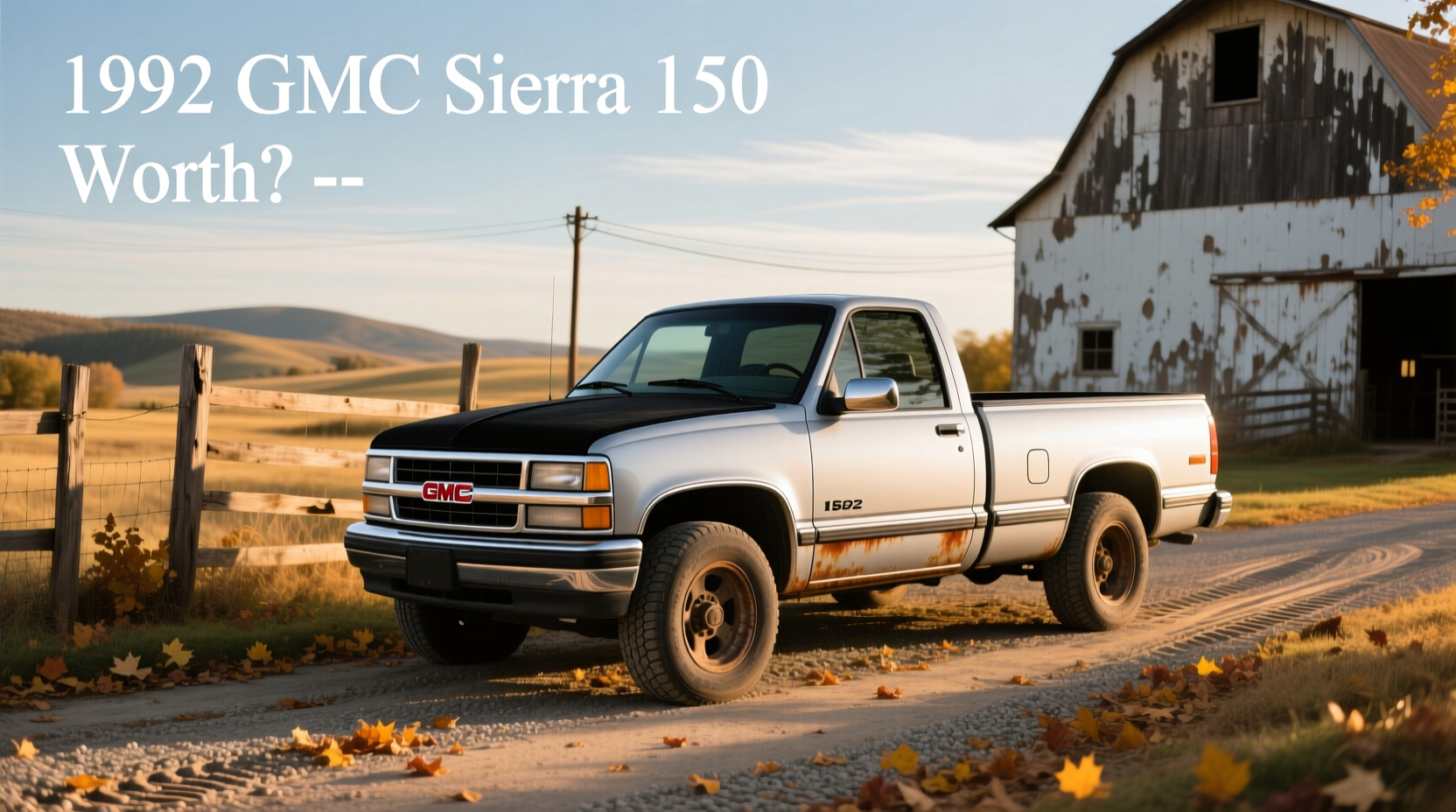
If you’re looking at a 1992 GMC Sierra 1500, here’s how to quickly decide what it’s worth and whether it’s a smart buy: focus on condition, mileage, originality, and trim level. Most average-condition trucks sell between $1,800 and $4,000 1. Well-preserved or modified models can reach $20,000+ on classic car platforms like Hagerty or Hemmings 2. If you’re a typical user, you don’t need to overthink this. For daily use or light restoration, prioritize mechanical reliability over rarity. Over the past year, interest in early ’90s full-size pickups has grown—not because they’re suddenly rare, but because parts availability remains strong and their simplicity makes ownership manageable. What to look for in a 1992 GMC pickup truck? Start with frame integrity, engine responsiveness, and evidence of rust repair.
About the 1992 GMC Sierra 1500
The 1992 GMC Sierra 1500 was part of GM’s popular GMT400 platform, known for its boxy yet functional design, improved ride quality over previous generations, and durable powertrain options. It competed directly with Ford’s F-150 and Dodge’s Ram, offering both two- and four-wheel drive configurations, multiple bed lengths (short or long), cab styles (regular or extended), and trim levels ranging from basic workhorse models to the more luxurious SLE and SLT trims.
Under the hood, common engines included the 4.3L V6, 5.0L V8, and 5.7L V8—each paired with either a manual or automatic transmission. The 5.7L V8, especially when combined with throttle-body injection, delivered solid torque for towing and hauling, though fuel economy remained modest by today’s standards. These trucks were built for utility first, comfort second—but even base models featured straightforward controls and easy maintenance access.
Why the 1992 GMC Sierra Is Gaining Popularity
Lately, older trucks like the 1992 Sierra 1500 have seen renewed interest—not due to sudden scarcity, but because of shifting ownership economics. With new truck prices climbing past $50,000–$70,000, many buyers are turning to reliable vintage alternatives that cost less than a single tire set for a modern vehicle. These trucks are also mechanically simple: no complex driver aids, minimal electronics, and widely available aftermarket support.
This resurgence isn’t driven by nostalgia alone. Enthusiasts appreciate the GMT400’s balance of size and drivability. Unlike earlier heavy-duty frames, the ’92 Sierra handles city driving reasonably well while still capable of towing trailers or hauling equipment. Restoration projects are common, especially among DIY mechanics who value compatibility across GM V8 platforms. Additionally, some modified examples now appear in online auctions with premium pricing, signaling stronger collector sentiment.
If you’re a typical user, you don’t need to overthink this. The appeal lies not in flipping profits but in predictable costs and usable functionality. This piece isn’t for keyword collectors. It’s for people who will actually use the product.
Types and Variants
| Variant | Pros | Cons |
|---|---|---|
| Regular Cab, Long Bed (Base Trim) | Durable, low purchase cost, excellent for work | Minimal comfort features, limited passenger space |
| Extended Cab (SLE/SLT) | Better seating, upgraded interior, optional A/C and cruise control | Higher price point, more wear on high-mileage units |
| 4x4 Models with 5.7L V8 | Strong off-road capability, better resale if maintained | Fuel consumption ~12 mpg, transfer case maintenance required |
| Short Bed, Two-Wheel Drive | Easier parking, lighter weight, simpler drivetrain | Limited cargo capacity, less desirable for collectors |
When choosing a variant, consider your primary use. Daily drivers benefit from extended cabs with air conditioning. Off-road enthusiasts should verify 4x4 operation thoroughly. Work-focused buyers often prefer long beds despite reduced maneuverability.
Key Features and Specifications to Evaluate
- Engine Type: The 5.7L V8 offers the best performance and aftermarket support. Check for smooth idle and absence of knocking.
- Mileage: Below 100,000 miles is ideal. Above 150,000 requires scrutiny of service history.
- Transmission: 4L60 automatic is common. Look for clean fluid and smooth shifts.
- Frame Condition: Rust around the rear leaf spring mounts and cab corners is frequent. Inspect underbody carefully.
- Interior Wear: Original upholstery increases value only if intact. Cracked dashboards are widespread due to sun exposure.
- Originality: Matching numbers and factory options boost collector interest, but matter little for utilitarian use.
When it’s worth caring about: If you plan to restore or resell as a show truck, every detail counts. When you don’t need to overthink it: For personal use or farm duty, mechanical soundness outweighs cosmetic perfection.
Pros and Cons
| Pros ✅ | Cons ⚠️ |
|---|---|
| Simple mechanical systems ease repairs | Poor fuel efficiency (~10–14 mpg) |
| Wide availability of replacement parts | Rust-prone frame and floor pans |
| Strong V8 engine options with tuning potential | Outdated safety features (no airbags, weak crumple zones) |
| Low acquisition cost compared to new trucks | Comfort and noise levels below modern standards |
| High customization potential (lift kits, wheels, audio) | Cooling system failures common in overheated engines |
How to Choose a 1992 GMC Sierra 1500
Step-by-Step Checklist
- Verify title status (clean vs. salvage).
- Inspect for frame rust, especially behind rear tires and under doors.
- Start the engine cold—listen for knocks or excessive smoke.
- Test all gears including 4WD (if equipped).
- Check dashboard warning lights and HVAC operation.
- Review service records—if none exist, assume worst-case maintenance.
- Get a pre-purchase inspection from a mechanic familiar with GMT400 trucks.
Decision Flow
- Need a cheap work truck? → Prioritize metal condition and drivetrain health.
- Planning a resto-mod? → Seek original interiors and matching VIN/engine numbers.
- Want weekend cruiser capability? → Choose SLE/SLT with A/C and updated tires.
- Concerned about running costs? → Avoid high-mileage 4x4s without recent rebuilds.
Recommendations by Scenario
- Budget Buyer ($2,000–$4,000): Look for local private sellers with documented oil changes. Accept cosmetic flaws if structure is solid.
- Restoration Project ($5,000–$10,000): Target low-mileage SLE models with factory manuals and original badges.
- Collector Interest (>$15,000): Focus on auction listings via Classic.com or Hagerty where documentation enhances credibility 3.
Red Flags / What to Avoid
❗ Avoid trucks with:
- Frame patches or welds indicating prior rust repair
- Odometer discrepancies or missing service history
- Engine replacements without supporting paperwork
- Flood damage signs (musty smell, silt in seats, corroded connectors)
- Price significantly below market average—likely major hidden issues
If you’re a typical user, you don’t need to overthink this. A clean title and solid frame matter more than showroom shine.
Price & Market Insights
Value varies dramatically based on condition and location. According to Kelley Blue Book, trade-in values for standard models start around $1,800, while private-party asking prices average $3,000–$4,000 4. In contrast, pristine examples listed on Hemmings or Classic.com may ask $15,000–$20,000, with some exceeding that if professionally restored.
Regional differences affect pricing. Dry climates (Arizona, Nevada) tend to preserve metal better, increasing demand. Rust-belt states (Michigan, Pennsylvania) often offer lower prices due to corrosion risk—even if current appearance seems acceptable.
When it’s worth caring about: When comparing apples-to-apples deals, always adjust expectations based on local climate impact. When you don’t need to overthink it: National averages give a baseline, but your decision hinges on the individual truck’s condition, not regional trends.
Top-Seller & Competitive Analysis
While no single seller dominates the 1992 Sierra market, several platforms provide transparency into active inventory and recent sales:
| Platform | Best For | Limitations |
|---|---|---|
| Kelley Blue Book | Baseline valuation estimates | Does not reflect rare or modified builds |
| Edmunds Appraisal Tool | Condition-adjusted pricing | Less data on collector-grade vehicles |
| Cars.com | Current local listings | Mix of realistic and inflated prices |
| Hemmings / Classic.com | High-end and restored models | Premium bias; not representative of average trucks |
Use multiple sources to triangulate fair value. Relying solely on KBB may undervalue a show-ready build; using only Hemmings could inflate expectations for a daily driver.
Customer Feedback Synthesis
Analysis of owner reviews and forum discussions reveals consistent themes:
- Positive: “Reliable once sorted,” “easy to work on,” “parts everywhere,” “great for towing small trailers.”
- Negative: “Rusty floors within five years,” “overheats in summer traffic,” “transmission slips after 180k miles,” “seat foam disintegrates.”
The most satisfied owners treated these trucks as tools—not luxury transports. Dissatisfaction usually stemmed from unexpected repair bills after buying a seemingly affordable project with hidden decay.
If you’re a typical user, you don’t need to overthink this. Real-world feedback confirms that upfront inspection saves long-term pain.
Sourcing & Supplier Tips
Private sellers dominate the market for 1992 Sierras. Dealerships rarely stock them unless part of a classic collection. Online marketplaces vary in reliability:
- Cars.com: Best for finding nearby trucks currently for sale.
- Facebook Marketplace: High volume, but higher scam risk—always inspect in person.
- Classic Car Platforms (Hagerty, Classic.com): Better for vetted, higher-value examples with documentation.
When sourcing, contact sellers promptly and request full photo sets—including undercarriage shots. Ask specifically about cooling system work, transmission service, and any paint corrections.
Maintenance, Safety & Legal Considerations
Maintenance needs are predictable but non-negotiable. Key items include:
🔧 Radiator flushes every 2 years
🔧 Transmission fluid changes every 50,000 miles
🔧 Ball joints and tie rods inspected annually
🔧 Brake system overhaul recommended for trucks over 100k miles
Safety-wise, the 1992 Sierra lacks airbags, ABS, and electronic stability control. Drive accordingly—especially in wet conditions or emergency maneuvers.
Legally, ensure the truck meets your state’s emissions and safety inspection requirements. Some regions exempt vehicles over 25 years old. Verify locally before purchase.
If you’re a typical user, you don’t need to overthink this. Mechanical upkeep is cheaper than insurance claims from preventable failures.
Conclusion
If you need a rugged, affordable pickup for light hauling or nostalgic cruising, the 1992 GMC Sierra 1500 remains a viable option—provided you inspect carefully. For budget-conscious users, choose a structurally sound model under $4,000 and budget $1,000 for immediate maintenance. Collectors should focus on originality and provenance. If you’re a typical user, you don’t need to overthink this. Prioritize function over form, and let real-world condition—not listing photos—guide your decision.




 浙公网安备
33010002000092号
 浙B2-20120091-4