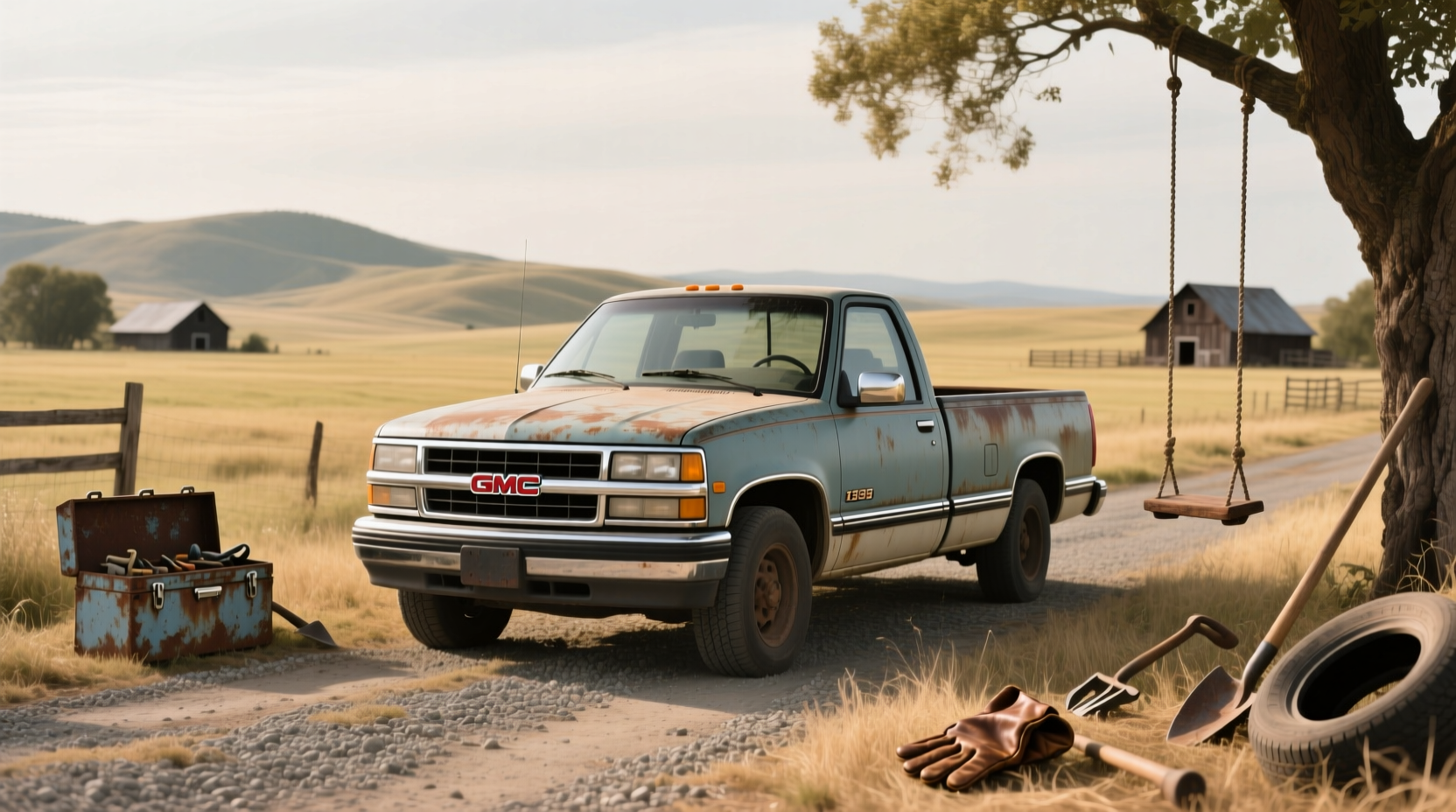
If you’re looking at how to choose a 1993 GMC Sierra 1500 pickup truck, start here: focus on frame integrity, engine responsiveness, and whether the 15-inch wheels are original or replaced. Most buyers don’t need rare trims—standard models with documented maintenance offer better value. If you’re a typical user, you don’t need to overthink this. Rust in floor pans and unverified transmission history are red flags worth walking away from. Over the past year, interest in 1993 GMC Sierra 1500 trucks has grown among DIY restorers and rural utility drivers who prioritize mechanical simplicity over modern tech.
About 1993 GMC Sierra 1500 Pickup Truck
The 1993 GMC Sierra 1500 was part of GM’s popular C/K series, known for its boxy design, durable chassis, and straightforward mechanics. It came with multiple engine options, including the 4.3L V6, 5.0L V8, and 5.7L V8, paired with either manual or automatic transmissions. Built on a body-on-frame platform, it offered rear-wheel drive as standard, with four-wheel drive available on many trims. The interior was utilitarian, with vinyl seats and basic HVAC systems, reflecting its role as a work-focused vehicle.
Its towing capacity ranged between 5,000 and 7,000 pounds depending on configuration, making it suitable for light to moderate hauling. The suspension used leaf springs in the rear and coil springs up front, tuned more for durability than comfort. This generation is often referred to as the "OBS" (Old Body Style) by enthusiasts, marking the last of the square-angled Sierras before the 1999 redesign.
Why 1993 GMC Sierra 1500 Pickup Truck Is Gaining Popularity
Lately, the 1993 Sierra 1500 has seen renewed attention—not because it’s advanced, but because it’s accessible. Mechanical simplicity means owners can perform repairs without specialized tools or software. Parts remain widely available due to shared components with Chevrolet C/K trucks. Recently, rising demand for analog driving experiences and off-grid readiness has drawn hobbyists and preppers toward these older full-size pickups.
Another factor: affordability. Compared to modern trucks with complex electronics and high repair costs, a well-maintained 1993 Sierra offers predictable ownership. Enthusiast communities have also expanded online, sharing restoration guides and sourcing tips. If you’re a typical user, you don’t need to overthink this—it’s not about nostalgia, but practicality.
Types and Variants
Regular Cab vs. Extended Cab
- 👤Regular Cab: Two doors, single row seating. Best for solo drivers or those using the bed daily. More affordable, easier to park.
- 👥Extended Cab: Smaller rear-hinged doors, limited back seat. Adds versatility for occasional passengers but reduces cargo access.
Drive Type
- 📍Rear-Wheel Drive (RWD): Standard setup. Lighter, simpler, lower maintenance. Sufficient for dry climates and paved roads.
- 🚚Four-Wheel Drive (4WD): Optional. Better for snow, mud, or uneven terrain. Adds weight and potential drivetrain wear.
Trim Levels
- ⚙️SL: Base model. Manual windows/locks, basic gauges. Lowest price, highest reliability if maintained.
- ✨SLE: Higher trim. Power accessories, cruise control, upgraded stereo. More comfortable but pricier to repair.
✅ Key Takeaway: For most users, Regular Cab RWD SL models provide the best balance of cost and function. If you’re a typical user, you don’t need to overthink this—extra features rarely justify added complexity.
Key Features and Specifications to Evaluate
When assessing a 1993 Sierra 1500, verify these core specs:
- Engine Type: 4.3L V6 (fuel-efficient), 5.0L V8 (balanced power), or 5.7L V8 (strongest towing). Check for oil leaks, smoke on startup, and smooth idle.
- Transmission: 4L60 or 4L80E automatics were common. Look for delayed shifting or grinding noises—signs of internal wear.
- Wheel Size: 15-inch wheels were standard1. Confirm tire compatibility and hub condition during inspection.
- Bed Length: Typically 6.5 ft or 8 ft. Shorter beds suit urban use; longer ones help contractors.
- Frame Condition: Inspect for rust, especially under the cab and near suspension mounts. Structural corrosion is a dealbreaker.
When it’s worth caring about: engine rebuild history, axle ratio (impacts fuel economy and towing), and whether emissions systems are intact. When you don’t need to overthink it: factory radio type, paint color, or minor interior tears.
Pros and Cons
Pros
- 🔧 Simple mechanical design allows owner-level repairs
- 🛒 Low purchase cost compared to newer trucks
- 🏭 Wide parts availability through OEM and aftermarket suppliers
- 🌐 Strong enthusiast community support
Cons
- ❗ No airbags or ABS (safety limitations)
- 🧼 Prone to rust in humid or snowy regions
- ⚡ Lower fuel efficiency (12–15 MPG typical)
- 📌 May lack modern diagnostics or OBD-II port
How to Buy a 1993 GMC Sierra 1500 Pickup Truck
Step-by-Step Checklist
- Define your use case: daily driver, project build, or utility hauler?
- Set a budget including potential repairs (recommended: $2,000–$4,000 above purchase price)
- Search listings locally and online (avoid long-distance purchases without inspection)
- Verify VIN matches title and major components
- Inspect frame, engine bay, bed, and interior for rust/damage
- Test drive: listen for abnormal noises, check transmission shift quality
- Review service records—if none exist, assume worst-case maintenance
- Negotiate based on needed repairs (tires, brakes, fluids)
- Complete transaction with bill of sale and title transfer
Decision Flow
- If you want low-cost transportation → choose RWD Regular Cab SL
- If you tow equipment regularly → prioritize 5.7L V8 with 4WD
- If restoring for shows → seek SLE trim with original parts
- If budget-constrained → avoid vehicles needing frame work
Recommendations by Scenario
- Farm/utility use: 4WD Extended Cab with 8-ft bed
- City commuting: RWD Regular Cab, any engine (prioritize rust-free body)
- Restoration project: Full-time 4WD SLE with matching numbers
Red Flags / What to Avoid
- Rust holes in floorboards, rocker panels, or frame rails
- Rebuilt engine without documentation
- Salvage or flood titles (hard to insure, resale issues)
- Missing differential cover or leaking axles
- Inconsistent odometer readings or no service history
This piece isn’t for keyword collectors. It’s for people who will actually use the product.
Price & Market Insights
As of now, prices for a 1993 GMC Sierra 1500 vary widely by region, condition, and drivetrain. Running base models (RWD, SL trim) typically sell between $2,000 and $5,000. Restored or low-mileage examples may reach $8,000–$12,000, especially in collector circles. Four-wheel-drive versions command a $500–$1,500 premium.
Prices may vary by region/model/seller—always compare local listings. In northern states, rust significantly lowers value. Southwest-based trucks often fetch higher prices due to better preservation. To verify fair pricing, check completed listings on auction platforms and cross-reference with private sales.
Top-Seller & Competitive Analysis
The 1993 Sierra competes directly with the Ford F-150 (1992–1996) and Dodge Ram 1500 (1994–2001). Each has strengths:
| Model | Reliability | Parts Cost | Towing Capacity | Common Issues |
|---|---|---|---|---|
| GMC Sierra 1500 | High (if maintained) | Moderate | Up to 7,000 lbs | Frame rust, carburetor tuning |
| Ford F-150 (OBS) | High | Low | Up to 7,500 lbs | Ignition switch failure |
| Dodge Ram 1500 (B3) | Moderate | Moderate | Up to 6,800 lbs | AFCO steering box wear |
If you’re a typical user, you don’t need to overthink this—Sierra shares parts with Chevrolet, which boosts availability. However, Ford leads in ease of DIY fixes.
Customer Feedback Synthesis
Based on owner forums and marketplace reviews:
- ✅ Most praised: Durability of 5.7L V8 engines, ease of upgrading suspension, spacious bed.
- ❗ Most criticized: Poor heater performance, lack of side impact protection, rapid interior fading.
- 🔧 Frequent mention: Need to replace window regulators and blend door actuators over time.
Sourcing & Supplier Tips
Look for trucks stored indoors or in dry climates. Private sellers often provide more transparency than dealers. When sourcing parts:
- Use interchange databases to find compatible components from Chevrolets
- Check salvage yards for donor vehicles with clean titles
- Order critical sensors or gaskets from reputable auto parts brands (ACDelco, Dorman)
- Verify return policies before ordering online
This piece isn’t for keyword collectors. It’s for people who will actually use the product.
Maintenance, Safety & Legal Considerations
Maintenance should include regular fluid changes, brake inspections, and frame checks. Use jack stands when working underneath—never rely on lifts alone. Since the 1993 Sierra predates standardized OBD-II, diagnostics require mechanical testing rather than scan tools.
Safety-wise, remember: no airbags, minimal crumple zones, and drum brakes on some rears. Drive accordingly. For legal compliance:
- Confirm the vehicle passes state emissions and safety inspections (requirements vary by state)
- Ensure VIN matches all documents
- Register under correct class (some states require antique plates after 25+ years)
To verify local regulations, contact your DMV or visit official state transportation websites.
Conclusion
If you need a dependable, easy-to-fix truck for light hauling or rural use, the 1993 GMC Sierra 1500 remains a solid pick—especially in RWD SL trim with documented care. If you’re a typical user, you don’t need to overthink this. But if you expect modern safety or digital connectivity, look elsewhere. Prioritize structural integrity over cosmetic appeal, and always budget for immediate maintenance.
FAQs
What wheel size does a 1993 GMC Sierra 1500 come with?
It originally came with 15-inch wheels as standard equipment. Some owners upgrade to 16- or 17-inch rims, but 15-inch remains optimal for load rating and clearance.
Is the 5.7L V8 engine reliable in the 1993 Sierra 1500?
Yes, the 5.7L V8 (L31) is known for durability when properly maintained. Common issues include intake manifold gasket leaks and carbon buildup—routine servicing prevents most failures.
Can I tow a trailer with a 1993 GMC Sierra 1500?
Yes, it can tow up to 7,000 pounds when equipped with the V8 engine, proper hitch, and cooling package. Always confirm axle ratio and transmission health before heavy towing.
Are parts still available for the 1993 GMC Sierra 1500?
Yes, many components are still manufactured due to platform sharing with Chevrolet trucks. Aftermarket support remains strong for brakes, suspension, and engine parts.
Does the 1993 Sierra 1500 have anti-lock brakes?
No, ABS was not standard or commonly available on the 1993 model. Braking relies on hydraulic pressure only, requiring careful modulation in wet conditions.




 浙公网安备
33010002000092号
 浙B2-20120091-4