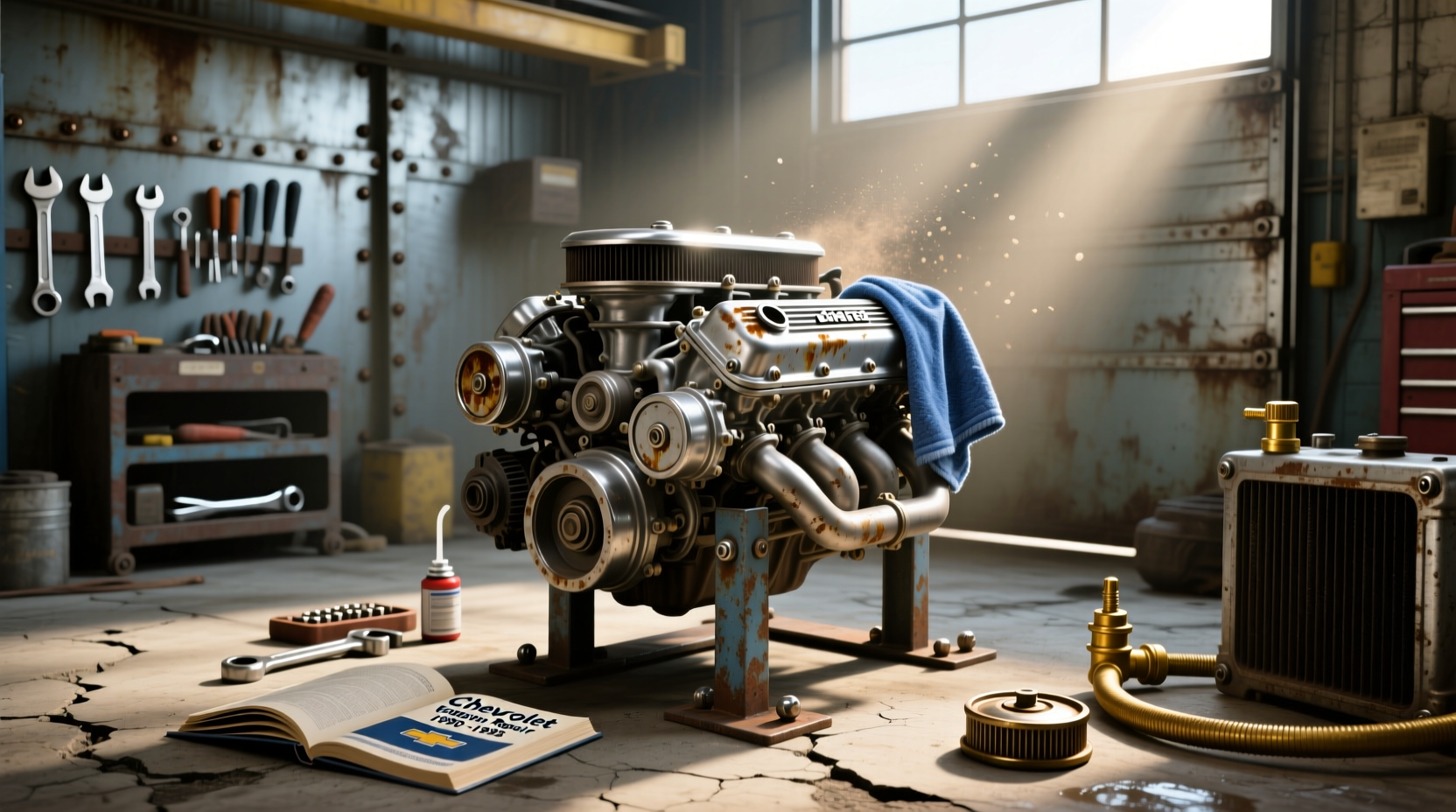
If you're looking for a durable, affordable V8 with strong aftermarket support, the 1994 Chevrolet 350 (5.7L) engine remains a compelling choice for restorations, truck swaps, or budget performance builds. When evaluating how to choose a 1994 Chevy 350 engine, focus on its throttle-body injection (TBI) system, distributor-based ignition, and overall service history. Key red flags include misfiring under load, warm-start stalling, and vacuum leaks—common symptoms tied to aging sensors or worn ignition components 1. Prioritize engines with documented maintenance, especially recent replacements of the cap, rotor, plugs, and fuel filter. For those planning upgrades, this generation responds well to intake manifolds, headers, and camshaft swaps, making it a versatile platform if sourced wisely.
About the 1994 Chevy 350 Engine
The 1994 Chevy 350 engine is part of the legendary small-block V8 family introduced by Chevrolet in 1955. By 1994, it had evolved into a throttle-body injected (TBI), electronically controlled powerplant used primarily in full-size trucks like the C/K series and SUVs such as the Suburban 2. This version marked one of the final years before GM transitioned to the LS series in 1997.
It features a cast-iron block and heads, a pushrod valvetrain, and a relatively simple design that makes it accessible for DIY mechanics. With 200 horsepower and 300 lb-ft of torque in stock form, it offers adequate power for light towing, daily driving, and basic off-road use. Its widespread use across GM vehicles means parts are abundant and compatibility is generally high within the same model year and displacement class.
Why the 1994 Chevy 350 Engine Is Still Popular
Despite being nearly three decades old, interest in the 1994 Chevy 350 engine persists due to several enduring advantages. One major reason is affordability—rebuilding or replacing one costs significantly less than modern fuel-injected V8s. Enthusiasts often seek out these engines for classic truck restorations, budget hot rods, or off-road vehicle swaps where simplicity and repairability matter more than cutting-edge efficiency.
Another driver of popularity is the vast ecosystem of aftermarket support. From performance camshafts to aluminum intakes and complete crate engine conversions, there’s no shortage of ways to upgrade. Additionally, the OBD-I diagnostic system allows for basic code reading using jumper wires or simple scanners, lowering the barrier to troubleshooting compared to newer OBD-II systems.
Types and Variants
While all 1994 Chevy 350 engines share core architecture, variations exist based on application and emissions tuning:
- TBI (Throttle Body Injection) – Standard Duty: Found in most K1500 and C1500 trucks. Uses a single throttle body mounted atop the intake manifold. Reliable but limited in airflow potential.
- TBI – Heavy Duty / Tow Package: Slightly tuned for better low-end torque and cooling capacity. Often paired with larger radiators and transmission coolers.
- Marine Versions: Used in boats; may have different cooling passages, coatings, and corrosion-resistant materials. Not ideal for automotive reuse unless fully rebuilt.
- Rebuilt or Crate Engines: Offered by third-party suppliers. Can range from stock-replacement units to mild performance builds.
Pros:
- Widespread availability
- Low cost compared to LS engines
- Familiar design for mechanics
Cons:
- Limited factory horsepower
- Heavier than aluminum-block alternatives
- TBI system restricts high-RPM performance
Key Features and Specifications to Evaluate
When assessing a 1994 Chevy 350 engine, verify the following specifications and conditions:
- ⚙️ Displacement: Confirm it’s a true 5.7L (350 cubic inches). Some blocks were reused for smaller engines.
- ⚡ Horsepower & Torque: Stock output is 200 HP @ 4,000 RPM and 300 lb-ft @ 2,800 RPM 3.
- 🔧 Fuel System: Ensure the TBI unit is clean, not leaking, and injectors are functional.
- 🔍 Ignition System: Check distributor cap, rotor, coil, and spark plug wires for wear.
- 📊 OBD-I Compatibility: Verify the ECM (Engine Control Module) is present and codes can be pulled.
- 🧼 Internal Condition: Look for oil pressure readings, signs of coolant mixing, or excessive blow-by.
- 🌐 Sensor Health: Test MAP sensor, coolant temperature sensor, and oxygen sensor operation.
Pros and Cons
Advantages:
- Proven durability and long service life with proper care
- Easy to work on—minimal specialized tools required
- Extensive aftermarket parts availability
- Ideal for learning engine diagnostics and repairs
- Affordable rebuild costs ($1,500–$3,000 for long-block)
Limitations:
- Lower fuel efficiency than modern engines
- Bulkier and heavier than LS-series V8s
- TBI system limits tuning flexibility and top-end power
- Potential electrical gremlins due to aging wiring harnesses
- Emissions compliance varies by state—verify local rules
How to Choose a 1994 Chevy 350 Engine
Follow this step-by-step checklist when selecting a 1994 Chevy 350 engine:
- Verify Vehicle History: Obtain any service records. Engines removed from regularly maintained trucks are preferable.
- Inspect for Leaks: Check around the oil pan, valve covers, rear main seal, and intake manifold.
- Test Start-Up Behavior: Cold and warm starts should be smooth. Hesitation or stalling suggests sensor or fuel issues.
- Pull Diagnostic Codes: Use the paperclip method or an OBD-I scanner to read stored trouble codes 1.
- Check Vacuum Lines: Cracked or disconnected hoses cause rough idle and poor performance.
- Examine Ignition Components: Replace cap, rotor, wires, and plugs if uncertain—they’re inexpensive and critical.
- Assess Fuel Pressure: Should be between 9–13 psi for TBI systems.
- Evaluate Aftermarket Modifications: Upgraded intakes or exhausts may increase value, but poorly executed mods can create reliability issues.
Red Flags to Avoid:
- Engines that stall when warmed up (possible ICM or ECM failure)
- No documentation or unknown origin
- Signs of overheating (warped heads, rust inside radiator)
- Mismatched components (e.g., non-factory distributor)
- High mileage without recent rebuild
Price & Market Insights
Pricing for a 1994 Chevy 350 engine varies widely based on condition and source:
- Used Core (Unrun): $200–$500 — suitable for rebuild projects
- Running Pull-Out: $600–$1,200 — from donor vehicles, may need minor servicing
- Rebuilt Long Block: $1,800–$2,800 — includes internals, no accessories
- Crate Engine (Stock or Mild Performance): $3,000–$5,000 — turnkey solution with warranty
Prices may vary depending on region, demand, and included components (e.g., alternator, carburetor conversion kits). Always confirm whether shipping is included and inspect upon delivery if buying online.
Top-Seller & Competitive Analysis
Popular rebuilt options come from suppliers like Jasper Engines, Summit Racing, and local machine shops. Below is a comparison of common choices:
| Model Type | Horsepower | Warranty | Avg. Price | Best For |
|---|---|---|---|---|
| Stock Rebuild (Local Shop) | 200 HP | 6 months | $1,800 | Daily drivers, OEM replacement |
| Jasper 350 Crate Engine | 240 HP | 3 years | $4,200 | Reliability-focused buyers |
| Summit Budget Long Block | 210 HP | 1 year | $2,500 | Enthusiasts doing own assembly |
Customer Feedback Synthesis
Analysis of owner reports and forum discussions reveals consistent themes:
Common Praises:
- Durability over 200,000 miles with regular oil changes
- Simple repairs—many fixes done at home with basic tools
- Strong low-end torque ideal for towing and hauling
- Wide availability of replacement parts
Frequent Complaints:
- Warm-engine stalling linked to failing Ignition Control Module (ICM)
- MAP sensor failures causing rough idle
- Difficulty sourcing original-style ECMs
- Electrical harness degradation after 25+ years
Sourcing & Supplier Tips
You can source a 1994 Chevy 350 engine from:
- Junkyards: Local pull-and-pay yards offer low-cost cores. Inspect visually and ask about removal vehicle.
- Online Marketplaces: eBay Motors, Facebook Marketplace, Craigslist. Request videos of the engine running.
- Rebuilders: Companies like Jasper or Summit provide tested units with warranties.
- Engine Swappers: Some sellers specialize in prepped engines ready for installation.
When buying in bulk or for resale, negotiate with salvage yards for multiple units. Always verify serial numbers and casting marks match a 1994 350 configuration. Upon receipt, perform a quick oil pressure check and visual inspection before installation.
Maintenance, Safety & Legal Considerations
Regular maintenance extends engine life significantly. Recommended intervals:
- Oil and filter: Every 3,000–5,000 miles
- Spark plugs and wires: Every 30,000 miles
- Fuel filter: Every 15,000–20,000 miles
- Distributor cap and rotor: Every 30,000 miles
- Coolant flush: Every 2 years
Safety-wise, ensure proper grounding, secure mounting, and correct fan/shroud alignment to prevent fires or mechanical failure. Legally, engine swaps must comply with emissions regulations in your state—California (CARB) and New York have stricter rules. Verify whether the engine requires smog certification before registration.
Conclusion
The 1994 Chevy 350 engine remains a practical, cost-effective V8 option for restorations, swaps, and learning platforms. If you need a reliable, easy-to-maintain engine for a classic truck or project car, it’s a solid pick—especially when sourced from a well-documented donor. However, if you prioritize fuel economy, high horsepower, or modern driveability, consider upgrading to an LS-series engine instead. For those committed to the Gen I small-block, investing in a professionally rebuilt unit or addressing known weak points (like the ICM and sensors) will maximize longevity and satisfaction.
Frequently Asked Questions
Can I upgrade the TBI system on a 1994 Chevy 350?
Yes, many owners retrofit electronic fuel injection (EFI) systems or convert to carburetors using adapter plates. These changes require new wiring, sensors, and sometimes a standalone ECU.
What causes a 1994 Chevy 350 to stall when warm?
This is commonly caused by a failing Ignition Control Module (ICM) or Engine Control Module (ECM), both sensitive to heat buildup. Testing or replacing these units often resolves the issue.
Is the 1994 Chevy 350 engine compatible with older or newer transmissions?
Yes, it shares the standard small-block bellhousing pattern, making it compatible with TH350, 700R4, 4L60E, and manual transmissions like the SM465, provided the flexplate or clutch setup matches.
How do I check for vacuum leaks?
Spray carburetor cleaner or propane around intake gaskets and vacuum lines while the engine is idling. A change in RPM indicates a leak location.
Are parts still available for the 1994 Chevy 350 engine?
Yes, due to its popularity, most components—from gaskets to performance cams—are still manufactured or available through salvage networks and aftermarket suppliers.




 浙公网安备
33010002000092号
 浙B2-20120091-4