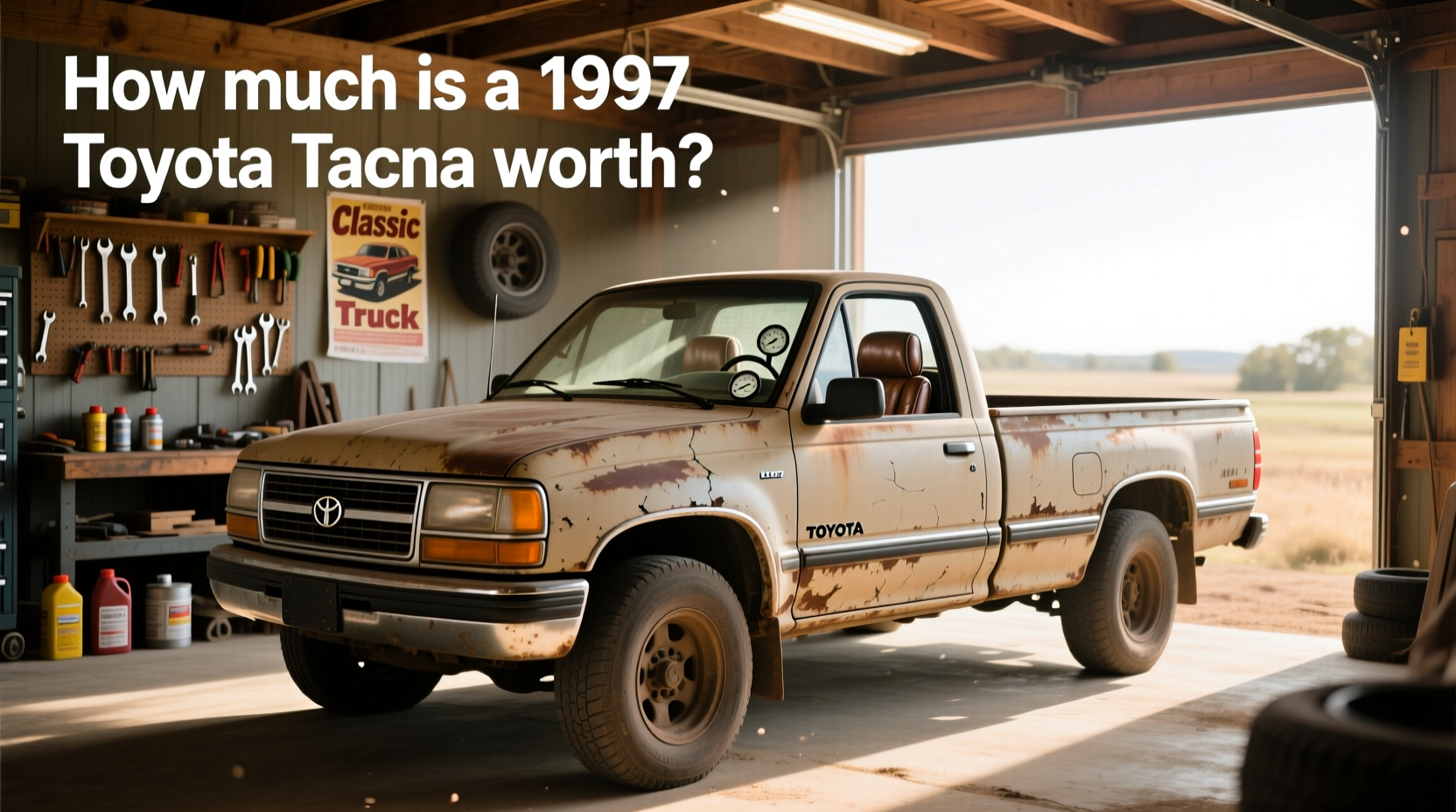
If you’re looking at a 1997 Toyota Tacoma, here’s how to quickly assess its worth: focus on condition, mileage, engine type (V6 vs. 4-cylinder), drivetrain (4x4 vs. 2WD), and cab style. Most sell between $2,000 and $8,000. If you’re a typical user, you don’t need to overthink this. For a reliable daily driver or light work truck, a clean-running V6 4x4 XtraCab in average condition around $4,000 is a reasonable target. Avoid trucks with rust damage, salvage titles, or unclear maintenance history—these are red flags regardless of price. Use free tools like Kelley Blue Book 1 or Edmunds 2 to get instant estimates based on your specific configuration.
About the 1997 Toyota Tacoma
The 1997 Toyota Tacoma was the first year of a new compact pickup line designed to replace the aging Toyota Pickup (aka Hilux). It marked a shift toward improved comfort, safety, and on-road manners while retaining strong reliability and off-road capability. Available in Regular Cab and XtraCab (extended cab) configurations, it came with two engines: a 2.4L inline-4 and a more powerful 3.4L V6. Drivetrains included rear-wheel drive and part-time four-wheel drive. Trim levels ranged from base models to the better-equipped SR5.
Why the 1997 Toyota Tacoma Is Gaining Popularity
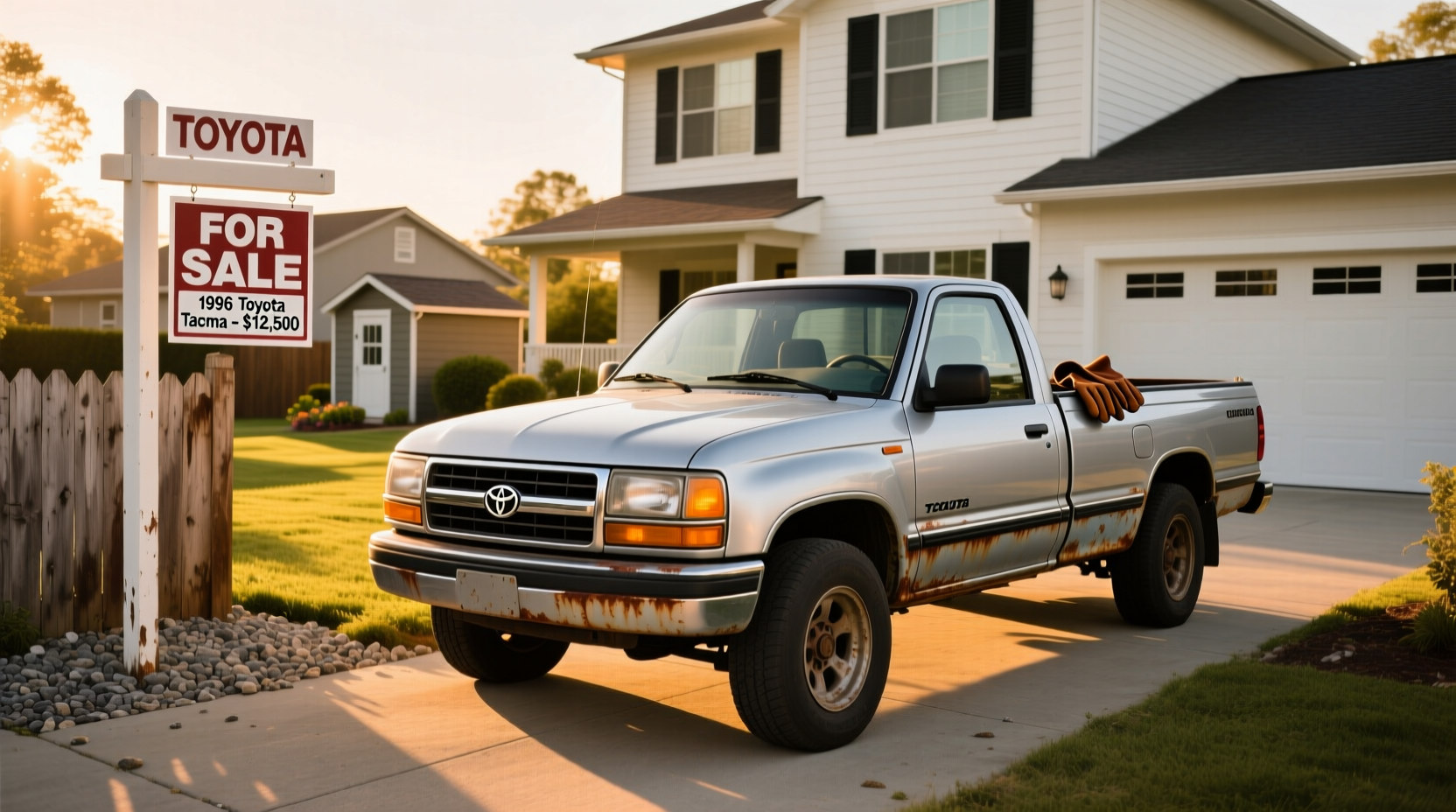
Lately, interest in older, simple trucks has grown. Over the past year, search volume and forum discussions around first-gen Tacomas have increased—not because they’re new, but because buyers are re-evaluating what matters in a used truck. With modern vehicles becoming more complex and expensive to repair, the 1997 Tacoma represents a known quantity: basic mechanics, widely available parts, and proven longevity if maintained. This shift reflects a broader trend toward functional ownership over feature-rich dependency.
If you’re a typical user, you don’t need to overthink this. The appeal isn’t nostalgia—it’s utility. These trucks work well for small jobs, weekend adventures, or as low-cost transportation without modern electronics that can fail. Their rising visibility in online marketplaces signals renewed demand, especially for well-kept examples.
Types and Variants
The 1997 Tacoma came in several configurations that still affect value today.
Regular Cab
- Pros: Lighter weight, slightly better fuel economy, simpler design, lower purchase price
- Cons: Minimal rear seating (if any), less cargo versatility, fewer comfort features
XtraCab (Extended Cab)
- Pros: Small rear jump seats useful for gear or occasional passengers, better resale value, more storage options
- Cons: Slightly higher curb weight, less agile in tight spaces
Engine Options
- 2.4L Inline-4: Adequate for light duty, good fuel efficiency, but underpowered when towing or climbing hills
- 3.4L V6: Stronger acceleration, better towing capacity, smoother highway performance—this engine commands a significant premium
Drivetrain
- Rear-Wheel Drive (2WD): Lower cost, better fuel economy, sufficient for dry pavement and city driving
- Part-Time Four-Wheel Drive (4x4): Essential for snow, mud, or off-road use; adds value due to versatility
Key Features and Specifications to Evaluate
When assessing a 1997 Tacoma, prioritize these five factors:
1. Condition (Exterior and Interior)
Rust—especially in frame rails, wheel wells, and undercarriage—is the biggest threat to structural integrity. Surface rust may be manageable, but penetrating corrosion is a dealbreaker. Inside, check for cracked dashboards (common in sun-exposed climates), worn seats, and functioning gauges.
When it’s worth caring about: If you plan to keep the truck long-term or drive in harsh environments.
When you don’t need to overthink it: For short-term use or budget builds where replacement panels are acceptable.
2. Mileage
While Tacomas are known to last 200,000+ miles, lower mileage (under 150,000) generally means less wear and potentially longer service life before major repairs. However, a high-mileage truck with full service records often beats a neglected low-mileage one.
When it’s worth caring about: When comparing similar models priced the same.
When you don’t need to overthink it: If maintenance history shows consistent oil changes and fluid replacements.
3. Engine Type
The V6 is significantly more desirable. It provides enough power for highway merging and moderate towing (up to 3,500 lbs). The 4-cylinder struggles in hilly terrain or with heavy loads.
When it’s worth caring about: If you regularly carry cargo or tow equipment.
When you don’t need to overthink it: For urban commuting or very light use.
4. Drivetrain (4x4 vs. 2WD)
Four-wheel drive increases value by $1,000–$2,000 depending on condition. It offers real-world benefits in slippery conditions and expands usability.
When it’s worth caring about: In regions with winter weather or unpaved roads.
When you don’t need to overthink it: In warm, flat cities with reliable road maintenance.
5. Maintenance History
A complete paper trail—including timing belt changes (recommended every 90,000 miles), differential fluids, and brake work—adds confidence. Lack of records doesn’t mean poor care, but it raises risk.
When it’s worth caring about: On higher-priced examples where trust matters.
When you don’t need to overthink it: On project trucks priced well below market.
Pros and Cons
| Pros | Cons |
|---|---|
| Legendary reliability when maintained | Outdated safety features (no airbags in base models) |
| Simple mechanical systems, easy to repair | Limited towing compared to modern midsize trucks |
| Low acquisition cost | Rust issues common in northern/salty climates |
| Fuel-efficient for a pickup (18–21 mpg highway) | Basic interior, minimal tech or comfort upgrades |
| Strong aftermarket support | Parts for 4x4 systems may require sourcing |
How to Evaluate a 1997 Toyota Tacoma: A Step-by-Step Buying Guide
Follow this checklist to make a confident decision.
Step 1: Identify the Exact Configuration
Determine cab size, engine, drivetrain, and trim. This defines baseline value. Look for badging, VIN lookup, or engine inspection.
Step 2: Get Instant Online Estimates
Visit Kelley Blue Book 1, Edmunds 2, or J.D. Power 3 and input your truck’s specs. Compare trade-in vs. private-party values.
Step 3: Inspect for Critical Flaws
- Check frame for rust or weld patches
- Test 4x4 system (if equipped) on loose surface
- Listen for engine knocking or transmission hesitation
- Verify title status (avoid salvage or flood titles)
Decision Flow
- Need power and versatility? → Prioritize V6 4x4 XtraCab
- Budget-constrained city driver? → Consider 4-cylinder 2WD Regular Cab
- Planning modifications? → Focus on solid-condition base models
Recommendations by Scenario
- Daily commuter: Clean 2WD 4-cylinder with AC and reliable start-up
- Weekend adventurer: V6 4x4 with roof rack and all-terrain tires
- Project restomod: Low-mileage donor truck with original interior
- Unexplained smoke from exhaust
- Inconsistent service records or blank maintenance log
- Significant undercarriage rust or patchwork repairs
- Priced significantly above KBB private-party range without justification
- Non-functional 4x4 system in advertised 4x4 model
Price & Market Insights
As of late 2024, 1997 Toyota Tacoma prices vary widely based on region, condition, and seller type.
- Trade-in Value: $1,800 – $3,400 (average condition)
- Private Party Sale: $3,000 – $6,000 (clean, functional)
- Exceptional Examples: Up to $8,000+ (low mileage, V6 4x4, documented care)
Prices may vary by region/model/seller. Dry climate states (Arizona, California) often see higher values due to less rust. Rust-belt areas may offer lower prices but require more scrutiny. Always verify local listings via CarGurus 4 or Cars.com 5 to benchmark fairness.
Top-Seller & Competitive Analysis
Among 1997 compact trucks, the Tacoma competes with the Ford Ranger, Chevrolet S-10, and Dodge Dakota. While all were competent, the Tacoma stands out for long-term durability and owner satisfaction.
| Model | Reliability Perception | Aftermarket Support | Avg. Private Sale Price |
|---|---|---|---|
| 1997 Toyota Tacoma | ⭐⭐⭐⭐☆ | ⭐⭐⭐⭐☆ | $4,200 |
| 1997 Ford Ranger | ⭐⭐⭐☆☆ | ⭐⭐⭐☆☆ | $3,500 |
| 1997 Chevrolet S-10 | ⭐⭐☆☆☆ | ⭐⭐☆☆☆ | $2,800 |
| 1997 Dodge Dakota | ⭐⭐☆☆☆ | ⭐⭐☆☆☆ | $3,000 |
If you’re a typical user, you don’t need to overthink this. The Tacoma’s edge lies in predictable ownership costs and ease of repair—even decades later.
Customer Feedback Synthesis
Analysis of owner reviews across forums and listing sites reveals consistent themes.
- Engine longevity (many report 200k+ miles with basic maintenance)
- Simplicity of repairs (owners frequently DIY brakes, suspension, exhaust)
- Off-road capability of 4x4 models with minor tire upgrades
- Rust in critical areas (frame, floor pans) even on lower-mileage trucks
- Interior plastics cracking due to UV exposure
- Lack of power steering or ABS in base trims
Sourcing & Supplier Tips
Buy from private sellers when possible—they typically price more fairly than dealerships for older vehicles. Check community boards, Facebook Marketplace, and Craigslist. If buying online, insist on a third-party inspection before payment. Avoid "as-is" auctions unless you’re mechanically skilled.
When sourcing, prioritize trucks stored indoors or in dry climates. Desert-bought Tacomas often have less corrosion despite high heat. Verify ownership history and ensure no liens exist through your state DMV.
Maintenance, Safety & Legal Considerations
Mechanically, the 1997 Tacoma requires routine oil changes, coolant flushes, and timing belt replacement (interference engine—failure can destroy the motor). Brakes, shocks, and wheel bearings wear predictably and are inexpensive to replace.
Safety-wise, these trucks lack modern features like stability control, side airbags, or crumple zones. They perform poorly in crash tests by today’s standards. Drive defensively and maintain excellent visibility and braking response.
Legally, ensure the vehicle passes any required emissions or safety inspections in your state. Registration is usually straightforward for non-modified trucks. Confirm local rules for classic or antique classification, which may affect insurance and registration fees.
Conclusion
If you need a durable, no-fuss truck for light hauling or rural access, choose a 1997 Tacoma with the V6 and 4x4. If you're on a tight budget and only need basic transportation, a 4-cylinder 2WD model can suffice—but inspect thoroughly. If you’re a typical user, you don’t need to overthink this. Focus on condition over cosmetics, and let maintenance history guide your trust more than mileage alone.
This piece isn’t for keyword collectors. It’s for people who will actually use the product.
Everything You Need to Know




 浙公网安备
33010002000092号
 浙B2-20120091-4