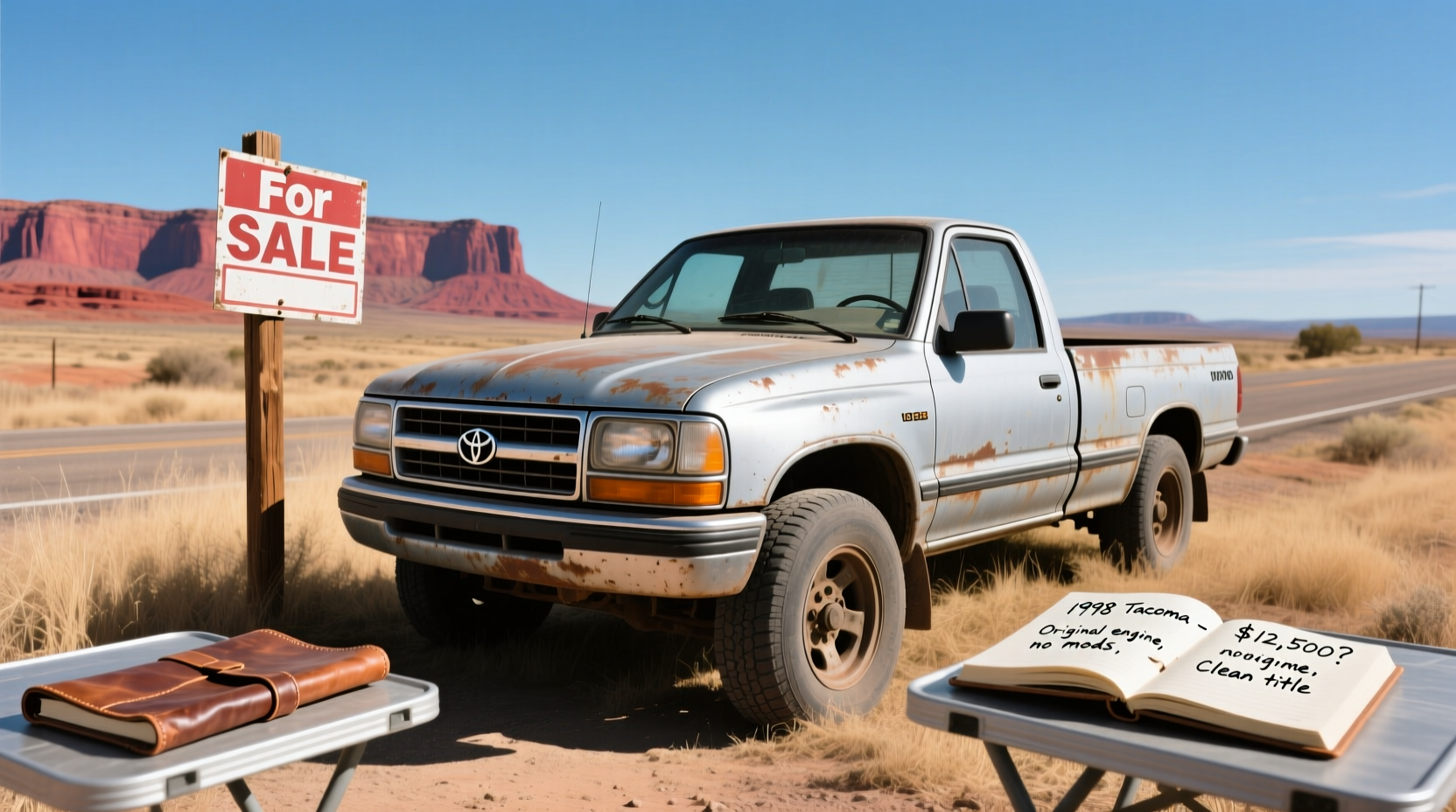
Lately, the 1998 Toyota Tacoma has reappeared in regional used truck markets not just as a budget workhorse, but as a surprisingly resilient holdover from an era when simplicity meant longevity. If you’re asking how much is a 1998 Tacoma worth today?, the short answer is: between $2,700 and $14,000—but your actual number depends almost entirely on four factors: mileage, mechanical condition, drivetrain (4WD vs 2WD), and trim level. For most buyers looking for a functional daily driver or light-duty hauler, a clean 4-cylinder 2WD model in the $4,000–$6,000 range represents strong value. Over the past year, demand for well-maintained first-gen Tacomas has ticked up slightly in dry-climate regions, where rust isn’t a major factor. If you’re a typical user, you don’t need to overthink this. What matters most is verifying maintenance history and checking for frame rust—everything else is secondary.
When shopping, focus on trucks with under 200,000 miles, documented service records, and no signs of off-road abuse. Avoid models modified for lift kits unless you plan to keep them. And if you're buying for utility, skip the V6—it adds cost but rarely improves real-world performance enough to justify the premium. This piece isn’t for keyword collectors. It’s for people who will actually use the product.
About the 1998 Toyota Pickup Truck
The 1998 Toyota Tacoma was part of the first generation of this compact pickup line, introduced in 1995 to replace the aging Toyota Pickup (later called the Hilux in global markets). Unlike its predecessor, the Tacoma was designed specifically for North American preferences—offering improved ride comfort, better cabin ergonomics, and available extended cab configurations. It came in Regular Cab, XtraCab (Toyota’s term for extended cab), and later a Access Cab variant, though all fall under similar mechanical platforms.
Two engines were offered: a 2.4L inline-4 producing around 130 horsepower, and a 3.4L V6 with approximately 190 horsepower. Transmission options included a 5-speed manual or 4-speed automatic. Drivetrains ranged from rear-wheel drive to part-time four-wheel drive with a transfer case. The 1998 model year didn’t introduce major changes from 1997, making it a stable, predictable platform for buyers today.
Why the 1998 Tacoma Is Gaining Popularity
Over the past year, interest in older compact trucks like the 1998 Tacoma has grown—not because they’re powerful or luxurious, but because they’re increasingly seen as mechanically transparent. With fewer electronic systems than modern vehicles, repairs are more accessible to DIY owners. Simpler emissions controls mean easier diagnostics. And their modest size makes them easier to park and maneuver than full-size pickups.
In rural areas and among tradespeople needing a backup vehicle, the Tacoma offers proven durability without the complexity of newer models. Enthusiasts also appreciate its modularity—many aftermarket parts exist for suspension lifts, skid plates, and lighting upgrades. However, popularity doesn’t always align with smart purchasing. Just because something is trending doesn’t mean it’s right for your needs. If you’re a typical user, you don’t need to overthink this. Focus on usability, not hype.
Types and Variants
The 1998 Tacoma came in several configurations that still affect value and usability today.
1. Regular Cab
Pros: Lightest weight, lowest price point, simplest design.
Cons: Minimal passenger space, less resale appeal.
Best for: Work-focused buyers who prioritize cargo room over comfort.
2. XtraCab (Extended Cab)
Pros: Fold-down jump seats allow occasional passenger use; slightly higher demand.
Cons: Rear seating is cramped and best suited for children.
Best for: Buyers wanting flexibility without stepping into midsize territory.
3. Drivetrain: 2WD vs 4WD
2WD: Lower purchase price, better fuel economy, simpler maintenance.
4WD: Higher resale value, better traction in snow or dirt, but added mechanical complexity.
When it’s worth caring about: Only if you regularly drive on unpaved roads or live in snowy climates.
When you don’t need to overthink it: If you’re mostly driving on paved roads in mild weather, 2WD is sufficient.
4. Trim Levels: Base vs SR5
Base: Manual windows/locks, basic radio, minimal features.
SR5: Power accessories, upgraded interior, optional V6 engine.
When it’s worth caring about: If comfort and convenience matter, SR5 adds meaningful quality-of-life improvements.
When you don’t need to overthink it: For pure utility, base models perform just as reliably.
Key Features and Specifications to Evaluate
When assessing a 1998 Tacoma, prioritize these elements:
- Engine Type: The 2.4L 4-cylinder is durable and economical. The 3.4L V6 offers more power but may have higher maintenance costs after 200k miles.
- Mileage: Trucks under 180,000 miles with service records are preferable. Above 200k, inspect timing belt history and differential wear.
- Transmission: Both manual and automatic units are robust, but check for smooth shifting and absence of grinding or slipping.
- Suspension and Frame: Look for sagging rear coils or cracked leaf springs. Inspect the frame rails—especially near the rear axle mounts—for rust or weld patches.
- Cabin Condition: Check HVAC operation, seat integrity, and dashboard cracks (common in sun-exposed interiors).
If you’re a typical user, you don’t need to overthink this. A clean title, no major accidents, and consistent oil changes matter far more than factory-original trim pieces.
Pros and Cons
| Pros | Cons |
|---|---|
| ✅ Proven long-term reliability | ⚠️ Limited safety features (no airbags in base models) |
| ✅ Low-cost parts and widespread mechanic familiarity | ⚠️ Outdated fuel economy (~18 mpg combined) |
| ✅ Simple design allows for easy repairs | ⚠️ Rust can be severe in northern states |
| ✅ Strong aftermarket support | ⚠️ Limited cargo bed length (5–6 feet) |
| ✅ Holds residual value better than many contemporaries | ⚠️ Hard to find low-mileage examples without overpaying |
How to Choose a 1998 Tacoma: A Step-by-Step Buying Guide
Follow this checklist to make a confident decision.
Step-by-Step Checklist
- Define your primary use: daily commute, weekend hauling, or off-road recreation.
- Determine your budget, including potential repair reserves ($500–$1,000 recommended).
- Search listings using Kelley Blue Book1 and Edmunds2 to establish fair market range in your area.
- Filter for trucks with service records or Carfax reports showing regular maintenance.
- Inspect in person—or hire a mechanic—if purchasing privately.
- Negotiate based on observed condition, not sticker price.
Decision Flow
- Need basic transportation? → Choose a 2WD 4-cylinder Regular Cab under $5,000.
- Want weekend adventure capability? → Prioritize a 4WD V6 XtraCab with recent tires and brakes.
- On a tight budget? → Accept higher mileage (200k+) only if maintenance is documented.
Recommendations by Scenario
- Budget Buyer ($2,500–$4,000): Look for 2WD 4-cylinder models with minor cosmetic flaws but solid mechanics.
- Everyday Driver ($4,000–$7,000): Target SR5 trims with under 180k miles and clean interiors.
- Project Vehicle or Off-Roader ($7,000+): Seek unmodified 4WD trucks with clean frames—avoid heavily lifted ones unless modifications are reversible.
Red Flags / What to Avoid
- ❌ Frame rust, especially along rocker panels or above rear wheel wells.
- ❌ Salvage or rebuilt titles unless you fully understand implications.
- ❌ Engines with overheating history or oil leaks indicating head gasket issues.
- ❌ Tires with mismatched brands/sizes or uneven wear (sign of alignment problems).
- ❌ Digital listings with stock photos only—always request current, real images.
If you’re a typical user, you don’t need to overthink this. One overlooked truth: many 1998 Tacomas listed above $10,000 are priced based on nostalgia, not objective condition. Be ready to walk away.
Price & Market Insights
As of early 2025, estimated values for a 1998 Toyota Tacoma vary significantly:
- Trade-in Value: ~$2,700–$3,800
- Private Party Sale: ~$4,500–$7,000 (fair to good condition)
- Premium Examples: Clean, low-mileage (<150k) 4WD V6 models may reach $10,000–$14,000
Prices may vary by region/model/seller. For example, 4WD models command a $1,000–$2,000 premium in mountainous or northern states. In contrast, 2WD variants sell faster in urban Southwest markets. To get an accurate estimate, verify your specific configuration using tools like Cars.com3 or CarGurus4. Listings on enthusiast platforms like Classic.com sometimes exceed average market rates due to collector interest.
Top-Seller & Competitive Analysis
While the 1998 Tacoma competes indirectly with other late-'90s compact trucks, its reputation for reliability gives it an edge.
| Model | Average Market Price | Reliability Perception | Key Weakness |
|---|---|---|---|
| 1998 Toyota Tacoma | $5,000–$7,000 | ⭐⭐⭐⭐☆ | Rust in wet climates |
| 1998 Ford Ranger | $3,500–$5,500 | ⭐⭐⭐☆☆ | Electrical gremlins, weaker resale |
| 1998 Chevrolet S-10 | $2,800–$4,800 | ⭐⭐☆☆☆ | Corrosion, engine longevity concerns |
| 1998 Nissan Frontier | $4,000–$6,000 | ⭐⭐⭐☆☆ | Fewer replacement parts available |
The Tacoma consistently holds higher residual value, partly due to brand perception and part availability. However, comparable Rangers or S-10s can offer lower entry points—if you’re willing to accept potentially higher upkeep.
Customer Feedback Synthesis
Analysis of owner discussions on forums like Reddit5 reveals recurring themes:
- High Praise: “Still running at 250k miles with only routine maintenance.” “Simple to fix—even for beginners.”
- Common Complaints: “Rust destroyed the frame after 20 years in the Midwest.” “No ABS or traction control makes winter driving sketchy.”
- Surprise Insight: Many regret paying over $8,000 unless the truck had exceptional documentation or rare specs.
If you’re a typical user, you don’t need to overthink this. Longevity is real—but so are regional drawbacks.
Sourcing & Supplier Tips
Most 1998 Tacomas are sold privately or through small independent dealers. When sourcing:
- Use localized search filters on Cars.com or Facebook Marketplace.
- Contact local Toyota dealerships—they may know customers looking to sell.
- Check community boards or trade schools where mechanics might list project trucks.
- Avoid online auctions unless you can inspect beforehand or hire a pre-purchase inspector.
This piece isn’t for keyword collectors. It’s for people who will actually use the product.
Maintenance, Safety & Legal Considerations
Mechanically, the 1998 Tacoma requires standard maintenance: oil changes, brake inspections, coolant flushes, and timing belt replacement every 90,000–100,000 miles. Because it predates OBD-II standardization in some functions, ensure any shop has experience with pre-2000 Toyotas.
Safety-wise, remember: many base models lack driver or passenger airbags. Side-impact protection is minimal. Drive accordingly—this is not a modern safety cage.
Legally, ensure the title is clean and registration is transferable in your state. Some areas require emissions testing for vehicles under a certain age; verify whether 1998 models are exempt where you live. Always confirm local regulations before purchase.
Conclusion
If you need a simple, durable truck for light hauling or as a secondary vehicle, the 1998 Toyota Tacoma remains a rational choice—provided it’s in solid mechanical condition. If you’re primarily driving in cities or mild climates, opt for a 2WD 4-cylinder model under $6,000. If you face rough terrain or snow, a 4WD V6 SR5 with recent maintenance is worth the extra cost. But if you’re chasing collector status or planning heavy modification, reconsider: most 1998 Tacomas aren’t rare, and overinvestment risks poor ROI. If you’re a typical user, you don’t need to overthink this. Buy smart, inspect thoroughly, and prioritize function over form.
Everything You Need to Know
Value typically ranges from $2,700 (trade-in) to $14,000 for pristine, low-mileage models. Most functional trucks sell between $4,500 and $7,000. Use Kelley Blue Book or Edmunds to estimate based on your truck’s specifics.
Yes, many reach 200,000+ miles with proper maintenance. Key factors include timing belt history, oil change consistency, and absence of overheating. If records exist, high mileage isn’t automatically a red flag.
Frame rust (especially in snowy states), worn suspension components, and aging electrical connectors are frequent issues. The 3.4L V6 may develop oil leaks or intake manifold cracks after 150k miles.
SR5 trims usually include driver and passenger airbags. Base models may lack them entirely. Always verify during inspection—don’t assume.
Yes, parts remain widely available through OEM dealers, auto parts stores, and online suppliers. Its popularity ensures strong aftermarket support for both stock and upgraded components.




 浙公网安备
33010002000092号
 浙B2-20120091-4