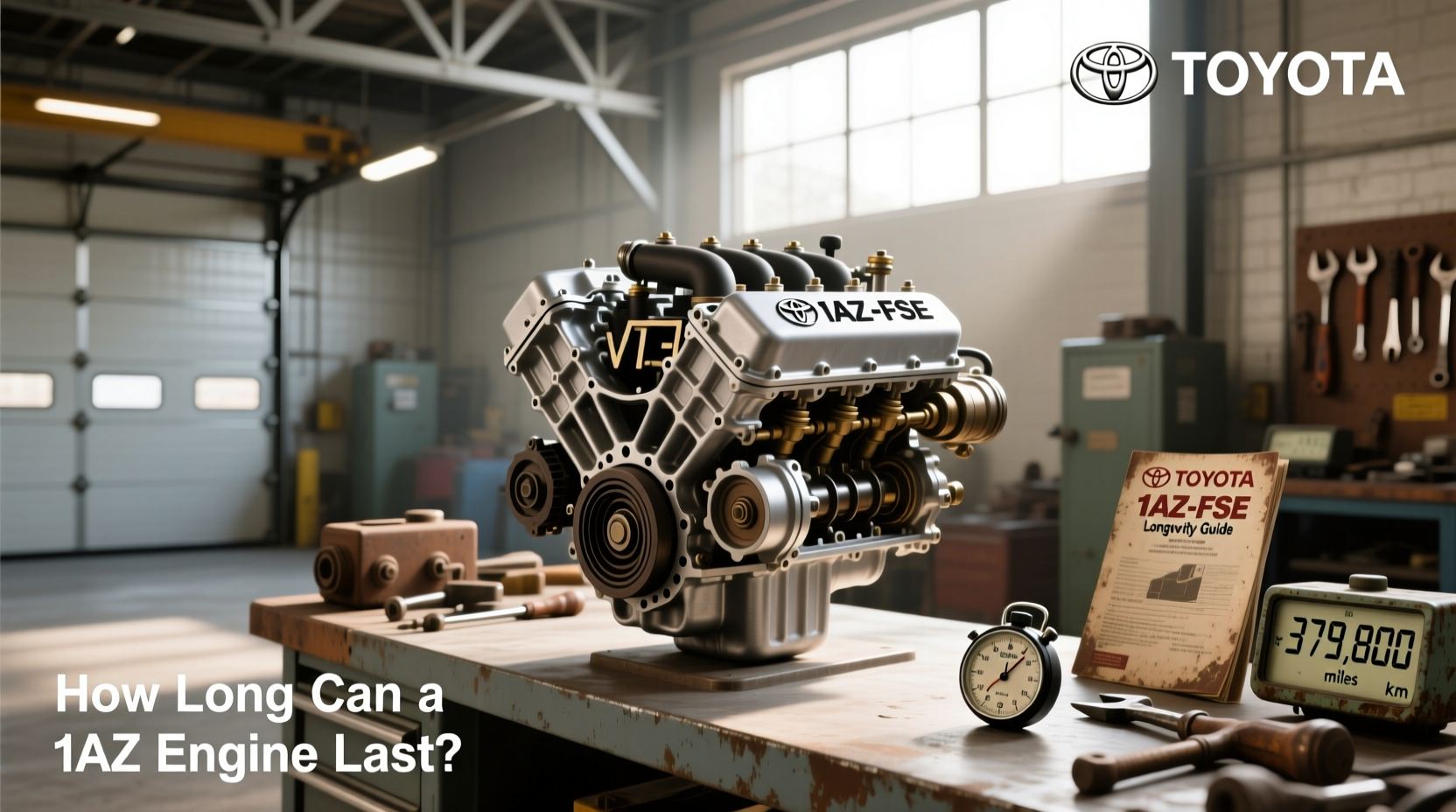
If you're asking how long can a 1AZ engine last?, the answer is clear: with proper maintenance, the Toyota 1AZ-FSE engine can reliably exceed 200,000 miles (300,000+ km) 12. However, choosing a used or replacement 1AZ-FSE requires careful evaluation of maintenance history, model year, and known weaknesses like cylinder head bolt thread failure—especially in pre-2007 units 3. When deciding how to choose a Toyota 1AZ-FSE engine, prioritize vehicles with full service records, clean oil change history, and documented repairs for common D-4 direct injection system issues. ⚠️ Avoid engines with signs of coolant leaks or overheating, as these may indicate unresolved head gasket or block thread damage—a costly repair if not already addressed.
About the Toyota 1AZ-FSE Engine and Its Lifespan
The Toyota 1AZ-FSE is a 2.0-liter inline-four gasoline engine produced from 2000 to 2009. It belongs to Toyota’s AZ engine family, designed to replace the older S-series engines 2. Unlike the standard 1AZ-FE, the 1AZ-FSE features Toyota’s D-4 direct fuel injection system, which improves fuel efficiency and power output but introduces sensitivity to low-quality fuel 1.
This engine was commonly used in models such as the Toyota Avensis, Camry, and RAV4, primarily in Japanese and European markets. It delivers between 148 and 155 horsepower and 141.7 to 147.6 lb-ft of torque, making it suitable for mid-sized sedans and compact SUVs where balanced performance and reliability are key.
Why the 1AZ-FSE Is Still Relevant for Buyers
Despite being out of production since 2009, the 1AZ-FSE remains a popular choice among buyers seeking affordable, durable powertrains for used vehicles or engine swaps. Its reputation for longevity when well-maintained makes it attractive in markets where cost-effective transportation is essential. Additionally, parts availability remains relatively strong due to its widespread use and Toyota’s global support network.
Many owners report keeping their 1AZ-FSE-powered vehicles beyond 200,000 miles, reinforcing its image as a dependable engine. As more drivers seek value and long-term ownership, understanding how to evaluate this engine becomes crucial—especially given its known technical vulnerabilities that can shorten lifespan if ignored.
Types and Variants of the 1AZ Engine Series
The 1AZ series includes several variants, each tailored for different performance and emissions requirements:
- 1AZ-FE: The base model with port fuel injection. More tolerant of lower fuel quality and less prone to carbon buildup than the FSE. Widely used in North American Camrys.
- 1AZ-FSE: Features direct injection (D-4), higher compression ratios (up to 11.0:1), and slightly improved power. Found mainly in JDM and European models. More complex and sensitive to maintenance.
- 2AZ-FE: A 2.4L version of the same engine family, often confused with the 1AZ. Not interchangeable without modifications.
When considering how to choose a Toyota 1AZ-FSE engine specifically, ensure compatibility with your vehicle’s ECU, fuel system, and mounting points. The FSE variant offers better efficiency but demands stricter upkeep compared to the FE.
Key Features and Specifications to Evaluate
To make an informed decision on whether a 1AZ-FSE engine is right for your needs, assess the following technical aspects:
- Engine Type: 2.0L inline-4, naturally aspirated, gasoline
- Fuel System: D-4 direct injection – check for injector wear and high-pressure pump health 1
- Horsepower/Torque: 148–155 HP / 141.7–147.6 lb-ft – sufficient for daily driving
- Block Material: Aluminum with cast-iron liners – lightweight but vulnerable to thread damage
- Valve Train: DOHC, 4 valves per cylinder, VVT-i on intake cam
- Timing Drive: Chain-driven – durable but should be replaced around 120,000 miles 1
- Compression Ratio: Varies by year (9.8:1 to 11.0:1)
⚙️ Pay special attention to the presence of manual valve adjustment—this engine lacks hydraulic lifters, requiring adjustment every 60,000 miles (100,000 km). Failure to perform this service leads to noise, reduced performance, and potential valve damage.
Pros and Cons of the 1AZ-FSE Engine
| Aspect | Advantages ✅ | Disadvantages ❗ |
|---|---|---|
| Reliability | Lifespan exceeds 200,000 miles with proper care | Vulnerable to head bolt thread failure in early models |
| Fuel Efficiency | D-4 system improves combustion efficiency | Sensitive to poor fuel quality; deposits form easily |
| Maintenance | Timing chain lasts long; no belt replacements | Manual valve adjustments required every 60k miles |
| Performance | Solid mid-range torque for city and highway use | Not designed for high-performance tuning |
| Parts Availability | Good global supply of OEM and aftermarket parts | High-pressure fuel pump and injectors are expensive |
The 1AZ-FSE is best suited for drivers prioritizing durability and moderate running costs. It's less ideal for those who skip maintenance or operate in regions with inconsistent fuel quality.
How to Choose a 1AZ-FSE Engine: Step-by-Step Buying Guide
Selecting a reliable 1AZ-FSE involves more than checking mileage. Follow this checklist to minimize risk:
- Verify Model Year and Production Date: Engines made after 2007 have revised cylinder blocks addressing thread failure issues. Pre-2007 units require inspection or proof of repaired threads using inserts.
- Review Maintenance Records: Look for consistent oil changes (every 5,000–10,000 km), timing chain replacement at ~120,000 miles, and recent valve clearance adjustment.
- Inspect for Coolant Leaks: Check around the cylinder head and block for residue—this could signal damaged head bolt threads or a failing head gasket.
- Test for Oil Consumption: Excessive oil usage (>1 qt per 1,000 miles) may indicate worn piston rings. Some late-model 1AZ-FSE engines had extended warranties for this issue 3.
- Scan for Error Codes: Use an OBD2 scanner to detect past or current issues related to VVT-i, misfires, or fuel trim problems.
- Check EGR and Intake System: Carbon buildup is common. Ask if the intake manifold and EGR valve have been cleaned recently.
🚫 Red Flags to Avoid:
- No service history or vague documentation
- Visible coolant stains near the engine block
- Knocking or ticking noises indicating valve train issues
- History of overheating incidents
- Modified or non-OEM fuel system components
Always get a pre-purchase inspection by a qualified mechanic familiar with Toyota engines.
Price & Market Insights
Used 1AZ-FSE engines typically range from $800 to $1,800 USD depending on condition, location, and whether they’re sold bare or long-block. Rebuilt units cost $1,500–$2,500, while new crate engines are rare and significantly more expensive.
In Japan and Europe, JDM-sourced 1AZ-FSE engines are plentiful and often cheaper due to high export volume. In North America, availability is limited, so prices may be higher. Consider shipping costs and import regulations when sourcing internationally.
For budget-conscious buyers, a used engine with verified low mileage and maintenance records offers the best value. For peace of mind, a professionally rebuilt engine with warranty support may justify the extra cost.
Top-Seller & Competitive Analysis
While there are no official “top-selling” new 1AZ-FSE engines today, certain suppliers dominate the used and remanufactured market:
| Supplier Type | Pros | Cons | Best For |
|---|---|---|---|
| JDM Importers | Low mileage, complete engines, competitive pricing | Risk of hidden damage, no warranty, shipping delays | DIY mechanics with inspection capability |
| Remanufacturers (US/EU) | Warranty (1–3 years), tested performance | Higher cost, variable rebuild quality | Buyers wanting reliability assurance |
| Local Junkyards | Immediate access, ability to inspect in person | Limited inventory, no guarantees | Urgent replacements with local support |
When comparing options, always ask about core return policies, testing procedures, and whether the timing chain, water pump, and seals have been replaced.
Customer Feedback Synthesis
Based on owner forums, repair databases, and service reports, here are the most frequently cited experiences:
Positive Feedback:
- “My 2005 Avensis with 240,000 km still runs smoothly—just regular oil changes.”
- “Fuel economy is excellent for a 2.0L—around 30 mpg on highway.”
- “Easy to work on; many components are accessible.”
Common Complaints:
- “Spent $1,200 fixing stripped head bolt threads—wish I’d known about this issue earlier.”
- “Direct injectors clogged at 90,000 miles due to cheap gas.”
- “Had to replace pistons under goodwill warranty for excessive oil burn.”
The consensus: owners who follow strict maintenance schedules report high satisfaction, while neglect leads to expensive repairs.
Sourcing & Supplier Tips
When purchasing a 1AZ-FSE engine, consider these sourcing strategies:
- For Individuals: Buy from reputable JDM exporters with photo documentation and mileage verification. Request videos of the engine running.
- For Repair Shops: Partner with remanufacturers offering bulk pricing and exchange programs.
- For Export/Import: Confirm customs duties, emission compliance, and VIN matching requirements in your country.
🔧 Always inspect upon arrival: check for external damage, rotate the crankshaft freely, and verify all sensors and brackets are included. Ask for a compression test report if available.
Maintenance, Safety & Legal Considerations
Regular maintenance is critical to maximizing the lifespan of a 1AZ-FSE engine. Key tasks include:
- Oil changes every 5,000–10,000 km using correct viscosity (typically 5W-30 or 5W-40)
- Valve clearance inspection and adjustment every 60,000 miles
- Cleaning EGR valve and intake manifold every 60,000–80,000 miles
- Replacing timing chain, tensioner, and sprockets around 120,000 miles
Safety-wise, ensure all fluid lines, mounts, and electrical connections are secure before installation. Improper grounding or loose belts can lead to fire hazards or mechanical failure.
Legally, engine swaps must comply with local emissions and safety regulations. In some regions, replacing an engine requires re-certification or smog testing. Verify rules with your local transportation authority before proceeding.
Conclusion
The Toyota 1AZ-FSE engine can last well beyond 200,000 miles—if maintained properly and sourced wisely. If you need a durable, fuel-efficient inline-four for a used Toyota sedan or SUV, the 1AZ-FSE is a solid option, especially in post-2007 models with updated blocks. However, if you cannot commit to regular valve adjustments, high-quality fuel, and proactive carbon cleaning, consider the simpler 1AZ-FE instead. For maximum confidence, choose a remanufactured unit with warranty over a low-cost imported long-block with unknown history.
Frequently Asked Questions
- How long can a 1AZ engine last?
With proper maintenance, the 1AZ-FSE engine can last 200,000 miles (300,000+ km) or more. Longevity depends heavily on oil changes, valve adjustments, and addressing known issues like head bolt thread failure. - What are the most common problems with the 1AZ-FSE engine?
The top issues include cylinder head bolt thread failure (especially in pre-2007 models), carbon buildup from the EGR system, and high-pressure fuel pump wear due to poor fuel quality. - Is the 1AZ-FSE engine good for tuning?
It’s not ideal for high-performance modifications. The design prioritizes reliability and efficiency. While mild upgrades exist, significant power gains require extensive investment. - Does the 1AZ-FSE require premium fuel?
No, it runs on regular unleaded gasoline. However, using top-tier fuel helps prevent carbon deposits in the direct injection system. - Can I swap a 1AZ-FSE into a 1AZ-FE vehicle?
Possible, but not plug-and-play. Differences in fuel systems, ECU programming, and sensors require significant modification and tuning.




 浙公网安备
33010002000092号
 浙B2-20120091-4