
If you're searching for a 2 door hatchback Honda, here’s the direct answer: Honda does not currently sell a new 2-door hatchback in the U.S. The current Civic Hatchback is a 4-door model. However, if you’re open to used vehicles, the Honda Civic Coupe (2016–2020) was a practical 2-door hatch-style car. Looking ahead, Honda is reintroducing a 2-door body style with the 2026 Prelude, though it’s a coupe, not a hatchback. So how to choose? For daily usability and cargo access, prioritize the 4-door Civic Hatchback. If you want classic 2-door styling and don’t mind limited rear access, consider a pre-owned Civic Coupe. This guide covers what to look for in a compact 2-door Honda, including real-world trade-offs between hatchback functionality and coupe aesthetics.
If you’re a typical user, you don’t need to overthink this. Most people choosing between 2-door and 4-door Hondas are balancing style against practicality — not performance or reliability. And unless you frequently carry backseat passengers or need quick trunk loading, the difference rarely impacts day-to-day life.
About 2 Door Hatchback Honda Models
The term "2 door hatchback Honda" often mixes two distinct vehicle types: true hatchbacks with rear liftgates and coupes with fixed trunks. Historically, Honda blurred these lines. The 2016–2020 Civic Coupe had a sloping roof and rear hatch, functioning like a hatchback despite its coupe name. It offered 27.2 cubic feet of cargo space — more than many SUVs in its class — and shared mechanicals with the sedan and hatchback variants.
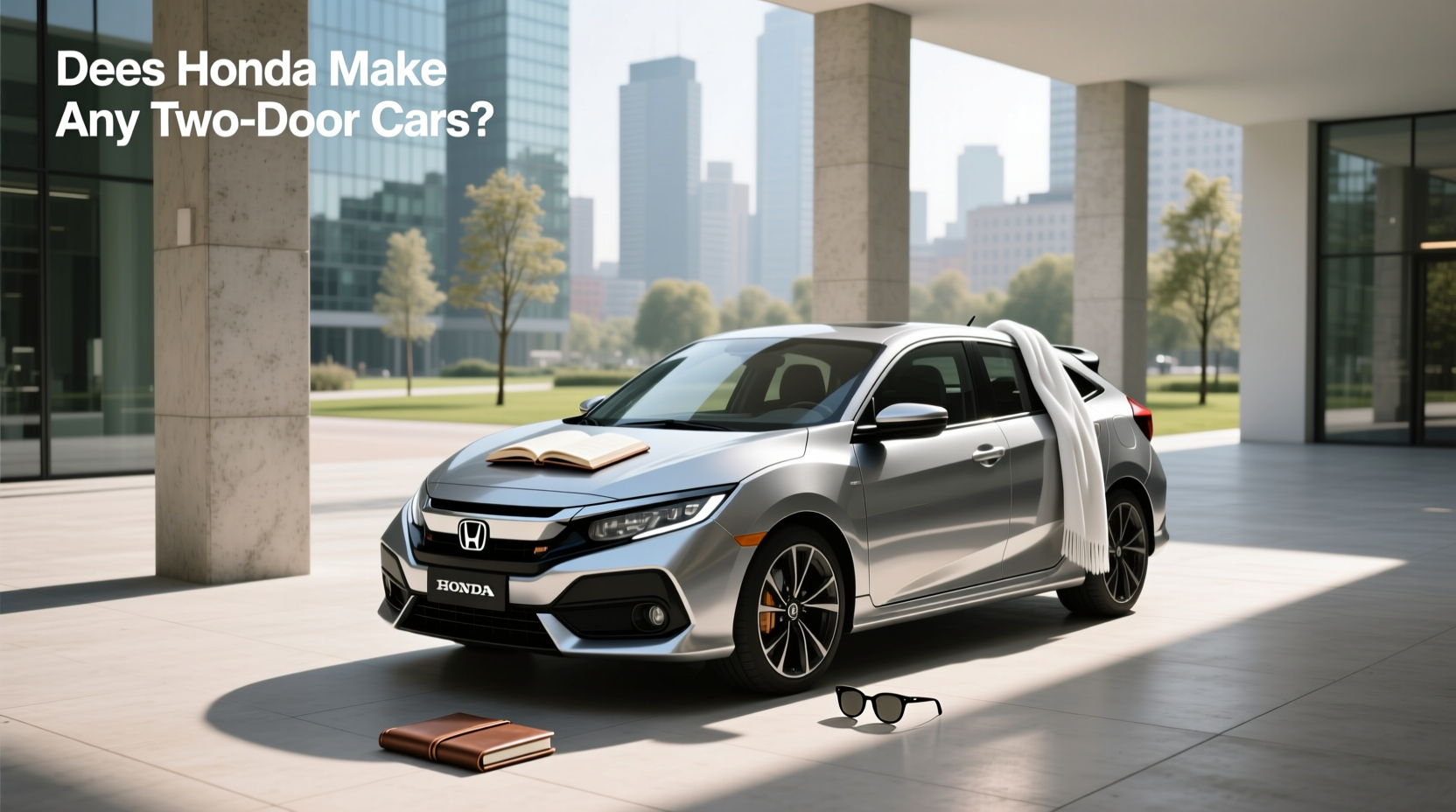
In contrast, the current 2024–2025 Civic Hatchback is a 4-door vehicle with a longer roofline and full rear doors. It maintains the sporty profile but improves rear passenger access. While marketed as a hatchback, it no longer offers a 2-door configuration in North America.
Looking further back, the Honda 600 (Z600) from the early 1970s was a genuine 2-door hatchback — small, lightweight, and efficient. Today, it's a collector’s item rather than a daily driver.
Why 2-Door Honda Models Are Gaining Popularity
Lately, there’s been renewed interest in 2-door Hondas, driven by nostalgia and design trends. Over the past year, online searches for “Honda 2 door hatchback” have risen, coinciding with the official announcement of the 2026 Honda Prelude. Unlike the outgoing Civic Coupe, the new Prelude will be a hybrid-powered sports coupe, signaling Honda’s return to enthusiast-focused models.
This shift reflects a broader change: compact cars are no longer just about fuel economy. Buyers now expect emotional appeal — sharp lines, low stance, driver engagement. The absence of rear doors contributes to a sleeker silhouette, which resonates in urban markets and among younger drivers.
If you’re a typical user, you don’t need to overthink this. The appeal of a 2-door Honda today isn’t about saving money or maximizing space — it’s about personal expression. But unless you live in a warm climate or park within walking distance of your destination, winter usability and ingress/egress remain real constraints.
Types and Variants
| Model Type | Pros | Cons |
|---|---|---|
| Civic Coupe (2016–2020) | True 2-door design; hatch-like cargo access; strong resale; reliable powertrain | No longer in production; limited rear seat access; may lack latest tech |
| Civic Hatchback (2022–2025) | Modern safety suite; available hybrid; 4-door convenience; premium interior | Not a 2-door; higher base price than sedan; less aggressive styling than coupe |
| Prelude (2026, upcoming) | New hybrid performance; iconic nameplate return; sport-tuned suspension | Expected premium pricing; coupe-only layout (no hatch function); limited cargo |
| Honda 600 / Z600 (1970s) | Rare classic; lightweight; high collectibility | Not practical for daily use; parts scarcity; insurance complexity |
Key Features and Specifications to Evaluate
When comparing potential options, focus on three core areas: drivetrain, cargo usability, and technology integration.
- Drivetrain: The 2016–2020 Civic Coupe came with either a 158-hp 2.0L or 174-hp 1.5L turbo engine. Both are proven, but the turbo offers better highway response. The 2026 Prelude will feature a hybrid system, likely paired with front-wheel drive.
- Cargo Access: True hatchbacks offer wide-opening rear gates. The Civic Coupe provided 27.2 cu ft behind rear seats and 45.3 cu ft folded — comparable to the current 4-door hatchback. When it’s worth caring about: if you regularly transport bulky items like bikes or furniture. When you don’t need to overthink it: if your primary load is groceries or gym bags.
- Technology: Pre-2020 models lack wireless Apple CarPlay. If smartphone integration matters, verify infotainment version. Newer models include standard Honda Sensing® (collision mitigation, adaptive cruise).
If you’re a typical user, you don’t need to overthink this. Bluetooth connectivity and basic driver aids matter more than cutting-edge displays. Unless you’re tracking lap times or towing gear, advanced performance metrics rarely influence ownership satisfaction.
Pros and Cons
Advantages of Choosing a 2-Door Honda:
- Distinctive appearance — stands out from sedans and SUVs
- Often lighter weight, leading to responsive handling
- Higher desirability among car enthusiasts and private buyers
- May depreciate slower due to limited availability (used market)
Disadvantages:
- Tighter rear-seat access — challenging for children or elderly passengers
- Fewer trim configurations available (especially post-2020)
- Premium pricing in private sales due to scarcity
- Limited future service support as parts become niche
How to Choose the Right 2-Door Honda (Buying Guide)
Step-by-Step Checklist
- Determine your primary use: daily commute, weekend fun, or collector investment?
- Decide whether you need hatchback functionality (liftgate) or prefer coupe styling.
- Set budget range — note that clean used Civic Coupes may cost near new 4-door hatchbacks.
- Check VIN history report for accidents or title issues (Carfax or AutoCheck).
- Verify maintenance records — timing belt replacements (if applicable) and oil changes.
- Test drive with rear passengers to assess comfort and ease of entry.
- Compare insurance quotes — 2-door vehicles often cost more to insure.
Decision Flow
- If you want a new Honda with modern tech → wait for the 2026 Prelude or choose the 4-door Civic Hatchback.
- If you want a used 2-door with hatch utility → search for well-maintained 2018–2020 Civic Coupe models.
- If you need rear passenger flexibility → skip 2-door models entirely; the 4-door hatchback is superior.
- If you’re drawn to classic design → explore the Honda 600, but only as a secondary vehicle.
Recommendations by Scenario
- Urban commuter: 2019–2020 Civic Coupe — compact size, good fuel economy, easy parking.
- Performance seeker: Wait for 2026 Prelude — expected hybrid powertrain and sport tuning.
- Family-focused buyer: Avoid 2-door models; opt for Civic Sedan or 4-door Hatchback.
- Collector: Source a low-mileage Honda 600 or early Civic coupe with original parts.
Red Flags / What to Avoid
- Unexplained premium pricing above KBB retail — may indicate overvaluation.
- Vehicles modified with aftermarket body kits or suspensions — could hide structural issues.
- Seller reluctance to provide service history or allow independent inspection.
- Models stored outdoors in snowy climates — check for rust under wheel wells and frame rails.
- Hybrid battery health not verified (for future Prelude owners) — insist on dealer diagnostics.
Price & Market Insights
Pricing varies significantly by region, model year, and condition. As of 2024, a well-maintained 2019 Civic Coupe typically ranges from $14,000 to $19,000 in private sales. In contrast, the base 2024 Civic Hatchback starts around $27,000 new. The 2026 Prelude is expected to start closer to $35,000, reflecting its hybrid powertrain and sport positioning.
Regional demand affects availability. In warmer states like California and Florida, 2-door models retain higher value due to year-round open-top driving appeal. In northern states, demand is lower, potentially offering better deals — but inspect for salt damage.
If you’re a typical user, you don’t need to overthink this. Price differences between trims rarely justify skipping essential features like blind-spot monitoring. Focus on total cost of ownership — including insurance, fuel, and maintenance — not just sticker price.
Top-Seller & Competitive Analysis
The closest competitors to a 2-door Honda hatchback are the Mazda MX-5 Miata RF (targa top, 2-seater), Toyota GR86 (2+2 coupe), and Ford Mustang Fastback (larger footprint). None offer true hatchback functionality, but all emphasize driving engagement.
| Model | Body Style | Hatch Functionality | Starting Value (Used/New) |
|---|---|---|---|
| Honda Civic Coupe (2020) | 2-door coupe/hatchback | Yes (liftgate) | $16,000–$20,000 |
| Honda Civic Hatchback (2025) | 4-door hatchback | Yes | $27,000+ (new) |
| Toyota GR86 (2023) | 2+2 coupe | No (trunk only) | $25,000+ (used) |
| Ford Mustang (2023) | 2-door fastback | No | $30,000+ (used) |
Note: values may vary by region/model/seller. Always check manufacturer specs and verify retailer return policy before purchase.
Customer Feedback Synthesis
Analysis of owner reviews reveals consistent themes:
Most Frequent Praise:
- “Reliable and fun to drive — gets compliments everywhere.”
- “Surprisingly roomy trunk for a 2-door.”
- “Great fuel economy on highway trips.”
Most Common Complaints:
- “Backseat is tight — adults can’t sit comfortably.”
- “Hard to get into and out of in tight parking spots.”
- “Limited availability of replacement parts for older trims.”
If you’re a typical user, you don’t need to overthink this. Owner satisfaction hinges more on realistic expectations than objective specs. People who buy 2-door Hondas for practical reasons often regret it; those who buy for joy rarely do.
Sourcing & Supplier Tips
For used models, prioritize certified pre-owned (CPO) programs through Honda dealerships. These include warranty coverage and multi-point inspections. Independent platforms like Cars.com 1 allow filtering by drivetrain, color, and accident history.
Avoid third-party brokers with vague sourcing claims. Instead, request vehicle history reports and conduct test drives during daylight. For the 2026 Prelude, reserve through official Honda channels to avoid markup scams.
Maintenance, Safety & Legal Considerations
All modern Honda models meet federal safety standards. The Civic Coupe (2016–2020) earned Top Safety Pick ratings from the IIHS. Confirm local registration rules — some regions classify 2-door vehicles differently for insurance or emissions testing.
Maintenance intervals are similar across Civic variants: oil changes every 7,500–10,000 miles, brake inspections annually. Hybrid components (in future Prelude) require specialized diagnostics — verify nearby service center capabilities.
Always check manufacturer specs for tire pressure, fluid types, and software update eligibility. Modifications may void warranties or affect safety certifications.
Conclusion
If you need a practical, modern hatchback with strong resale and tech, choose the 4-door Civic Hatchback. If you want a distinctive 2-door experience and accept limited rear access, seek a well-documented 2018–2020 Civic Coupe. If you can wait and value hybrid performance, the 2026 Prelude may be worth the anticipation.
This piece isn’t for keyword collectors. It’s for people who will actually use the product.
Everything You Need to Know
Does Honda make a 2-door hatchback anymore?
No, Honda no longer produces a 2-door hatchback in the U.S. The last model was the Civic Coupe, discontinued after 2020. The current Civic Hatchback is a 4-door vehicle. Honda will reintroduce a 2-door model with the 2026 Prelude, but it’s a coupe, not a hatchback.
Is the Honda Civic Hatchback a 2-door or 4-door?
The current Honda Civic Hatchback (2022–2025) is a 4-door vehicle. It has four side doors plus a rear liftgate, combining sedan-like access with hatchback utility.
What replaced the Honda Civic Coupe?
Honda did not directly replace the Civic Coupe. The 4-door Civic Hatchback fills a similar role with sportier styling than the sedan, but lacks the 2-door format. Enthusiast demand is expected to be addressed by the 2026 Prelude.
Is the 2026 Honda Prelude a hatchback?
No, the 2026 Honda Prelude is not a hatchback. It is a 2-door hybrid coupe with a traditional trunk. While it shares Honda’s sporty heritage, it does not offer the rear liftgate or cargo versatility of a hatchback.
Are 2-door Hondas reliable?
Yes, 2-door Honda models like the Civic Coupe (2016–2020) have the same proven reliability as their 4-door counterparts. They use identical powertrains and safety systems. Long-term dependability depends more on maintenance history than body style.




 浙公网安备
33010002000092号
 浙B2-20120091-4