Short introduction
If you’re choosing a 2.5 cubic feet subwoofer box, prioritize internal volume accuracy and enclosure type over brand names. For most car or home theater users, a sealed or ported 2.5 cu ft box balances deep bass response with manageable size—especially if space is limited. Recently, compact yet powerful amplifier designs have made smaller enclosures like this more viable without sacrificing low-end output. If you’re a typical user, you don’t need to overthink this: match the box tuning to your subwoofer’s specs and ensure it fits your installation area. Two common but often irrelevant debates? Whether exotic wood finishes improve sound (they don’t) and if hand-built boxes always outperform pre-fab ones (not necessarily). The real constraint? Physical clearance—measure twice, buy once.
This piece isn’t for keyword collectors. It’s for people who will actually use the product.
About 2.5 cubic feet subwoofer box
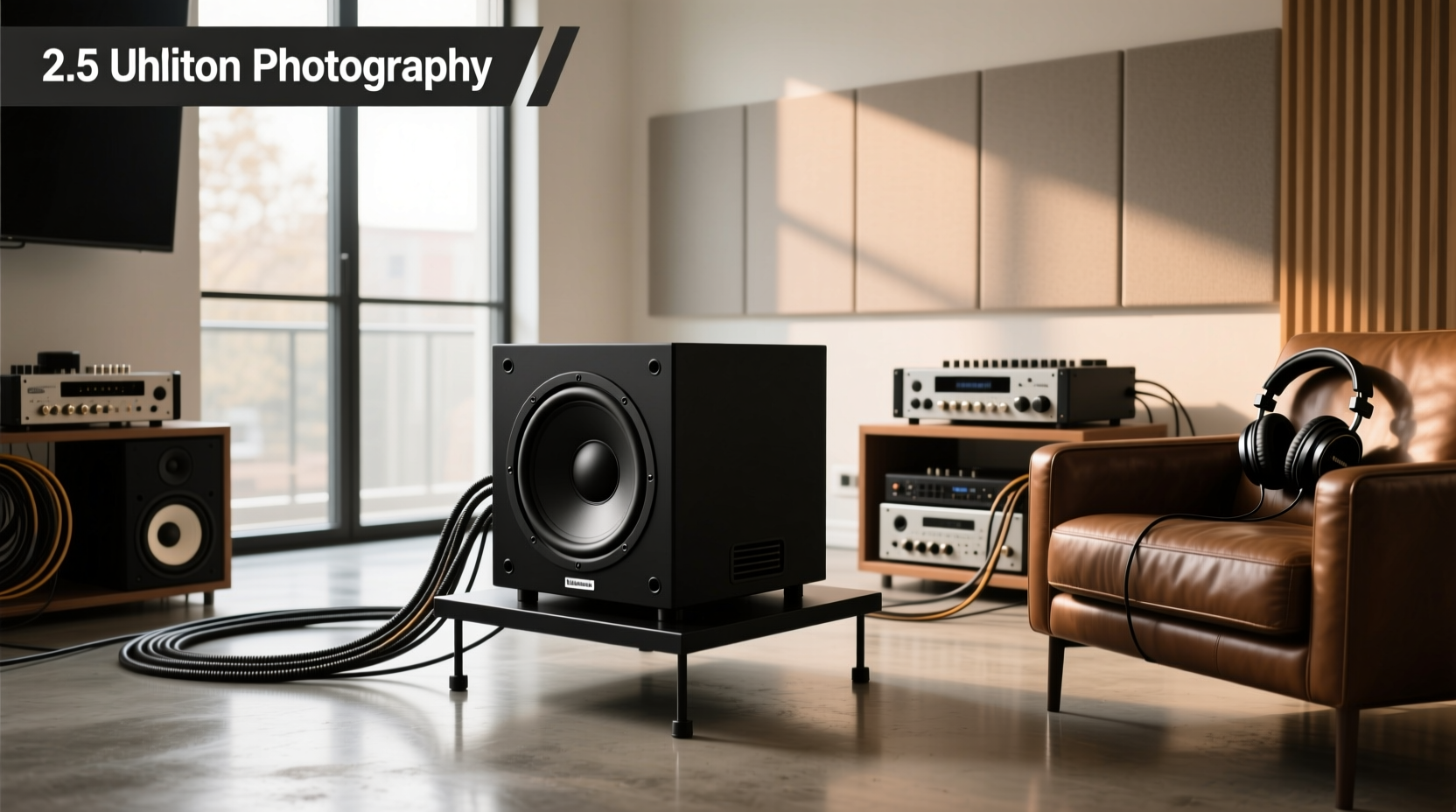
A 2.5 cubic feet subwoofer box refers to an enclosure with an internal volume of exactly 2.5 cubic feet, designed to optimize the performance of a specific subwoofer driver. This size sits at a sweet spot between compactness and acoustic efficiency, making it suitable for mid-sized vehicles, small home theaters, or powered bass stations where floor space matters. Unlike larger enclosures that require significant room, the 2.5 cu ft design maintains enough air volume to support meaningful low-frequency extension while remaining installable behind seats or under rear decks.
The term “cubic feet” here means net internal volume after displacement from the speaker and bracing—not external dimensions. Many buyers overlook this distinction and end up with mismatched systems. Always verify net volume from manufacturer specs, not advertised size. When properly tuned and paired, a 2.5 cu ft box can deliver tight, punchy bass for genres like hip-hop, EDM, or action-heavy movie soundtracks.
Why 2.5 cubic feet subwoofer box is gaining popularity
Over the past year, demand for optimized mid-size enclosures has increased due to rising interest in modular audio setups and urban vehicle modifications. Smaller SUVs and electric vehicles often lack trunk space, pushing users toward efficient designs that don’t compromise on output. Additionally, modern high-excursion subwoofers perform better in moderately sized sealed or vented boxes than older models did, increasing confidence in the 2.5 cu ft standard.
Another shift: consumers now expect plug-and-play compatibility without custom fabrication. Pre-tuned 2.5 cu ft boxes meet that need. They’re also easier to ship and handle, reducing logistics friction. If you’re a typical user, you don’t need to overthink this—many off-the-shelf options now come with accurate tuning and durable construction that used to require DIY expertise.
Types and variants
Sealed Enclosures
- ✅ Tight, accurate bass ideal for vocals and acoustic content
- ✅ Compact and predictable response
- ❌ Less loud than ported at same power
- ❌ Requires more amplifier power for deep extension
Ported (Vented) Enclosures
- ✅ Higher efficiency and louder output near tuning frequency
- ✅ Better perceived “boom” for bass-heavy music
- ❌ Larger physical footprint due to port length
- ❌ Can sound boomy or delayed if poorly designed
Bandpass Enclosures
- ✅ Focused mid-bass punch, good for SPL contests
- ✅ Directional output helps isolate noise
- ❌ Narrow frequency range
- ❌ Complex tuning; hard to reverse changes
Isobaric Configuration 🔄
As noted in design trends, an isobaric 2.5 cubic feet subwoofer box uses two drivers coupled together—either face-to-face or back-to-back—to act as one unit in half the effective airspace. This allows strong bass response in tighter spaces, such as compact cars or wall-mounted installations.
- ✅ Space-saving while maintaining low-frequency capability
- ✅ Reduced cabinet resonance due to opposing forces
- ❌ More expensive (two subs, complex wiring)
- ❌ Lower overall efficiency; needs stronger amp
If you’re a typical user, you don’t need to overthink this: unless space is extremely limited, a single-driver sealed or ported box offers better value and simplicity.
Key features and specifications to evaluate
- Net Internal Volume: Must be precisely 2.5 cu ft post-displacement. Check manufacturer documentation.
- Tuning Frequency (for ported): Typically 30–35 Hz for balanced response. Lower = deeper but narrower.
- Construction Material: MDF is standard; avoid particle board. Thickness should be ≥ ¾ inch.
- Bracing: Internal supports reduce panel vibration and coloration.
- Port Design: Round vs. slot ports affect airflow noise and space usage.
- Subwoofer Compatibility: Match RMS power handling and recommended box volume.
When it’s worth caring about: if you're pushing >500 watts or tuning for competition-level output.
When you don’t need to overthink it: for daily driving or background home audio under 300 watts.
Pros and cons
- Optimal balance between size and bass performance
- Fits in many mid-size vehicles and rooms
- Wide availability in pre-built formats
- Supports both sealed precision and ported impact
- Precise measurements critical—small errors degrade performance
- Limited headroom for very large drivers (15"+)
- May require modification for non-standard mounting locations
How to choose a 2.5 cubic feet subwoofer box
Step-by-step checklist
- Determine available installation space (height, width, depth).
- Select subwoofer first—check its recommended enclosure volume.
- Choose enclosure type based on preferred sound profile.
- Verify net internal volume matches 2.5 cu ft requirement.
- Inspect build quality: joints, material thickness, finish.
- Confirm terminal type and internal wiring compatibility.
- Test fit before final installation.
Decision flow
- Need max output in small space? → Consider isobaric.
- Prefer clean, fast bass? → Choose sealed.
- Want louder, resonant low end? → Go ported.
- Installing in tight hatchback? → Prioritize depth over width.
Recommendations by scenario
- Car Audio – Daily Driver: Sealed 2.5 cu ft box with 10" or 12" sub.
- Home Theater – Small Room: Ported box tuned to 32 Hz for movie effects.
- SUV or Truck Cab: Isobaric setup if space behind seat is minimal.
- Budget Build: Pre-fabricated MDF box with basic finish.
Red flags / what to avoid ⚠️
- Unverified internal volume claims
- No tuning specs provided (for ported)
- Thin walls (< ½ inch) or warped panels
- Cheap carpeting covering poor craftsmanship
- Vague compatibility information
This piece isn’t for keyword collectors. It’s for people who will actually use the product.
Price & market insights
Prices for a 2.5 cubic feet subwoofer box vary widely based on materials, brand, and whether it's sold alone or with a subwoofer. Basic MDF models start around $60, while premium fiberglass or carbon-fiber builds exceed $200. Isobaric configurations typically cost 1.5x more due to dual drivers. Fully assembled and tuned units are increasingly common online, but pricing may vary by region/model/seller. To get accurate quotes, check manufacturer specs and compare total system value—not just box cost. Verify retailer return policy before purchase, especially when buying sight-unseen.
Top-seller & competitive analysis
While no single brand dominates the 2.5 cu ft niche, several consistently receive positive feedback for dimensional accuracy and structural integrity. Below is a representative comparison of popular types:
| Brand/Type | Enclosure Type | Avg. Price | Material | User Rating |
|---|---|---|---|---|
| Rockford Fosgate Power Series | Ported | $110 | 7/8" MDF | ⭐ 4.6 |
| JL Audio StealthBox | Custom-Fit Sealed | $180 | Marine-Grade Composite | ⭐ 4.8 |
| MTX Jackhammer Series | Ported w/ Illuminated Port | $130 | 6/8" MDF | ⭐ 4.3 |
| DIY Kits (Various Sellers) | Build-Your-Own | $70–$90 | Pre-Cut MDF | N/A |
Note: Availability and pricing may vary by region/model/seller. Always cross-check current specs before purchasing.
Customer feedback synthesis
Based on aggregated reviews across platforms, common positives include:
- “Fits perfectly behind my truck seat” 📍
- “Surprisingly deep bass for the size” ⚡
- “Easy to wire and connect” 🔧
Frequent complaints involve:
- “External dimensions were larger than expected” ❗
- “Port chuffing at high volume” 🔊
- “Finish peeled after six months” 🧼
If you’re a typical user, you don’t need to overthink this: read fitment notes carefully and prioritize structural honesty over flashy aesthetics.
Sourcing & supplier tips
When sourcing a 2.5 cubic feet subwoofer box, consider these practical steps:
- Buy from suppliers who publish full schematics and net volume calculations.
- Look for vendors offering fitment guides tailored to vehicle models.
- For international orders, confirm shipping timelines and import fees.
- Support businesses with clear return policies and responsive support.
- Use forums or community groups to validate seller reputation.
Some manufacturers offer configuration tools to customize box parameters. When possible, choose modular designs that allow future upgrades. Remember: pricing and stock levels may vary by region/model/seller. Check manufacturer specs directly rather than relying solely on third-party listings.
Maintenance, safety & legal considerations
Maintaining a 2.5 cubic feet subwoofer box involves periodic inspection for loose terminals, swollen capacitors (in powered versions), and structural warping from humidity. Keep vents clear of debris and avoid placing heavy objects on top. In vehicles, secure the enclosure to prevent movement during sudden stops.
Safety-wise, ensure wiring meets amperage requirements and fuses are correctly rated. Overpowering a small enclosure can damage both the subwoofer and amplifier. While there are no universal regulations governing subwoofer box size, some localities limit in-car sound pressure levels. Confirm local regulations through official transportation or noise control offices if operating in public spaces frequently.
Conclusion
If you need balanced bass in a constrained space, choose a well-constructed 2.5 cubic feet subwoofer box matched to your driver’s specifications. For most listeners, a sealed or moderately tuned ported design delivers the best blend of clarity and impact. If space is severely limited, explore isobaric options—but expect higher cost and complexity. Ultimately, success depends less on chasing specs and more on accurate fit and honest build quality. If you’re a typical user, you don’t need to overthink this: focus on verified volume, proper tuning, and physical compatibility.
FAQs
What does 2.5 cubic feet mean for a subwoofer box?
It refers to the net internal air volume available to the subwoofer after accounting for speaker displacement and bracing. This volume affects tuning, efficiency, and bass response. Always match it to your sub’s manufacturer recommendation.
Can I use a 2.5 cu ft box with any 12-inch subwoofer?
No. Not all 12" subs are designed for 2.5 cu ft enclosures. Check the manufacturer’s suggested sealed or ported volume before pairing. Using the wrong size can lead to weak output or mechanical damage.
Is a ported or sealed 2.5 cubic feet box better?
Depends on your preference. Sealed boxes offer tighter, more accurate bass; ported ones deliver louder, more resonant low end. For everyday listening, sealed is often sufficient. For maximum impact, go ported—if space allows.
Do isobaric 2.5 cu ft boxes really save space?
Yes. By using two coupled drivers, they achieve similar bass performance to a larger single-driver box in half the depth. However, they require more amplifier power and careful alignment.
How important is build material for a 2.5 cu ft sub box?
Very. Medium-density fiberboard (MDF) at ¾ inch or thicker resists flex and resonance. Avoid thin particle board or plastic housings, which degrade sound quality and durability over time.




 浙公网安备
33010002000092号
 浙B2-20120091-4