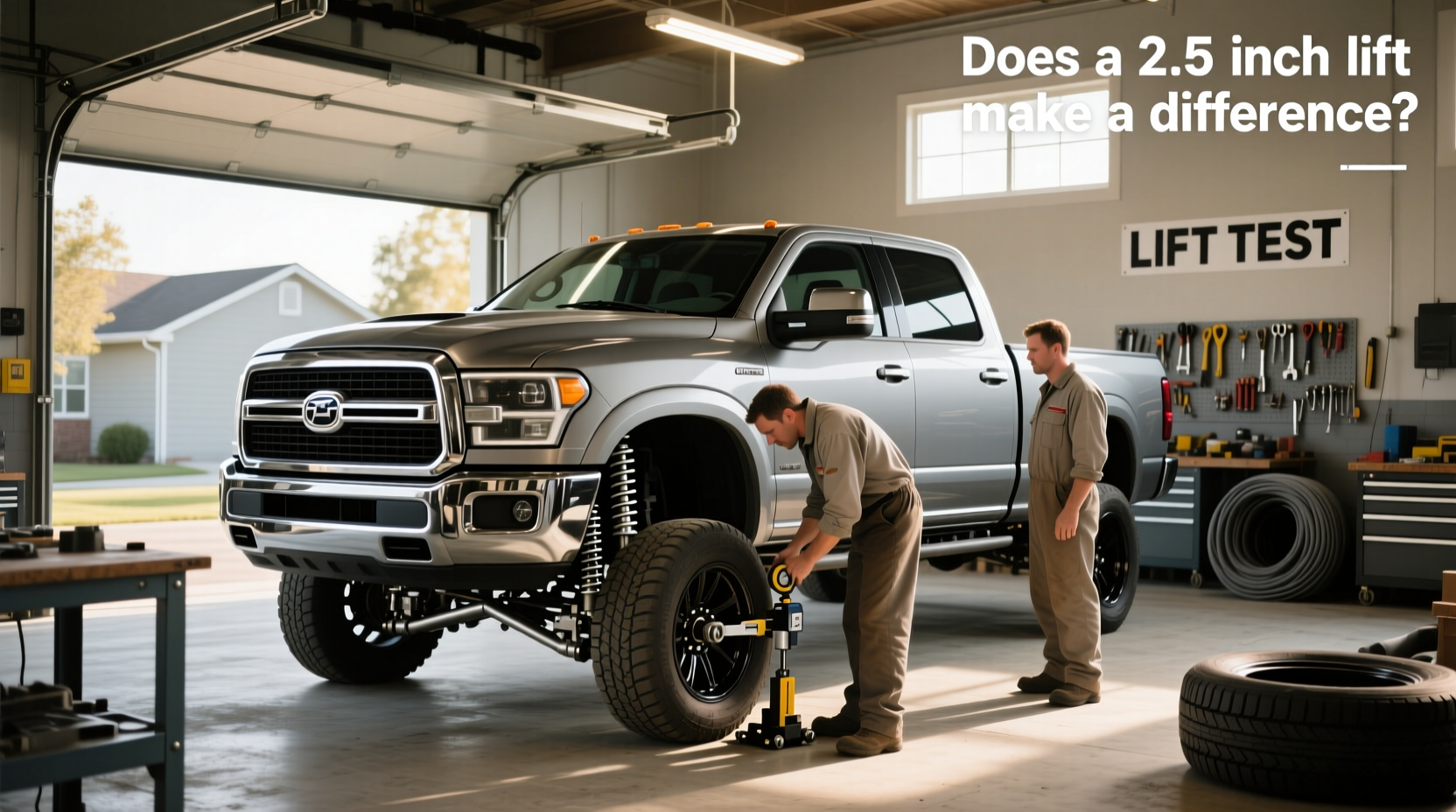
How to Choose a Truck Lift: Does a 2.5-Inch Lift Make a Difference?
✨A 2.5-inch truck lift can make a noticeable difference in both appearance and function, especially when correcting factory rake or fitting larger tires. For most daily drivers, a leveling kit offering up to 2.5 inches of front lift provides a balanced look with minimal impact on ride quality 1. If you're exploring how to choose a truck lift, does a 2.5 inch lift make a difference? — the answer depends on your goals: aesthetics, mild off-road use, or future modularity. Avoid full suspension lifts unless you need significant ground clearance, as they increase cost, complexity, and may alter handling. Always get an alignment post-installation to prevent uneven tire wear.
About Truck Lifts: What Is a 2.5-Inch Lift?
📏A 2.5-inch lift refers to a modification that raises a truck’s chassis by approximately 2.5 inches above its original factory height. This adjustment is typically achieved through either a leveling kit (which lifts only the front) or a full suspension lift kit (raising both front and rear). Most trucks come with a factory “rake” — where the rear sits higher than the front — designed to support payload but often resulting in a nose-down stance. A 2.5-inch lift, particularly via a leveling kit, reduces this rake, creating a more level profile 1.
This lift size is considered moderate, striking a balance between visual enhancement and practical performance. It allows room for slightly larger tires (typically up to 33 inches in diameter depending on make/model), improves approach angles, and adds modest ground clearance without requiring major drivetrain modifications like axle re-gearing or driveshaft adjustments.
Why a 2.5-Inch Lift Is Gaining Popularity
📈Truck owners are increasingly opting for 2.5-inch lifts due to their versatility and value. They offer a clear visual upgrade over stock configurations while remaining within OEM-like driving dynamics. Many users report that this lift height delivers the “sweet spot” — enough to stand out and improve light off-road capability without sacrificing too much comfort or fuel economy 2.
Additionally, social media and truck customization communities have amplified interest in moderate lifts. Photos showcasing clean, aggressive stances with minimal fender gap resonate widely, reinforcing the appeal of a 2.5-inch change. It also serves as a foundation for future upgrades — some owners install a leveling kit first, then later add rear blocks or longer shocks to achieve greater lift incrementally.
Types and Variants of 2.5-Inch Lifts
🔧The two primary types of 2.5-inch lifts are leveling kits and full suspension lift kits. Each has distinct advantages and trade-offs based on budget, intended use, and desired outcome.
Leveling Kit (Front-Only Lift)
- Pros: Affordable ($100–$400), easy installation (often DIY-friendly), maintains near-stock ride quality, corrects factory rake
- Cons: Limited height gain (usually 1–2.5 inches), only affects front end, restricts maximum tire size compared to full lifts
Ideal for owners who want a level stance and slight tire upgrade without altering overall vehicle dynamics.
Full Suspension Lift Kit (Front & Rear)
- Pros: Uniform lift across axles, enables much larger tires (up to 35+ inches), better articulation and off-road performance, enhanced durability with upgraded components
- Cons: Higher cost ($800–$3,000+), complex installation (professional recommended), potential changes to steering geometry, possible decrease in highway stability
Suited for serious off-roaders or those building show trucks with aggressive tire profiles.
| Feature | Leveling Kit | Suspension Lift Kit |
|---|---|---|
| Lift Height | Up to 2.5" (front only) | 2–10+" (full vehicle) |
| Main Benefit | Balanced look, minor clearance | Major off-road capability |
| Cost Range | $100–$400 | $800–$3,000+ |
| Installation | DIY possible (~2–4 hrs) | Professional advised (~6–12 hrs) |
| Tire Compatibility | +1–2 inches over stock | +3+ inches over stock |
| Ride Impact | Minimal change | Noticeable firmness/stiffness |
Key Features and Specifications to Evaluate
🔍When assessing whether a 2.5-inch lift makes sense for your truck, consider these critical specifications:
- Lift Type: Decide between leveling and full suspension based on goals.
- Material Quality: Look for forged steel or high-grade aluminum spacers; avoid cheap stamped metal.
- Shock Compatibility: Some kits include extended-length shocks; others assume reuse of stock units — verify fitment.
- Warranty: Reputable manufacturers offer 1–3 year warranties against defects.
- Vehicle-Specific Design: Kits should be tailored to your make, model, and year — universal fits risk misalignment.
- Alignment Requirements: All lifts require post-installation alignment to maintain handling and tire life 1.
Pros and Cons of a 2.5-Inch Lift
✅ Advantages:
- Improves truck stance and visual symmetry
- Enables installation of larger, more aggressive tires
- Adds usable ground clearance for trails or rough roads
- Affordable entry point into truck customization
- Minimal effect on daily drivability (especially leveling kits)
❌ Drawbacks:
- Potential reduction in fuel efficiency (typically 1–3 mpg loss)
- May affect towing stability or payload handling
- Increased wind resistance and higher center of gravity
- Requires recalibration of electronic systems (e.g., TPMS, traction control)
- Legal restrictions may apply in some regions
How to Choose a 2.5-Inch Truck Lift
📋Follow this step-by-step guide to ensure you select the right lift for your needs:
- Define Your Goal: Are you improving looks, adding off-road ability, or preparing for bigger tires? If it's primarily aesthetic, a leveling kit suffices.
- Check Tire Clearance: Measure current fender-to-tire gap. A 2.5-inch lift usually allows +1 to +2 inches in tire diameter, but check manufacturer specs for interference risks.
- Evaluate Budget: Leveling kits are economical; full suspension kits demand higher investment. Include labor costs if not DIY-ing.
- Verify Compatibility: Confirm the kit is designed for your exact truck model and trim (e.g., 4WD vs 2WD, independent front suspension).
- Research Installation Complexity: Some kits require spring compressors or control arm modifications — assess skill level honestly.
- Plan for Alignment: Schedule a professional alignment after installation to correct camber and toe settings.
❗Red Flags to Avoid: Steer clear of kits labeled "universal" with no year/make/model specificity. Avoid brands lacking customer support or warranty documentation. Never skip alignment — it leads to rapid tire wear and unsafe handling.
Price & Market Insights
🛒Prices vary significantly based on type, brand, and included components. Leveling kits typically range from $100 to $400, while complete 2.5-inch suspension lift kits cost between $800 and $2,500. Premium brands like ReadyLIFT, Zone Offroad, or Superlift often include upgraded shocks and hardware, justifying higher prices.
Value isn't solely about upfront cost. Consider long-term reliability, ease of installation, and component quality. A slightly more expensive kit with lifetime warranty and excellent reviews may save money over time versus a cheaper alternative needing replacement.
Top-Seller & Competitive Analysis
⭐Popular 2.5-inch lift kits include ReadyLIFT SST Series (leveling), Zone Offroad Performance Lifts, and Superlift’s SOA (Spring-Over-Axle) systems. These brands consistently receive positive feedback for fitment accuracy and durability.
| Brand/Model | Type | Price Range | Key Feature |
|---|---|---|---|
| ReadyLIFT SST-2500 | Leveling Kit | $280–$350 | No strut disassembly required |
| Zone Offroad 2.5" Lift | Full Suspension | $1,200–$1,800 | Includes extended sway bar links |
| Superlift 2.5" Standard Lift | Full Suspension | $1,500–$2,200 | Lifetime warranty on parts |
Customer Feedback Synthesis
👥Analysis of user reviews reveals consistent themes:
- Frequent Praise: Improved appearance, easier tire upgrades, straightforward installation (for leveling kits), and retained ride comfort.
- Common Complaints: Minor vibrations at highway speeds (often resolved with proper alignment), occasional noise from new hardware, and slight fuel economy drop (~1–2 mpg).
- Unexpected Benefits: Better visibility due to raised seating position, increased confidence on unpaved roads.
Sourcing & Supplier Tips
🌐Purchase from reputable retailers specializing in truck accessories — such as 4WP, ExtremeTerrain, or Summit Racing — which provide detailed fitment guides and return policies. Avoid third-party marketplaces with unverified sellers.
For bulk purchases or resale, contact distributors directly for dealer pricing. Always inspect packaging upon delivery and test-fit components before installation. Verify compatibility using VIN-specific lookup tools provided by suppliers.
Maintenance, Safety & Legal Considerations
⚙️After installing a 2.5-inch lift, monitor suspension components regularly for loosening bolts or worn bushings. Inspect tires for uneven wear — a sign of improper alignment. Upgraded shocks may require earlier servicing due to increased travel.
Safety-wise, remember that a lifted truck has a higher center of gravity, increasing rollover risk during sharp maneuvers. Drive cautiously, especially when cornering at speed.
Legally, lift regulations vary by state and country. Some jurisdictions limit lift height or require lighting adjustments for taller tires. Always check local laws before modifying your vehicle to avoid fines or inspection failures.
Conclusion
📌If you want a cleaner, more aggressive stance and plan to run slightly larger tires without major mechanical changes, a 2.5-inch leveling kit is a smart, cost-effective choice. However, if you're pursuing serious off-road adventures or maximum tire clearance, consider a full suspension lift despite the added expense and complexity. Ultimately, how to choose a truck lift, does a 2.5 inch lift make a difference? comes down to matching the modification to your real-world usage — not just aspirations. Prioritize fitment, quality, and post-install service like alignment to ensure lasting satisfaction.
Frequently Asked Questions
- Does a 2.5-inch lift improve off-road performance?
- Yes, moderately. It increases ground clearance and approach/departure angles, helping navigate rocks, ruts, and steep inclines. However, for extreme terrain, additional modifications like lockers or skid plates are usually needed.
- Will a 2.5-inch lift void my truck’s warranty?
- It might affect certain aspects. Under the Magnuson-Moss Warranty Act, manufacturers cannot automatically void a warranty due to aftermarket parts unless they cause the failure. However, suspension-related claims could be denied if the lift is deemed responsible.
- Can I install a 2.5-inch lift myself?
- Many leveling kits are DIY-friendly with basic tools and mechanical knowledge. Full suspension lifts involve more complexity and may require special tools (e.g., spring compressors), so professional installation is often recommended.
- How much fuel economy is lost with a 2.5-inch lift?
- Most owners report a decrease of 1–3 mpg, primarily due to increased aerodynamic drag and heavier tires. The exact impact varies by driving style, terrain, and tire type.
- Do I need new shocks with a 2.5-inch lift?
- Not always. Leveling kits often work with stock shocks. However, full suspension lifts typically require longer shocks to accommodate increased travel and prevent bottoming out.




 浙公网安备
33010002000092号
 浙B2-20120091-4