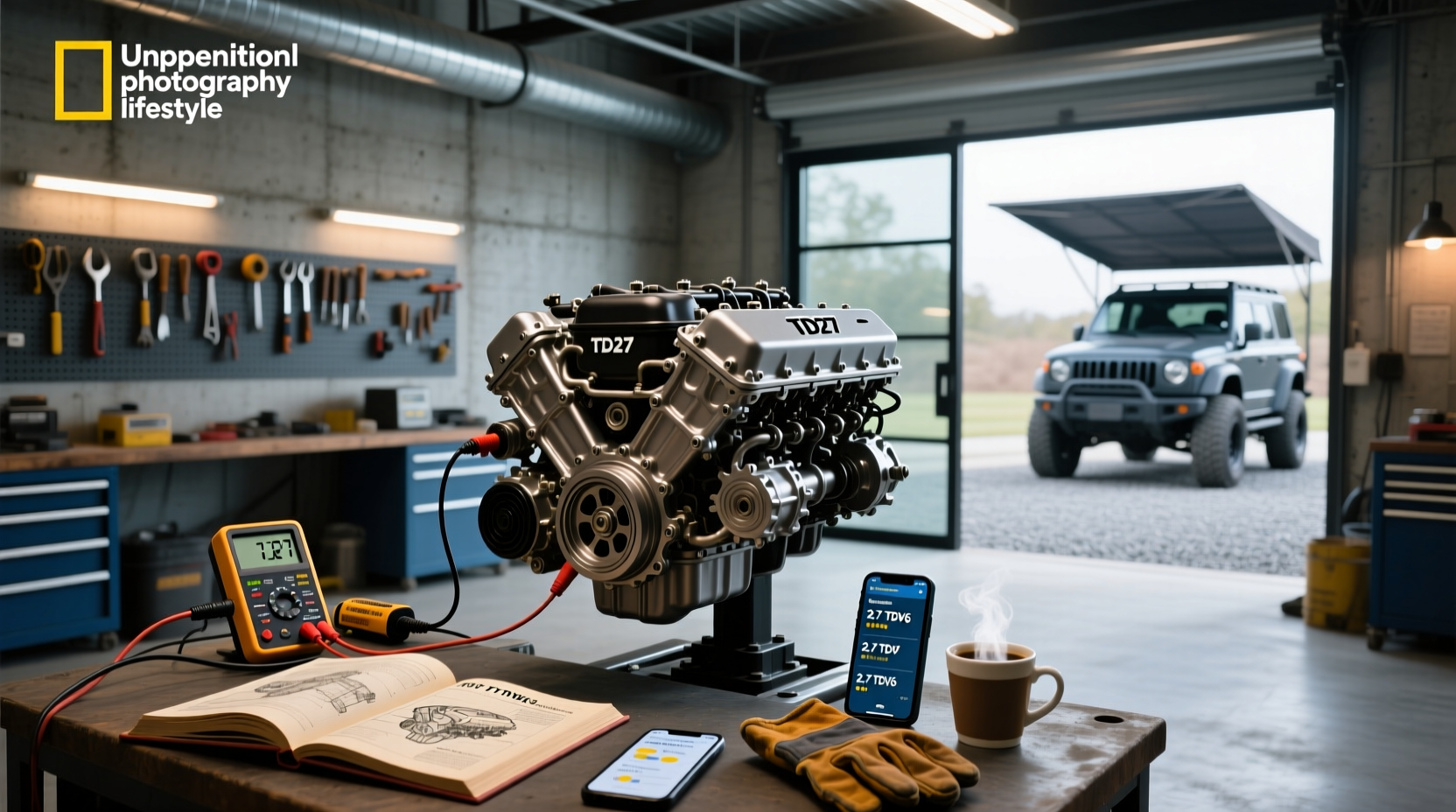
Short Introduction: Should You Buy a 2.7 TDV6 Engine?
If you're asking how to choose td27 engine,Is the 2.7 TDV6 a good engine?, the answer depends heavily on maintenance history and your risk tolerance. The 2.7-liter TDV6 diesel engine, used in Land Rover Discovery 3 and Range Rover Sport models from 2004–2010, offers smooth performance and strong low-end torque (187 hp, 325 lb-ft), with fuel economy averaging 28–35 mpg 1. However, it's infamous for catastrophic crankshaft failures, turbocharger issues, and EGR system clogs—problems that can lead to repair costs exceeding £5,600 2. So, what to look for in td27 engine,Is the 2.7 TDV6 a good engine?? Prioritize full service records, recent timing belt changes, and proof of oil system inspections. For budget-conscious buyers willing to invest in upkeep, it can be a value pick—but only if mechanically sound.
About td27 engine,Is the 2.7 TDV6 a good engine?
The 2.7 TDV6 is a V6 diesel engine co-developed by Ford and PSA Peugeot Citroën for Land Rover’s SUV lineup 3. It was designed to balance on-road refinement with off-road capability, featuring a compacted graphite iron block, deep oil sump for improved lubrication during inclines, and a single turbocharger setup. This engine powers the Land Rover Discovery 3 (LR3) and Range Rover Sport from model years 2005 to 2010.
It should not be confused with the Nissan TD27, an entirely different 2.7L inline-four diesel used in commercial vehicles and known for durability 4. The Land Rover 2.7 TDV6 targets drivers seeking a refined diesel experience with moderate towing capacity (up to 7,700 lbs) and daily drivability, though its reliability reputation has been marred by recurring mechanical flaws.
Why td27 engine,Is the 2.7 TDV6 a good engine? is gaining popularity
Despite its reliability concerns, interest in the 2.7 TDV6 persists due to affordability in the used SUV market. As newer diesel models face emissions regulations and higher prices, budget-focused buyers are turning to older Land Rovers powered by this engine. Its relatively compact size, acceptable fuel efficiency compared to the larger TDV8, and availability of replacement engines make it a candidate for restorations and off-road conversions.
Additionally, enthusiast communities have developed preventive maintenance protocols and aftermarket fixes—such as EGR blanking kits and upgraded oil systems—that improve longevity. These modifications, while sometimes affecting emissions compliance, extend usability in regions with relaxed enforcement. Thus, the engine gains niche appeal among DIY mechanics and off-road hobbyists looking for a capable platform at a lower entry cost.
Types and variants
The 2.7 TDV6 came in two main variants based on emission standards:
- ⚙️Euro 3 (Pre-2007): Found in early Discovery 3 and Range Rover Sport models. Less complex emissions controls, making EGR deletion easier. More prone to timing chain wear but slightly simpler to maintain.
- ⚙️Euro 4 (2007–2010): Introduced stricter emissions compliance. Features revised EGR and diesel particulate filter (DPF) systems. Harder to modify legally, and DPF regeneration issues may arise if driven mostly short distances.
Both share the same core architecture and displacement but differ in tuning and ancillary components. Neither version is inherently more reliable—the key factor remains maintenance quality.
✅ Pros
- Good torque for towing and off-roading
- Smoother operation than older Land Rover diesels
- Better fuel economy than TDV8 (28–35 mpg vs. 20–25 mpg)
- Lower initial purchase price in used market
- Achieves 200,000–250,000 miles with meticulous care 1
❗ Cons
- High risk of crankshaft failure due to weak bottom end
- Turbo replacement requires major disassembly (costly labor)
- EGR system prone to clogging
- Timing belt must be replaced every 60,000–105,000 miles
- Expensive repairs; long engine replacement over £5,600 2
Key features and specifications to evaluate
When assessing a vehicle with a 2.7 TDV6, focus on these technical and maintenance indicators:
- 🔍Oil System Health: Check for oil pickup pipe integrity and breather system cleanliness. Sludge buildup leads to oil starvation and crankshaft damage.
- ⏱️Timing Belt/Chain Status: Verify replacement history. The exhaust cam timing belt should be changed every 60,000–105,000 miles 5.
- 🧼EGR and Cooling System: Inspect for soot accumulation and coolant contamination. Failed EGR coolers can leak coolant into the oil, accelerating internal wear.
- ⚡Turbocharger Condition: Listen for whining or lack of boost. Carbon buildup from poor oil changes is common.
- 📊Service Records: Full documentation of oil changes (every 6,000 miles recommended), filter replacements, and major services is critical.
- 📍Ownership History: Fewer owners and consistent use (not frequent short trips) reduce risk of component stress and DPF/EGR issues.
Pros and cons
The 2.7 TDV6 suits specific users under certain conditions:
Who it's good for ✅
- DIY owners comfortable with diesel engine maintenance
- Buyers with access to trusted specialists for inspections
- Those needing moderate towing (boats, trailers) without V8 fuel costs
- Enthusiasts restoring or modifying older Land Rovers
Who should avoid it ❗
- First-time luxury SUV buyers expecting reliability
- Drivers unwilling to perform frequent, high-quality servicing
- Urban commuters with mostly short trips (harms DPF function)
- Anyone on a tight repair budget
How to choose td27 engine,Is the 2.7 TDV6 a good engine?
Follow this checklist when evaluating a used Land Rover with the 2.7 TDV6:
- 📋Review Service History: Confirm regular oil changes using synthetic oil every 6,000 miles. Missing records are a red flag.
- 🔧Inspect Timing Components: Ask for proof of recent timing belt replacement. If not done, factor in £800–£1,200 for immediate service.
- 👂Listen for Knocking Noises: A dull knock from the lower engine area may indicate crankshaft bearing wear—a precursor to failure.
- 🧰Check Oil and Coolant: Look for milky residue (coolant in oil) or excessive sludge. Both signal internal leaks or poor maintenance.
- 🌐Scan for Error Codes: Use an OBD2 scanner to detect stored faults related to EGR, turbo pressure, or injection system.
- 🚛Verify Towing Usage: Frequent heavy towing without proper cooling upgrades increases stress on the engine.
Avoid any vehicle with unexplained oil consumption, fluctuating oil pressure, or no documented major services. These are strong predictors of imminent failure.
Price & market insights
In the UK and EU markets, used Discovery 3 or Range Rover Sport models with the 2.7 TDV6 range from £4,000 to £9,000 depending on age, mileage, and condition. In the US, imports typically sell between $8,000 and $15,000. Prices reflect the engine’s mixed reputation—well-maintained examples command premiums.
A remanufactured 2.7 TDV6 engine costs £4,000–£6,000, with labor adding £1,500–£2,500 due to complexity 2. Therefore, a seemingly cheap purchase can become costly if the engine needs replacement. Always weigh upfront savings against potential repair liabilities.
Top-seller & competitive analysis
While there are no current “top-seller” new models with this engine, used market leaders include:
| Model | Engine | MPG | Known Issues | Reliability Outlook |
|---|---|---|---|---|
| Land Rover Discovery 3 (2005–2009) | 2.7 TDV6 | 28–35 | Crankshaft, turbo, EGR | Poor without maintenance |
| Range Rover Sport (2006–2010) | 2.7 TDV6 | 28–33 | Same as above | Similar risk profile |
| Discovery 3 with TDV8 | 3.6/4.4 TDV8 | 20–25 | Fuel system, injectors | Better durability under load |
| Nissan Patrol Y61 (TD42/TD27) | Nissan TD27 I4 | 22–26 | Glow plugs, aging parts | Generally robust |
The Nissan TD27, though less powerful, is widely regarded as more dependable in harsh environments due to simpler design and proven longevity 6.
Customer feedback synthesis
Analysis of owner forums and expert reviews reveals consistent patterns:
- ⭐Positive Feedback: Smooth idle, quiet operation, strong low-RPM pull, and decent highway economy praised by many owners.
- ❗Common Complaints: Sudden crankshaft breakage (often without warning), turbo failures after 100k miles, EGR valve clogging requiring cleaning or deletion, and high repair bills cited repeatedly.
- 👥Owner Sentiment: Divided—those with full service histories report reliable use past 200k miles; others describe it as a “ticking time bomb” due to unpredictable failures.
Sourcing & supplier tips
When sourcing a 2.7 TDV6—either in a vehicle or as a replacement unit:
- 🛒Buy from sellers who provide complete maintenance logs and allow pre-purchase inspections.
- 🏭For engine swaps, consider remanufactured units from specialized Land Rover shops rather than generic rebuilds.
- 🔍Inspect compression and leak-down test results if available. Request photos of the oil pickup pipe and breather system.
- 📎Avoid engines advertised as “running” without supporting data. Performance claims can be misleading.
Maintenance, safety & legal considerations
To maximize lifespan, adhere to strict maintenance:
- Change oil and both filters every 6,000 miles using ACEA C3-compliant synthetic oil.
- Replace timing belt at 60,000–105,000 miles; inspect chains and tensioners.
- Keep EGR and intercooler passages clean; consider periodic decarbonizing.
- Monitor oil pressure and coolant levels regularly.
Modifications like EGR deletion may improve reliability but could violate local emissions laws—verify regulations in your region before altering factory systems. Always ensure brake, suspension, and steering components are in safe working order, especially given the vehicle’s weight and age.
Conclusion
The 2.7 TDV6 engine is neither universally bad nor reliably good—it’s a high-maintenance powerplant that demands diligence. If you’re considering a td27 engine,Is the 2.7 TDV6 a good engine? purchase, proceed only if the vehicle has verifiable service history, no signs of oil or coolant issues, and recent critical maintenance. For those prepared to invest time and money into upkeep, it can deliver satisfying performance. But if you prioritize hassle-free ownership, consider more robust alternatives like the TDV8 or non-Land Rover diesel SUVs. Ultimately, your decision should hinge on mechanical condition—not just price.
FAQs
No engine is universally reliable, but the 2.7 TDV6 can last 200,000+ miles with strict maintenance. Without it, major failures like crankshaft breakage are common.
Failure often stems from oil starvation, bearing shell rotation, or coolant contamination from a failed EGR cooler. Poor maintenance accelerates these risks.
Yes, it’s rated for up to 7,700 lbs. However, frequent heavy towing increases stress, so ensure cooling upgrades and diligent oil changes.
Replacement costs range from £5,600 to over £8,000, including parts and labor, due to the complex installation requiring chassis separation in some cases.
No. The Nissan TD27 is an inline-four diesel known for durability. The Land Rover 2.7 TDV6 is a V6 co-developed by Ford/PSA, with different design and reliability challenges.




 浙公网安备
33010002000092号
 浙B2-20120091-4