
Short introduction
If you’re looking at a 2001 Nissan Frontier, here’s the bottom line: with consistent maintenance, expect 200,000 to 300,000 miles. Some reach 400,000+ with no major overhauls—especially manual transmission models. If you’re a typical user, you don’t need to overthink this. The real question isn’t whether it can last—it’s whether the one you’re considering has lasted, based on how it was treated. When choosing a used 2001 Frontier, focus on service history, engine condition, and signs of rust or neglect. Common pitfalls include unaddressed head gasket wear, timing chain noise, and poor fluid maintenance. What to look for in a durable pickup? Prioritize full service records, clean oil reports, and absence of overheating history. Over the past year, interest in older midsize trucks like this has grown—not because they’re trendy, but because rising prices make reliable older models more appealing when budget matters.
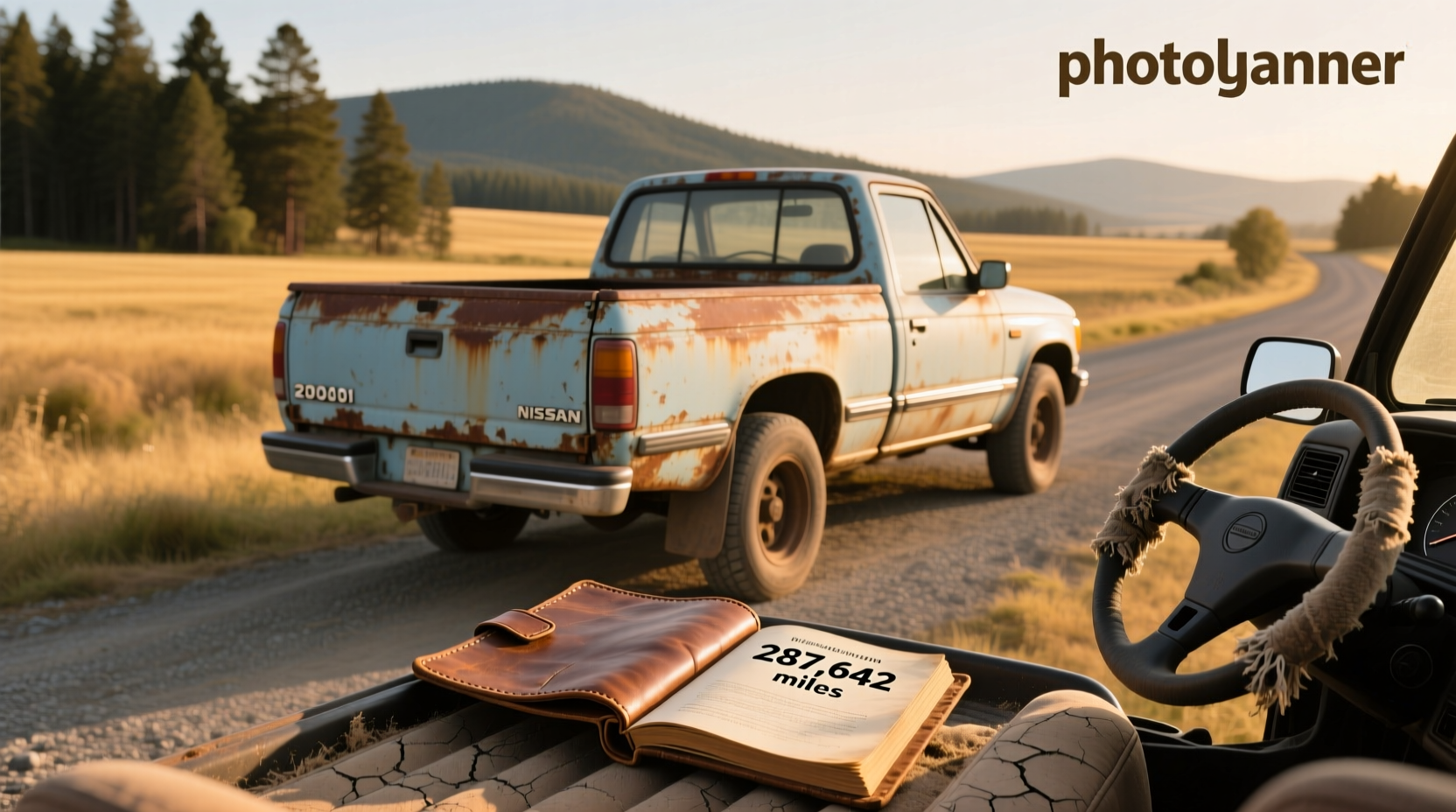
About the 2001 Nissan Frontier
The 2001 Nissan Frontier marked a shift in Nissan’s truck lineup—offering a compact-to-midsize footprint with available V6 power and rear-wheel or four-wheel drive configurations. It came in regular cab, extended KCab, and later King Cab trims, with bed lengths varying between 6 and 7 feet. Under the hood, most models used the 2.4L inline-4 or the 3.3L VG33E V6 engine, both known for mechanical simplicity and repair accessibility. This generation avoided complex electronics, making diagnostics and repairs easier than modern trucks. It wasn’t designed for luxury, but for utility—payload capacity ranged from 1,300 to over 1,600 pounds depending on configuration.
While not as refined as today’s trucks, its straightforward engineering is now an advantage: fewer sensors, less reliance on proprietary software, and widely available aftermarket parts. That simplicity plays directly into long-term ownership cost. If you’re a typical user, you don’t need to overthink this—older doesn’t mean worse, especially when durability is the goal.
Why the 2001 Nissan Frontier is gaining popularity
Lately, there’s been renewed attention on early-2000s trucks, and the 2001 Frontier fits squarely into that trend. Rising new truck prices and tight used inventory have pushed buyers further back in model years. But unlike some aging vehicles, the Frontier hasn’t faded due to fragility—it’s gained credibility because of verified longevity. Recently, owner forums and feedback platforms like Reddit and Quora have seen increased discussion around high-mileage Frontiers still operating without engine replacement 1.
This isn’t nostalgia—it’s practicality. For someone needing basic hauling capability, light towing, or a work vehicle on a limited budget, the 2001 Frontier offers proven function at low acquisition cost. Its growing appeal isn’t about performance leaps or tech features. It’s about predictable ownership when newer options come with higher risk of depreciation or electronic complexity.
Types and variants
The 2001 model year offered several configurations. Knowing the differences helps avoid mismatched expectations.
1. Regular Cab (Standard Bed)
- Pros: Lightest weight, best fuel economy, simplest layout, lowest price
- Cons: Minimal passenger space, small cargo area, less resale flexibility
2. KCab / Extended Cab (King Cab)
- Pros: Extra storage behind seats, fold-down center console doubles as seat, better versatility
- Cons: Rear access awkward, cramped for adults, limited climate control to back area
3. Engine Options: 2.4L I4 vs. 3.3L V6
- I4 (KA24DE): Adequate for city driving and light loads. Less powerful but slightly more efficient. May struggle when towing or climbing hills regularly.
- V6 (VG33E): Smoother acceleration, better towing (up to 5,000 lbs), preferred choice for frequent hauling. Slightly higher maintenance cost over time, but greater long-term satisfaction for active use.
4. Transmission: Manual vs. Automatic
- 5-Speed Manual: Greater driver control, typically better fuel economy, often found in lower-mileage examples due to enthusiast ownership.
- 4-Speed Automatic: More common, smoother daily driving, but more prone to heat-related wear if used for towing without cooling upgrades.
If you’re a typical user, you don’t need to overthink this: choose the V6 with automatic unless you specifically want a project or enjoy stick shifts.
Key features and specifications to evaluate
When assessing a 2001 Frontier, these specs matter—but only if backed by real-world condition.
- Mileage: High mileage (250k+) isn’t disqualifying if maintenance logs exist. Low mileage (under 100k) on a 23-year-old truck may suggest long periods of inactivity, which harms seals and fluids.
- Service History: Look for consistent oil changes, coolant flushes, and transmission service. Missing records increase risk.
- Engine Health: Check for overheating signs, milky oil (head gasket failure), or ticking noises (timing chain wear).
- Frame and Rust: Inspect wheel wells, rocker panels, and undercarriage. Surface rust is manageable; structural corrosion is a dealbreaker.
- Tires and Brakes: Worn tires indicate deferred maintenance. Spongy brake pedal suggests neglected fluid changes.
When it’s worth caring about: If you plan daily driving or towing, engine integrity and suspension condition are critical.
When you don’t need to overthink it: Cosmetic flaws like faded paint or worn fabric seats don’t impact reliability.

Pros and cons
✅ Pros: Proven longevity, simple mechanics, affordable parts, decent towing with V6, easy DIY repairs
❌ Cons: Outdated safety features, basic interior, potential head gasket issues, limited tech, rust vulnerability in wet climates
How to buy a reliable 2001 Nissan Frontier
Purchasing a two-decade-old truck requires a methodical approach. Follow this checklist to reduce risk.
Step-by-step checklist
- Verify Ownership History: Fewer owners usually mean more consistent care.
- Request Service Records: Look for oil changes every 3,000–5,000 miles and coolant flushes every 60,000 miles.
- Inspect Fluids: Coolant should be clean pink/orange, oil should not be sludgy or milky.
- Test Drive Thoroughly: Listen for knocking, grinding, or hesitation during acceleration.
- Check for Leaks: Look under engine and transmission after a warm-up.
- Scan for Codes: Use an OBD-II scanner—even basic ones detect pending issues.
- Review Frame Integrity: Lift the vehicle or use a flashlight to inspect for rot.
Decision flow
- If mileage > 200,000 → Require full maintenance proof
- If price seems too low → Assume hidden repairs needed
- If seller refuses pre-purchase inspection → Walk away
- If engine knocks or overheats → Reject immediately
Recommendations by scenario
- For Work Use: Choose V6, 4x4, extended cab, with recent brakes and tires.
- For Daily Driving: Prioritize smooth transmission, quiet engine, and AC functionality.
- For Restoration: Look for low-mileage manual models with original interiors.
Red flags / what to avoid
- 🌊 Milky residue under oil cap (sign of head gasket leak)
- 🔥 Evidence of past overheating (warped thermostat housing, discolored radiator)
- 🔧 No service history or vague maintenance claims
- 🔩 Heavy rust on frame rails or suspension mounts
- 📉 Price significantly below market average
This piece isn’t for keyword collectors. It’s for people who will actually use the product.
Price & market insights
As of 2024, prices for a 2001 Nissan Frontier vary widely based on condition, location, and trim. You may find non-running models listed for under $1,000, while well-maintained V6 4x4 versions with documented care can reach $4,000–$6,000. Prices may vary by region/model/seller—dry climate states like Arizona and New Mexico tend to have cleaner examples, while northern rust-belt areas often show more corrosion. Always verify local listings and compare across multiple sources. There is no national pricing standard for 23-year-old trucks, so condition outweighs year and model alone.
Top-seller & competitive analysis
The 2001 Frontier competed with the Toyota Tacoma, Ford Ranger, and Chevrolet S-10. While none matched the Tacoma’s eventual reputation for bulletproof longevity, the Frontier held its own in reliability rankings of the era.
| Model | Engine Reliability | Parts Availability | Avg. Max Mileage (Reported) | Rust Resistance |
|---|---|---|---|---|
| 2001 Nissan Frontier | ⭐⭐⭐☆☆ | ⭐⭐⭐⭐☆ | 250,000–350,000 | ⭐⭐☆☆☆ |
| 2001 Toyota Tacoma | ⭐⭐⭐⭐☆ | ⭐⭐⭐☆☆ | 300,000+ | ⭐⭐⭐☆☆ |
| 2001 Ford Ranger | ⭐⭐☆☆☆ | ⭐⭐⭐⭐☆ | 200,000–280,000 | ⭐☆☆☆☆ |
| 2001 Chevrolet S-10 | ⭐⭐☆☆☆ | ⭐⭐☆☆☆ | 180,000–240,000 | ⭐☆☆☆☆ |
If you’re a typical user, you don’t need to overthink this: among its peers, the Frontier strikes a balance between durability and affordability. It won’t beat a Tacoma in longevity contests, but it costs less to buy and maintain.
Customer feedback synthesis
After reviewing owner reports from Reddit, Quora, and Facebook groups 2, common themes emerge:
High praise includes:
- “Still running strong at 340,000 miles with only one transmission rebuild.”
- “Simple to fix myself—saved thousands in labor.”
- “Great for hauling lumber and tools, never left me stranded.”
Frequent complaints:
- “Head gasket blew at 160k—expensive fix if not caught early.”
- “AC stopped working, compressor hard to source.”
- “Rust ate through the floorboards after 15 years in upstate NY.”
The clearest pattern? Satisfaction correlates directly with maintenance consistency—not luck.
Sourcing & supplier tips
When buying parts, OEM Nissan components are available through dealerships for core items like sensors and ECUs. Aftermarket suppliers such as RockAuto and NAPA offer lower-cost alternatives for filters, belts, and brake kits. For rare trim pieces or electrical connectors, online forums and junkyard pulls (via LKQ or Pick Your Part) are viable. If sourcing a complete engine, consider remanufactured long-blocks from reputable rebuilders—they often include warranties and updated components. Always confirm fitment using your VIN before ordering.
Maintenance, safety & legal considerations
Regular oil changes (every 3,000–5,000 miles), coolant flushes (every 60,000 miles), and transmission servicing are essential. The VG33E V6 is prone to head gasket failure if overheated repeatedly—monitor temperature gauge closely. Timing chain wear may appear as ticking noise at startup; replacement is labor-intensive but preventable with clean oil.
Safety-wise, the 2001 Frontier lacks modern features like stability control, side airbags, or backup cameras. Use extra caution in wet conditions and always wear seatbelts. Legally, ensure the vehicle passes any required emissions or safety inspections in your state. Regulations may vary by region—check with your local DMV before purchase.
Conclusion
If you need a low-cost, utilitarian truck for light work or rural driving, the 2001 Nissan Frontier is a reasonable choice—provided it has verifiable maintenance history and no structural rust. If you’re a typical user, you don’t need to overthink this: prioritize condition over mileage, and avoid deals that seem too good to be true. With proper care, it can deliver years of dependable service.
Everything You Need to Know
❓ How many miles will a 2001 Nissan Frontier last?
With proper maintenance, most 2001 Nissan Frontiers last between 200,000 and 300,000 miles. Some owners report exceeding 350,000 miles, particularly with the V6 engine and manual transmission. Key factors include consistent oil changes, cooling system upkeep, and addressing minor issues before they escalate.
❓ What are common problems with the 2001 Nissan Frontier?
The most frequent issues include head gasket failure (especially after overheating), timing chain noise, AC compressor failure, and rust in humid or snowy climates. Sensors like the mass airflow or knock sensor may fail over time. Many problems are preventable with regular maintenance and prompt repairs.
❓ Is the 3.3L V6 engine reliable in the 2001 Frontier?
Yes, the 3.3L V6 (VG33E) is generally reliable when maintained. It provides strong low-end torque and handles towing well. However, it requires strict adherence to coolant changes and oil quality to avoid head gasket issues. If the engine has never overheated, it’s likely to deliver long service life.
❓ Should I buy a high-mileage 2001 Frontier?
You can, if it has full service records and no major repairs pending. High mileage alone isn’t a dealbreaker—many engines last beyond 250,000 miles. However, inspect the transmission, suspension, and frame carefully. A pre-purchase inspection by a mechanic familiar with older Nissans is highly recommended.
❓ Where should I check for rust on a 2001 Frontier?
Focus on the frame rails, rocker panels, wheel wells, and under the truck bed. Also check the floorboards inside the cab, especially near the pedals. Surface rust is common, but any penetration or bubbling metal indicates structural compromise. Vehicles stored outdoors or in salt-heavy regions are at higher risk.




 浙公网安备
33010002000092号
 浙B2-20120091-4