Short introduction
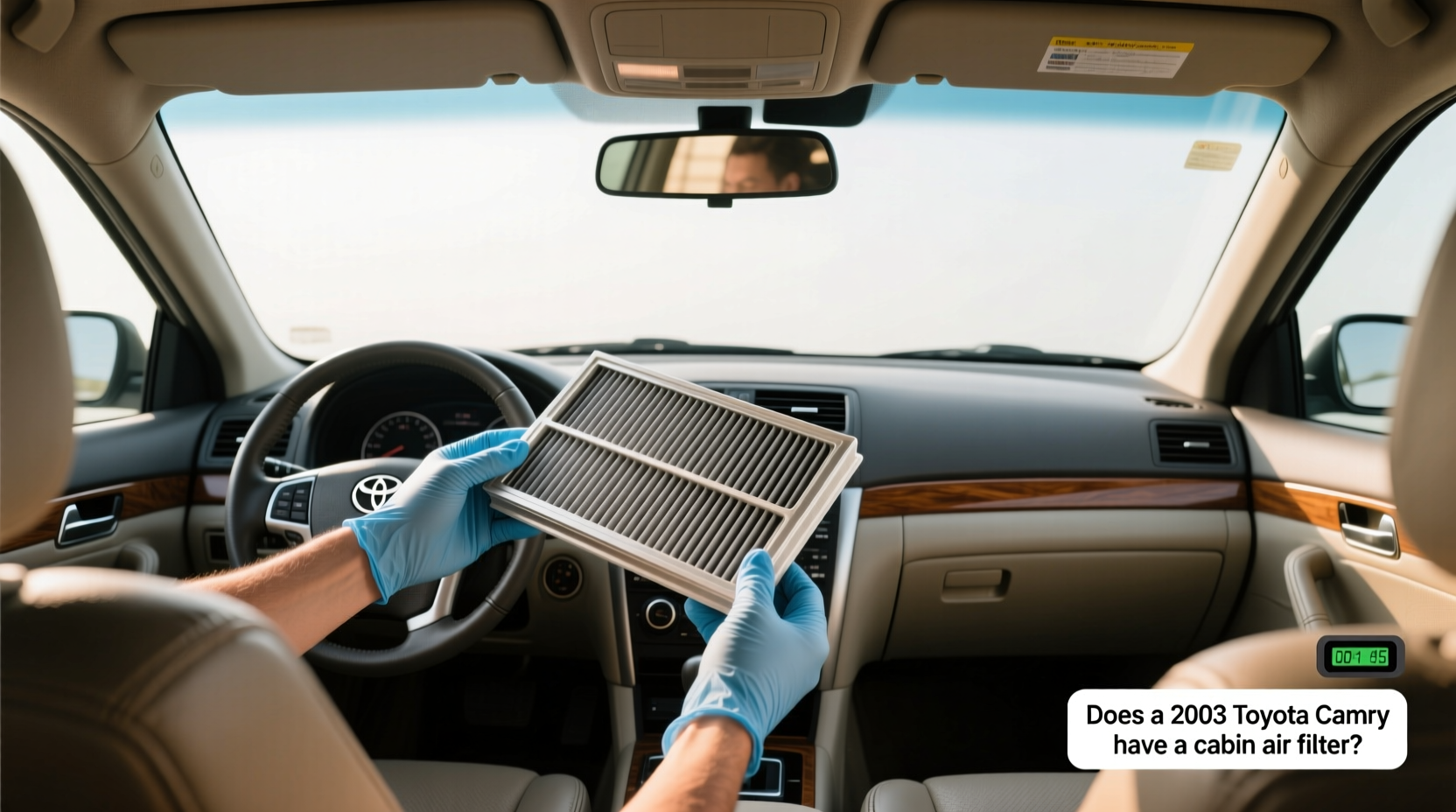
If you drive a 2003 Toyota Camry, here’s what you need to know: yes, it has a cabin air filter, typically located behind the glove box 📍. Over the past year, more owners have started paying attention to this part—not because it’s new, but because air quality awareness has increased, especially in urban or high-pollen areas. If you’re wondering how to choose the right cabin air filter for a 2003 Toyota Camry, focus on three things: size compatibility (usually around 9.25 × 8.5 × 1 inch), filtration type (standard particulate vs. activated carbon), and ease of DIY installation. A common mistake is assuming all filters fit the same—some aftermarket brands may require slight trimming or pressure-fit adjustments. If you’re a typical user, you don’t need to overthink this. Stick with a direct-fit model from a reputable supplier, and replace it every 12 months for consistent airflow and odor control.

About the 2003 Toyota Camry Cabin Air Filter
The 2003 Toyota Camry was among the first midsize sedans in its class to include a standard cabin air filter as part of its HVAC system. This filter sits between the outside air intake and the passenger compartment, capturing dust, pollen, road debris, and some airborne pollutants before they enter through the vents. It does not affect engine performance—that’s the job of the engine air filter. Instead, the cabin filter directly impacts interior air quality and HVAC efficiency.
For many years, this component was overlooked by drivers who didn’t realize it existed or assumed their car didn’t have one. But recently, online searches and community forums like Reddit’s r/MechanicAdvice 1 have seen rising discussion about locating and replacing it correctly. The good news: if your Camry came with climate control (which most did), it almost certainly includes a cabin air filter housing behind the glove box.
Why It's Gaining Popularity
Lately, there's been a noticeable uptick in owner interest around cabin air filters—not due to any design change in the 2003 model, but because environmental conditions and health priorities have evolved. Urban congestion, wildfire smoke exposure, and seasonal allergy severity have made clean cabin air more relevant than ever.
This isn't just about comfort. A clogged or missing filter can reduce airflow from the AC or heater, strain the blower motor over time, and allow fine particulates into the cabin. That’s why even older vehicles like the 2003 Camry are seeing renewed maintenance focus. If you’re a typical user, you don’t need to overthink this. Replacing a $15–$25 filter annually is low-cost insurance against stuffy interiors and reduced HVAC performance.
This piece isn’t for keyword collectors. It’s for people who will actually use the product.
Types and Variants
Not all cabin air filters are the same. While they share basic dimensions, their internal media and functional goals differ significantly. Here’s how to tell them apart:
Standard Particulate Filters
- Pros: Inexpensive, widely available, effective at trapping dust, pollen, and larger debris.
- Cons: Does not remove odors or gaseous pollutants (like exhaust fumes).
- Best for: Drivers in low-smog areas focused on allergen reduction.
Activated Carbon Filters
- Pros: Adds layer of charcoal-based media that absorbs VOCs, smog odors, and vehicle exhaust gases.
- Cons: Slightly higher cost; may restrict airflow very slightly over long-term use.
- Best for: City driving, heavy traffic commutes, or sensitivity to chemical smells.
High-Efficiency (HEPA-like) Filters
- Pros: Claims improved capture of ultrafine particles (though not true medical-grade HEPA).
- Cons: Potential airflow restriction; not all models fit without modification.
- Caution: May impact HVAC fan load if too dense—verify fitment carefully.
If you’re a typical user, you don’t need to overthink this. For most 2003 Camry owners, an activated carbon filter offers the best balance of air cleaning and odor control without risking system strain.
Key Features and Specifications to Evaluate
When shopping, these five factors matter most:
- Dimensions: ~9.25 × 8.5 × 1 inch. Even small deviations may cause gaps or difficult installation.
- Filtration Media: Look for multi-layer synthetic or cellulose blends. Carbon-impregnated versions add odor protection.
- Frame Material: Rigid plastic or reinforced cardboard holds shape better during insertion.
- Compatibility Markings: Should list “Toyota Camry 2003” or specific OE numbers like WIX 24883 or Fram CF10132.
- Sealing Edges: Foam gaskets help prevent bypass air—important for full effectiveness.
When it’s worth caring about: If you live near construction zones, industrial areas, or experience frequent allergies.
When you don’t need to overthink it: If you're doing routine replacement under normal conditions, stick with a known-fit carbon model.
Pros and Cons
| Aspect | Advantage | Limitation |
|---|---|---|
| Fits OEM Housing | Direct swap, no tools needed beyond screwdriver | Aftermarket variance may require force-fitting |
| Improves Air Quality | Reduces dust, pollen, mold spores indoors | No effect on CO or NO₂ levels |
| DIY-Friendly | Takes under 10 minutes once glove box is lowered | Glove box clips can break if handled roughly |
| Cost Effective | Replacement costs less than $30 | Neglect leads to diminished HVAC output over time |
How to Choose & Replace: Buying Guide
Follow this step-by-step process to ensure correct selection and smooth installation.
Step-by-Step Checklist
- Confirm your 2003 Camry has a cabin air filter housing (most do, but base models may vary).
- Measure existing filter if removed, or reference standard size (~9.25 × 8.5 × 1 inch).
- Select filter type: standard or activated carbon (recommended).
- Purchase from verified auto parts retailer listing 2003 Camry compatibility.
- Prepare tools: Phillips screwdriver or trim tool (optional).
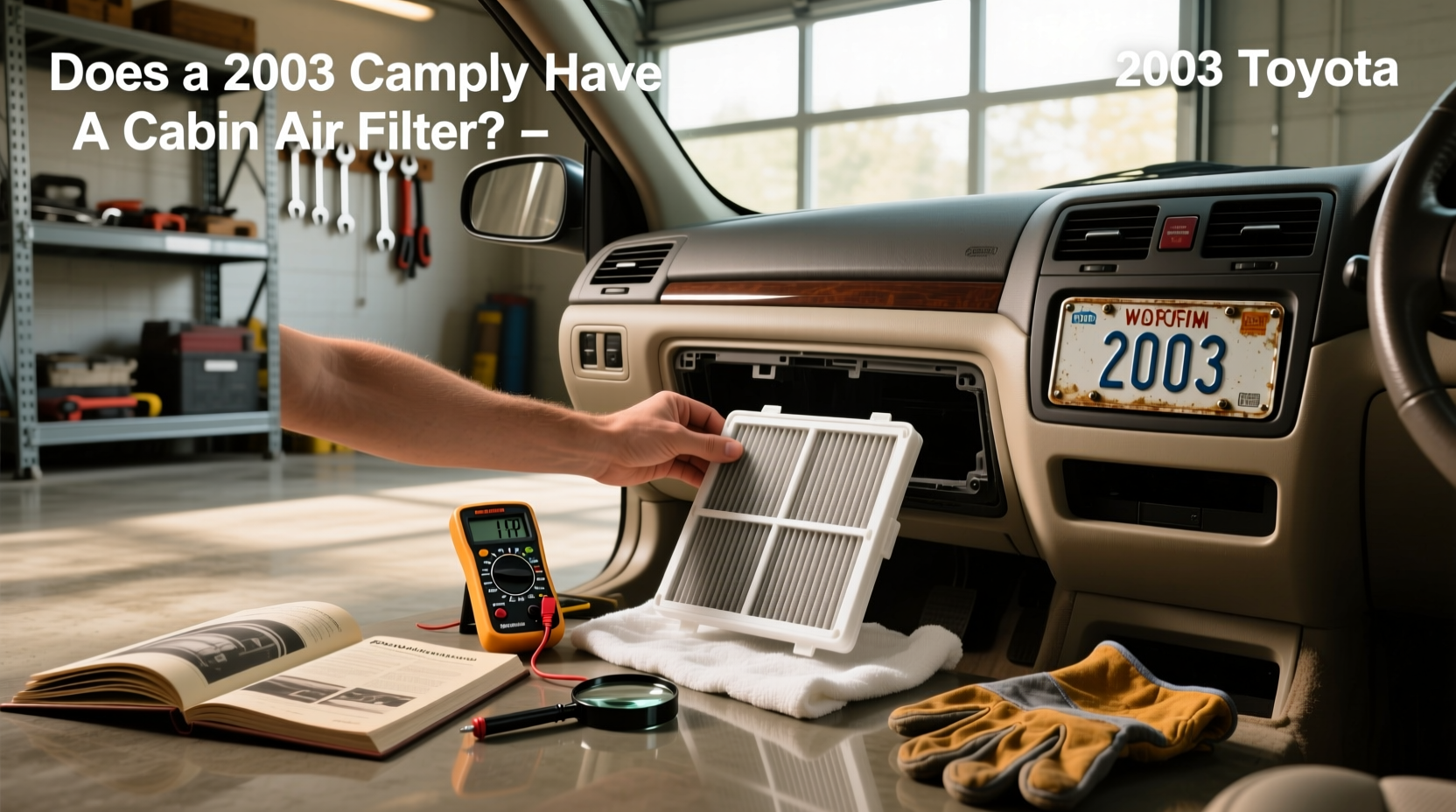
- Lower glove box by releasing side retaining clips.
- Remove old filter (note orientation: arrow toward cabin).
- Insert new filter, reassemble glove box.
- Test HVAC airflow on max setting.
Decision Flow
- You want basic dust filtering → Standard particulate filter
- You notice odors from traffic or parking garages → Activated carbon filter
- You suffer from allergies or asthma → Carbon + high-efficiency media, verify fit
- You’ve never replaced it before → Do it now; overdue filters accumulate mold risk
Recommendations by Scenario
- City Commuter: FRAM Fresh Breeze CF10132 or equivalent carbon model.
- Rural Driver: Standard filter like WIX 24883—lower pollutant load.
- Allergy Sufferer: Consider PureFlow PC5479HX (claims enhanced particle capture).
Red Flags / What to Avoid
- ❌ Filters labeled "universal" without specific 2003 Camry mention.
- ❌ Extremely cheap packs with no brand traceability.
- ❌ Products claiming "HEPA certified"—automotive filters aren’t regulated under HEPA standards.
- ❌ Ignoring direction arrows during install—reduces efficiency.
Price & Market Insights
Prices for a single cabin air filter for the 2003 Toyota Camry typically range from $12 to $28, depending on brand, filtration technology, and retailer. Activated carbon models are usually $5–$8 more than basic versions. Multi-packs (e.g., 2-for-1 deals) can offer savings if you plan ahead or maintain multiple vehicles.
Costs may vary by region/model/seller—always check return policies before bulk buying. Major retailers like O'Reilly Auto Parts 2 and AutoZone 3 list compatible options with customer reviews that help assess real-world fitment. Online-only brands may undercut prices but lack in-store support if sizing issues arise.
Top-Seller & Competitive Analysis
The following models represent commonly purchased and well-reviewed options across major platforms:
| Brand & Model | Type | Avg Price | Key Strength | User Note |
|---|---|---|---|---|
| FRAM CF10132 | Carbon | $18–$22 | Strong odor reduction | Widely available; trusted fit |
| WIX 24883 | Particulate | $14–$17 | Durable frame | Slight gap reported by some users |
| K&N CA-1037 | High-flow pleated | $25–$28 | Longevity claim | Pricier; marginal benefit for daily drivers |
| PureFlow PC5479HX | Carbon + enhanced media | $20–$24 | Allergy-focused design | Positive feedback on air freshness |
If you’re a typical user, you don’t need to overthink this. FRAM and WIX deliver reliable performance at accessible price points. Premium options exist, but gains are often subtle.
Customer Feedback Synthesis
Across forums and retail sites, two themes dominate user experiences:
Common Praise:
- “AC feels stronger after replacing a dirty filter.”
- “Noticeable drop in musty smell when using carbon filters.”
- “Easy DIY job—even for first-timers.”
Recurring Complaints:
- “Filter didn’t fit flush—had to bend edges slightly.”
- “Cheaper brand turned black with mold within 6 months.”
- “Glove box clip snapped during removal—handle gently!”
Sourcing & Supplier Tips
Where you buy matters as much as what you buy. Prioritize suppliers that:
- List exact vehicle compatibility (year/make/model/engine)
- Provide clear return policies for incorrect fits
- Show actual product photos, not generic illustrations
- Display verified customer reviews mentioning installation ease
Local auto parts stores (O'Reilly, AutoZone, Advance Auto Parts) let you inspect packaging and confirm part numbers in person. Online marketplaces may offer lower prices but require careful vetting of seller reputation. Always cross-check part numbers like CF10132 or 24883 against manufacturer catalogs when uncertain.
Maintenance, Safety & Legal Considerations
No legal mandate requires regular cabin air filter replacement, but neglecting it can indirectly affect safety. Reduced defroster performance due to clogged airflow could impair visibility in cold weather. Also, prolonged exposure to poor indoor air quality may aggravate respiratory conditions.
Recommended practice: Replace every 12 months or 12,000–15,000 miles, whichever comes first. In dusty environments or high pollution zones, consider six-month intervals. To verify local service recommendations, check your owner’s manual or contact a dealership service department for maintenance schedules.
Conclusion
If you need consistent cabin air quality and reliable HVAC operation in your 2003 Toyota Camry, choose an activated carbon cabin air filter with confirmed 2003 Camry compatibility. It balances filtration, odor control, and value. If you’re a typical user, you don’t need to overthink this. Stick with a well-reviewed model, replace it annually, and enjoy cleaner air with minimal effort.




 浙公网安备
33010002000092号
 浙B2-20120091-4