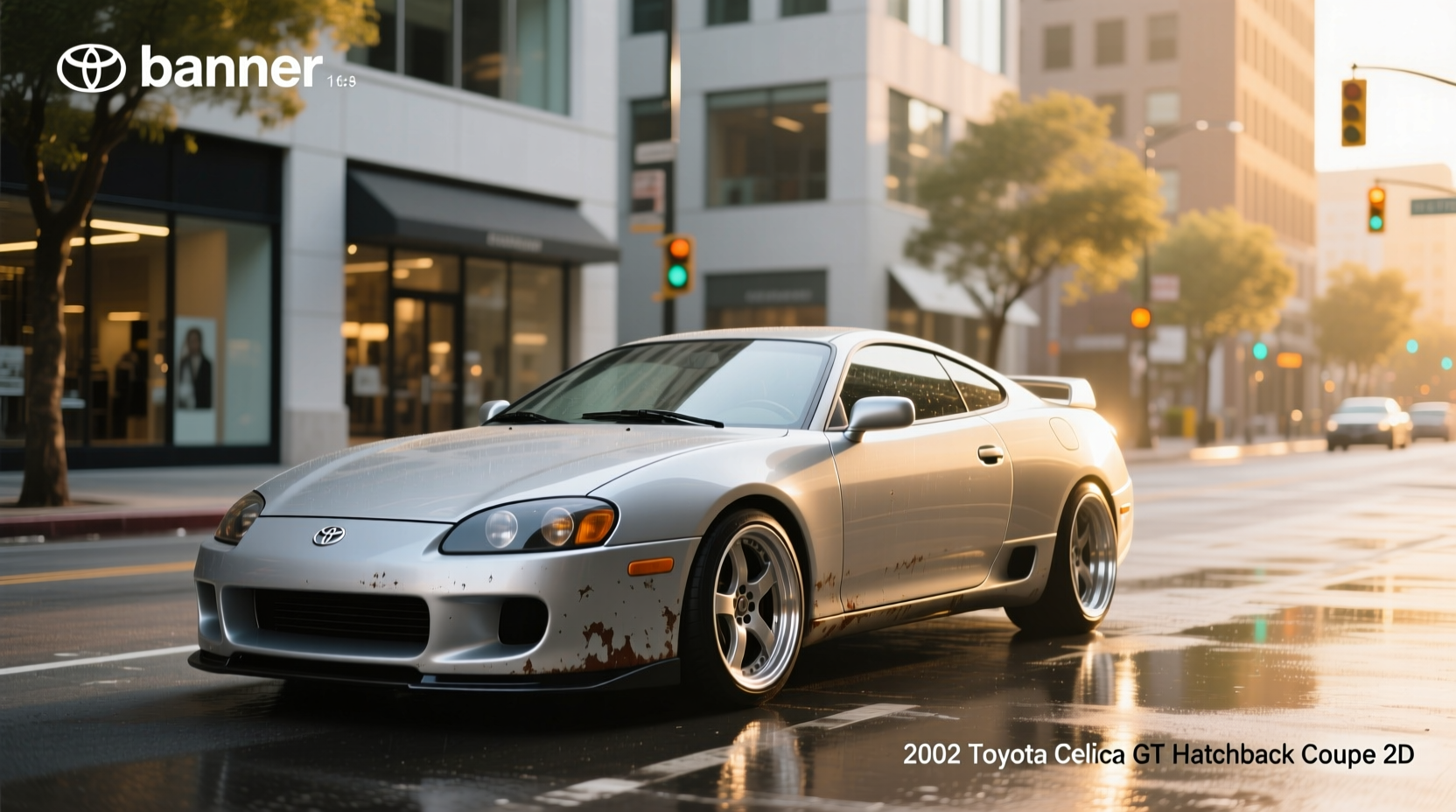
If you’re shopping for a used 2003 Toyota Celica GT hatchback coupe 2D, here’s the quick verdict: it has a 1.8L 4-cylinder engine producing 140 horsepower and 125 lb-ft of torque—adequate for daily driving but not performance-focused. The GT-S trim, by comparison, delivers 180 hp and requires premium fuel. If you’re a typical user, you don’t need to overthink this. Choose the GT for reliability and lower running costs; skip it if you want spirited acceleration. When evaluating models, focus on transmission (5-speed manual vs. 4-speed automatic), service history, and rust condition—especially in high-salt regions. Over the past year, interest in early-2000s Japanese sports coupes has grown due to their affordability and mechanical simplicity.
About the 2003 Toyota Celica GT
The 2003 Toyota Celica GT was part of the seventh generation (T230) lineup, reintroduced with a front-engine, front-wheel-drive layout after the mid-engine experiment of the late '90s. This model came as a 2-door hatchback coupe, blending sporty styling with practicality. It featured a 1.8-liter inline-4 engine with VVT-i (Variable Valve Timing with intelligence), delivering smooth power delivery and strong fuel economy. Unlike the higher-trim GT-S, which used a 2ZZ-GE engine co-developed with Yamaha, the GT relied on the more modest 1ZZ-FE powerplant. This distinction defines much of the ownership experience—reliability versus responsiveness.
Why the 2003 Celica Is Gaining Popularity
Lately, older Japanese performance sedans and coupes have seen renewed attention from enthusiasts and budget-conscious buyers alike. The 2003 Celica fits into this trend because it offers recognizable styling, manageable maintenance costs, and a reputation for longevity. Its compact size makes it easy to park and maneuver, while the hatchback design adds usability over traditional coupes. Recently, social media communities and niche forums have highlighted these cars as viable starter projects or commuter vehicles with character. If you’re a typical user, you don’t need to overthink this. The appeal isn’t about raw speed—it’s about having a car that stands out without demanding constant repairs.
This piece isn’t for keyword collectors. It’s for people who will actually use the product.
Types and Variants
The 2003 Celica lineup included two main trims: the GT and the GT-S. Both shared the same body style and platform but differed significantly under the hood.
GT Trim (1ZZ-FE Engine)
- Engine: 1.8L I4 with VVT-i
- Horsepower: 140 hp @ 6,400 RPM
- Torque: 125 lb-ft @ 4,200 RPM
- Fuel Type: Regular unleaded
- Transmission Options: 5-speed manual or 4-speed automatic
Pros: Proven reliability, lower insurance rates, cheaper parts, good fuel economy (23 city / 30 highway MPG).
Cons: Underpowered compared to competitors, less engaging drive, no lift-throttle oversteer tuning.
GT-S Trim (2ZZ-GE Engine)
- Engine: 1.8L I4 with VVTL-i (high-lift cam profile)
- Horsepower: 180 hp @ 7,600 RPM
- Torque: 130 lb-ft @ 6,800 RPM
- Fuel Type: Premium recommended
- Transmission: 6-speed manual only
Pros: Sharper throttle response, higher redline (8,600 RPM), track-capable handling, enthusiast favorite.
Cons: Requires premium fuel, earlier wear on timing chains if not maintained, fewer automatic options, higher depreciation loss.
When it’s worth caring about: If you plan to modify the car or enjoy spirited weekend drives, the GT-S matters. When you don’t need to overthink it: For city commuting and basic transportation, the GT covers all bases.
Key Features and Specifications to Evaluate
When assessing any 2003 Celica, verify the following specifications directly through VIN lookup or service records:
- Engine Code: 1ZZ-FE (GT) vs. 2ZZ-GE (GT-S)—this determines performance potential.
- Transmission: Manual versions generally command higher resale value.
- Fuel Economy: EPA-rated at 23 mpg city, 30 mpg highway, 26 mpg combined for the GT 1.
- Warranty Info: Original coverage was 3 years or 36,000 miles—now expired, but useful for tracking service history.
- Suspension Setup: Independent MacPherson strut front and torsion beam rear—adequate for comfort, not aggressive cornering.
When it’s worth caring about: If you're comparing clean titles or verifying modifications. When you don’t need to overthink it: For standard daily use, factory specs are consistent across unmodified units.
Pros and Cons
Pros
- Reliable 1ZZ-FE engine known for exceeding 200,000 miles with basic care
- Affordable purchase price (typically $2,000–$5,000 depending on condition)
- Hatchback practicality with fold-down rear seats
- Low-profile stance and timeless design
- Parts widely available and inexpensive
Cons
- Limited power output—feels sluggish on highways or uphill climbs
- Interior plastics prone to cracking over time
- No modern safety tech (no ESC, side airbags optional)
- Rusting issues in door bottoms and wheel arches in snowy climates
- Discontinued production means no dealer support for aging electronics
How to Buy a 2003 Toyota Celica GT: A Practical Guide
Beyond horsepower numbers, your decision should be guided by real-world usability and long-term ownership cost. Follow this step-by-step approach.
Step-by-Step Checklist
- Confirm trim level via VIN or badging—don’t rely on seller description alone.
- Inspect for rust, especially around lower doors, fenders, and subframe.
- Test both cold and warm starts—listen for timing chain noise (common in high-mileage GT-S models).
- Check transmission smoothness: hesitation or flaring indicates fluid neglect.
- Review service history: look for regular oil changes and timing belt replacement (if applicable).
- Verify title status: avoid salvage or flood-damaged examples.
- Take a test drive focusing on steering feel, brake pedal firmness, and HVAC operation.
Decision Flow
If you prioritize fuel efficiency and low maintenance → go for the GT with manual transmission.
If you want a fun-to-drive used coupe and can handle higher upkeep → consider the GT-S with documented service history.
If budget is tight and you need immediate transportation → accept minor cosmetic flaws but insist on mechanical soundness.
Recommendations by Scenario
- First-time car buyer: GT with automatic transmission—easier to drive, forgiving learning curve.
- Enthusiast looking to mod: GT-S with manual—higher revving engine responds well to intake/exhaust upgrades.
- Daily commuter: GT with full service records—prioritize condition over aesthetics.
Red Flags / What to Avoid
- Unexplained check engine lights—could indicate ECU or sensor issues.
- Patched-up rust repairs—temporary fixes lead to structural concerns.
- Inconsistent maintenance logs—raises risk of hidden engine wear.
- Aftermarket turbo kits—often poorly installed, increase failure risk.
- VIN mismatches between registration and dashboard—potential theft or fraud.
If you’re a typical user, you don’t need to overthink this. Most problems arise from neglect, not design flaws. Focus on what’s been done to the car, not just what it says on paper.
Price & Market Insights
As of now, prices for a 2003 Toyota Celica GT vary widely based on location, mileage, and condition. Private-party sales typically range from $2,000 (high-mileage, average condition) to $5,000 (low-mileage, well-maintained). GT-S models may reach $7,000 if modified or kept in show-ready shape. Prices may vary by region/model/seller—always compare local listings using platforms like Cars.com 2 or Edmunds 3. Urban areas tend to list higher due to demand, while rural markets offer bargains—but often with exposure to winter road salt.
Top-Seller & Competitive Analysis
The 2003 Celica competes indirectly with other early-2000s sporty coupes. Below is a comparison of key attributes.
| Model | HP | MPG (City/Hwy) | Transmission | Common Issues |
|---|---|---|---|---|
| Toyota Celica GT | 140 | 23 / 30 | 5MT / 4AT | Plastic degradation, minor rust |
| Toyota Celica GT-S | 180 | 22 / 29 | 6MT only | Timing chain tensioner wear |
| Honda Prelude (2001–2002) | 195 | 22 / 30 | 5MT / 4AT | Automatic transmission reliability |
| Mazda MX-5 Miata (2003) | 142 | 25 / 30 | 5MT / 4AT | Soft top leaks, RWD wear |
| Nissan 240SX (S14) | 155 | 21 / 28 | 5MT / 4AT | Engine bay rust, wiring harness fatigue |
While the Celica GT doesn’t lead in performance, it holds an edge in long-term reliability and ease of ownership. If you’re a typical user, you don’t need to overthink this. The competition offers more engagement, but few match Toyota’s consistency.
Customer Feedback Synthesis
Based on aggregated reviews from KBB, Edmunds, and owner forums, common sentiments include:
Highly Praised
- Fuel efficiency remains impressive even in mixed driving.
- Manual transmission is precise and durable.
- Simple electronics mean fewer diagnostic headaches.
- Styling still turns heads despite age.
Frequently Criticized
- Underpowered acceleration, especially when loaded or climbing hills.
- Interior materials feel dated and crack easily.
- Lack of modern connectivity (Bluetooth, USB).
- Headroom limited for taller drivers.
This piece isn’t for keyword collectors. It’s for people who will actually use the product.
Sourcing & Supplier Tips
When sourcing a 2003 Celica, prioritize private sellers with full documentation. Dealerships rarely stock these models, and when they do, markups are steep relative to condition. Use online marketplaces to filter by location, price, and keywords like "garage kept" or "non-smoker." Contact owners directly to ask about storage conditions and driving patterns. For parts, OEM components are still available through authorized distributors or reputable aftermarket suppliers. Always check manufacturer specs before ordering critical items like ECUs or suspension mounts.
Maintenance, Safety & Legal Considerations
Regular oil changes every 5,000 miles and coolant flushes every 60,000 miles help extend engine life. The 1ZZ-FE does not require a timing belt change (it uses a chain), but tensioner wear can occur after 150,000 miles. Brakes and tires should be inspected annually. From a safety standpoint, the 2003 Celica lacks electronic stability control and advanced driver aids. Side airbags were optional—verify installation if listed. Legally, ensure the vehicle passes your state’s emissions and safety inspection programs. Confirm local regulations before registering, especially if imported or modified.
Conclusion
If you need reliable, affordable transportation with a sporty silhouette, the 2003 Toyota Celica GT hatchback coupe 2D is a sensible choice. If you crave performance and don’t mind higher upkeep, step up to the GT-S. But for most users, the base GT delivers where it counts: durability, efficiency, and ease of repair. If you’re a typical user, you don’t need to overthink this. Prioritize condition over cosmetics, and always verify service history.
Everything You Need to Know
❓ How much horsepower does a 2003 Toyota Celica GT hatchback coupe 2D have?
The 2003 Toyota Celica GT produces 140 horsepower from its 1.8L 4-cylinder engine (1ZZ-FE). Torque is rated at 125 lb-ft. This is significantly less than the GT-S trim, which makes 180 hp.
❓ What's the difference between the Celica GT and GT-S?
The GT uses a 1.8L 1ZZ-FE engine (140 hp, regular fuel), while the GT-S has the 2ZZ-GE engine (180 hp, premium fuel recommended). The GT-S also comes only with a 6-speed manual and sharper suspension tuning.
❓ Is the 2003 Celica GT reliable?
Yes, the 1ZZ-FE engine is known for longevity when properly maintained. Many exceed 200,000 miles. However, rust and interior wear are common issues in older examples.
❓ What should I watch for when buying a used 2003 Celica?
Check for rust (especially under doors), service history, transmission behavior, and any check engine lights. Verify the trim level via VIN, as some sellers mislabel GT models as GT-S.
❓ Does the 2003 Celica GT require premium gas?
No, the GT runs on regular unleaded fuel. Only the GT-S trim recommends premium fuel for optimal performance.




 浙公网安备
33010002000092号
 浙B2-20120091-4