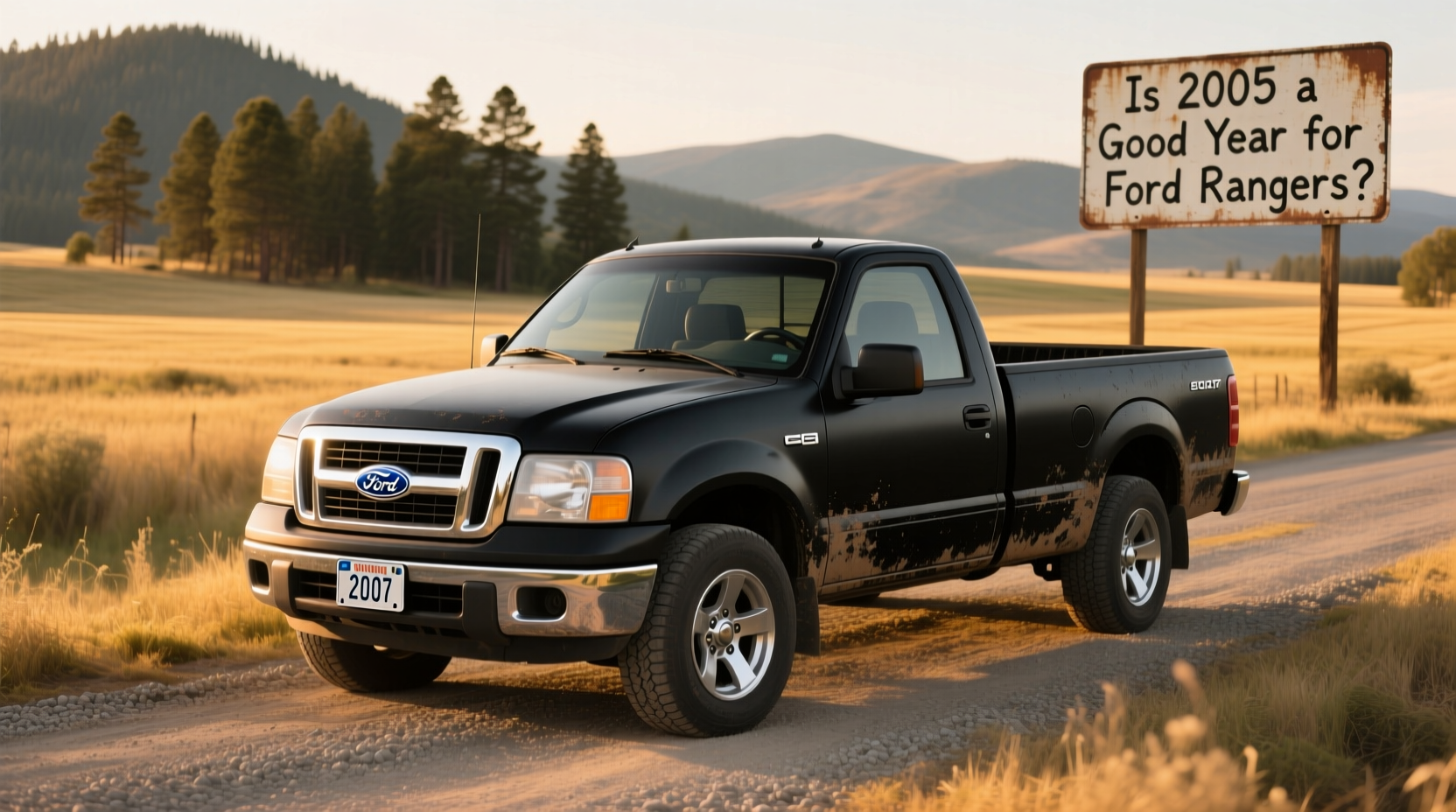
2007 Ford Ranger Pickup Truck: A Practical Choice for Budget Buyers?
If you’re looking for a no-frills, mechanically simple pickup that won’t break the bank to maintain, the 2007 Ford Ranger remains a relevant option in the used truck market. How to choose a reliable used compact truck often comes down to durability, parts availability, and real-world usability—three areas where this model consistently scores well. It’s best suited for light-duty work, city driving, or off-road use in mild conditions. Focus on V6 engine variants for better performance, and avoid trucks with rust damage or poorly maintained 4x4 systems. If you’re a typical user, you don’t need to overthink this.
About the 2007 Ford Ranger
The 2007 Ford Ranger was part of the third generation of Ford’s compact pickup lineup, produced from 1998 to 2011. Available in Regular Cab and SuperCab configurations, it offered rear-wheel or four-wheel drive, with a choice of inline-four or V6 engines. While not designed for heavy towing or luxury comfort, it filled a niche for buyers needing a smaller, maneuverable truck for daily tasks. Its design emphasized utility over refinement, making it popular among tradespeople, rural drivers, and those prioritizing function over features.
Why the 2007 Ranger Is Gaining Popularity
Lately, interest in older compact trucks like the 2007 Ranger has grown due to rising prices in the new vehicle market and increased demand for affordable, repairable vehicles. Over the past year, more budget-conscious buyers have turned to models with proven longevity and low repair costs. The Ranger fits this trend: its mechanical simplicity means most repairs can be done without specialized tools or software. Additionally, its size makes it easier to park and handle than full-size pickups, appealing to urban users who still need hauling capability. This piece isn’t for keyword collectors. It’s for people who will actually use the product.
Types and Variants
The 2007 Ranger came in several trim levels and body styles, each serving different needs:
Regular Cab (XL, XLT)
- Pros: Lower price, lighter weight, better fuel economy, simpler maintenance
- Cons: Minimal passenger space, basic interior features
SuperCab (XLT, FX4 Off-Road)
- Pros: Extended rear seating (though tight), more storage, available off-road package
- Cons: Heavier, slightly reduced fuel efficiency, higher initial cost
Engine Options
- 2.3L Inline-4: Adequate for light loads; less powerful and noisier under stress
- 4.0L V6: Smoother power delivery, better towing capacity (up to 5,000 lbs when equipped properly), preferred by most owners
If you’re a typical user, you don’t need to overthink this. Choose the V6-powered Regular Cab if you want reliability and affordability. Opt for the SuperCab only if you regularly carry passengers or gear in the back.
Key Features and Specifications to Evaluate
When inspecting a used 2007 Ranger, focus on these core elements:
- Engine Type: Prioritize the 4.0L SOHC V6—it’s more durable and responsive than the base four-cylinder
- Transmission: Both 5-speed manual and 5-speed automatic were offered; manuals tend to last longer with proper care
- Drivetrain: RWD is sufficient for most conditions; 4x4 adds capability but requires inspection of transfer case and front differential
- Suspension & Ride: Known for a stiff ride; check for worn shocks or leaf spring sag, especially on high-mileage examples
- Cabin Condition: Look for cracked dashboards (common in sun-exposed interiors), functioning HVAC, and working electronics
- Safety Equipment: Standard ABS and tire-pressure monitoring system; no side airbags were available
When it’s worth caring about: Engine history and drivetrain condition matter most if you plan long-term ownership or frequent towing.
When you don’t need to overthink it: Trim level differences are minor—focus on mechanical health over cosmetic upgrades.
Pros and Cons
| Category | Pros | Cons |
|---|---|---|
| Reliability | Many reach 150k+ miles with routine maintenance | Older age increases risk of electrical gremlins |
| Fuel Economy | ~17 mpg city / 23 mpg highway (V6) | Poor by modern standards; worse with 4x4 |
| Maintenance Cost | Cheap parts, widely available at auto stores | Rust-prone frames in snowy climates |
| Ride & Comfort | Simple controls, easy to learn | Stiff suspension, noisy cabin at highway speeds |
| Safety | Good frontal crash rating for era 1 | No side airbags; limited visibility |
If you’re a typical user, you don’t need to overthink this. The trade-offs are clear: you gain mechanical accessibility and lower ownership cost at the expense of comfort and modern safety tech.
How to Buy a 2007 Ford Ranger
This guide walks through the essential steps to ensure you get a dependable example.
Step-by-Step Checklist
- Verify ownership history using VIN (check for accidents or flood damage)
- Inspect frame for rust, especially near rear wheel wells and under cab
- Test both 2WD and 4WD modes if applicable
- Check engine for smooth idle and absence of knocking or ticking
- Review service records for timing chain replacement (if 4.0L V6)
- Evaluate tire wear pattern for alignment issues
- Confirm all gauges and warning lights function
Decision Flow
- Need basic hauling and commuting? → Regular Cab, V6, RWD
- Do off-road work or live in snow? → SuperCab FX4 with 4x4
- On a tight budget? → Accept higher mileage only if maintenance is documented
Recommendations by Scenario
- First-time truck buyer: Stick to under 150k miles, ideally with recent brake and fluid service
- Daily driver: Avoid heavily modified examples; prioritize comfort and quiet operation
- Project vehicle: Consider non-running models priced below $3,000 for parts reuse
Red Flags / What to Avoid
- Rust holes in frame rails — compromises structural integrity
- Intermittent electrical issues — hard to diagnose, costly to fix fully
- Rebuilt title or salvage history — resale value drops sharply
- No service documentation — assume worst-case maintenance neglect
If you’re a typical user, you don’t need to overthink this. Walk away from any truck showing major rust or unexplained warning lights.
Price & Market Insights
As of now, prices for a 2007 Ford Ranger vary significantly by region, condition, and drivetrain. Well-maintained V6 models with under 150,000 miles typically range from $4,000 to $8,000 in the U.S., though southern states often see lower values due to less rust exposure. Trucks marketed as “mechanic’s special” or “for parts” may sell for under $2,000. Prices may vary by region/model/seller—always compare local listings and verify claims independently. Check manufacturer specs for original equipment details and confirm local regulations regarding emissions compliance if registering in stricter states.
Top-Seller & Competitive Analysis
The 2007 Ranger competed with other compact trucks of its time, including the Toyota Tacoma, Chevrolet Colorado, and Nissan Frontier. While none matched the Tacoma’s long-term resale strength, the Ranger held its own in terms of reliability and ease of ownership.
| Model | Reliability | Maintenance Cost | Off-Road Availability | Current Resale Trend |
|---|---|---|---|---|
| Ford Ranger 2007 | High (with V6) | Low | FX4 Package Only | Stable (functional demand) |
| Toyota Tacoma 2007 | Very High | Moderate | Widely Available | High retention |
| Chevrolet Colorado 2007 | Moderate | Moderate-High | Limited trims | Declining |
| Nissan Frontier 2007 | Good | Moderate | Select trims | Steady |
Ford didn’t dominate this segment in sales volume, but owner satisfaction remained strong, particularly among those valuing straightforward mechanics. According to feedback on KBB and Cars.com, many owners kept their Rangers for over a decade, citing minimal repairs 2. This reflects a key insight: longevity isn’t just about build quality—it’s about serviceability.
Customer Feedback Synthesis
Analysis of user reviews from Edmunds, Consumer Reports, and Reddit reveals consistent themes:
- High Praise: Long-term reliability, low repair costs, ease of DIY fixes, good traction in snow with 4x4
- Common Complaints: Cramped rear seats, dated dashboard design, rough ride on uneven roads, engine noise at cruising speed
- Surprising Positives: Some owners report exceeding 200,000 miles without major powertrain work
- Recurring Issues: Blend door actuators failing (causing HVAC mode problems), speedometer malfunctions, starter motor wear after 12+ years
If you’re a typical user, you don’t need to overthink this. Most complaints relate to comfort and aging components—not fundamental flaws.
Sourcing & Supplier Tips
Private-party sellers often offer better pricing than dealerships, especially for older trucks not covered under certification programs. When sourcing online, prioritize listings with full photo sets showing undercarriage and engine bay. Avoid auctions unless you can inspect personally or hire a third-party evaluator. For parts, consider OEM replacements or reputable aftermarket brands like Motorcraft or AutoZone Premium. Verify retailer return policy before ordering critical components. This piece isn’t for keyword collectors. It’s for people who will actually use the product.
Maintenance, Safety & Legal Considerations
Regular oil changes, coolant flushes, and brake inspections are critical for long life. The 4.0L V6 uses a timing chain—inspect for wear if there’s a rattle on cold start. Brakes should be checked every 12,000 miles; rear drums are common on base models. Tire pressure monitoring system alerts should not be ignored, even if sensors are outdated. From a safety standpoint, lack of side airbags and electronic stability control (not standard until later years) means defensive driving is essential. To verify compliance with local laws, confirm emissions requirements and safety inspection rules in your state or province. Regulations may vary by region—check official transportation department websites.
Conclusion
If you need an affordable, easy-to-fix truck for light work and daily driving, the 2007 Ford Ranger is a sensible pick—especially the V6-equipped version. If you prioritize modern safety features, cabin comfort, or towing above 5,000 pounds, newer alternatives are worth exploring. If you’re a typical user, you don’t need to overthink this. Focus on mechanical condition, avoid rust, and choose based on actual usage needs.
Everything You Need to Know
❓ Is the 2007 Ford Ranger reliable long-term?
Yes, many 2007 Rangers have exceeded 150,000 miles with regular maintenance. The 4.0L V6 engine is known for durability, though older age increases likelihood of accessory failures like sensors or starters.
❓ Does the 2007 Ranger have side airbags?
No, side airbags were not available on any 2007 Ford Ranger trim. Frontal airbags and anti-lock brakes were standard, with decent crash test ratings for its time 1.
❓ What's the average fuel economy?
The 4.0L V6 gets approximately 17 mpg in the city and 23 mpg on the highway. The 2.3L four-cylinder averages 19 city / 24 highway, but feels underpowered when loaded.
❓ Are parts still available?
Yes, parts remain widely available through auto retailers and online suppliers. Due to the model’s popularity during production, many components are still manufactured or stocked.
❓ Can it tow a trailer?
Yes, properly equipped V6 models can tow up to 5,000 pounds. Ensure the truck has the towing package, functional cooling system, and sturdy hitch. Always confirm payload limits on the door jamb sticker.




 浙公网安备
33010002000092号
 浙B2-20120091-4