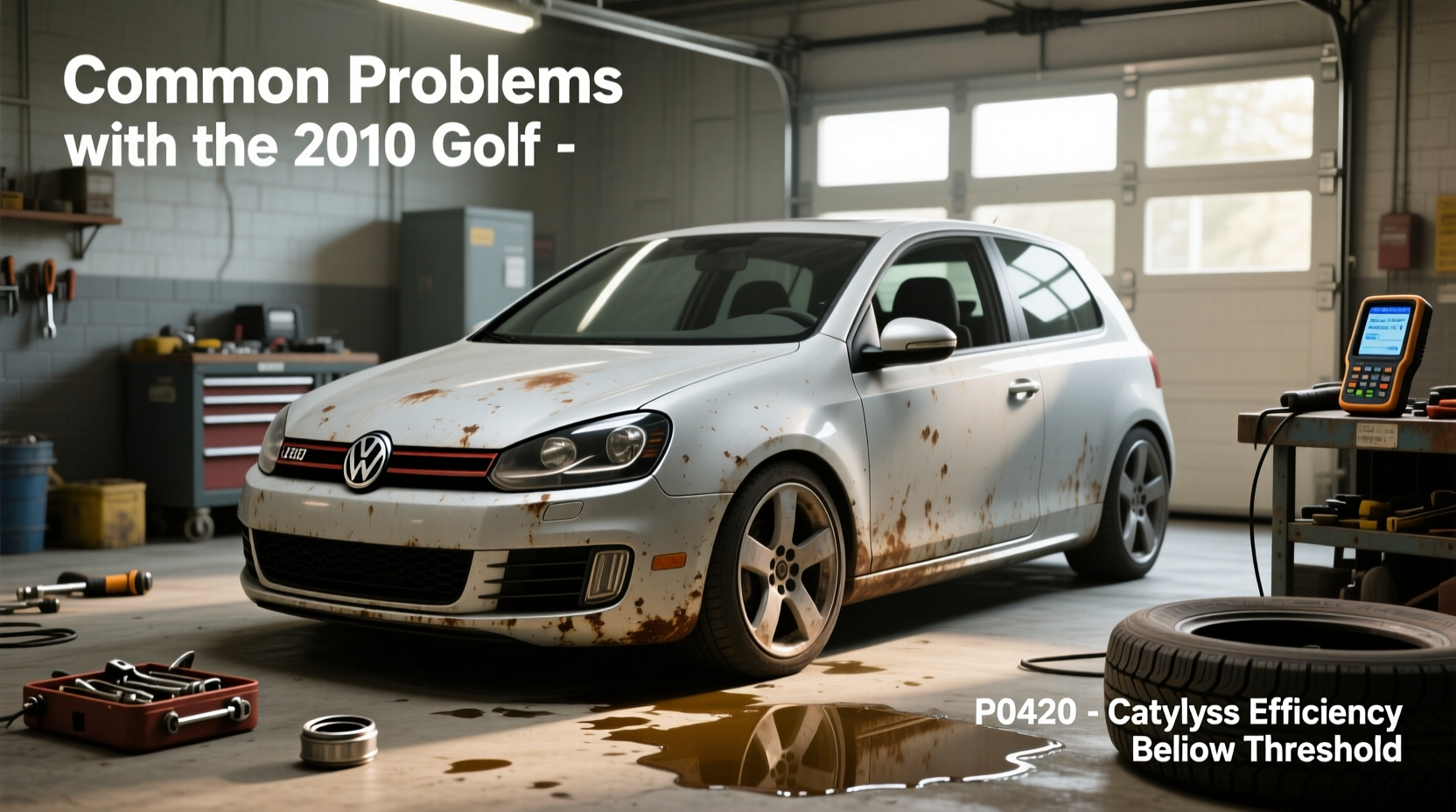
If you’re considering a used 2010 Golf hatchback, here’s how to choose wisely: prioritize models with full service history, avoid high-mileage DSG automatics unless recently serviced, and inspect for engine misfires or hesitation—common signs of carbon buildup or failing ignition coils. What to look for in a reliable 2010 Golf? A well-maintained 1.6L manual avoids the biggest pitfalls of the 1.4 TSI and DSG combo. If you’re a typical user, you don’t need to overthink this. Focus on maintenance records and test drive behavior—not badges or trim levels.
Over the past year, interest in affordable European hatchbacks has risen, but so have repair cost complaints. Recently, more buyers report surprise bills from neglected timing chains or failed mechatronic units in DSG transmissions. This piece isn’t for keyword collectors. It’s for people who will actually use the product.
About the 2010 Volkswagen Golf Hatchback
The 2010 Volkswagen Golf (Mk6) marked a return to sharper design and improved build quality over its predecessor. Offered as a five-door hatchback, it came with several petrol and diesel engines, including the widely used 1.6L naturally aspirated, 1.4L TSI turbocharged, and 2.0L TDI diesel. Transmissions included five- or six-speed manuals and optional six-speed DSG automatics. Positioned as a practical yet premium-feeling compact car, the 2010 Golf appeals today primarily as a budget-friendly entry into European driving dynamics—if mechanical risks are properly assessed.
Why the 2010 Golf Is Gaining Popularity
Lately, older European cars like the 2010 Golf have seen renewed attention due to rising demand for fuel-efficient, driver-focused vehicles outside mainstream Japanese brands. Enthusiasts appreciate the chassis refinement and interior ergonomics. However, popularity doesn’t equal reliability consensus. The shift comes not from perfection, but from availability and lower purchase prices compared to newer models. As newer cars carry higher tech complexity and depreciation concerns, the 2010 Golf represents a known quantity—with known flaws.
If you’re a typical user, you don’t need to overthink this. You’re not buying it for novelty. You’re buying it because it fits your garage, your commute, and your budget. That means understanding which problems are manageable and which are dealbreakers.
Types and Variants
The 2010 Golf was offered in multiple configurations, each with distinct trade-offs:
- 1.6L Petrol (Manual) – Most reliable option; low power but durable. Rarely suffers from major engine issues.
- 1.4L TSI Petrol (Manual or DSG) – More performance, but prone to timing chain guide wear and carbon buildup. Higher maintenance sensitivity.
- 2.0L TDI Diesel (Manual or DSG) – Strong fuel economy and torque. Watch for EGR and DPF issues if driven mostly short distances.
- DSG Automatic (Six-Speed) – Smooth shifting when healthy, but mechatronic unit failures can be costly. High-mileage units are risky.
This piece isn’t for keyword collectors. It’s for people who will actually use the product. Choose based on real-world usage, not theoretical specs.
Key Features and Specifications to Evaluate
When evaluating a 2010 Golf, focus on these systems:
Engine Health
Timing Chain & Guides (1.4 TSI): Premature failure can lead to bent valves. When it’s worth caring about: if the car has over 80,000 miles or incomplete service history. When you don’t need to overthink it: if replaced with documented proof.
Carbon Buildup (FSI/TFSI engines): Causes rough idle, misfires. When it’s worth caring about: if the car hesitates at low RPM or idles unevenly. When you don’t need to overthink it: if intake cleaning is part of recent maintenance.
Oil Consumption: Some 1.4 TSI and 2.0L engines burn oil. Check dipstick during inspection. When it’s worth caring about: if consuming more than 1 quart per 1,500 miles. When you don’t need to overthink it: minor consumption with consistent top-ups.
Transmission
DSG Mechatronic Unit: Controls clutch pack and shifting. Failures cause juddering, delays, or no-start. When it’s worth caring about: if over 90,000 miles without fluid change. When you don’t need to overthink it: if serviced every 40,000–60,000 miles.
Manual Reverse Gear: Known for grinding noise. Not always serious, but may indicate syncro wear. When it’s worth caring about: if other gears are affected. When you don’t need to overthink it: if only reverse is noisy and engages smoothly.
Electrical Systems
Headlight Harness: Melting connectors due to heat exposure. When it’s worth caring about: if headlights flicker or fail intermittently. When you don’t need to overthink it: if harness was upgraded or shows no damage.
Power Windows: Motor or switch failure common. When it’s worth caring about: if multiple windows act up. When you don’t need to overthink it: single window issue—easy fix.
Check Engine Light (CEL): Often tied to MAF sensor, EVAP leaks, or throttle body. When it’s worth caring about: if persistent after reset. When you don’t need to overthink it: if cleared and doesn’t return after drive cycle.
Pros and Cons
| Aspect | Pros | Cons |
|---|---|---|
| Driving Experience | Precise steering, stable ride, engaging handling | Firm suspension on poor roads |
| Fuel Efficiency | 1.6L: ~35 mpg highway; 2.0L TDI: up to 45 mpg | TSI loses efficiency if carbon-clogged |
| Reliability (Well-Maintained) | Solid base mechanics, predictable wear | High repair costs for DSG or engine internals |
| Ownership Cost | Low purchase price, widely available parts | Dealership labor rates high; specialist recommended |
| Interior Quality | Better materials than contemporaries, ergonomic layout | Soft-touch surfaces degrade; headliner sag possible |
How to Buy a Reliable 2010 Golf Hatchback
This guide walks through critical steps to minimize risk and maximize value.
Step-by-Step Checklist
- Verify full service history—especially timing chain and DSG fluid changes.
- Test drive: accelerate hard from 20 mph to check for hesitation (carbon/test throttle response).
- Inspect for CEL codes using OBD2 scanner 1.
- Check oil level and condition—dark, thick oil suggests neglect.
- Listen for transmission noises in DSG models during take-off and shifts.
- Operate all windows, lights, HVAC controls.
- Look under hood for coolant leaks (water pump/thermostat housing).
- Examine rear brakes—known to wear fast.
- Scan for rust around tailgate seals and wheel arches.
- Confirm ownership transfer documents and accident history via VIN.
Decision Flow
If budget allows → Prioritize 1.6L manual with full history
If you need power → Accept 1.4 TSI only if timing chain recently replaced
If automatic required → DSG only if under 80k miles and service record clear
If minimal hassle → Avoid high-mileage TSI+DSG combos
Recommendations by Scenario
- First-time buyer on tight budget: 1.6L manual, under 100k miles, local seller with records.
- Commuter needing efficiency: 2.0L TDI manual—only if driven long distances regularly.
- Enthusiast willing to maintain: 1.4 TSI manual—plan for annual intake cleaning and coil monitoring.
Red Flags / What to Avoid
- DSG judder or delay in engagement
- Persistent misfires or rough idle
- Oil-soaked timing cover (leaking water pump)
- Flickering headlights or dead instrument cluster
- No service records for key components
If you’re a typical user, you don’t need to overthink this. Walk away from any car hiding these symptoms behind a clean exterior.
Price & Market Insights
Prices vary significantly by region, condition, and drivetrain. In the UK, expect £1,500–£3,500. In the US, $2,000–$5,000 depending on location and trim. Diesel models may command slight premiums where fuel economy is valued. Manual transmissions typically cost less than DSG-equipped versions. Always verify local pricing through classifieds and auction data—values may vary by region/model/seller. To assess fairness, compare similar mileage and service history, not just model year.
Top-Seller & Competitive Analysis
The 2010 Golf competes with contemporaries like the Honda Civic, Ford Focus, and Toyota Corolla. While those offer higher reliability averages, the Golf counters with superior ride quality and cabin feel.
| Model | Strengths | Weaknesses | Maintenance Complexity |
|---|---|---|---|
| 2010 VW Golf 1.6L Manual | Premium interior, precise handling | Higher long-term repair risk than rivals | Moderate |
| 2010 Honda Civic | Legendary reliability, low running costs | Less refined ride, basic tech | Low |
| 2010 Ford Focus | Agile, spacious interior | Early PowerShift auto unreliable | Moderate-High |
| 2010 Toyota Corolla | Durability, resale value | Bland driving experience | Low |
If you’re a typical user, you don’t need to overthink this. The Golf isn’t the safest bet—but it’s the most satisfying if maintained properly.
Customer Feedback Synthesis
Analysis of owner reports from forums and repair databases reveals consistent patterns:
Most Frequent Complaints
- DSG transmission shuddering or failing (automatics)
- Timing chain failure in 1.4 TSI engines without maintenance
- Water pump and thermostat leaks causing overheating
- Ignition coil failures leading to misfires
- Headlight connector melting requiring harness repair
- Rear brake wear faster than expected
Common Praises
- Comfortable highway cruising and wind noise control
- Intuitive dashboard layout and switchgear quality
- Solid highway stability and cornering confidence
- Resale value holding better than expected for age
Sources: RepairPal, Reddit r/vwgolf, ClickMechanic 23.
Sourcing & Supplier Tips
When sourcing a 2010 Golf:
- Purchase from private sellers who maintain records—or certified pre-owned programs if available.
- Avoid imported models unless you can verify maintenance abroad.
- Use independent VW specialists for pre-purchase inspections—not general mechanics.
- Ask for proof of major services: timing chain, DSG fluid, water pump.
- Negotiate price based on upcoming maintenance needs (e.g., brake replacement).
If you’re a typical user, you don’t need to overthink this. A clean Carfax and a compression test mean more than glossy wheels.
Maintenance, Safety & Legal Considerations
Regular maintenance is non-negotiable for longevity. Key intervals:
- Timing chain inspection/replacement: every 80,000–100,000 miles (TSI engines)
- DSG transmission fluid: every 40,000–60,000 miles
- Spark plugs and coils: every 60,000 miles (TSI)
- Coolant flush: every 3 years
Safety-wise, the 2010 Golf includes ABS, airbags, and electronic stability control. No active recalls remain, but confirm via national motor vehicle database—this may vary by region. Ensure seat belts, lights, and brakes function fully before registration. For emissions compliance, check local requirements—older diesels may face restrictions in urban zones.
Conclusion
If you need a low-cost hatchback with European driving character, choose a 1.6L manual 2010 Golf with full service history. If you require an automatic, ensure the DSG has been properly maintained. If you plan high annual mileage, consider the TDI—but only with long-distance driving patterns. If you’re a typical user, you don’t need to overthink this. Prioritize proven care over performance promises.
Everything You Need to Know
Is the 2010 VW Golf reliable? ✅+
The 2010 Golf can be reliable if well-maintained, particularly the 1.6L manual variant. However, models with the 1.4 TSI engine and DSG transmission carry higher risk of expensive repairs. Regular servicing is essential.
What are the most common problems with the 2010 Golf? ⚙️+
Common issues include DSG transmission failures, timing chain/guide wear (especially on 1.4 TSI), carbon buildup on intake valves, water pump leaks, ignition coil failures, headlight harness melting, and rear brake wear. Electrical gremlins and HVAC odors also reported.
How much does it cost to maintain a 2010 Golf? 💰+
Annual maintenance can range from $400–$800 for basic services. Major repairs—like DSG mechatronic unit replacement or engine rebuilds—can exceed $2,000. DIY-capable owners reduce costs significantly.
Should I buy a 2010 Golf with a DSG transmission? 🚗+
Only if it has low mileage (under 80k) and complete service records, especially for DSG fluid changes. High-mileage DSG units are a gamble. If you're unsure, opt for a manual—it's cheaper and more durable.
Does the 2010 Golf have a timing belt or chain? 🔧+
The 1.6L and 2.0L TDI engines use a timing chain (lifetime component, but guides can fail). The 1.4L TSI also uses a chain, but premature guide wear is common—replacement recommended around 90,000 miles regardless.




 浙公网安备
33010002000092号
 浙B2-20120091-4