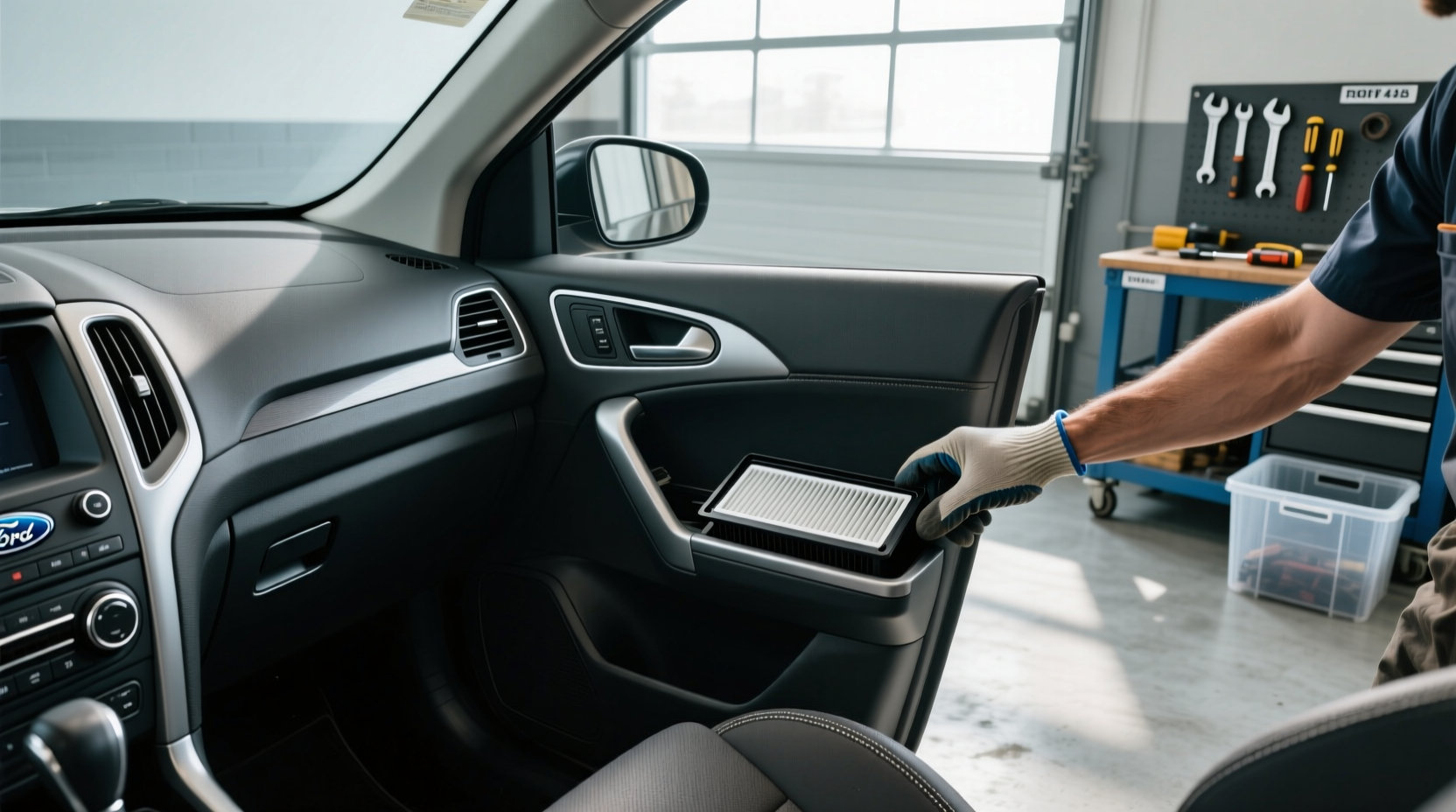
If you’re trying to locate or replace the cabin air filter in your 2012 Ford Escape, here’s what matters: most models didn’t come with one from the factory. If yours does have one, it’s likely a dealer-installed accessory located under the cowl panel on the passenger side. How to choose 2012 Ford Escape cabin air filter location? First, confirm whether your vehicle actually has one. If not, installing an aftermarket kit may be worth considering—especially if you drive in dusty areas or suffer from allergies. A common mistake is assuming all trims include the filter; only some XLT and Limited trims received it as an add-on. Don’t waste time removing panels unless you’ve verified its presence. Replacement cost is low ($10–$30), but labor can push total expense past $100 at a shop. If you’re a typical user, you don’t need to overthink this.
About 2012 Ford Escape cabin air filter location
The 2012 Ford Escape was produced during a transition period when cabin air filtration was becoming more common but wasn’t yet standard across all trims or configurations. Unlike newer SUVs that include these filters universally, the 2012 model year left this feature out of many base-line vehicles. Specifically, the XLT trim—which makes up a large portion of used market availability—did not come factory-equipped with a cabin air filter 1.
However, dealers could install it as an optional accessory at the time of purchase. That means two otherwise identical Escapes might differ: one has a filter housing behind the glove compartment area, the other doesn’t. The physical location, when present, is beneath the right-hand side of the cowl panel grille near the windshield base. This spot allows outside air entering the HVAC system to pass through the filter before circulating inside the cabin.
Because installation wasn’t standardized, owners must verify their specific vehicle's setup rather than relying on general model-year assumptions. This inconsistency creates confusion online, where DIY videos often assume the filter exists. If you're troubleshooting airflow issues or musty odors, checking for the presence of a filter—or at least debris blocking the intake screen—is essential.
Why 2012 Ford Escape cabin air filter location is gaining popularity
Lately, searches around the 2012 Ford Escape cabin air filter location have increased—not because the car is new, but because aging vehicles are showing long-term maintenance gaps. Over the past year, more owners have reported symptoms like weak AC output, musty smells, or allergy flare-ups linked to unfiltered cabin air. These concerns align with broader consumer awareness about indoor air quality, amplified by recent public health discussions.
Additionally, affordable aftermarket kits and easy-to-follow YouTube tutorials have made retrofitting feasible for non-mechanics. People are realizing that even if their Escape didn’t come with a filter, adding one improves comfort without major modifications. The growing secondhand SUV market also plays a role: buyers inspecting older models now ask whether the HVAC system includes filtration—a subtle but meaningful upgrade over bare intakes exposed to pollen, dust, and road grime.
If you’re a typical user, you don’t need to overthink this. But if you live in a high-pollution area or carry children or elderly passengers regularly, having a functioning cabin air filter becomes less optional and more practical.
Types and variants
There are three possible states for the 2012 Ford Escape regarding cabin air filtration:
No Filter Installed (Most Common)
- Pros: No maintenance required; no risk of improper installation blocking airflow.
- Cons: Unfiltered air enters cabin; increased allergens, dust, and odors; potential mold buildup in HVAC ducts over time.
Factory-Installed Filter (Rare)
This applies only to select higher-trim models ordered with the HVAC package. Not standard, but documented in service manuals for certain VIN ranges.
- Pros: Integrated design; correct seal and fit; original equipment reliability.
- Cons: Hard to identify without documentation; limited availability in used market.
Aftermarket/Dealer-Installed Filter Kit
These were added post-production, either by dealerships or previous owners using third-party kits (e.g., from brands like FiltroGuard or OEM-style replacements).
- Pros: Can be retrofitted easily; widely available; low part cost.
- Cons: May not seal perfectly; incorrect installation risks debris entry or airflow restriction; varies by brand quality.
If you’re a typical user, you don’t need to overthink this. Most 2012 Escapes fall into the first category—no filter. Recognizing which group yours belongs to determines your next move.
Key features and specifications to evaluate
When assessing whether to install or replace a cabin air filter in your 2012 Escape, focus on these factors:
- Airflow Direction Arrow: Filters must be installed with the arrow pointing downward (toward the cabin). Reversing it reduces efficiency and may strain the blower motor.
- Filter Size: Standard size is approximately 9.8 x 11.8 inches. Confirm dimensions before purchasing, as slight variations exist between brands.
- Material Type: Choose between basic particulate filters (capture dust/pollen) or activated carbon versions (reduce odors and VOCs). Carbon types cost more but help in urban or industrial environments.
- Housing Compatibility: Some retrofits require modifying the cowl panel or securing clips differently. Ensure the kit matches your engine bay layout (2.5L I4 vs. 3.0L V6).
- Sealing Gasket: A proper seal prevents bypass air. Look for models with foam edging or rubberized borders.
When it’s worth caring about: If you notice reduced airflow, persistent smells, or respiratory irritation while driving. When you don’t need to overthink it: If you drive infrequently in clean climates and haven’t experienced any HVAC issues.
Pros and cons
| Aspect | Pros | Cons |
|---|---|---|
| Filtration Quality | Reduces airborne particles, pollen, and allergens | Only effective if properly sealed and replaced regularly |
| Cost Efficiency | Low part cost ($10–$30); DIY saves labor fees | Professional installation doubles total cost |
| Health Benefits | Helpful for asthma/allergy sufferers | No medical guarantee; depends on individual sensitivity |
| Installation Flexibility | Can retrofit even if not originally equipped | Retrofit kits may not fit perfectly; risk of water intrusion if misaligned |
| Maintenance Simplicity | Replacement takes under 15 minutes once access is clear | Cowl panel clips break easily; replacements not always included |
If you’re a typical user, you don’t need to overthink this. The benefits are modest but real for those sensitive to air quality.
How to choose 2012 Ford Escape cabin air filter location
Follow this step-by-step checklist to make a confident decision:
Step-by-step checklist
- Verify Presence: Open the passenger-side wiper cowl panel. Remove the plastic cover secured by push-clips using a trim tool. Look for a rectangular filter housing behind the glove box area.
- Inspect Intake Screen: If no filter is found, check the mesh screen underneath for leaves, dirt, or nests. Clean if blocked.
- Check Service Records: Ask the previous owner or dealership if a filter was installed. Some window stickers or addendum forms list dealer options.
- Determine Trim Level: Higher trims (Limited) were more likely to include it. Base models (XLS) rarely did.
- Select Correct Replacement: Use fitment tools on auto parts sites (like RockAuto or AutoZone) to confirm compatibility. Search by VIN for best accuracy.
- Install Properly: Insert new filter with airflow arrow facing down. Replace cowl panel securely to prevent water leaks.
Decision flow
- You notice bad odors or poor airflow → Check for filter → Not present? Consider retrofit kit.
- No symptoms after 1+ years of ownership → Likely fine without one.
- Allergy-sensitive occupants → Prioritize carbon filter installation.
- Living in dusty/dirty environment → Filter adds value.
Recommendations by scenario
- City Driver: ✅ Install activated carbon filter.
- Rural Commuter: ⚠️ Optional—basic particulate filter sufficient.
- Used Car Buyer: 🔍 Verify during inspection; factor into negotiation if missing.
- DIY Mechanic: 🛠️ Replace every 12 months or 20,000 miles.
Red flags / what to avoid
- Assuming all 2012 Escapes have the filter.
- Forcing broken push-clips back into place—replace them.
- Using a filter without confirming airflow direction.
- Ignoring clogged intake screens just because there’s no filter.
- Paying $100+ for a $20 part replacement—do it yourself.
If you’re a typical user, you don’t need to overthink this. One overlooked truth: many HVAC problems stem from debris in the intake, not the lack of a filter itself.
Price & market insights
Cabin air filters for the 2012 Ford Escape vary in price based on type and retailer. Basic pleated paper filters range from $10 to $18, while activated carbon models go up to $30. Brand names like Bosch, Fram, and Denso command slight premiums but offer consistent sizing. Aftermarket kits for non-equipped vehicles cost $25–$40 and include mounting frames.
Professional replacement at dealerships or quick-lube shops typically costs $50–$100, mostly due to labor. However, this service may vary by region/model/seller. To save money, buy online and self-install. Always verify return policies before ordering—some retailers charge restocking fees for opened packages.
Top-seller & competitive analysis
While no single brand dominates the niche market for 2012 Escape filters, several stand out based on availability and consistency:
| Brand | Type | Price Range | Availability | User Feedback Summary |
|---|---|---|---|---|
| Fram CF10670 | Particulate | $12–$16 | Widespread (AutoZone, O'Reilly) | Good fit; occasional reports of loose edges |
| Bosch 3343 | Carbon | $22–$28 | National chains + Amazon | Premium feel; excellent odor reduction |
| Denso 7310 | Particulate | $15–$19 | Limited retail; stronger online | Tight seal; durable construction |
| PUROLATOR BO20026 | Carbon | $24–$30 | Walmart, Advance Auto | Effective filtration; pricier than average |
Note: Availability may vary by region/model/seller. Always cross-check fitment guides before purchase.
Customer feedback synthesis
Analysis of reviews across major auto parts platforms reveals recurring themes:
- High Praise: Users consistently appreciate improved air quality after installing carbon filters. Many note immediate reduction in exhaust fumes and musty smells.
- Common Complaints: Misfitting filters (especially generics), broken cowl clips during removal, and difficulty finding confirmation about original equipment status.
- Surprising Insight: Several owners report better fuel economy perception after replacement—likely placebo, but speaks to perceived system cleanliness.
- Frequent Request: More detailed VIN-based lookup tools to confirm factory specs without guesswork.
If you’re a typical user, you don’t need to overthink this. Real-world satisfaction hinges more on correct installation than brand choice.
Sourcing & supplier tips
Buy filters from reputable suppliers that provide dimensional specs and OEM cross-references. Trusted sources include:
- O’Reilly Auto Parts: In-store pickup; free recycling of old filters.
- RockAuto: Extensive catalog with detailed fitment notes.
- CarParts.com: Fast shipping; VIN-based search option.
- Local Dealerships: Genuine OEM parts available, though priced higher.
To avoid compatibility issues, enter your VIN when available. For retrofits, look for complete kits labeled “for Ford Escape 2008–2012 no filter” to ensure housing is included.
Maintenance, safety & legal considerations
No federal regulations require cabin air filters in personal vehicles. However, maintaining clean HVAC intake systems contributes to overall vehicle safety by preventing mold growth and ensuring proper defrost performance.
Recommended maintenance: Replace filter every 12 months or 20,000 miles, especially in polluted or high-dust areas 2. Always disconnect the battery before working near airbag modules (though not directly involved here).
To verify compliance with local standards (if converting vehicle for commercial use), consult your DMV or transportation department. Otherwise, this is a personal comfort upgrade, not a legal requirement.
Conclusion
If you need cleaner cabin air and drive frequently in polluted areas, choose a carbon filter and install it correctly—or retrofit if needed. If you’re a weekend driver in a clean climate with no sensitivities, skipping the filter won’t harm your vehicle. The key is knowing your actual usage pattern, not following generic advice. If you’re a typical user, you don’t need to overthink this.
FAQs
- Where is the cabin air filter located on a 2012 Ford Escape?
It’s under the cowl panel on the passenger side, behind the glove compartment—if installed. Many 2012 models didn’t come with one from the factory. - Does my 2012 Ford Escape have a cabin air filter?
Not necessarily. It was not standard equipment. Check under the wiper cowl panel or consult service records to confirm. - Can I install a cabin air filter if my 2012 Escape didn’t come with one?
Yes. Aftermarket kits allow retrofitting. Installation involves securing a housing unit into the intake path beneath the windshield. - How often should I replace the cabin air filter?
Every 12 months or 20,000 miles, or more often in dusty conditions 2. - What happens if I never replace the cabin air filter?
Over time, airflow diminishes, odors develop, and HVAC efficiency drops. In extreme cases, moisture buildup can lead to mold.




 浙公网安备
33010002000092号
 浙B2-20120091-4