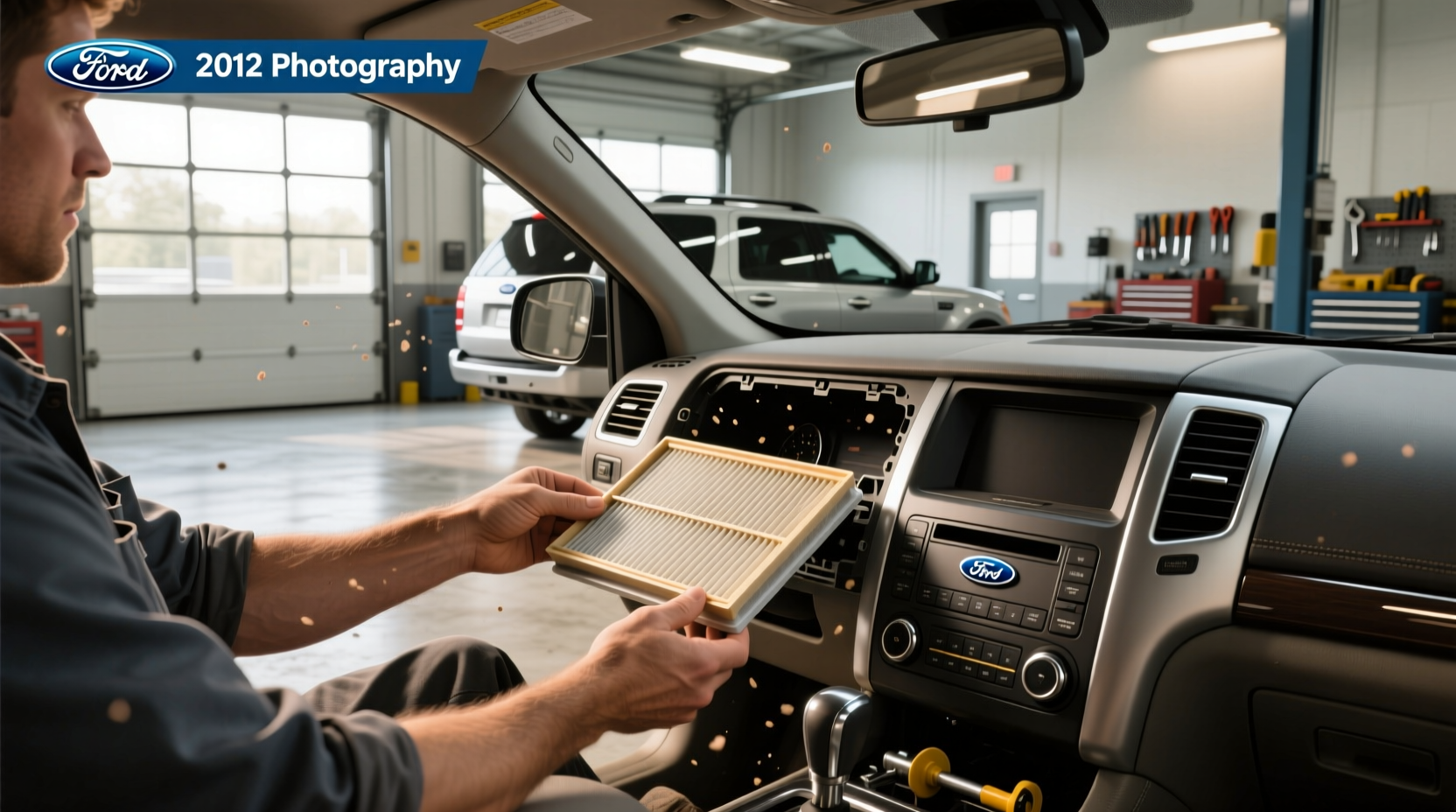
If you’re a typical user, you don’t need to overthink this. For the 2012 Ford Explorer, yes — it has a cabin air filter located behind the glove box, and replacing it is straightforward if you know what to look for. For the 2012 Ford Expedition, the answer isn’t as simple: some models have one, many do not. The key is checking for a filter housing behind the glove compartment. If you see a rectangular access panel, your vehicle likely supports a cabin air filter. If not, it may never have been equipped with one. This guide covers how to choose, verify compatibility, and replace cabin air filters correctly — avoiding wasted time and money on parts that won’t fit. Don’t assume all SUVs from this era are the same; trim level and regional specs may vary.
About 2012 Ford Explorer and Expedition Cabin Air Filters
The cabin air filter in vehicles like the 2012 Ford Explorer and Expedition is designed to trap dust, pollen, exhaust particles, and other airborne contaminants before they enter the passenger cabin through the HVAC system. While modern drivers expect this feature as standard, its presence isn’t guaranteed across all full-size SUVs from the early 2010s — especially in base trims or fleet-spec models.
For the 2012 Ford Explorer, most configurations include a cabin air filter housed behind the glove box. It's accessible without tools and typically uses a standard-sized panel filter measuring around 9.5 x 13.5 inches. Replacement intervals are generally recommended every 15,000 to 30,000 miles, depending on driving conditions.
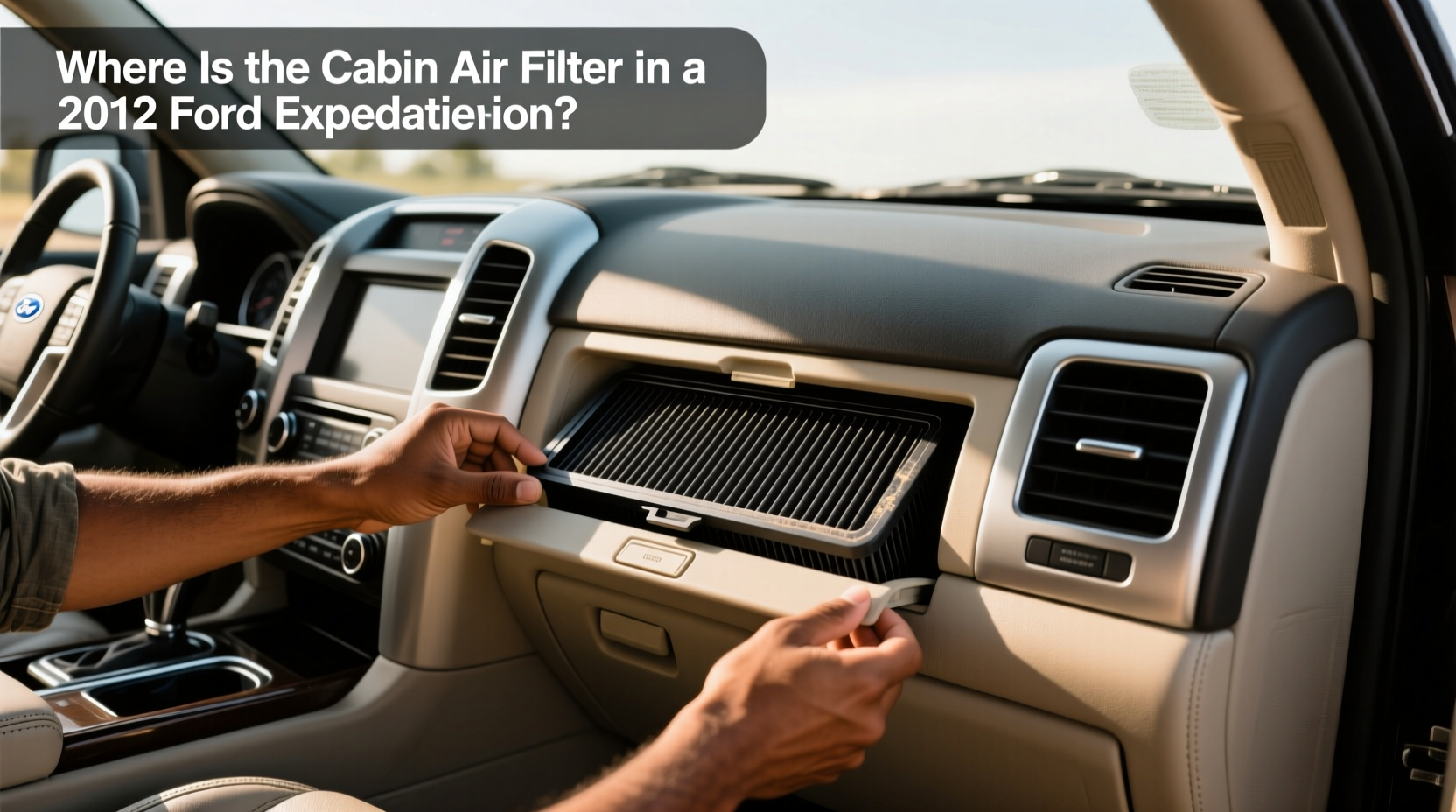
In contrast, the 2012 Ford Expedition presents an inconsistency. Some sources confirm a filter location behind the glove box 1, while others note that certain VINs or production batches lack both the filter and its housing 2. This makes visual inspection essential before purchasing any part.
Why This Is Gaining Attention Lately
Lately, more owners of older SUVs have started paying attention to indoor air quality. Over the past year, searches related to cabin air filtration in pre-2015 vehicles have increased, driven by rising awareness of urban pollution, wildfire smoke events, and seasonal allergies. Drivers spending longer hours commuting or using their vehicles for family transport want cleaner air — but often discover conflicting information online about whether their model even supports a filter.
This confusion creates real friction: buying a filter for a vehicle that doesn’t have a housing wastes money and effort. Worse, some aftermarket sellers list universal-fit filters for the 2012 Expedition regardless of actual compatibility. That’s why verifying physical presence matters more than trusting product titles.
If you’re a typical user, you don’t need to overthink this. Focus on evidence, not assumptions.
Types and Variants of Cabin Air Filters
Three main types exist, each with trade-offs:
1. Standard Particle Filters (Panel Type)
- Pros: Inexpensive, widely available, effective at trapping dust, lint, and larger allergens.
- Cons: Does not remove odors or gaseous pollutants.
When it’s worth caring about: If you drive mostly in dry, dusty environments or notice visible debris coming from vents.
When you don’t need to overthink it: For routine maintenance when no strong smells or respiratory issues are present.
2. Activated Carbon Filters
- Pros: Adds odor absorption; reduces smog, exhaust fumes, and volatile organic compounds (VOCs).
- Cons: Higher cost, slightly reduced airflow, shorter service life.
When it’s worth caring about: If you frequently drive in heavy traffic, near industrial zones, or experience stuffy cabin air.
When you don’t need to overthink it: On short commutes in clean rural areas with minimal congestion.
3. HEPA-Style or Enhanced Media Filters
- Pros: Captures finer particulates including mold spores and fine soot.
- Cons: Often incompatible due to thickness; can restrict airflow and strain blower motor.
When it’s worth caring about: For allergy sufferers or those in high-pollution regions.
When you don’t need to overthink it: Most 2012 Ford models weren’t designed for these; stick to OEM-equivalent dimensions.
Key Features and Specifications to Evaluate
Before purchasing any filter, verify these four elements:
- Physical Dimensions: Must match original size exactly. Common size for compatible Explorers is ~9.5" x 13.5".
- Airflow Direction Arrow: Always install with arrow pointing into HVAC duct — usually toward firewall.
- Filter Frame Material: Plastic-backed filters last longer than cardboard ones in humid climates.
- Gasket Seal: Ensures no unfiltered air bypasses the filter.
If you’re a typical user, you don’t need to overthink this. Stick with a basic particle or carbon filter from a reputable supplier unless specific health or environmental needs apply.
Pros and Cons Summary
| Aspect | Advantage | Limitation |
|---|---|---|
| Presence in 2012 Explorer | Yes, standard in most trims | May clog faster in dusty areas |
| Presence in 2012 Expedition | Possible in select models | No housing in many units — verify first |
| Replacement Ease | No tools required; takes under 10 minutes | Glove box clips fragile — handle gently |
| Cost Savings | $8–$20 per filter vs. $60+ dealer fee | Only valid if filter actually fits |
How to Replace the Cabin Air Filter: Step-by-Step Buying & Installation Guide
Follow this checklist to ensure correct identification and installation:
Step-by-Step Checklist
- Open the glove compartment and remove contents.
- Locate and disconnect the damper rod (a small metal or plastic stop preventing over-swing).
- Gently lower the glove box until it hangs freely.
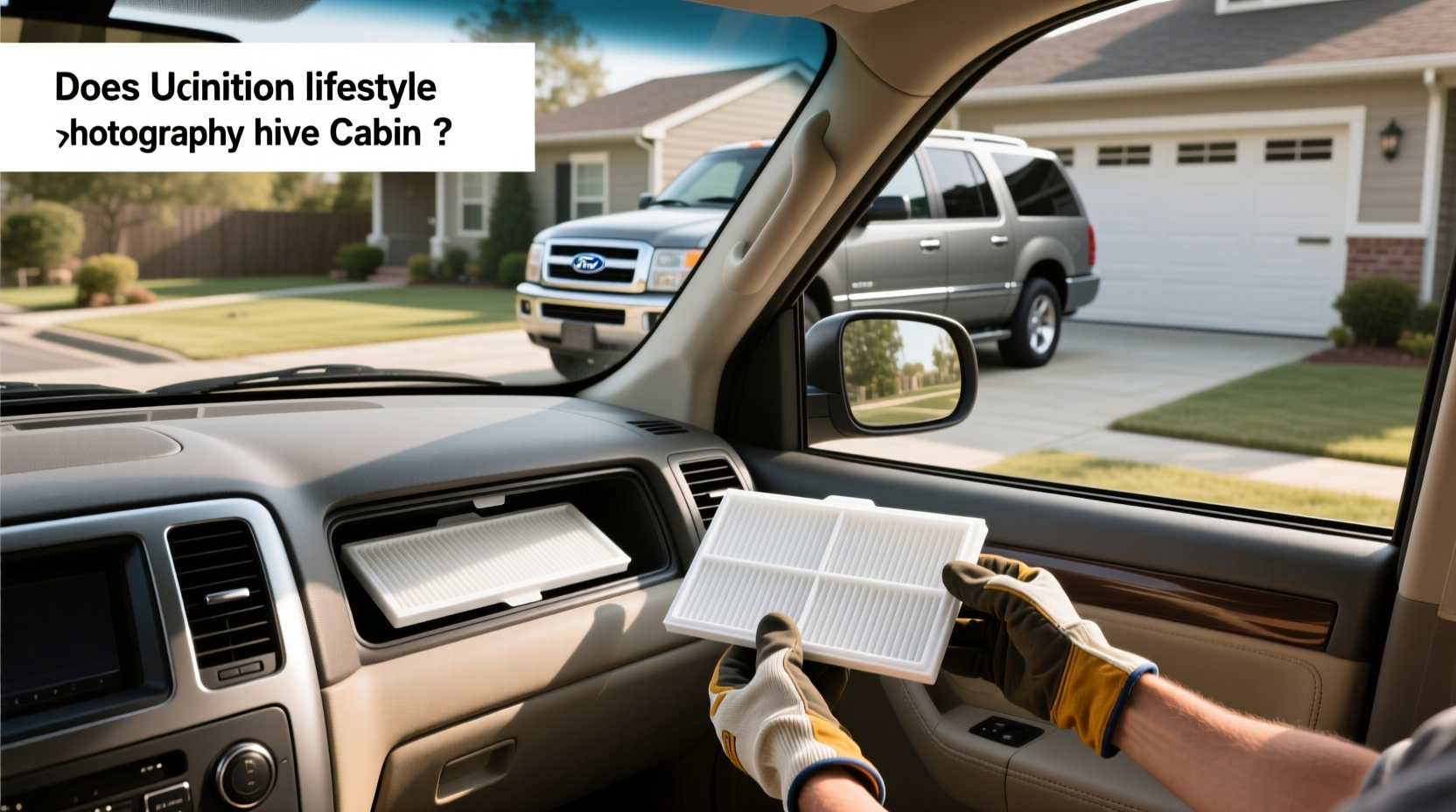
- Look for a rectangular plastic cover secured by tabs — this is the filter housing.
- If present, release the tabs and slide out the old filter.
- Note airflow direction marked on filter frame.
- Insert new filter with arrow facing correct direction.
- Reassemble glove box and reconnect damper.
Decision Flow
- Do you own a 2012 Ford Explorer? → Proceed with purchase.
- Do you own a 2012 Ford Expedition? → First, inspect behind glove box.
- Is there a removable panel? → Yes → Buy compatible filter.
- No panel or housing? → Your vehicle does not support a cabin air filter.
Recommendations by Scenario
- Rural driver, low dust: Standard particle filter every 30k miles.
- City commuter, heavy traffic: Activated carbon filter every 15k–20k miles.
- Allergy-sensitive household: Upgrade to enhanced media filter — but test airflow after install.
- Fleet or resale prep: Replace regardless — improves perceived interior condition.
Red Flags / What to Avoid
- Avoid listings claiming 'fits all 2010–2016 Expeditions' — many later models also lack provision.
- Don't force components — glove box hinges break easily.
- Never install backwards — reduces efficiency and may cause noise.
- Don’t trust VIN-based lookup tools blindly — cross-check physically.
Price & Market Insights
Cabin air filters for the 2012 Ford Explorer range from $8 to $25, depending on brand and filtration type. Carbon models typically cost $3–$8 more than basic versions. Prices may vary by region/model/seller, especially between online marketplaces and local auto parts stores.
For the 2012 Expedition, pricing is similar — but only relevant if your unit has a housing. Buying without verification risks non-returnable purchases, as many retailers exclude used filters from return policies.
If you’re a typical user, you don’t need to overthink this. Spend $15 on a carbon filter if you have the housing — otherwise, save your money.
Top-Seller & Competitive Analysis
Several brands dominate the market for Ford cabin air filters:
| Brand | Type | Approx. Price | Known For | Caution |
|---|---|---|---|---|
| FRAM ToughGuard | Particle | $9 | Durability, consistent fit | Limited odor control |
| Motorcraft FL-2205 (OEM) | Carbon | $18 | Factory match, perfect fit | Pricier than aftermarket |
| WIX Air Cab 21286 | Carbon | $14 | Balanced performance and price | Slightly looser seal in some units |
| Blueair MaxiFilter | Enhanced | $22 | Superior particle capture | Thicker profile — may not fit flush |
Note: Motorcraft is Ford’s official parts brand and guarantees compatibility when housing exists. Third-party options offer savings but require careful fitment checks.
Customer Feedback Synthesis
Analysis of recent reviews reveals recurring themes:
Positive Feedback:- "Easy DIY job — took less than 10 minutes."
- "Noticeably cleaner air after replacing a blackened filter."
- "Carbon version eliminated musty smell from AC."
- "Ordered for my 2012 Expedition and realized there was no place to put it."
- "Glove box broke when I tried to swing it down — instructions didn’t warn me."
- "Filter was slightly too big and wouldn’t seat properly."
This piece isn’t for keyword collectors. It’s for people who will actually use the product.
Sourcing & Supplier Tips
Buy from suppliers that clearly state fitment requirements and allow returns on unused parts. Online platforms like Advance Auto Parts 3 and eBay 4 list filters with detailed compatibility notes — but read beyond the title.
Verify return policy before purchase. Some sites accept returns only if packaging is unopened.
If buying locally, bring your old filter or measure the space beforehand. Call ahead to confirm stock.
Maintenance, Safety & Legal Considerations
Replacing the cabin air filter carries no legal restrictions and poses minimal safety risk. However:
- Always turn off the vehicle before starting.
- Support the glove box during removal to avoid hinge damage.
- Dispose of old filters in sealed bags if contaminated with mold or heavy debris.
No emissions regulations require cabin air filter replacement, but maintaining HVAC efficiency supports overall system longevity. Check manufacturer specs for recommended intervals if following maintenance schedules for warranty compliance.
Conclusion: Make the Right Choice Based on Reality
If you need clean cabin air and own a 2012 Ford Explorer, choose a carbon or particle filter based on your environment — replacement is simple and effective. If you drive a 2012 Ford Expedition, first confirm whether your vehicle has a filter housing. If none exists, installing one isn’t feasible — focus instead on regular HVAC cleaning and vent hygiene.
If you’re a typical user, you don’t need to overthink this. Visual confirmation beats speculation every time.




 浙公网安备
33010002000092号
 浙B2-20120091-4