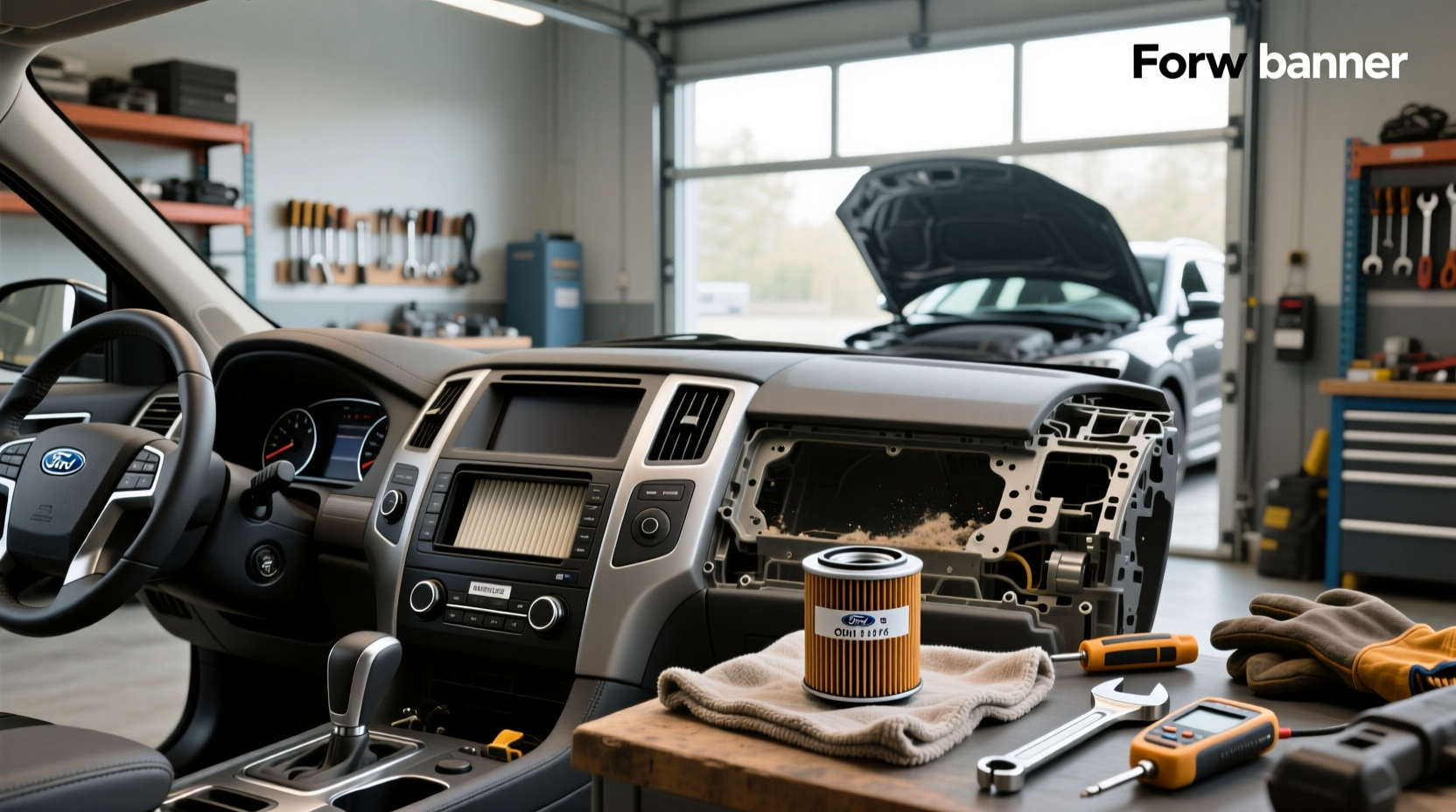
If you’re replacing the cabin air or oil filter on your 2012 Ford Explorer, start here: use a Motorcraft FL910S for the oil filter if you want OEM-equivalent performance. For the cabin air filter, any standard size like FRAM CAF5677 or equivalent will fit—no need to overpay for branding. If you’re a typical user, you don’t need to overthink this. What to look for in a replacement filter includes correct dimensions (approx. 10.5 x 8.5 inches), pleat density for airflow resistance, and whether it’s particulate-only or includes activated carbon. Avoid filters that lack clear labeling or compress too easily—the paper media should hold firm under light pressure.
Lately, more owners are checking cabin air filters during routine oil changes, especially in urban areas with higher pollution. This shift reflects broader awareness of interior air quality—not just engine longevity. Over the past year, search interest in DIY cabin air replacements has grown steadily, driven by short video tutorials showing how fast the job is (under 10 minutes).
About the 2012 Ford Explorer’s Filter Systems
The 2012 Ford Explorer uses two primary filtration systems: one for engine oil and another for cabin air. The oil filter protects the engine by trapping metal particles and contaminants from circulating oil. It threads onto the engine block and is replaced during every oil change. The cabin air filter, meanwhile, sits behind the glove compartment and cleans outside air entering the HVAC system. It captures dust, pollen, smog particles, and some odors—especially important if you drive in cities or suffer from allergies.
This model year introduced the redesigned third-generation Explorer SUV, now built on a unibody platform with independent rear suspension. It came standard with a 3.5L V6 engine, though later trims added a 3.0L V6 EcoBoost option. Each engine variant shares the same oil filter specification, but trim levels can affect HVAC setup—which may influence cabin filter design slightly (though not enough to prevent cross-compatibility).
If you’re a typical user, you don’t need to overthink this. Both filters are standardized across most North American markets and widely available at auto parts retailers. There’s no proprietary lock-in, and aftermarket options perform reliably when sourced from known suppliers.
Why Proper Filtration Is Gaining Popularity
Over the past year, vehicle maintenance habits have shifted toward proactive care, especially among mid-life SUV owners. With rising repair costs and longer ownership periods, people are paying closer attention to consumables like filters. A clean cabin air filter improves airflow through vents, reduces strain on the blower motor, and prevents musty smells caused by mold buildup. Similarly, using the correct oil filter ensures consistent oil pressure and helps extend engine life between services.
Social media has amplified this trend. Short-form videos demonstrating quick filter swaps—often tagged with #DIYauto or #FordTips—have made these tasks feel accessible. Many show side-by-side comparisons of blackened old filters versus clean replacements, creating visual impact without exaggeration. This isn’t about fear-mongering; it’s practical visibility into wear items that were once ignored.
This piece isn’t for keyword collectors. It’s for people who will actually use the product.
Types and Variants
Cabin Air Filters
- Particulate-only filters: Capture dust, pollen, and larger airborne debris. Most affordable and sufficient for rural or suburban drivers.
- Activated carbon filters: Add an extra layer to absorb gases, smoke, and odors. Ideal for city driving or heavy traffic zones.
- High-efficiency pleated filters: Use denser media to trap smaller particles. May reduce airflow slightly but offer better protection for allergy sufferers.
When it’s worth caring about: If you notice weak AC output, strange smells, or increased allergy symptoms while driving, upgrading to a carbon or high-efficiency filter makes sense.
When you don’t need to overthink it: For general driving in average conditions, a basic particulate filter works fine. If you’re a typical user, you don’t need to overthink this.
Oil Filters
- OEM-style (e.g., Motorcraft FL910S): Match factory design and flow characteristics. Often include anti-drainback valves and crush ribs for durability.
- Premium aftermarket (e.g., FRAM Ultra, Wix XP): Use synthetic blend media for higher contaminant capacity. Slightly more expensive but last well under normal conditions.
- Budget conventional filters: Made with cellulose media. Adequate for short intervals but degrade faster in heat.
When it’s worth caring about: On high-mileage vehicles or those used for towing, a premium oil filter can help manage sludge and prolong oil cleanliness.
When you don’t need to overthink it: For regular commuting and timely oil changes, even budget filters work acceptably—as long as they meet minimum industry standards (like ISO 4548 testing). If you’re a typical user, you don’t need to overthink this.
Key Features and Specifications to Evaluate
Choosing the right filter means focusing on functional traits, not marketing claims. Here’s what matters:
- Dimensions: Cabin air filters must fit snugly in the housing behind the glove box. Standard size is ~10.5" x 8.5" x 1", but slight variations exist. Measure your old filter before buying.
- Media type: Look for multi-layered paper or synthetic blends. Avoid filters with visible gaps or uneven pleats.
- Flow rating: Oil filters should support at least 10 quarts per minute at operating viscosity. Most reputable brands publish flow data.
- Valve presence: An anti-drainback valve keeps oil in the filter when the engine stops, reducing startup wear.
- Thread pattern and gasket: Must match the engine block (M20x1.5 thread with 3/4" drive flat). Rubber gasket should be pliable, not cracked.
If you’re a typical user, you don’t need to overthink this. Stick with filters labeled as direct replacements for Motorcraft FL910S (oil) or CAF5677 (cabin).

Pros and Cons
| Filter Type | Pros | Cons |
|---|---|---|
| Cabin – Particulate Only | Affordable, good airflow, widely available | No odor reduction, limited fine particle capture |
| Cabin – Activated Carbon | Reduces fumes, smoke, and VOCs; better air quality | Slightly higher cost; may restrict airflow over time |
| Oil – OEM Equivalent | Reliable sealing, consistent performance, correct bypass settings | Pricier than generic options |
| Oil – Budget Aftermarket | Low upfront cost; suitable for short-term use | Shorter lifespan; inconsistent media quality |
If you’re a typical user, you don’t need to overthink this. Prioritize fit and consistency over minor performance gains.
How to Choose the Right Filter (Buying Guide)
Step-by-Step Checklist
- Confirm your engine type: All 2012 Explorers use the same oil filter (FL910S), but verify via VIN lookup if uncertain.
- Check cabin filter access: Open the glove box, squeeze sides inward, and lower the stopper to expose the filter housing.
- Remove old filter and inspect condition: Heavy grime suggests frequent replacement is needed.
- Match physical dimensions: Compare length, width, and thickness to new filter.
- Select based on driving environment: Urban? Consider carbon. Suburban? Basic particulate suffices.
- Verify packaging labels: Look for “Direct Fit,” “OEM Replacement,” or “Meets Motorcraft Spec.”
Decision Flow
- Need fast replacement? → Go with Motorcraft or FRAM at local store.
- Want longer service life? → Choose synthetic-media oil filter or carbon cabin filter.
- On a tight budget? → Standard FRAM or Autolite cabin filter + Motorcraft oil filter combo is reliable.
Recommendations by Scenario
- Daily commuter: FRAM CAF5677 (cabin), Motorcraft FL910S (oil)
- City driver: Bosch CF10165AC (carbon cabin), Wix 51516 (premium oil)
- DIY mechanic: K&N RC-1002 (washable cabin)1, Mobil 1 M1-206A (full synthetic oil + filter kit)
Red Flags / What to Avoid
- Unbranded filters with no test certification listed
- Filters sold in bulk packs with damaged packaging
- Deals that seem too cheap—may indicate expired stock
- Products missing dimensional specs online
- Any listing claiming “better than OEM” without verifiable data
If you’re a typical user, you don’t need to overthink this. Stick to recognized names and avoid experimental choices unless you’re tracking results.
Price & Market Insights
Prices vary by region, retailer, and brand tier. As of early 2025, expect to pay:
- Cabin air filter: $8–$22 (particulate), $15–$30 (carbon)
- Oil filter: $7–$12 (Motorcraft), $5–$10 (budget), $12–$18 (premium)
Kit bundles (oil + cabin + engine air) are increasingly common online and may offer savings of 10–15%. However, confirm all components are current-spec before purchasing. Note that prices may vary by region/model/seller—always check return policies in case of incorrect fitment.
If you’re a typical user, you don’t need to overthink this. Spending more than $25 on a single cabin filter offers diminishing returns unless you have specific health concerns.
Top-Seller & Competitive Analysis
Based on availability and customer volume, top-selling options include:
| Product | Type | Key Feature | Typical Price |
|---|---|---|---|
| Motorcraft FL910S | Oil Filter | OEM-specified, balanced flow & retention | $9.50 |
| FRAM CAF5677 | Cabin Filter | Widely compatible, medium-density pleats | $11.99 |
| Bosch CF10165AC | Cabin Filter (Carbon) | Odor-reducing layer, low airflow restriction | $18.50 |
| K&N RC-1002 | Reusable Cabin Filter | Washable up to 50 times | $34.99 |
| Wix 51516 | Premium Oil Filter | Synthetic media, extended drain capability | $14.25 |
While K&N’s reusable filter appeals to eco-conscious buyers, its higher initial cost and need for cleaning make it less practical for casual users. For most, disposable OEM-equivalent filters remain the optimal balance.
Customer Feedback Synthesis
Analyzing recent reviews across major retailers reveals consistent themes:
- Positive: Easy installation, noticeable improvement in air quality, quiet HVAC operation after replacement.
- Negative: Some carbon filters cause slight airflow reduction; occasional mislabeling in multipacks; rare reports of rubber gaskets sticking during oil filter removal.
One frequently cited benefit: eliminating stale smells after winter storage. Several users noted that replacing a neglected cabin filter restored full climate control performance. Conversely, complaints often trace back to mismatched part numbers or expired inventory purchased from third-party sellers.
Sourcing & Supplier Tips
To ensure authenticity:
- Buy from authorized dealers or directly from manufacturer sites (e.g., fram.com2, motorcraft.com)
- Check lot numbers and manufacturing dates on packaging
- Avoid third-party marketplaces unless seller has high ratings and clear return terms
- Use VIN-based lookup tools at AutoZone, Advance Auto Parts, or Ford’s official portal to confirm compatibility
If you’re a typical user, you don’t need to overthink this. A quick call to your local dealer parts desk can verify the correct number in under two minutes.
Maintenance, Safety & Legal Considerations
No legal requirements mandate specific filter types for passenger vehicles. However, maintaining proper filtration supports overall vehicle safety by preventing overheating (via clean oil flow) and ensuring clear visibility (by stopping fogging due to poor ventilation).
Always allow the engine to cool before changing the oil filter to avoid burns. Replace the rubber gasket each time if reusing an old filter (not recommended). Dispose of used oil filters at certified recycling centers—many auto parts stores accept them.
Verify local disposal regulations; rules may vary by region/model/seller jurisdiction. Check manufacturer specs for torque settings: 20 ft-lbs is standard for the FL910S oil filter.
Conclusion
If you need reliable, hassle-free performance, choose the Motorcraft FL910S for oil and a FRAM CAF5677 or Bosch carbon equivalent for the cabin. If you’re a typical user, you don’t need to overthink this. These choices align with real-world durability, broad compatibility, and balanced cost—all without chasing marginal improvements.
Everything You Need to Know
❓ What oil filter does a 2012 Ford Explorer take?
The 2012 Ford Explorer requires an oil filter with the OEM part number Motorcraft FL910S. This specification applies to all engine variants (3.5L V6, 2.0L I4) produced for that model year. Compatible aftermarket equivalents include FRAM PH9611, Wix 51516, and Bosch 3320. Always confirm thread size (M20x1.5) and gasket diameter before installation.
❓ Where is the cabin air filter located in a 2012 Ford Explorer?
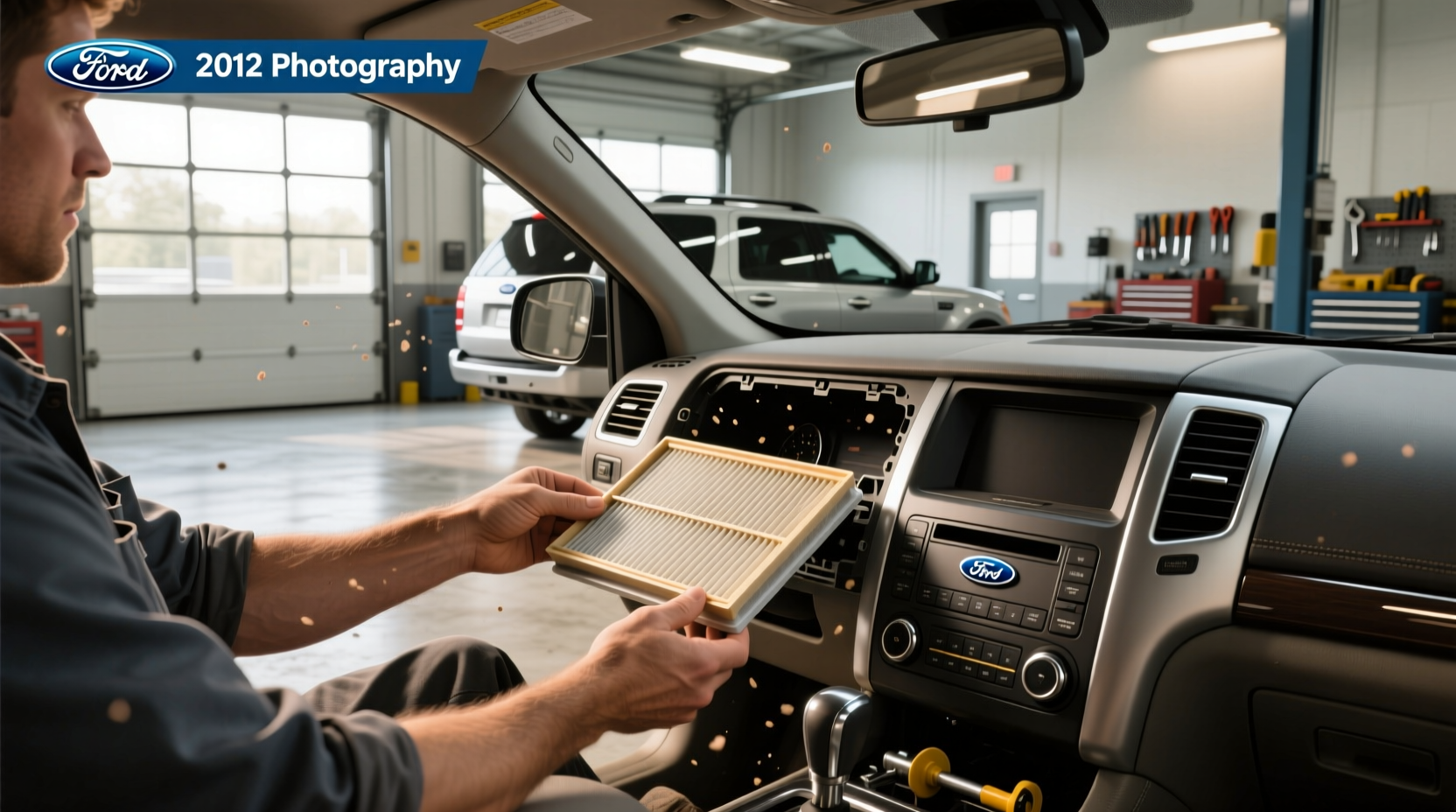
The cabin air filter is located behind the glove compartment on the passenger side. To access it, open the glove box, press the sides inward to release the stops, then lower the compartment door. The filter housing cover is secured with clips—remove it to slide out the old filter. Replacement takes under 10 minutes with no tools required.
❓ How often should I replace the cabin air filter?
Ford recommends replacing the cabin air filter every 15,000 to 30,000 miles depending on driving conditions. In dusty environments or heavy traffic, consider changing it every 15,000 miles. Signs it needs replacement include reduced airflow from vents, persistent musty odors, or increased allergy symptoms while driving.
❓ Can I use a reusable cabin air filter in my 2012 Explorer?
Yes, reusable cabin air filters like the K&N RC-1002 are designed to fit the 2011–2019 Ford Explorer series, including the 2012 model. These filters require periodic cleaning and re-oiling. While cost-effective over time, they demand consistent maintenance and may not capture ultrafine particles as effectively as premium disposable carbon filters.
❓ Does the 2012 Ford Explorer need a special oil type?
The 2012 Ford Explorer uses 5W-20 motor oil in all temperature conditions. Total capacity is 6 quarts (with filter). Synthetic oil is recommended for improved protection and longer drain intervals. Always check the owner’s manual or consult a dealership for updates related to extended warranties or severe service usage.




 浙公网安备
33010002000092号
 浙B2-20120091-4