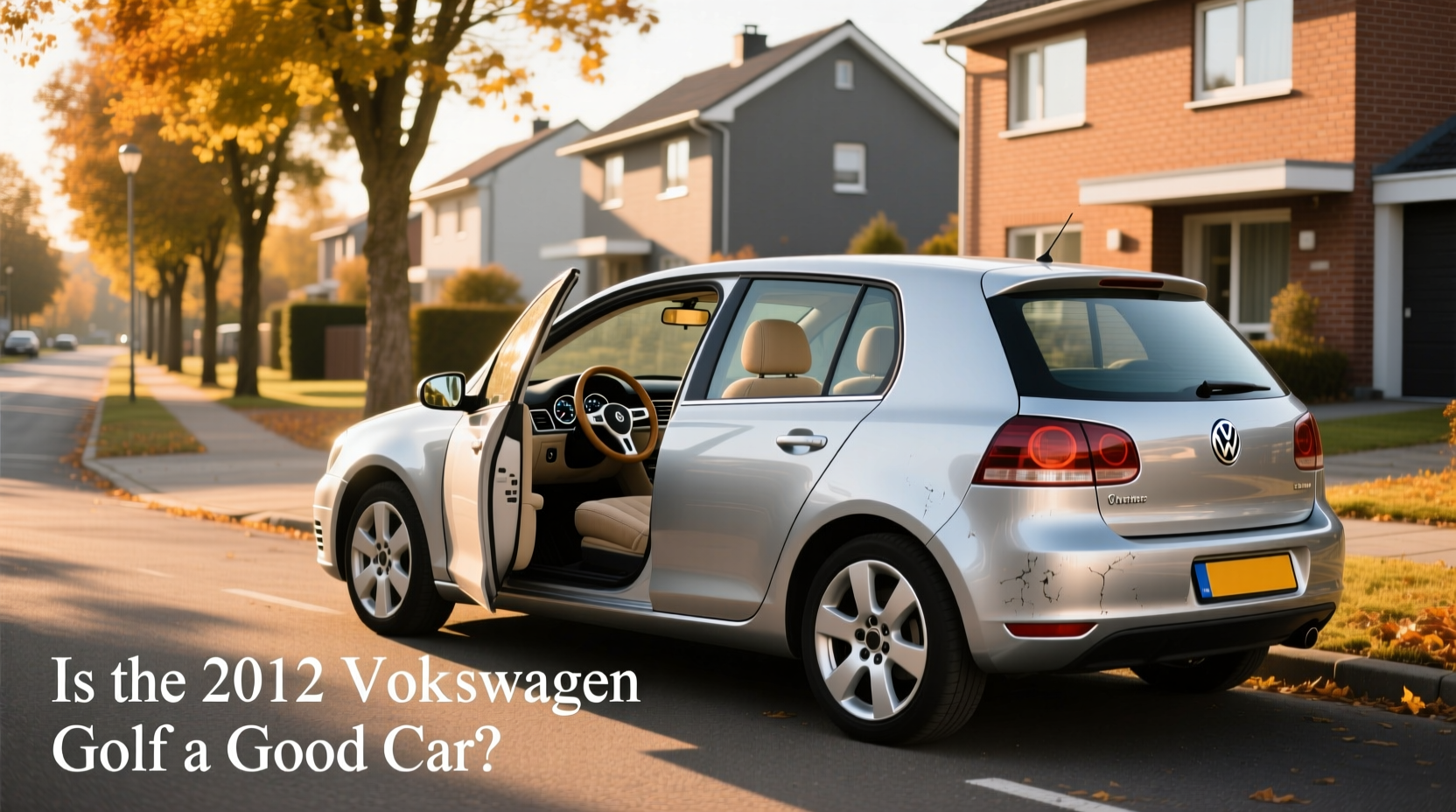
Short introduction
If you’re looking for a used compact hatchback that balances driving engagement and practicality, the 2012 Volkswagen Golf is worth considering—but your decision should hinge on which variant you choose and how much risk you’re willing to accept. How to choose a reliable used VW Golf comes down to avoiding high-risk components: skip automatic DSG models if you want low maintenance, and prioritize TDI diesels only if you drive over 15,000 miles per year. The 2.5L gasoline engine is less efficient but more durable for city drivers. If you’re a typical user, you don’t need to overthink this: go for a manual transmission 2.5L with full service history, and avoid cars with sunroof leaks or undocumented repairs.
About the 2012 Volkswagen Golf
The 2012 Volkswagen Golf (Mk6) sits at a pivot point in the model’s evolution—late enough to benefit from updated interiors and safety features, yet early enough to avoid some of the complex electronics and turbocharged engines that plagued later models. Offered in multiple trims and powertrains, it was marketed as a premium compact hatchback with European handling and build quality. Available configurations included the base 2.5L five-cylinder gasoline engine, the fuel-efficient TDI diesel, and the performance-oriented GTI and Golf R variants.
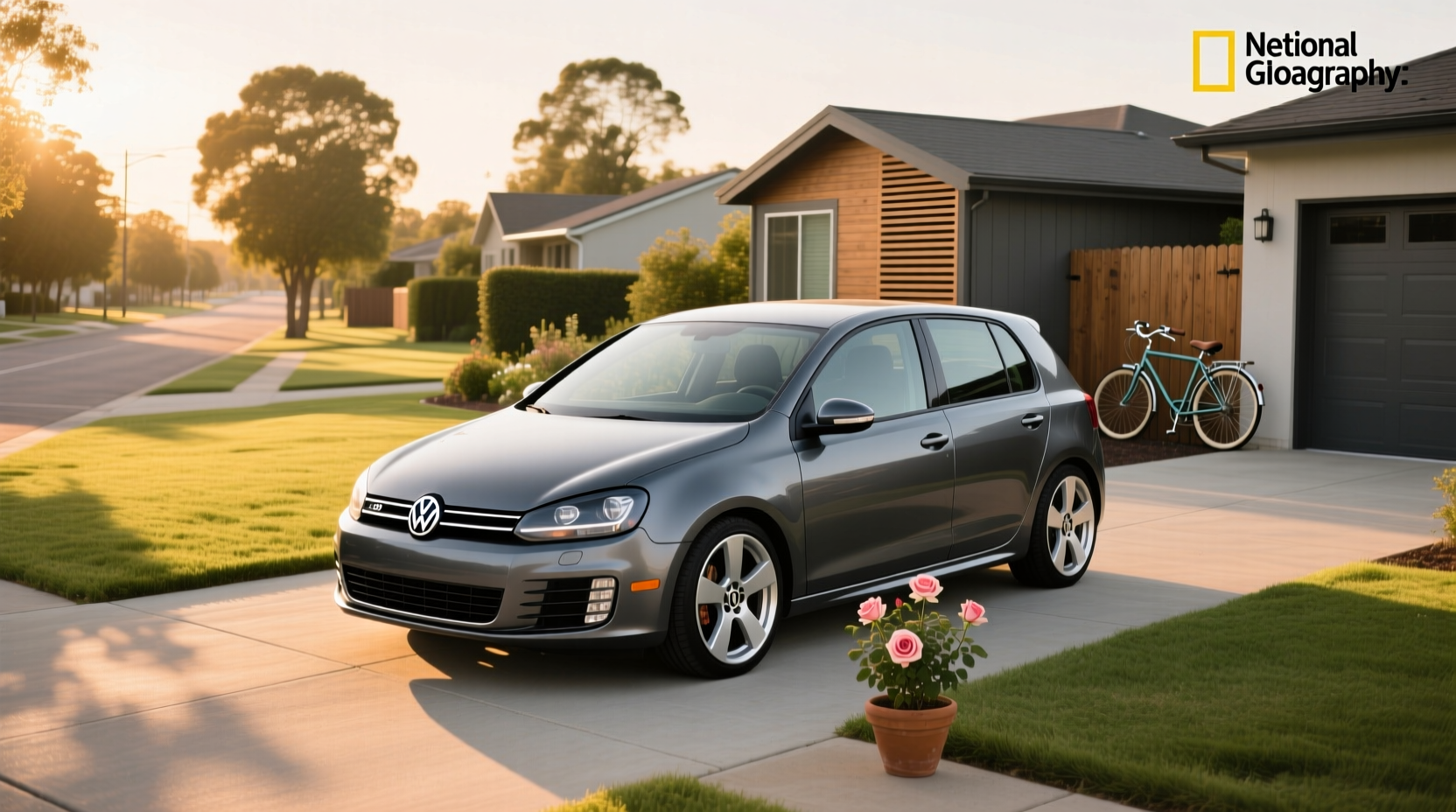
This generation didn’t win major awards in the U.S., but it earned consistent praise for its interior materials, responsive steering, and versatile hatchback layout. It was also one of the last Golfs sold in North America before the Mk7 brought more advanced tech—and more potential points of failure.
Why the 2012 VW Golf is gaining popularity
Lately, interest in the 2012 Golf has grown among budget-conscious buyers seeking a well-built European car without luxury-brand pricing. Over the past year, used listings have highlighted its strong resale desirability relative to other compact cars from the era 1. Its appeal stems from three factors: proven mechanical simplicity in base models, strong aftermarket support, and a reputation for driver engagement rare in economy hatchbacks.
Additionally, post-Dieselgate clarity has made TDI models easier to evaluate: many have been modified or certified, and their long-term viability is now better understood. This transparency reduces uncertainty for buyers who want diesel efficiency without regulatory risk. If you’re a typical user, you don’t need to overthink this: the 2012 Golf isn’t trending because it’s flawless—it’s gaining traction because its flaws are now predictable, and therefore manageable.
This piece isn’t for keyword collectors. It’s for people who will actually use the product.
Types and variants
The 2012 Golf came in several distinct versions, each suited to different needs and risk tolerances.
| Variant | Pros | Cons |
|---|---|---|
| 2.5L Gasoline (Base/GLS) | Durable engine, simple maintenance, widely supported by mechanics | Lower fuel economy (~24 mpg combined), unrefined at high RPM |
| TDI Diesel | Excellent fuel economy (~34 mpg combined), strong low-end torque, ideal for highway driving | Risk of emissions-related issues, potential DSG transmission problems, higher repair costs |
| GTI | Fun to drive, sport-tuned suspension, iconic hot hatch status | High-pressure fuel pump failures common, turbo issues possible, pricier upkeep |
| Golf R (Rare) | All-wheel drive, powerful 2.0T engine, superior grip and performance | Very limited availability, high depreciation, complex systems increase repair likelihood |
When it’s worth caring about: If your annual mileage exceeds 15,000 miles, the TDI’s fuel savings may justify its risks. For city drivers or those under 10,000 miles/year, the 2.5L offers peace of mind. When you don’t need to overthink it: Unless you specifically want performance, the GTI and Golf R aren’t necessary upgrades—the base car already feels engaging.
Key features and specifications to evaluate
When assessing a 2012 Golf, focus on these core areas:
- Engine type: 2.5L inline-five (gasoline) or 2.0L TDI (diesel). The 2.5L is known for longevity; the TDI delivers efficiency but requires scrutiny.
- Transmission: Manual (5- or 6-speed) is more reliable than DSG automatic, which has documented shift issues and costly repairs.
- Service history: Full records matter more than mileage. Look for timing belt changes (if applicable), oil changes, and cooling system work.
- Sunroof condition: Leaks are common and can lead to electrical faults or mold.
- Interior electronics: Test windows, locks, infotainment, and climate controls—intermittent glitches are frequent.
When it’s worth caring about: If the car has a DSG gearbox, verify fluid and filter changes every 40,000 miles. For TDIs, confirm any Dieselgate-related repairs or deletions were performed legally and safely. When you don’t need to overthink it: Trim level differences (GLS vs. S) are mostly cosmetic—focus on mechanical condition instead.
Pros and cons
| Pros | Cons |
|---|---|
| ✅ High-quality cabin materials | ❌ DSG transmission reliability concerns |
| ✅ Engaging driving dynamics | ❌ Sunroof seal degradation over time |
| ✅ Spacious rear seats and cargo area | ❌ High-pressure fuel pump failures in GTI models |
| ✅ Strong resale compared to peers | ❌ Limited smartphone integration by modern standards |
| ✅ Manual transmission models are durable | ❌ Some electrical gremlins (window motors, sensors) |
If you’re a typical user, you don’t need to overthink this: the pros outweigh the cons if you select the right variant and inspect thoroughly. Avoiding known weak points is more effective than hoping for luck.
How to buy a 2012 Volkswagen Golf
Follow this step-by-step checklist to minimize risk and maximize value.
Step-by-step checklist
- Decide between 2.5L gasoline or TDI diesel based on your annual mileage.
- Choose manual transmission unless you have a specific need for DSG (and budget for potential repairs).
- Request complete service records—verify timing belt, coolant flushes, and transmission service.
- Inspect for sunroof leaks (check headliner and drain tubes).
- Test all electrical functions: windows, locks, HVAC, radio, lights.
- Take a test drive focusing on transmission smoothness and engine responsiveness.
- Get an independent pre-purchase inspection from a mechanic familiar with VWs.
Decision flow
- Drive mainly in city? → 2.5L manual
- Highway-heavy commute (>15k mi/yr)? → TDI manual (with service history)
- Want fun but not extreme performance? → GTI with documented maintenance
- On a tight budget? → Avoid DSG and sunroof-equipped models
Recommendations by scenario
- First-time VW buyer: Start with a 2.5L manual—simple, predictable, easy to maintain.
- Fleet or high-mileage driver: Consider a TDI with verified modifications or compliance.
- Enthusiast: GTI with 6-speed manual and no turbo or fuel pump warnings.
Red flags / what to avoid
- 🚫 DSG automatic with unclear service history
- 🚫 Sunroof leaks or water damage signs
- 🚫 Check engine light related to fuel system (especially in GTI)
- 🚫 Missing service records or inconsistent maintenance intervals
- 🚫 Aftermarket tuning or deleted emissions systems (legal and reliability risks)
Price & market insights
As of 2024, 2012 Golf prices vary significantly by trim, condition, and location. Base 2.5L models range from $6,500 to $8,500, while TDI variants typically sell for $8,000–$9,500. GTI prices hover around $7,500–$10,000 depending on mileage and condition 2. These figures may vary by region/model/seller.
Premiums exist for low-mileage examples, especially among TDI buyers seeking maximum efficiency. However, unusually low mileage on a DSG model should raise suspicion—lack of regular heat cycles can degrade transmission fluid faster. Always check manufacturer specs for recommended service intervals and verify retailer return policies if buying online.
Top-seller & competitive analysis
The 2.5L manual GLS is the most commonly listed and reliably transacted variant. It competes directly with the Honda Civic, Toyota Corolla, and Ford Focus of the same era—but stands out for its superior interior quality and driving feel.
| Model | Strengths | Weaknesses |
|---|---|---|
| 2012 VW Golf 2.5L | Better materials, engaging drive, spacious hatch | Lower fuel economy, minor electrical issues |
| 2012 Honda Civic | Fuel-efficient, ultra-reliable, low maintenance | Bland interior, stiff ride, less fun to drive |
| 2012 Toyota Corolla | Proven durability, strong resale, simple tech | Underpowered, basic features, dated styling |
| 2012 Ford Focus | Sharp handling, modern SYNC system | Powertrain reliability concerns, interior fit/finish |
The Golf doesn’t dominate on paper, but it wins in subjective experience—assuming mechanical issues are ruled out. If you’re a typical user, you don’t need to overthink this: the competition is more dependable on average, but the Golf offers a more satisfying daily drive when well-maintained.
Customer feedback synthesis
Owner reviews consistently highlight two themes: love for the driving experience and frustration with sporadic electrical and transmission issues.
Most praised aspects:
- “The steering feels connected and precise.”
- “Interior looks and feels more expensive than the price suggests.”
- “Hatchback space is perfect for groceries, gear, or pets.”
Most frequent complaints:
- “DSG jerks at low speeds and shudders when cold.”
- “Sunroof leaked after three years, ruined the headliner.”
- “Window motor failed twice—common issue among owners.”
Long-term owners emphasize that regular maintenance and using OEM-grade parts make a significant difference. One recurring sentiment: “It’s not unreliable if you treat it right.”
Maintenance, safety & legal considerations
Regular maintenance is critical. Key intervals include:
- Coolant flush every 2 years or 30,000 miles (prevents water pump corrosion)
- Transmission service: every 40,000 miles for DSG; less frequent for manual
- Timing belt (on some 2.5L models): replace every 60,000–100,000 miles—verify with VIN
- Brake fluid flush: every 2 years
Safety-wise, the 2012 Golf earned good crash test ratings from IIHS for its class 3, though it lacks modern driver aids like lane keep assist or automatic emergency braking.
Legally, ensure any TDI has compliant emissions equipment if driven in regulated states (e.g., California). Modifications or deletions may void registration. Confirm local regulations through your DMV or authorized VW dealer.
Conclusion
If you need a used hatchback with character, build quality, and driver engagement, the 2012 Volkswagen Golf is a solid choice—if you pick wisely. Choose the 2.5L manual for reliability and low ownership stress. Opt for a TDI only if you drive frequently and can verify its service history and emissions compliance. Avoid DSG automatics unless you’re prepared for potential repairs. If you’re a typical user, you don’t need to overthink this: prioritize condition over specs, and let real-world durability guide your decision.
Everything You Need to Know
❓ Is the 2012 VW Golf reliable?
The 2012 Golf has mixed reliability. The 2.5L engine is durable, but DSG transmissions and sunroof leaks are common issues. RepairPal rates it 4/5, placing it mid-pack among compacts. Real-world reliability depends heavily on maintenance history and usage patterns.
❓ What is the most common problem with the 2012 VW Golf?
The most frequent issues are DSG transmission shuddering, sunroof seal leaks leading to water intrusion, and electrical gremlins (e.g., window motors, central locking). In GTI models, high-pressure fuel pump failure is also common. These problems are predictable and often preventable with proper care.
❓ Is the 2.5L engine a good choice?
Yes. The 2.5L five-cylinder engine is mechanically simple, widely supported, and known for longevity. It’s less fuel-efficient than the TDI but avoids turbo, direct injection, and emissions-related complexities. Ideal for city driving and first-time VW owners.
❓ Should I buy a TDI or gasoline Golf?
Choose TDI if you drive over 15,000 miles per year and want maximum fuel economy. Otherwise, the 2.5L gasoline engine offers lower maintenance risk and simpler ownership. Always verify TDI service history and emissions compliance status before purchase.
❓ How much should I pay for a 2012 Golf?
Expect to pay $6,500–$8,500 for a 2.5L model, $8,000–$9,500 for a TDI, and $7,500–$10,000 for a GTI. Prices depend on condition, mileage, transmission, and location. Always compare against Edmunds or Kelley Blue Book valuations and get a pre-purchase inspection.




 浙公网安备
33010002000092号
 浙B2-20120091-4