
Short introduction
If you’re looking at a used 2012 Toyota Yaris hatchback, here’s how to choose wisely: prioritize manual transmission over the automated MMT version, check for rust around the rear wiper and battery tray, and verify consistent service history. What to look for in a reliable city car? The 2012 Yaris delivers on longevity but has known issues—some avoidable, others costly. If you’re a typical user, you don’t need to overthink this. Most problems stem from poor maintenance or overlooked corrosion. Over the past year, more buyers have turned to older Yarises due to rising new-car prices, making it crucial to spot red flags early.
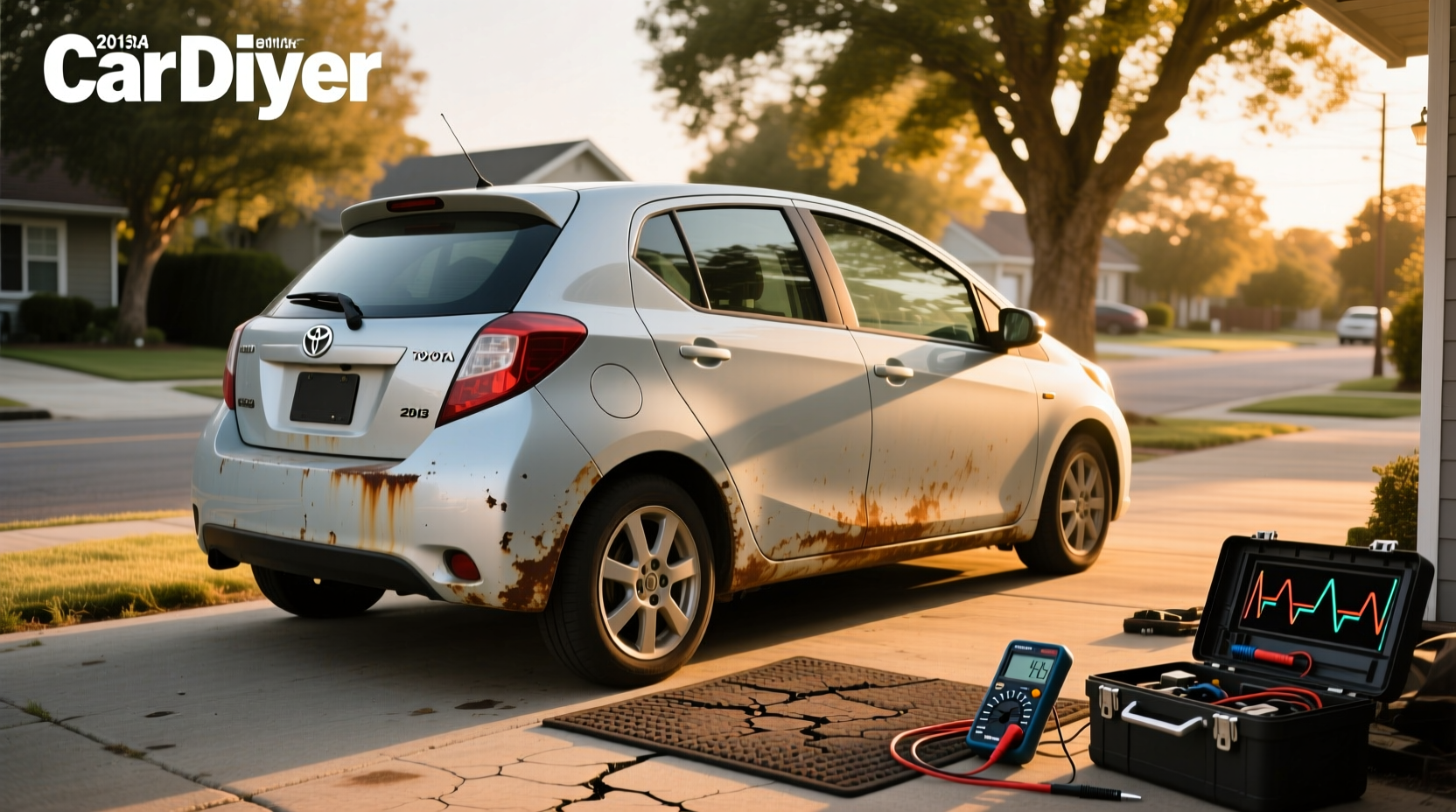
About the 2012 Toyota Yaris Hatchback
The 2012 Toyota Yaris hatchback (also sold as the Vitz in some markets) is part of the third generation (XP90), produced from 2011 to 2020. It was designed as an affordable, fuel-efficient subcompact for city driving and daily commuting. Available with a 1.3L or 1.5L four-cylinder engine, paired with either a 5-speed manual, 4-speed automatic, or the problematic Multimode Transmission (MMT)—an automated manual system unique to certain trims.
While not powerful or exciting, the Yaris earned a reputation for durability when maintained properly. Its simplicity makes repairs accessible, and parts are widely available. However, its age means wear-and-tear issues now dominate owner concerns. This piece isn’t for keyword collectors. It’s for people who will actually use the product.
Why the 2012 Yaris is gaining popularity
Lately, demand for budget-friendly used cars has surged. With inflation pushing new vehicle prices higher, many first-time buyers and urban commuters are turning to proven models like the 2012 Yaris. Its low purchase price, modest insurance costs, and excellent fuel economy (~5.8L/100km combined) make it attractive for cost-conscious drivers.
Additionally, Toyota’s long-standing image for reliability still influences buyer trust—even though real-world ownership reveals nuances. Some forums report high-mileage examples exceeding 250,000 km with minimal major repairs 1. But recent trends show increased reports of rust and electrical gremlins as these vehicles approach 10–12 years old.
Types and variants
| Transmission Type | Pros | Cons |
|---|---|---|
| 5-Speed Manual | Reliable, smooth shifts, better fuel economy | Less convenient in heavy traffic |
| 4-Speed Automatic | Smooth operation, widely trusted design | Slightly lower MPG, aging hydraulics may leak |
| MMT (Automated Manual) | Fuel-efficient, clutchless convenience | Rough shifting, hesitation, expensive control unit failures |
The MMT variant, primarily offered in higher trims outside North America, is the most polarizing. While it promised efficiency and ease of use, many owners report jerky acceleration and delayed responses—especially when cold. Repairs often exceed $1,000 USD due to proprietary components. If you’re a typical user, you don’t need to overthink this: avoid MMT unless you’ve test-driven one extensively and confirmed smooth performance.
Key features and specifications to evaluate
- Engine: 1.3L (99 hp) or 1.5L (106 hp); both generally durable but watch for oil consumption
- Fuel Economy: Ranges from 5.6–6.5 L/100km depending on driving style and transmission
- Transmission: Prioritize manual or conventional automatic; avoid MMT if refinement matters
- Service History: Full records significantly reduce risk—look for timing belt changes (if applicable), fluid flushes
- Recall Status: Check official channels for unresolved safety recalls (e.g., rear seatbelt anchor issue)
When it’s worth caring about: Engine health and transmission type directly affect daily usability and repair costs. When you don’t need to overthink it: Trim level differences (base vs. premium) matter less than mechanical condition and rust presence.
Pros and cons
| Category | Advantages | Drawbacks |
|---|---|---|
| Reliability | Engines often last 200,000+ km with care | Oil burning possible after 150,000 km |
| Maintenance | Cheap parts, simple DIY tasks | Some sensors (ABS) prone to rust-related failure |
| Ride Comfort | Adequate for city use | Basic suspension transmits road noise |
| Ownership Cost | Low insurance, tax, and fuel expenses | Rust repairs can be extensive and costly |
How to buy a 2012 Yaris hatchback
Step-by-step checklist
- Verify VIN and run a vehicle history report (accidents, title status)
- Inspect under hood: check for sludge, coolant color, battery corrosion
- Test drive: listen for grinding, clunks, or hesitation during gear changes
- Scan for error codes (OBD-II) — even if no lights are on
- Examine body seams and floor pans for rust, especially near battery tray and rear hatch
- Review service records — missing entries increase uncertainty
- Confirm recall completion via manufacturer website
Decision flow
If you want a cheap commuter car → Choose manual or 4AT model → Inspect for rust → Get pre-purchase inspection.
If budget allows flexibility → Consider newer model years or alternative brands with updated safety.
If considering MMT → Test drive multiple times (cold start + stop-and-go) → Walk away if shifting feels erratic.
Recommendations by scenario
- First-time buyer: Stick to manual transmission; easier to learn, fewer surprises
- Urban commuter: Acceptable ride quality, but sound insulation is thin
- Long-term holder: Only if rust-free and fully serviced; plan for eventual suspension refresh
Red flags / what to avoid
- 🚗 Unexplained rough idling or blue-tinted exhaust smoke (sign of oil burning)
- 🔧 Ongoing ABS or check engine lights without documentation
- 🌧️ Water stains inside trunk or under carpet (indicates rear wiper seal leak)
- 📉 Missing service history or inconsistent oil change intervals
- ⚙️ MMT-equipped models with reported hesitation or lurching

Price & market insights
Pricing varies widely based on region, mileage, and condition. In the U.S., expect $3,000–$6,000 USD; in Australia, A$4,000–A$8,000; UK values range £2,000–£4,500. These figures may vary by region/model/seller and depend heavily on documented maintenance and accident history.
Higher prices usually reflect full service histories, low mileage, or aftermarket upgrades (e.g., reverse camera). Be cautious of listings priced significantly above average without justification. Always check local classifieds and compare at least five similar vehicles before offering.
Top-seller & competitive analysis
The 2012 Yaris competes with other subcompacts like the Honda Fit (Jazz), Ford Fiesta, and Hyundai Accent. While none match Toyota’s breadth of global support, some offer better interiors or driving dynamics.
| Model | Strengths | Weaknesses |
|---|---|---|
| 2012 Toyota Yaris | Durability, low running costs | Bland driving experience, rust issues |
| 2012 Honda Fit | Superior interior space, engaging drive | More complex CVT risks |
| 2012 Ford Fiesta | Better handling, sportier feel | Lower resale, higher repair frequency |
| 2012 Hyundai Accent | More standard features, longer warranty (at time) | Fewer used parts today, weaker brand trust |
If you’re a typical user, you don’t need to overthink this: the Yaris wins on simplicity and predictability, not excitement.
Customer feedback synthesis
Based on forum threads, owner reviews, and mechanic reports:
- Most praised: Fuel economy, ease of parking, affordability of tires and brakes
- Most criticized: MMT transmission behavior, premature brake wear, persistent ABS warnings
- Surprising positives: Longevity of engines with regular oil changes
- Recurring complaints: Rust forming inside structural points, difficulty sourcing certain trim pieces
One common thread: satisfaction strongly correlates with maintenance diligence. Neglected examples develop multiple small issues that erode confidence.
Sourcing & supplier tips
When sourcing a 2012 Yaris:
- Prefer private sellers who provide full service logs
- Dealerships may charge premiums but sometimes include basic warranties
- Ask for independent inspection before finalizing—especially for high-mileage units
- Avoid salvage-title vehicles unless rebuilding as a project
- Use online forums (e.g., Yaris-specific Reddit communities) to find well-documented examples
This piece isn’t for keyword collectors. It’s for people who will actually use the product.
Maintenance, safety & legal considerations
Regular oil changes every 5,000–8,000 km help prevent piston ring coking and oil consumption. Replace timing belts (if equipped) per manufacturer schedule—failure can lead to engine damage. Suspension bushings typically need replacement after 120,000 km.
Safety-wise, the 2012 Yaris lacks modern driver aids (no lane keep, AEB). It earned modest crash test ratings in its era. Confirm any outstanding recalls through your national transport authority or Toyota’s VIN lookup tool. Do not assume dealership trade-ins have addressed all recalls.
Conclusion
If you need a basic, inexpensive car for short trips and city driving, the 2012 Yaris hatchback remains viable—provided it’s well-maintained and free of structural rust. Choose the manual or 4-speed automatic version. Avoid the MMT. Prioritize rust inspection and service history over cosmetic upgrades. If you’re a typical user, you don’t need to overthink this: reliability comes from care, not magic.
Everything You Need to Know
What are the most common mechanical issues with the 2012 Yaris? ❗+
The most frequent issues include rust around the battery tray and rear wiper area, ABS sensor faults due to corrosion, rough idling from dirty throttle bodies or injectors, and excessive oil consumption linked to piston ring wear. MMT transmission models also report hesitation and jerky shifts. Regular maintenance reduces most risks.
Is the 2012 Yaris reliable after 150,000 km? ✅+
Yes, many reach 200,000+ km when regularly serviced. Key factors are consistent oil changes, addressing small leaks early, and replacing worn suspension components. Engines are robust, but neglect leads to oil burning and carbon buildup. If you’re a typical user, you don’t need to overthink this—just verify upkeep.
Should I avoid the MMT transmission? ⚠️+
For most drivers, yes. The automated manual system lacks refinement, especially in traffic. Failures in the actuator or control module are expensive to fix. Test drive thoroughly—if it hesitates or lurches, walk away. Stick to manual or traditional automatic for smoother daily use.
How do I check for rust on a 2012 Yaris? 🧰+
Inspect the rear hatch seam, around the license plate, under the spare tire cover, and near the battery tray. Look for bubbling paint, flaking metal, or dampness. Use a flashlight to peer into inner fenders and floor supports. Rust often starts internally where drainage is poor. Address early signs before they spread.
Does the 2012 Yaris have any recalls? 🔍+
Yes, some markets had recalls related to rear seatbelt anchor integrity and power steering hose durability. Check your VIN using Toyota’s official recall portal or your country’s motor vehicle agency. Never assume a used car has had all updates applied—even at dealerships.




 浙公网安备
33010002000092号
 浙B2-20120091-4