
Lately, more buyers have turned to older subcompacts like the 2012 Toyota Yaris hatchback for affordable, dependable transportation. If you’re looking at used economy cars, how to choose a reliable 2012 Yaris comes down to three things: transmission type, service history, and recall status. The manual version is widely seen as bulletproof—many owners report over 200,000 miles with basic maintenance. Automatic (MMT) models, however, can have rough shifting or hesitation, especially if fluid wasn’t changed regularly. If you’re a typical user, you don’t need to overthink this: go manual, verify full service records, and check for the passenger airbag propellant recall. Minor electrical gremlins and rust near the rear wiper jet are possible but rarely serious. This piece isn’t for keyword collectors. It’s for people who will actually use the product.
About the 2012 Toyota Yaris Hatchback
The 2012 Toyota Yaris hatchback sits in the third generation of Toyota’s global B-segment car, known internally as the XP90 series. It replaced the boxier second-gen model with a slightly more aerodynamic shape and updated interior materials. Available in both 3-door and 5-door configurations, it was marketed as an efficient city car with low running costs and high durability. Under the hood, it uses a 1.5L 1NZ-FE inline-4 engine producing around 106 horsepower, paired with either a 5-speed manual or a 4-speed automatic with Multi-Mode Transmission (MMT), which functions like a traditional automatic but uses a clutch-based system.
Trim levels in most markets included base, S, and sometimes SE or RS variants, with incremental upgrades in wheels, audio systems, and convenience features like keyless entry or steering wheel-mounted controls. Despite its modest powertrain, the Yaris earned praise for predictable handling, light steering, and compact dimensions ideal for urban environments. Its design philosophy prioritized function over flair—simple controls, durable plastics, and easy access for repairs.
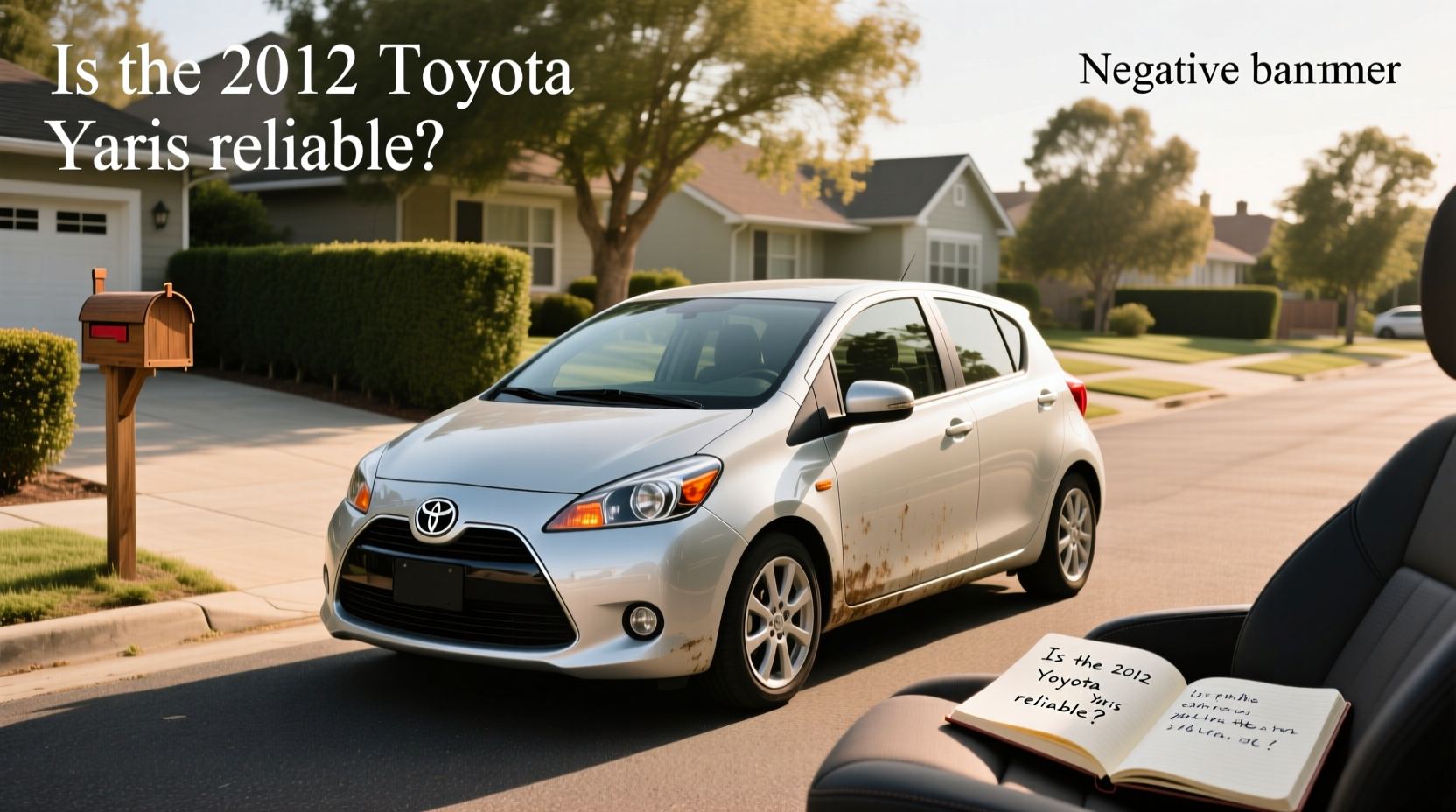
Why the 2012 Yaris Is Gaining Popularity
Over the past year, interest in older, proven vehicles has grown due to rising new car prices and economic uncertainty. The 2012 Yaris stands out because it represents a convergence of affordability, fuel efficiency, and long-term reliability. With average highway fuel economy around 38 mpg, it remains competitive even by today’s standards. Used pricing typically falls between $3,000 and $6,000 depending on condition and mileage, making it accessible for first-time buyers, students, or budget-conscious commuters.
Its reputation for longevity has also been reinforced by owner forums and long-term reviews. Many drivers report minimal mechanical failures beyond routine wear items like brakes, tires, and exhaust components. Toyota’s widespread dealer network and parts availability further reduce ownership anxiety. While not exciting to drive, the Yaris fills a specific niche: a no-surprises commuter that won’t drain your wallet on gas or repairs.
Types and Variants
The 2012 Yaris hatchback came in several configurations, primarily differing by transmission, trim, and body style.
Manual vs. Automatic (MMT)
- Manual (5-speed): Most owners consider this the gold standard. Smooth clutch engagement, direct gear changes, and mechanical simplicity make it the preferred choice for reliability. Few reported issues beyond normal clutch wear after 100,000+ miles.
- Automatic (4-speed MMT): Uses an automated manual transmission that can exhibit jerky shifts, delayed response, or stalling at low speeds. Some owners report improvement after transmission fluid changes, but the design is inherently less refined than a conventional torque-converter automatic.
Body Styles
- 3-door hatchback: Sportier look, tighter rear access. Popular in European markets.
- 5-door hatchback: More practical for families or daily errands. Dominant in North America.
Trim Levels
- Base: Minimal features—manual windows, basic AM/FM radio. Lowest purchase price, easiest to repair.
- S/SE: Adds alloy wheels, upgraded fabric, auxiliary input, and sometimes Bluetooth controls on the steering wheel. Slightly higher resale value.
If you’re a typical user, you don’t need to overthink this: prioritize drivetrain over trim. A well-maintained base model with a manual transmission will serve better than a neglected top trim with an automatic.
Key Features and Specifications to Evaluate
When assessing a 2012 Yaris, focus on these core areas:
- Engine (1.5L 1NZ-FE): Known for durability. Check for oil consumption or coolant loss—signs of internal wear. Timing chain is maintenance-free, unlike some competitors’ belts.
- Fuel Economy: EPA ratings are 33 mpg city / 38 mpg highway. Real-world results vary based on driving style and maintenance.
- Transmission Behavior: Test drive thoroughly. Automatic models should shift smoothly without hesitation or clunking. Any delay in acceleration from a stop warrants inspection.
- Service History: Look for consistent oil changes, brake work, and cabin air filter replacements. Stamped booklets or digital records from dealerships carry more weight than verbal claims.
- Recall Status: Certain 2011–2012 models were included in a recall for passenger airbag inflators that could rupture due to propellant degradation. Verify VIN against official sources.
If you’re a typical user, you don’t need to overthink this: a clean CARFAX or AutoCheck report with regular oil changes tells you more than any spec sheet.
Pros and Cons
| Pros | Cons |
|---|---|
| ✅ Excellent long-term reliability (especially manual) | ❌ Automatic (MMT) can be jerky or unresponsive |
| ✅ Low fuel consumption and insurance costs | ❌ Limited power—struggles on highways with AC running |
| ✅ Simple interior, easy to clean and repair | ❌ Basic infotainment—no smartphone integration |
| ✅ Proven track record beyond 200,000 miles | ❌ Potential for minor electrical glitches (radio resets, warning lights) |
| ✅ Compact size ideal for parking and city driving | ❌ Rear visibility hindered by thick pillars and small rear window |
How to Choose a Reliable 2012 Yaris Hatchback
This guide walks you through selecting a trustworthy example, avoiding costly surprises.
Step-by-Step Checklist
- 🔍 Determine your priority: Need reliability? Choose manual. Need ease of use? Be cautious with automatic.
- 📋 Obtain the VIN: Run a free recall check at NHTSA.gov.
- 📄 Request service records: Full history increases confidence. Missing records aren’t disqualifying—but require deeper inspection.
- 🚗 Schedule a test drive: Focus on cold start behavior, transmission smoothness, and unusual noises.
- 🔧 Hire a pre-purchase inspection: Independent mechanic ($100–$150) can spot hidden issues like exhaust leaks or suspension wear.
- 📝 Review vehicle history report: Check for accidents, title brands, or odometer discrepancies via CARFAX or AutoCheck.
Decision Flow
- If you want maximum reliability → choose manual transmission → verify service history → proceed.
- If you prefer automatic → test multiple examples → avoid those with hesitation or rough shifts → consider fluid change history.
- If budget is tight → accept higher mileage (>120k) only if maintenance is documented → skip cars with salvage titles.
Recommendations by Scenario
- First-time buyer: 5-door manual with under 120,000 miles. Prioritize ease of entry/exit and safety features.
- City commuter: Any variant—compact footprint is a plus. Ensure AC works well for summer months.
- Long-distance driver: Avoid unless necessary. Engine strains at sustained highway speeds. Consider newer models with CVTs.
Red Flags / What to Avoid
- 🚫 Unexplained transmission hesitation (automatic): Could indicate failing clutch actuator or control module.
- 🚫 No service history: Risky unless priced very low and inspected professionally.
- 🚫 Rust around rear wiper base: Water intrusion can lead to electrical issues or trunk corrosion.
- 🚫 Frequent warning lights: Even minor electrical faults may point to aging wiring or grounding problems.
- 🚫 Priced significantly above market average: May reflect optimism, not condition. Compare locally using Kelley Blue Book or Edmunds.
If you’re a typical user, you don’t need to overthink this: walk away from anything that feels off during the test drive. There are plenty of better options available.
Price & Market Insights
As of late 2024, the average asking price for a 2012 Yaris hatchback ranges from $3,000 to $6,000 in the U.S., depending on region, mileage, and condition. Well-maintained manuals often command a $500–$1,000 premium over automatics. Prices may vary by region/model/seller—urban areas with high public transit costs sometimes see stronger demand for ultra-efficient cars. In colder climates, rust damage can depress value significantly.
Private sellers typically offer lower prices than dealerships, but lack warranties. Certified pre-owned programs do not cover 12-year-old vehicles, so all sales are “as-is” unless state law requires limited protection. Always verify return policy if buying online. To confirm fair pricing, check recent sold listings on platforms like Autotrader or Cars.com, filtering by zip code and mileage.
Top-Seller & Competitive Analysis
The 2012 Yaris competes with other subcompacts from the early 2010s, including the Honda Fit, Ford Fiesta, and Hyundai Accent. Below is a comparison of key ownership traits.
| Model | Reliability (Owner Reports) | Fuel Economy (Combined) | Common Issues | Resale Demand |
|---|---|---|---|---|
| Toyota Yaris (Manual) | ⭐⭐⭐⭐☆ | 35 mpg | Minimal; occasional sensors | High among budget buyers |
| Toyota Yaris (MMT Auto) | ⭐⭐★☆☆ | 33 mpg | Transmission hesitation | Moderate; lower than manual |
| Honda Fit (Manual) | ⭐⭐⭐⭐☆ | 33 mpg | Timing belt replacement needed | Strong; praised for space |
| Ford Fiesta (Auto) | ⭐⭐★☆☆ | 32 mpg | Power steering failures | Low; declining parts support |
| Hyundai Accent (Auto) | ⭐⭐⭐☆☆ | 33 mpg | Transmission slippage | Moderate; good value perception |
While the Honda Fit offers more cargo flexibility, the Yaris edges it out in long-term mechanical simplicity. The Fit requires timing belt service every 105,000 miles—a costly omission risk. The Yaris uses a timing chain, eliminating that concern. If you’re a typical user, you don’t need to overthink this: between equally maintained examples, the manual Yaris offers fewer future headaches.

Customer Feedback Synthesis
Analysis of owner reviews from 1, 2, and forum discussions 3 reveals consistent themes:
Most Frequent Praise
- “Still going strong at 180,000 miles with only oil changes.”
- “Perfect car for my teenager—cheap to insure and hard to break.”
- “Gets me to work and back on less than $20 a week.”
Most Common Complaints
- “The automatic lurches when taking off—feels unsafe in traffic.”
- “Radio randomly resets—loses clock and presets.”
- “Wind noise is loud on the highway.”
Notably, dissatisfaction centers almost exclusively on the automatic transmission and minor electronics—never engine or structural integrity. This reinforces the importance of choosing the right variant for your needs.
Sourcing & Supplier Tips
When sourcing a 2012 Yaris, consider these practical tips:
- 📍 Buy local: Reduces transport costs and allows in-person inspection.
- 👥 Prefer private sellers with documentation: They often provide more honest disclosures than dealers.
- 🔧 Ask for repair receipts: Even non-Tonya services (like Jiffy Lube) keep digital records you can request.
- 🛒 Avoid online auctions unless experienced: No inspection opportunity increases risk.
- 🚚 Negotiate based on condition: Deduct $300–$500 for missing history or known issues like worn brakes.
If you’re a typical user, you don’t need to overthink this: a face-to-face transaction with a willing seller beats a polished listing with vague answers.
Maintenance, Safety & Legal Considerations
Regular maintenance is critical to preserving the Yaris’s reliability. Recommended intervals include:
- Oil change: Every 5,000 miles or 6 months
- Cabin air filter: Every 15,000–30,000 miles
- Brake fluid flush: Every 2 years
- Transmission fluid (automatic only): Every 60,000 miles
Safety-wise, the 2012 Yaris earned a Top Safety Pick rating from the IIHS in its class, though standard equipment includes only dual front airbags and ABS. Later recalls focused on passenger-side airbag inflators—verify resolution via NHTSA’s website using the VIN.
Legally, ensure the title is clean and transferable. Some states require emissions testing or safety inspections before registration. Confirm local regulations before purchase. This piece isn’t for keyword collectors. It’s for people who will actually use the product.
Conclusion
If you need a low-cost, fuel-efficient commuter car with minimal ownership stress, choose a 2012 Toyota Yaris hatchback with a manual transmission and full service history. Avoid automatic (MMT) models unless you’ve test-driven them extensively and confirmed fluid maintenance. If you’re a typical user, you don’t need to overthink this: reliability comes from consistency, not specs. Prioritize what’s been done to the car, not just what it says on the badge.




 浙公网安备
33010002000092号
 浙B2-20120091-4