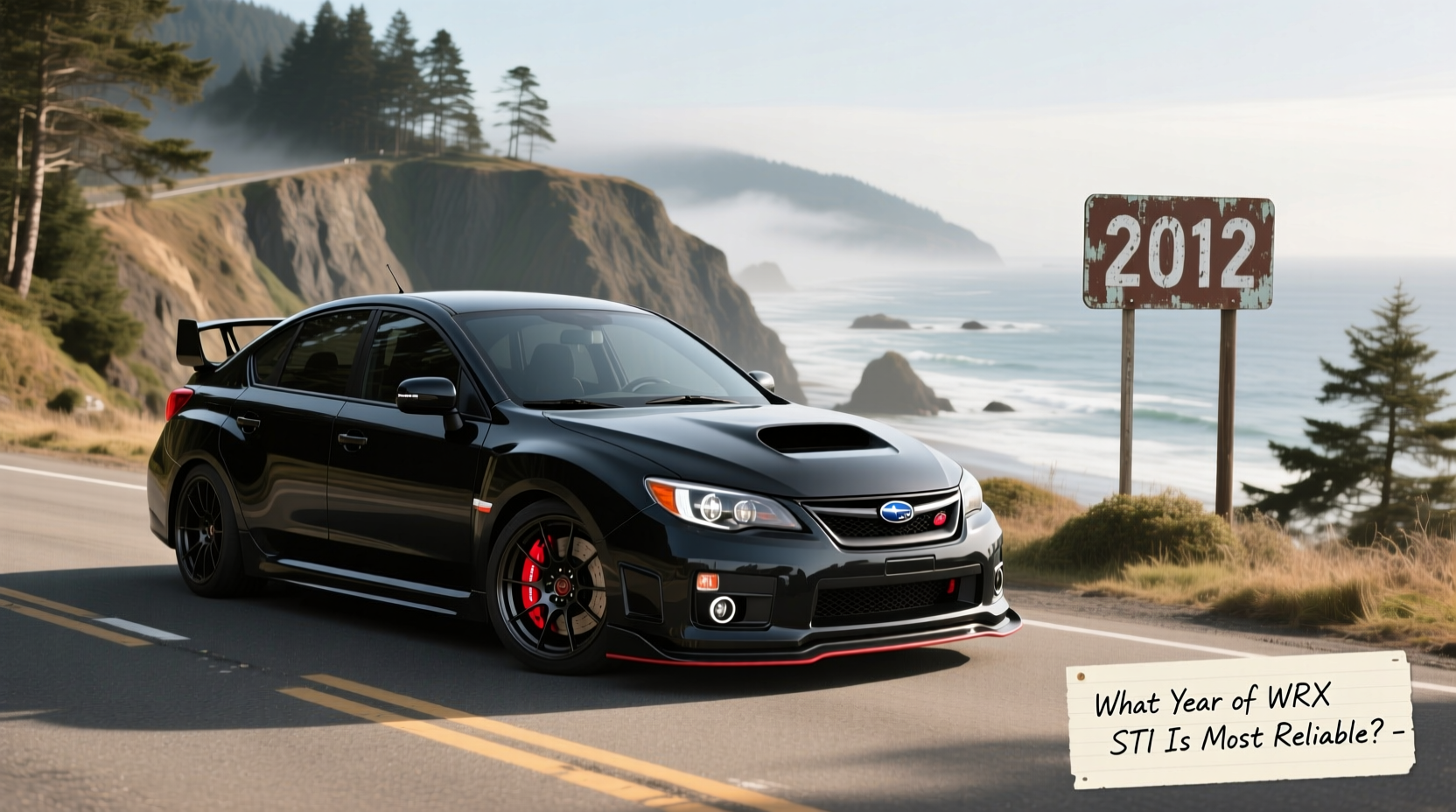
Lately, more enthusiasts are asking: what year of WRX STI is most reliable? If you’re looking at the 2013 Subaru WRX STI hatchback or weighing options across generations, here’s the clear answer: the 2010–2013 models (GR/GV chassis) offer the best balance of driving engagement and improved reliability within the EJ257 engine era. For how to choose a used WRX STI with confidence, focus on three things: engine maintenance history, oil change frequency, and whether the car was driven hard when cold. Avoid any 2.5L model with spotty service records — this is the single biggest risk factor. If you’re a typical user, you don’t need to overthink this.
About the WRX STI
The Subaru Impreza WRX STI has long been a benchmark for accessible performance all-wheel drive sedans and hatchbacks. Known for rally-bred handling, turbocharged power, and driver engagement, it appeals to both weekend track drivers and daily commuters who value control in poor weather. The STI trim sits above the standard WRX, adding a more powerful engine, stiffer suspension, a mechanical limited-slip rear differential, and aggressive styling cues.
Two main engine families define the STI’s reliability story: the EJ-series (used from 2004–2014) and the FA-series (introduced in 2015). Each has distinct strengths and failure modes. The 2013 WRX STI hatchback falls into the final years of the EJ257-powered generation, which benefits from late-cycle refinements but still requires disciplined ownership.

Why the WRX STI Is Gaining Popularity
Over the past year, interest in used performance cars has surged, and the WRX STI remains a top contender. Its reputation for durability — when properly maintained — combined with strong aftermarket support and AWD traction makes it ideal for climates with snow, rain, or twisty roads. Enthusiasts appreciate its analog driving feel compared to newer, heavier, more electronically managed sports sedans.
The 2010–2013 models have gained particular attention because they represent the peak refinement of the EJ platform before Subaru transitioned to the FA24 engine. These years fixed many early 2.5L issues, such as weak piston ringlands and oil consumption, while retaining the raw responsiveness that fans love. If you’re a typical user, you don’t need to overthink this: these years are widely seen as the sweet spot.
Types and Variants
The U.S.-spec WRX STI evolved across three major chassis platforms during its run. Understanding these helps clarify what you’re buying.
2004–2007 GD Chassis (“Hawkeye”)
- Engine: 2.0L EJ207 (import) or 2.5L EJ255 (U.S.)
- Pros: Lighter weight, simpler electronics, strong community knowledge base
- Cons: Lower stock power than later models, older interior tech, harder to find well-maintained examples
2008–2014 GR/GV Chassis (Sedan/Hatchback)
- Engine: 2.5L EJ257
- Pros: More torque, updated suspension, hatchback option (2008–2013), better cooling systems in later years
- Cons: Heavier than GD, prone to ringland/piston failure if misused or poorly maintained
2015–2021 VA Chassis
- Engine: 2.0L FA24F (turbocharged)
- Pros: Newer architecture, improved fuel economy, stronger bottom end, less prone to oiling issues
- Cons: Softer ride, more electronic driver aids, less “raw” feel than earlier STIs
This piece isn’t for keyword collectors. It’s for people who will actually use the product.
Key Features and Specifications to Evaluate
When shopping for a used WRX STI, prioritize mechanical health over cosmetic upgrades. Here’s what matters most:
Engine Condition (EJ257)
The EJ257 engine is robust under proper care but unforgiving of neglect. Key indicators:
- Oil consumption: More than 1 quart per 1,500 miles suggests ringland wear.
- Boost leaks: Hissing sounds or lagging turbo response may indicate cracked intercooler pipes.
- Cold starts: Rough idle or misfires can point to failing injectors or carbon buildup.
When it’s worth caring about: If the car has over 80,000 miles or unclear service history.
When you don’t need to overthink it: If it has full dealer records and no signs of abuse.
Transmission and Drivetrain
The 6-speed manual is generally durable, but aggressive shifting or skipped clutch changes accelerate wear.
- Check for notchy gear engagement, especially into 2nd and 3rd.
- Listen for whining noises under load — could indicate bearing wear.
- Differential fluid should be changed every 30,000 miles.
When it’s worth caring about: On high-mileage cars or those modified for drag launches.
When you don’t need to overthink it: If driven gently and serviced regularly.
Suspension and Brakes
STIs come with performance-tuned components that wear faster than average.
- Inspect strut mounts for cracking — common due to stiff springs.
- Front control arm bushings degrade over time, causing vague steering.
- Brake pads and rotors often need replacement by 30,000 miles.
When it’s worth caring about: If the car was used for track days or spirited driving.
When you don’t need to overthink it: For light daily use with documented upkeep.
Pros and Cons
| Aspect | Pros | Cons |
|---|---|---|
| Driving Experience | Engaging, precise, balanced AWD grip | Firm ride, noisy at highway speeds |
| Reliability (if maintained) | Predictable wear patterns, easy diagnosis | Demanding maintenance schedule |
| Aftermarket Support | Vast selection of parts and tuning options | Too many cheap mods that hurt longevity |
| Fuel Economy | Better than V6 competitors | Real-world MPG often below estimates |
| Resale Value | Holds value well, especially low-mile examples | Market saturation can limit pricing power |
How to Choose a Used WRX STI
Selecting the right WRX STI isn’t about chasing the newest model — it’s about finding one that was cared for. Follow this checklist to minimize risk.
Step-by-Step Checklist
- Verify service history: Look for consistent oil changes (every 3,000–5,000 miles).
- Get a pre-purchase inspection: Use a mechanic familiar with Subarus or Japanese performance cars.
- Review modification logs: Aftermarket tune? Uprev? Verify calibration and datalogs if possible.
- Test drive cold: Avoid hard acceleration until engine reaches operating temperature.
- Scan for stored codes: Even if no check engine light, pull pending codes related to knock sensors or boost control.
Decision Flow
- If budget allows and you want modern tech → 2015+ VA chassis
- If you want classic STI feel with manageable risk → 2010–2013 GR/GV
- If you're on a tight budget and accept higher effort → 2004–2007 GD
- If you plan heavy modifications → Avoid high-mileage EJ257s; consider crate engine swap potential
Recommendations by Scenario
- Daily driver in snowy climate: 2013 WRX STI hatchback — AWD, cargo space, proven winter capability.
- Weekend canyon carver: 2010–2013 sedan — stiffer setup, lighter than VA.
- First performance car: 2015+ STI — more forgiving engine, better safety features.
Red Flags / What to Avoid
- ❌ No service records or gaps longer than 10,000 miles
- ❌ Evidence of track use without supporting maintenance (e.g., no diff/trans fluid changes)
- ❌ Modified tune without supporting hardware (intercooler, fuel system)
- ❌ Signs of water intrusion (mold, rust under carpets) — points to poor storage
- ❌ Price significantly below market average — likely hiding major issues
If you’re a typical user, you don’t need to overthink this: walk away from anything with incomplete maintenance proof.
Price & Market Insights
Prices vary widely based on region, mileage, color, and condition. As of now:
- 2013 WRX STI hatchback: $12,000–$20,000
- 2010–2013 sedan: $10,000–$18,000
- 2015–2018 STI: $18,000–$28,000
These ranges may vary by region/model/seller. High-demand areas (Colorado, Pacific Northwest) often see premiums due to AWD utility. Collector-interest trims (like the 2004 FP Green or 2011 Limited) command higher prices. Always check recent local sales on platforms like CarGurus or Autotrader to gauge fair market value 1.
Top-Seller & Competitive Analysis
The 2013 WRX STI hatchback stands out among EJ257 models for combining practicality with performance. Below is a comparison of key STI generations.
| Model Year | Engine | Reliability Notes | Owner Sentiment |
|---|---|---|---|
| 2004–2007 | EJ255/207 | Simple, durable if maintained | Nostalgic, purist favorite |
| 2008–2009 | EJ257 | Early 2.5L; more failures reported | Mixed — avoid high-stress examples |
| 2010–2013 | EJ257 | Improved cooling, better pistons | Strong consensus on balance |
| 2015+ | FA24F | New design; fewer inherent flaws | Modern, safer, less raw |
The 2010–2013 group consistently scores highest in owner satisfaction for the EJ era. The 2013 hatchback, while slightly rarer, doesn’t differ mechanically from the sedan beyond body style and minor weight distribution.

Customer Feedback Synthesis
Analysis of owner forums and reviews reveals recurring themes:
Highly Praised
- All-weather confidence due to Symmetrical AWD
- Manual transmission precision and clutch feel
- Long-term ownership satisfaction when maintained
- Strong resale value relative to depreciation curve
Frequent Complaints
- High oil consumption in neglected EJ257 engines
- Expensive repairs once major components fail (engine rebuild ~$4k–$7k)
- Interior plastics crack over time
- Limited infotainment and tech in pre-2015 models
One Reddit user noted: “My 2012 STI hit 120k miles with only routine maintenance — zero major issues. But I changed oil every 3,000 miles and never floored it cold.” That discipline separates reliable examples from problem cases 2.
Sourcing & Supplier Tips
Buying a used WRX STI requires careful sourcing. Prioritize:
- Private sellers who are enthusiasts (more likely to maintain properly)
- Dealerships with certified pre-owned programs (may include warranty)
- Online auctions only if accompanied by full inspection reports
Avoid import-only models unless you can verify their compliance and maintenance trail. For U.S. buyers, stick to domestically sold vehicles to ensure compatibility and service access. Always confirm title status — salvage or rebuilt titles drastically reduce resale and insurance options.
Maintenance, Safety & Legal Considerations
STIs demand more frequent maintenance than average sedans:
- Oil changes: every 3,000–5,000 miles using 5W-30 synthetic
- Spark plugs: replace every 30,000 miles
- Differential and transmission fluids: renew every 30,000 miles
- Timing belt (on EJ models): replace every 100,000 miles or 10 years
Safety-wise, pre-2015 models lack modern driver aids like adaptive cruise or lane keep assist. However, the combination of AWD, low center of gravity, and responsive steering contributes to strong real-world crash avoidance.
Legally, modified STIs may face scrutiny during emissions inspections in certain states. If tuned, verify compliance with local regulations. Check manufacturer specs or consult a licensed inspector to confirm legality.
Conclusion
If you need a used performance car with proven all-weather capability and driver engagement, choose the 2010–2013 WRX STI — including the 2013 hatchback variant. It offers the most refined version of the EJ257 engine and avoids the teething issues of earlier 2.5L models. If you’re a typical user, you don’t need to overthink this: reliability hinges almost entirely on maintenance quality, not model year alone. Commit to strict service intervals, avoid cold launches, and source carefully. For a more modern, lower-effort experience, the 2015+ STI with the FA24 engine is objectively more durable — but lacks some of the analog charm.
Everything You Need to Know
The 2010–2013 models are widely regarded as the most reliable within the EJ257 engine series due to improved cooling, stronger internals, and better build quality. The 2015+ models with the FA24 engine are considered even more reliable overall, but represent a different driving experience.
Yes, if well-maintained. The 2013 hatchback uses the mature EJ257 engine and benefits from late-generation updates. Critical factors include regular oil changes, no aggressive cold driving, and documented service history. Neglect is the primary cause of failure.
The most common causes are inadequate oil changes, hard driving before warm-up, and poor tuning on modified cars. The EJ257’s piston ringlands are sensitive to detonation, which occurs when oil isn’t changed frequently or the engine runs lean. This leads to cracked pistons and costly rebuilds.
Yes, if you live in an area with harsh weather or winding roads. It’s practical, safe, and fun. However, expect higher maintenance costs than a regular sedan. Factor in tire, brake, and fluid replacement schedules. If you commit to upkeep, it can be a rewarding long-term vehicle.
Get a pre-purchase inspection by a Subaru-specialist mechanic. Review all service records, scan for hidden codes, test drive cold and hot, and check for oil consumption. Inspect undercarriage for rust and suspension components for wear. Verify title status and ownership history.




 浙公网安备
33010002000092号
 浙B2-20120091-4