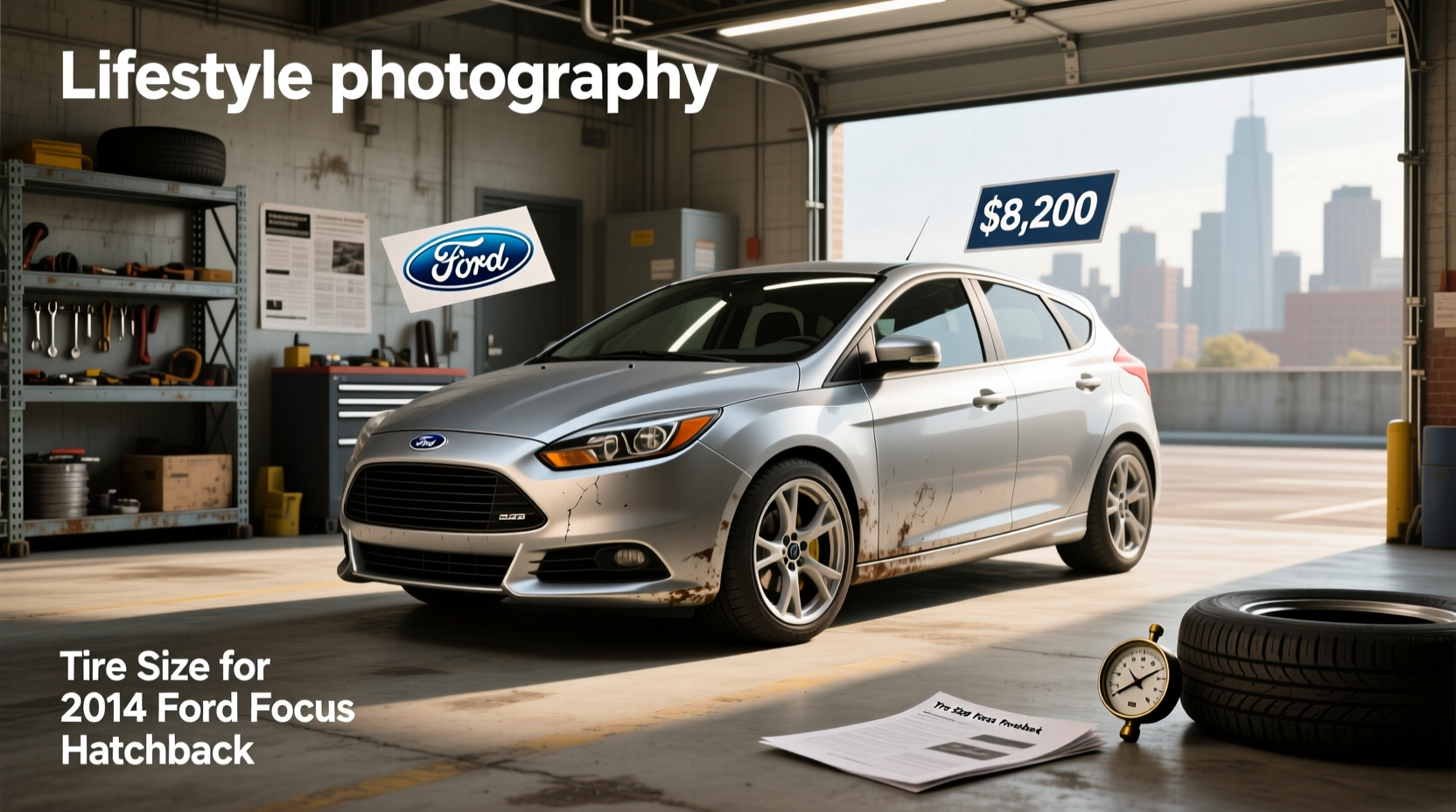
If you’re replacing tires or evaluating a used 2014 Ford Focus hatchback, start by confirming your trim-specific tire size—common options include 195/65R15 (S), 215/55R16 or 215/50R17 (SE), and 235/40R18 (ST). How to choose the right replacement? Match OEM specs first, then consider driving needs. Over the past year, more owners have reported transmission concerns affecting resale value, making mechanical history as critical as tread depth when assessing worth.
If you’re a typical user, you don’t need to overthink this. Stick with factory-recommended sizes unless upgrading wheels intentionally. Avoid mismatched load ratings or non-XL tires on ST models. For valuation, focus on documented maintenance and avoid automatic-transmission variants unless verified repaired.
About the 2014 Ford Focus Hatchback
The 2014 Ford Focus hatchback was offered in multiple trims: S, SE, Titanium, and performance-oriented ST. Each came with distinct wheel and tire configurations. The base S trim typically had smaller 15-inch wheels with 195/65R15 tires, prioritizing fuel efficiency. Mid-level SE and Titanium models often featured 16- or 17-inch wheels with wider 215-series tires, balancing comfort and handling. The ST model shipped standard with aggressive 235/40R18 rubber on 18-inch rims, tuned for sportier response.
This generation introduced the controversial DPS6 dual-clutch automatic transmission, which has since become a key factor in ownership cost and resale appeal. While manual versions remain more reliable, many used buyers now scrutinize service records closely before purchase.
Why This Matters Now
Lately, demand for compact used hatchbacks has risen due to higher new vehicle prices and improved long-term ownership data. However, recent forum discussions and repair reports highlight persistent reliability questions around the 2014 Focus’s transmission and electronic systems. As these cars age past 10 years, tire availability and accurate valuation are becoming harder for average buyers to navigate without context.
Additionally, some OE tire models are being phased out, pushing owners toward compatible alternatives. That makes understanding specifications—not just brand names—more important than ever. If you’re a typical user, you don’t need to overthink this: use your door jamb sticker as the primary reference, not online guesswork.
Types and Variants
S Trim – 195/65R15
Economical and lightweight, ideal for city driving and maximizing fuel economy. These tires offer a softer ride but less grip in wet conditions.
- ✅ Pros: Lower cost, better mileage, quiet operation
- ❌ Cons: Narrow footprint reduces cornering stability; fewer modern all-season options available
SE Trim – 215/55R16 or 215/50R17
A balanced setup across most SE models. The R16 version favors comfort; the R17 offers sharper steering feel at the expense of slightly firmer ride quality.
- ✅ Pros: Wider selection of current tire models, better wet traction
- ❌ Cons: R17 may increase road noise; slight drop in MPG
Titanium Trim – 215/50R17 or 235/40R18 (with Handling Package)
Upscale trim with optional sport suspension and larger wheels. The 235/40R18 requires XL (extra load) rating due to lower sidewall and higher speed capability.
- ✅ Pros: Premium appearance, enhanced cornering control
- ❌ Cons: Expensive replacements; vulnerable to pothole damage
ST Trim – 235/40R18
Performance-focused fitment. Wide tread and low profile deliver strong grip but require careful inflation management and regular rotation.
- ✅ Pros: High lateral grip, responsive feedback
- ❌ Cons: Harsh ride on rough roads; limited snow capability even with all-season compounds
Key Features and Specifications to Evaluate
When selecting tires or assessing value, verify:
- Tire Size: Always cross-check with the driver’s side door jamb label
- Load Index & Speed Rating: ST models require 95Y XL—don’t downgrade
- Trim-Specific Fitments: Appearance packages or SFE (Smart Fuel Efficiency) can alter stock sizes
- Mechanical Condition: Especially transmission behavior in automatics
- Service History: Clutch or TCM replacements should be documented
If you’re a typical user, you don’t need to overthink this. Matching OEM specs ensures compatibility and safety. Deviating without proper offset and clearance checks risks rubbing or ABS errors.
Pros and Cons
| Aspect | Pros | Cons |
|---|---|---|
| Fuel Efficiency | High in base trims with small wheels | Drops significantly with larger wheels |
| Tire Availability | Common sizes still widely stocked | Niche sizes (e.g., 195/65R15) shrinking |
| Handling | ST and Titanium offer sharp dynamics | Firm ride with 17+ inch wheels |
| Ownership Cost | Inexpensive parts for basic repairs | DPS6 transmission failures costly to fix |
| Resale Value | Manual ST models hold value better | Automatics depreciate faster due to stigma |
How to Choose Tires and Assess Value
This piece isn’t for keyword collectors. It’s for people who will actually use the product.
Step-by-Step Checklist
- Locate the tire information placard on the driver’s door edge
- Confirm exact size, load index, and speed rating
- Inspect current wear pattern—uneven wear suggests alignment or inflation issues
- Determine driving priorities: comfort vs. performance vs. longevity
- Check VIN for open recalls via NHTSA.gov1
- Review maintenance records, especially for transmission work
- Use KBB or Edmunds to estimate value using actual trim and mileage2
Decision Flow
- If keeping stock wheels → Match OEM size exactly
- If upgrading wheels → Consult fitment guide for offset and diameter limits
- If buying used → Prioritize manual transmission and full service history
- If budget-constrained → Focus on S or SE trims with known maintenance
Recommendations by Scenario
- Daily commuter: All-season touring tire in OEM size (e.g., 215/55R16)
- Cold climate driver: Consider dedicated winter tires if using 215/50R17 or smaller
- Enthusiast (ST): Summer or high-performance all-season with XL rating
- Low-mileage collector: Preserve original equipment; avoid modifications
Red Flags / What to Avoid
- Unexplained hesitation or jerking during acceleration (DPS6 failure sign)
- Tires with mismatched sizes or missing XL rating on ST/Titanium
- Vehicles with unverified transmission repairs
- Prices significantly below market average—may indicate hidden issues
- Aftermarket wheels with incorrect bolt pattern (5x10⁸) or offset
Price & Market Insights
Tire prices for the 2014 Focus vary widely by size and brand. Base 195/65R15 models may see sets under $400, while 235/40R18 performance tires can exceed $800. Regional availability affects pricing—larger metro areas tend to have more competitive quotes.
Vehicle values also fluctuate. A well-maintained ST with manual transmission might fetch $9,000–$12,000 in strong markets, while an automatic SE with 150k miles may sell privately for $3,500–$5,000. Values may vary by region/model/seller. Always verify local listings and adjust expectations accordingly.
If you’re a typical user, you don’t need to overthink this. Use tools like CarMax historical medians or private sale comps to benchmark fairness3.
Top-Seller & Competitive Analysis
Popular tire brands for this platform include Continental, Michelin, Goodyear, and Cooper. Here's how they compare:
| Brand | Best For | Average Lifespan | Cost Range (Set) |
|---|---|---|---|
| Continental ProContact | OEM replacement, comfort | 50k–60k miles | $450–$600 |
| Michelin Defender T&H | Longevity, wet safety | 70k+ miles | $600–$750 |
| Goodyear Assurance | Balanced performance | 55k–65k miles | $500–$650 |
| Cooper CS5 Ultra Touring | Value alternative | 50k miles | $400–$550 |
No single brand dominates across all trims. Choose based on priority: lifespan, noise reduction, or grip. Availability may vary by retailer.
Customer Feedback Synthesis
Based on forum threads and review aggregators:
- Most Frequent Praise: Crisp handling (especially ST), good fuel economy with manual, spacious hatchback cargo area
- Top Complaints: DPS6 shuddering at low speeds, premature rear door latch failure, radio malfunctions, poor resale value for automatics
- Owner Advice Repeatedly Shared: “Avoid the automatic unless it’s been fixed,” “rotate tires every 5k miles,” “replace motor mounts early if vibration starts”
If you’re a typical user, you don’t need to overthink this. Real-world feedback confirms that mechanical reliability outweighs cosmetic condition in long-term satisfaction.
Sourcing & Supplier Tips
When buying tires:
- Purchase from retailers offering free mounting and road hazard protection
- Verify return policy—some allow test drives within 30 days
- Consider buying full sets from reputable online vendors with local install partners
- Double-check SKU against your exact size—typos happen
For vehicles:
- Request a pre-purchase inspection from an independent mechanic
- Run the VIN through NHTSA to confirm recall completion
- Ask for oil change and clutch service records if applicable
Suppliers may vary by region. Always confirm warranty terms before finalizing.
Maintenance, Safety & Legal Considerations
Keep tire pressure monitored monthly—low pressure accelerates wear and hurts fuel economy. Rotate every 5,000–7,000 miles to extend life, especially on front-wheel-drive models.
Ensure any replacement tires meet or exceed OEM load and speed ratings. Using undersized or non-XL tires on ST models violates safety standards and may affect insurance claims after accidents.
To verify compliance: check manufacturer specs, consult DOT guidelines indirectly via tire sidewall codes, and ensure alignment is performed after wheel changes.
Conclusion
If you need reliable daily transport and want minimal hassle, choose a manual-transmission 2014 Focus SE or S trim with documented maintenance and OEM-sized tires. If you're seeking spirited driving and accept higher upkeep risk, a well-documented ST with proper tire care can still deliver fun. For tire replacement, stick to factory specs unless you’ve validated a custom fitment. If you’re a typical user, you don’t need to overthink this.
Everything You Need to Know
What tire size does my 2014 Ford Focus hatchback take?
Check the driver’s side door jamb sticker. Common sizes: 195/65R15 (S), 215/55R16 or 215/50R17 (SE), 215/50R17 or 235/40R18 (Titanium/ST). Never rely solely on VIN lookup tools—they may not reflect optional packages.
Is the 2014 Ford Focus hatchback reliable?
Manual versions are generally dependable. Automatic models with the DPS6 transmission have widespread reliability issues including shuddering and failure. Many owners report problems between 60k–100k miles. Always get a mechanical inspection before purchase.
How much is a 2014 Ford Focus hatchback worth today?
Values range from $3,000 (high-mileage base model) to $12,000+ (low-mileage ST). Factors include trim, transmission, condition, and location. Use KBB or Edmunds with your specific details for a realistic estimate. Manual STs retain value best.
Can I put different sized tires on my 2014 Focus?
You can, within limits. Stay within 3% diameter change to avoid speedometer and ABS errors. Ensure no rubbing occurs during full suspension compression. When it’s worth caring about: upgrading for aesthetics or performance. When you don’t need to overthink it: routine replacement—just match the OEM size.
Are there recalls on the 2014 Ford Focus?
Yes. Multiple recalls related to transmission control, fuel system, and door latches. Enter your VIN at NHTSA.gov to check if all were completed. Never buy one without verifying this step.




 浙公网安备
33010002000092号
 浙B2-20120091-4