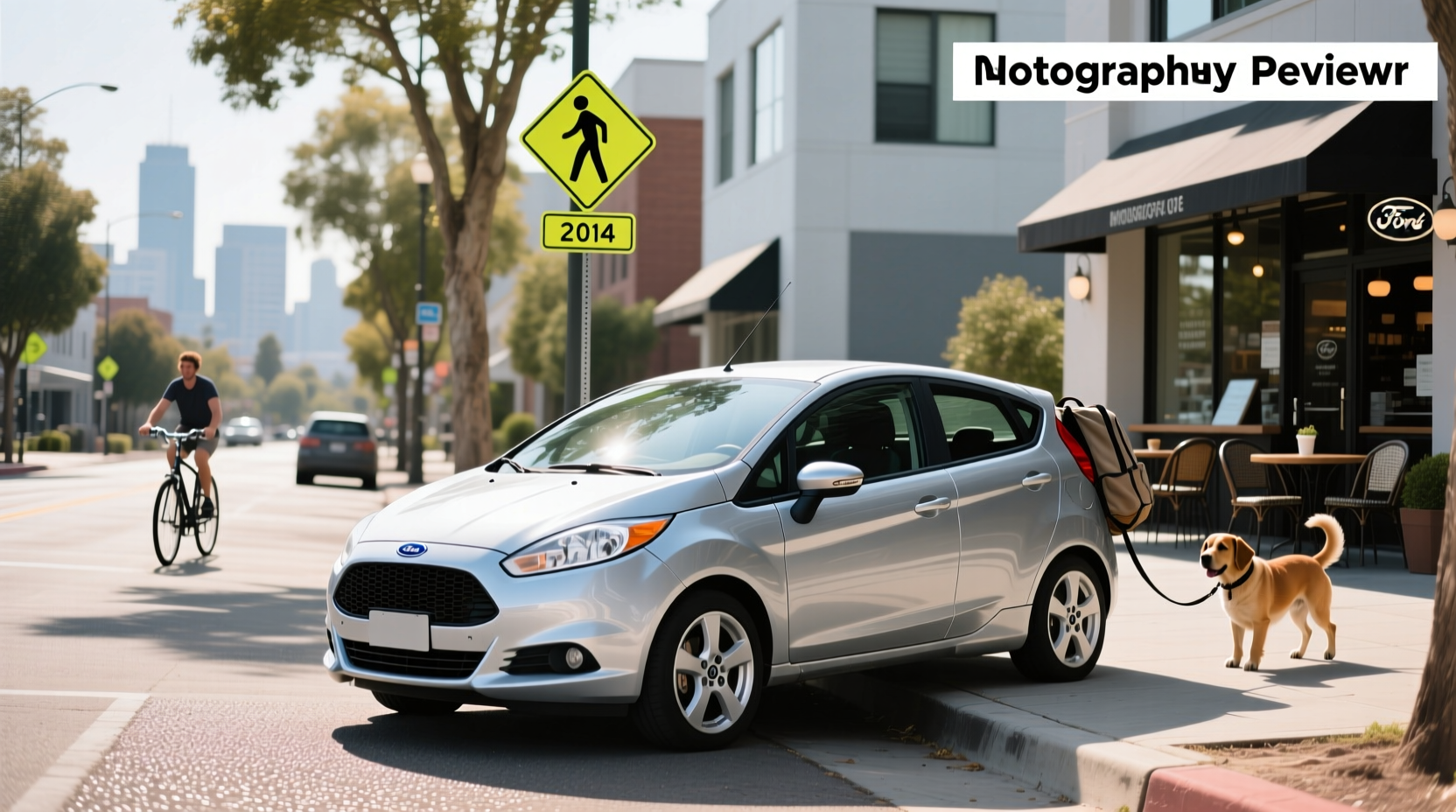
If you’re looking for an affordable, fun-to-drive hatchback with strong fuel economy, the 2014 Ford Fiesta may fit your needs—but only if you avoid the PowerShift automatic transmission. How to choose a reliable used subcompact? Prioritize manual transmission models, especially for daily commuting or city driving. The main risk isn’t age or mileage—it’s the dual-clutch automatic (DCT), which has a well-documented history of shuddering, delayed engagement, and costly repairs 1. If you’re a typical user, you don’t need to overthink this: go manual, inspect thoroughly, and skip high-mileage ST trims unless track use is confirmed.
Lately, demand for compact, low-cost commuter cars has risen due to fuel price volatility and urban parking constraints. Over the past year, used subcompacts like the Fiesta have gained visibility in online marketplaces—not because they’ve improved, but because economic pressure pushes buyers toward smaller, cheaper options. This piece isn’t for keyword collectors. It’s for people who will actually use the product.
About the 2014 Ford Fiesta
The 2014 Ford Fiesta is a subcompact car available as both a sedan and hatchback, though the five-door hatchback remains the more popular body style. It was part of Ford’s global B-car platform, designed with European engineering influence to improve handling and driver engagement compared to earlier American econoboxes. Two engine options were offered: a 1.6L naturally aspirated four-cylinder and a turbocharged 1.6L EcoBoost in the performance-oriented ST trim.
Inside, the cabin stood out for its time with soft-touch materials, a driver-focused dashboard, and Ford’s SYNC infotainment system, which supported Bluetooth, USB, and voice commands—advanced features for its class in 2014. Seating is configured for four to five passengers, though rear legroom is tight. Trunk space is modest at 10 cubic feet, expandable with fold-down rear seats.
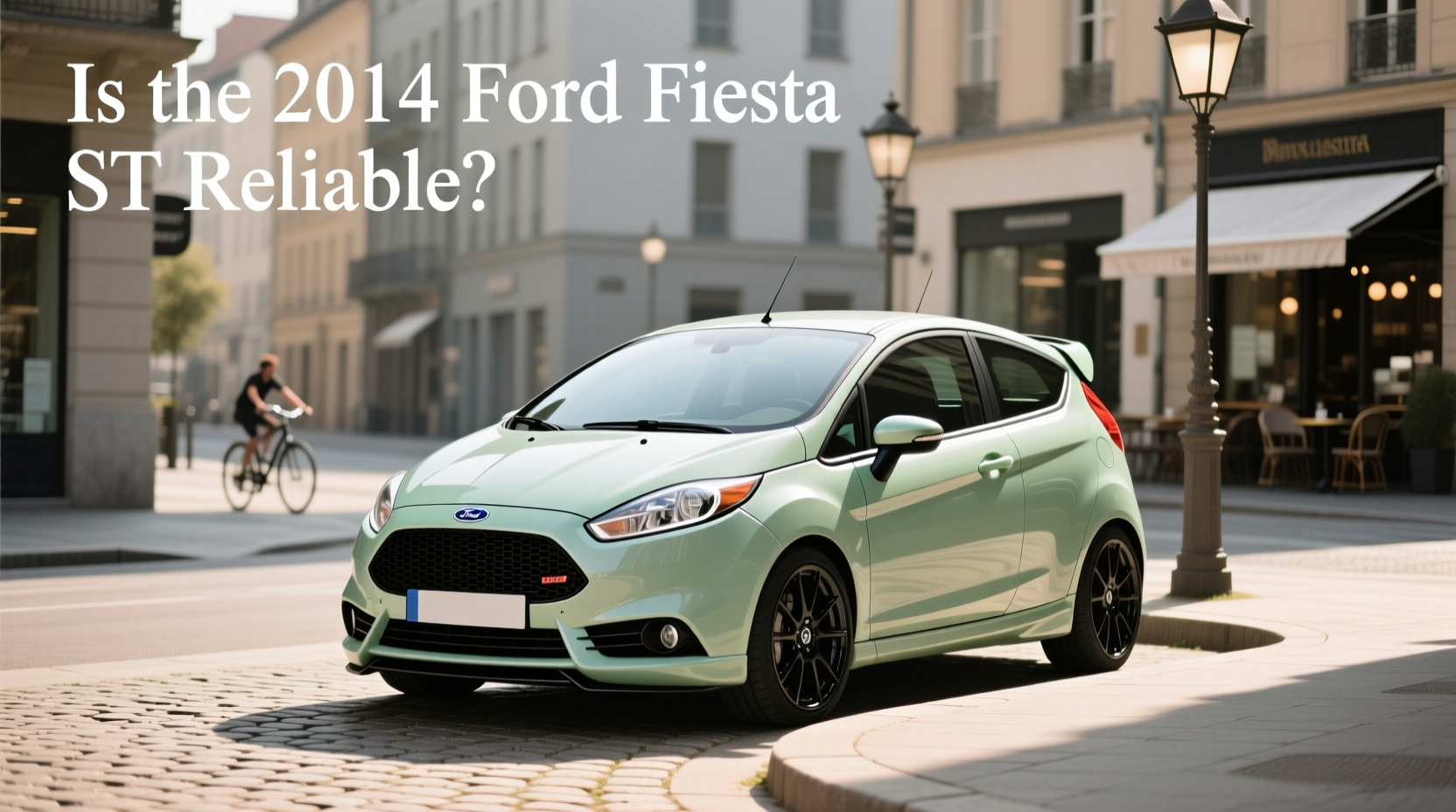
Why the 2014 Fiesta Is Gaining Attention
Recently, the 2014 Fiesta has reappeared in buyer discussions not due to renewed acclaim, but because it now sits within a sweet spot for budget-conscious shoppers: old enough to be inexpensive, new enough to include basic tech and safety features. Its appeal lies in three areas: driving dynamics, fuel efficiency, and relative build quality compared to rivals like the Toyota Yaris or Honda Fit of the same era 2.
What makes it stand out isn’t raw performance, but how it feels on winding roads. The steering is responsive, the chassis balanced, and the ride firm without being harsh—qualities often missing in budget vehicles. If you’re a typical user, you don’t need to overthink this: if you enjoy driving even short distances, the Fiesta offers more engagement than most competitors.
Types and Variants
The 2014 Fiesta came in several trims: S, SE, SEL, and the high-performance ST. Each serves a different purpose.
Fiesta S / SE / SEL (1.6L NA)
- Pros: Lower purchase price, simpler maintenance, better long-term reliability (especially with manual transmission).
- Cons: Underpowered acceleration (0–60 mph in ~9 seconds), limited tech in base S trim.
Fiesta ST (1.6L Turbo EcoBoost)
- Pros: 197 hp output, sport-tuned suspension, limited-slip differential, aggressive styling.
- Cons: Engine cooling issues during spirited driving, higher insurance costs, increased wear on brakes and tires.
When it’s worth caring about: If you live in a hilly area or plan to drive aggressively, the ST’s cooling system limitations matter. When you don’t need to overthink it: For flat-terrain commuting, even the ST is manageable with regular coolant checks.
Key Features and Specifications to Evaluate
Don’t get distracted by cosmetic upgrades. Focus on these core specs:
- Transmission type: 5-speed manual or 6-speed PowerShift dual-clutch automatic.
- Engine: 1.6L I4 (120 hp) or 1.6L Turbo I4 (197 hp in ST).
- Fuel economy: Up to 27 mpg city / 37 mpg highway (manual); automatic versions slightly lower.
- Safety: Standard ABS, stability control, front airbags. Optional side and curtain airbags in SEL trim.
- Tech: SYNC with MyFord Touch (prone to lag), available backup camera in later 2014 models.
When it’s worth caring about: Fuel economy differences between manual and automatic are minor—don’t let mpg alone sway your choice. When you don’t need to overthink it: SYNC works fine for calls and music, but avoid relying on touch-screen responsiveness.
Pros and Cons
| Category | Advantages | Drawbacks |
|---|---|---|
| Driving Experience | Engaging steering, nimble handling, fun-to-drive feel | Stiff ride on rough pavement |
| Interior Quality | Better materials than most subcompacts of its time | Cheap plastic persists in door panels and lower dash |
| Fuel Efficiency | Strong highway economy, especially with manual | Real-world city driving often falls short of EPA estimates |
| Reliability | Manual transmission models generally trouble-free | PowerShift DCT prone to shuddering, error codes, failure |
| Rear Seat Space | Hatchback allows flexible cargo-passenger balance | Legroom inadequate for adults beyond short trips |
How to Choose a 2014 Ford Fiesta: A Practical Guide
Buying one today requires strategy, not just budgeting. Follow this checklist to reduce risk.
Step-by-Step Checklist
- Confirm transmission type: Avoid PowerShift automatic unless fully documented service history exists.
- Inspect for transmission behavior: Test drive cold and warm; watch for hesitation, jerking, or delay when accelerating from stop.
- Check ST cooling components: Verify radiator, fan operation, and coolant condition—especially if previous owner tracked the car.
- Review maintenance records: Look for timing belt (if applicable), fluid changes, and clutch replacement (for manuals).
- Scan for stored codes: Use OBD2 scanner to detect intermittent transmission faults not visible during test drive.
Decision Flow
- You want low cost + reliability → Choose manual transmission S or SE trim.
- You want sporty driving + accept higher risk → Choose ST with manual, verified cooling system health.
- You need automatic convenience → Walk away or prepare for potential $2,500+ transmission repair.
Recommendations by Scenario
- City commuter: SE hatchback, manual, under 100k miles.
- First car for teen: SEL sedan with optional safety packages, manual preferred.
- Weekend fun car: ST with documented service history, upgraded intercooler recommended.
Red Flags / What to Avoid
- Any automatic model without complete service records.
- Vehicles modified with aftermarket tuners or exhaust (increases stress on ST engine).
- Clutch pedal feel that’s spongy or inconsistent (sign of hydraulic leak or worn master cylinder).
- SYNC system freezing repeatedly during test drive (indicates module degradation).
If you’re a typical user, you don’t need to overthink this: mechanical simplicity beats convenience when long-term ownership costs are factored in.
Price & Market Insights
As of 2024, prices range from $2,500 to $6,000 depending on trim, transmission, condition, and location. Manual transmission models typically command $500–$1,000 less than automatics despite being more reliable—a market inefficiency driven by consumer preference for convenience. ST models sit at the upper end, especially those with low mileage or performance modifications.
Pricing may vary by region/model/seller. Always verify vehicle history via Carfax or similar, and confirm local title status. In colder climates, rust inspection is essential—check wheel wells and undercarriage.
Top-Seller & Competitive Analysis
The 2014 Fiesta competes directly with the Honda Fit, Toyota Yaris, and Chevrolet Sonic. While all serve the subcompact role, their priorities differ.
| Model | Strengths | Weaknesses |
|---|---|---|
| 2014 Ford Fiesta | Best handling, engaging drive, upscale interior | PowerShift DCT unreliable, ST runs hot |
| 2014 Honda Fit | Durable engine, massive interior flexibility, high resale | Bland driving experience, basic interior materials |
| 2014 Toyota Yaris | Proven reliability, low repair frequency | Underpowered, outdated tech, poor crash scores |
| 2014 Chevrolet Sonic | Spacious cabin, standard turbo option, smooth ride | Early MyLink system bugs, soft resale curve |
When it’s worth caring about: If you value driving engagement over bulletproof reliability, the Fiesta wins. When you don’t need to overthink it: For pure longevity with minimal fuss, the Yaris or Fit remain safer bets.
Customer Feedback Synthesis
Analysis of owner reviews from KBB, Edmunds, and CNET reveals consistent patterns 3.
Most frequent praise:
- “Fun to drive” appears in over half of positive reviews.
- Interior design and material quality frequently described as “surprisingly nice.”
- Fuel economy meets expectations in mixed driving.
Most common complaints:
- PowerShift transmission issues dominate negative feedback: “shudders at low speed,” “won’t accelerate from stop,” “replaced at 60k miles.”
- ST owners report overheating warnings during summer driving or uphill climbs.
- Rear seat discomfort noted for passengers over 5'6".
If you’re a typical user, you don’t need to overthink this: real-world satisfaction splits sharply along transmission lines—manual owners are generally happy; automatic owners often regret their choice.
Sourcing & Supplier Tips
Private sellers often offer better pricing than dealerships, but lack warranties. When sourcing:
- Purchase from individual owners who maintained service logs.
- Avoid salvage-title vehicles—even if repaired, structural concerns remain.
- Consider certified pre-owned (CPO) programs only if transmission is manual and coverage includes powertrain.
- Negotiate based on known risks: cite PowerShift repair costs as leverage.
Verify return policy if buying online. Check manufacturer specs for original equipment details—aftermarket wheels or suspensions can mask underlying issues.
Maintenance, Safety & Legal Considerations
Regular maintenance is critical, especially for high-mileage examples. Key intervals:
- Oil changes every 5,000–7,500 miles (synthetic recommended).
- Transmission fluid: change every 60,000 miles (manual); PowerShift fluid interval often ignored—ask for proof.
- Timing belt: check if equipped (some 1.6L models use chain); replace per manufacturer schedule if belt-driven.
Safety-wise, the 2014 Fiesta earned a 4-star overall NHTSA rating, with lower marks in side-impact tests. It lacks modern driver aids like lane keep or automatic braking. Confirm local inspection requirements—some states require emissions testing for vehicles under 25 years old.
This piece isn’t for keyword collectors. It’s for people who will actually use the product.
Conclusion: Who Should Buy It?
If you need a compact, economical car with genuine driving enjoyment and can commit to a manual transmission, the 2014 Ford Fiesta is a compelling option. If you prioritize hassle-free ownership and dependability above all, look to the Honda Fit or Toyota Yaris instead. The decision hinges not on brand loyalty or styling, but on willingness to manage known mechanical risks.
Everything You Need to Know
Manual transmission models up to 120,000 miles can be reliable with proper maintenance. Automatic (PowerShift) models show increasing failure rates beyond 80,000 miles. Always inspect service history and perform a pre-purchase inspection focused on transmission behavior.
Yes, under sustained load—such as highway climbing or aggressive driving—the ST’s cooling system can struggle, triggering limp mode. Aftermarket intercoolers and upgraded radiators help mitigate this. Avoid track use unless modifications are confirmed.
Repairs are possible but often exceed $2,500. Rebuilt units exist, but longevity varies. Some owners convert to manual, though this is costly and complex. Prevention—choosing manual upfront—is far more economical.
The Fit offers superior practicality and long-term reliability. The Fiesta delivers better handling and a more engaging drive. Choose Fit for durability and cargo flexibility; choose Fiesta (manual) for driving pleasure.
Yes, most mechanical and body parts remain available through Ford dealers and aftermarket suppliers. However, discontinuation means some electronics (like SYNC modules) may require used replacements. Check availability before purchase if known issues exist.




 浙公网安备
33010002000092号
 浙B2-20120091-4