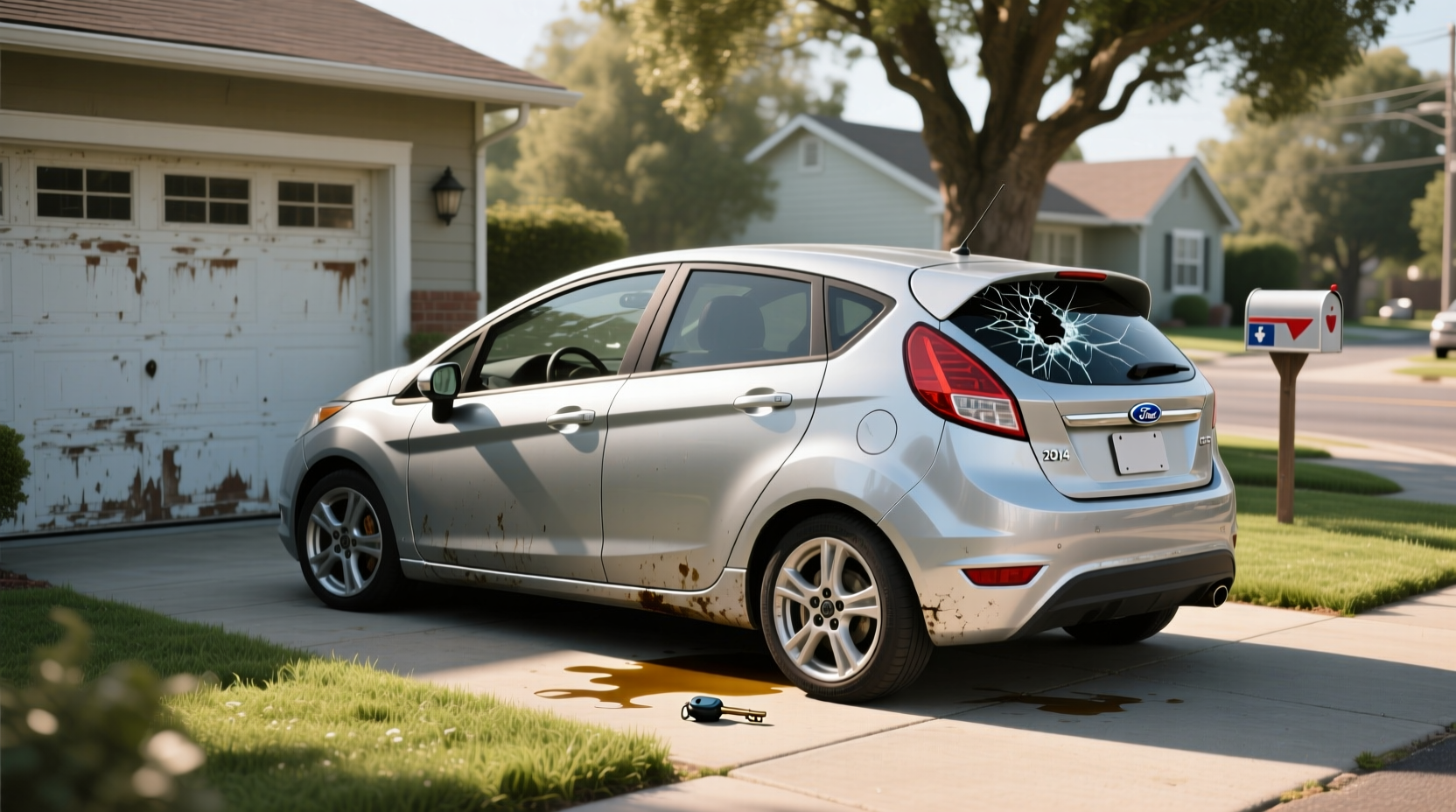
If you’re looking at a used 2014 Ford Fiesta hatchback, here’s the quick verdict: manual transmission models are significantly more reliable than automatics. The key issue? The Powershift dual-clutch automatic transmission is prone to shuddering, hesitation, and early failure—especially in city driving. If you need an affordable commuter car with good fuel economy and sharp handling, a well-maintained manual 2014 Fiesta can still be a practical choice. But how to choose a reliable one? Focus on full service history, confirm no unresolved recall work, and always get a pre-purchase inspection. Avoid automatic versions unless repair records for the transmission are complete and recent.
Over the past year, interest in compact used cars has risen due to high new vehicle prices and insurance costs. The 2014 Fiesta fits this trend—but its reputation is mixed. While many owners report trouble-free use, others face expensive repairs tied to known design flaws. This guide cuts through the noise, highlighting what actually matters when evaluating a 2014 Fiesta.
If you’re a typical user, you don’t need to overthink this. Most common problems are avoidable with documentation checks and mechanical verification.
About the 2014 Ford Fiesta Hatchback
The 2014 Ford Fiesta is a subcompact hatchback available in both standard and ST performance trims. It was marketed as a fuel-efficient, agile urban car with European-inspired driving dynamics. Base models came with a 1.6L naturally aspirated four-cylinder engine producing 120 horsepower, paired to either a 5-speed manual or the problematic 6-speed Powershift automated manual transmission. The Fiesta ST, introduced the same year, featured a turbocharged 1.6L EcoBoost engine and sport-tuned suspension.
Ford positioned the Fiesta as a youthful, tech-savvy option with available SYNC infotainment, Bluetooth connectivity, and modern styling. In its time, it competed with the Honda Fit, Toyota Yaris, and Chevrolet Sonic. While praised for its responsive steering and compact footprint, long-term reliability became a concern due to specific component failures—not general build quality.
Why the 2014 Fiesta Is Gaining Attention
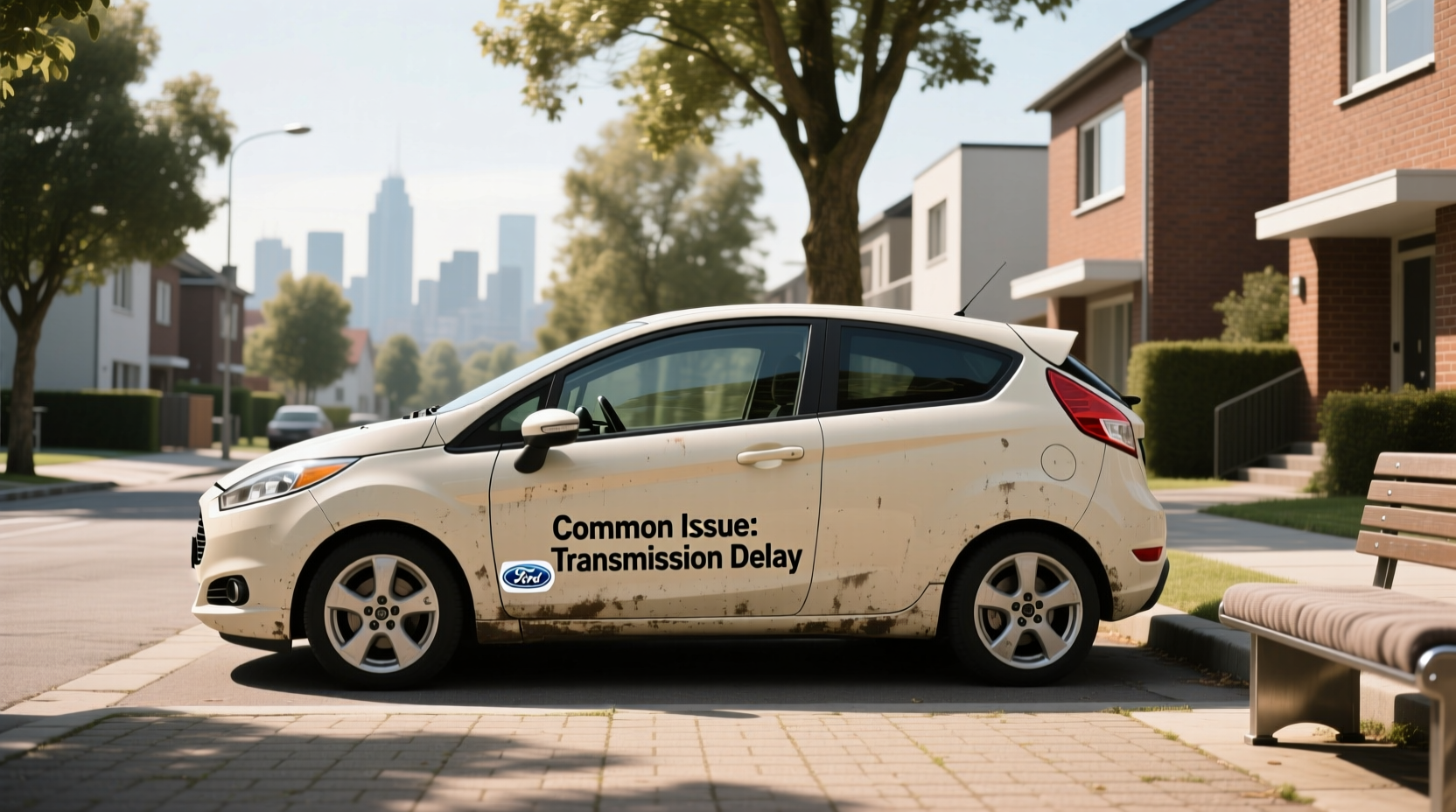
Lately, the 2014 Fiesta has re-entered the used car conversation not because of renewed popularity, but due to increased cost sensitivity among buyers. With average used car prices remaining elevated, shoppers are digging deeper into older models with lower price tags. The Fiesta often appears in searches under $6,000, making it tempting for budget-focused drivers, first-time car owners, or those needing a short-term commuter.
However, this renewed visibility comes with risk. Many listings omit critical mechanical history, especially regarding the Powershift transmission. Recent owner forums and mechanic advisories show growing frustration around unexpected repair bills—some exceeding $3,000 for transmission replacement. That contrast—low upfront cost versus potential high repair expense—has made the 2014 Fiesta a case study in trade-off evaluation.
If you’re a typical user, you don’t need to overthink this. The core decision isn’t about brand loyalty or styling—it’s whether the transmission type aligns with your risk tolerance.
Types and Variants
The 2014 Fiesta came in several trim levels and two major powertrain configurations. Understanding these differences is essential for assessing reliability and ownership cost.
1. Standard Fiesta (1.6L Naturally Aspirated)
- Transmission: 5-speed manual (reliable) or 6-speed Powershift automatic (high risk)
- Horsepower: 120 hp
- Fuel Economy: 29 mpg city / 39 mpg highway (manual); 27/37 (automatic)
Pros: Proven engine design, low maintenance needs, widely supported parts.
Cons: Automatic version carries significant transmission risk; limited power for highway merging.
2. Fiesta ST (Turbocharged 1.6L EcoBoost)
- Engine: 1.6L turbocharged inline-4
- Horsepower: 197 hp
- Transmission: 6-speed manual only
- Fuel Economy: 25 mpg city / 34 mpg highway
Pros: High-performance tuning, engaging drive, no Powershift issues.
Cons: Higher maintenance demands; potential for cracked cylinder heads in certain production batches; requires strict timing belt (wet belt) service every 60,000 miles.
This piece isn’t for keyword collectors. It’s for people who will actually use the product.
Key Features and Specifications to Evaluate
When reviewing a 2014 Fiesta, prioritize systems with known failure patterns. Don’t assume all components age equally—some define ownership experience.
Powershift Transmission (Automatic Models Only)
When it’s worth caring about: If the car has over 60,000 miles, has been driven mostly in stop-and-go traffic, or lacks documented transmission fluid changes.
When you don’t need to overthink it: If the car is manual-transmission-only or if the automatic has full dealer service records showing proactive maintenance.
Symptoms of failure include jerking during low-speed acceleration, delayed gear engagement, and warning lights like “Check Engine” or “Powertrain Fault.”
Water Pump and Cooling System
The water pump is mechanically driven and integrated with the timing belt on non-turbo models. Failure can lead to overheating and engine damage.
Worth checking: At or beyond 80,000 miles, especially if timing belt hasn’t been replaced.
Not urgent: If recently serviced with OEM-quality parts.
Door Latch Mechanism
Ford issued multiple safety recalls (NHTSA Campaign Numbers 12V-357, 13V-129) for faulty front and rear door latches that could disengage while driving.
Action step: Use the VIN to check NHTSA’s recall lookup tool1 to confirm repairs were completed.
Throttle Body and Electrical Systems
Carbon buildup in the throttle body can cause rough idling or stalling. Some models report SYNC system glitches or failing audio control modules.
Worth addressing: If the car exhibits hesitation or electronic resets.
Low priority: If symptoms haven’t appeared and mileage is moderate.
Pros and Cons
| Pros | Cons |
|---|---|
| ✅ Excellent fuel economy (especially manual) | ❌ Powershift transmission unreliable in automatic models |
| ✅ Nimble handling and tight turning radius | ❌ Water pump failure common at higher mileage |
| ✅ Low purchase price in used market | ❌ Door latch recalls require VIN verification |
| ✅ ST model offers strong performance for class | ❌ EcoBoost engines need strict maintenance schedule |
| ✅ Compact size ideal for parking and city driving | ❌ Limited cabin space and trunk capacity |
How to Buy a Reliable 2014 Ford Fiesta
Buying a 2014 Fiesta isn’t about avoiding all risks—it’s about managing them intelligently. Follow this checklist to reduce surprise costs.
Step-by-Step Checklist
- Confirm transmission type. Manual = lower risk. Automatic = demand full service history.
- Run the VIN through NHTSA’s database. Verify all recalls—especially door latches—were completed.
- Obtain maintenance records. Look for timing belt, water pump, and transmission service (if applicable).
- Schedule a pre-purchase inspection. Have a trusted mechanic test-drive and scan for stored codes.
- Test drive in real conditions. Pay attention to gear shifts (if automatic), idle smoothness, and warning lights.
Decision Flow
- If you want an automatic: Walk away unless the seller provides proof of recent Powershift servicing or replacement.
- If you’re open to manual: Proceed with inspection, focusing on clutch wear and engine responsiveness.
- If considering the ST model: Verify wet belt service history and ask about any overheating incidents.
Recommendations by Scenario
- First-time buyer on a tight budget: Choose a manual-transmission Fiesta with under 90,000 miles and clean history.
- Urban commuter needing automatic: Consider other models (e.g., Toyota Corolla, Honda Civic). The 2014 Fiesta automatic isn’t worth the gamble.
- Enthusiast seeking fun driving: The Fiesta ST (manual only) remains a capable performer—if maintained properly.
Red Flags / What to Avoid
- 🚗 No service records — especially for timing or transmission work
- ⚠️ Shuddering at low speeds — classic sign of failing Powershift
- 🔧 “As-is” sale with no inspection allowed — never skip a third-party check
- 📢 Vague descriptions like “mechanically sound” without evidence
- 🚪 Unverified recall status — safety-critical for door latches
If you’re a typical user, you don’t need to overthink this. A clean manual model under $6,000 is usable. An automatic at any price requires expert validation.
Price & Market Insights
As of 2024, average asking prices for a 2014 Fiesta range from $3,500 to $6,500 depending on condition, mileage, location, and transmission type. Manual models typically list $500–$1,000 below comparable automatics—an irony given their superior reliability. Prices may vary by region/model/seller, especially in markets where small cars remain popular.
Despite low pricing, total cost of ownership can spike if major repairs arise. Transmission replacement on automatic models averages $2,500–$3,500. Water pump and timing belt jobs run $600–$900. Always factor in potential repairs when budgeting.
| Trim/Model | Avg. Price Range | High-Risk Components | Recommended Action |
|---|---|---|---|
| Fiesta S (Manual) | $3,500 – $5,000 | Water pump, throttle body | Inspect service history, verify recalls |
| Fiesta SE (Automatic) | $4,000 – $6,500 | Powershift transmission, door latches | Avoid unless fully documented |
| Fiesta ST | $5,000 – $7,500 | Wet belt, cracked cylinder head | Confirm timing service, check for coolant leaks |
Customer Feedback Synthesis
Analysis of owner reviews from sources like KBB 2 and Reddit threads 3 reveals a polarized experience:
- Positive themes: “Great on gas,” “easy to park,” “fun to drive,” “simple interior, easy to clean.”
- Common complaints: “Transmission died at 58,000 miles,” “door popped open on highway,” “water pump failed twice,” “SYNC screen freezes randomly.”
Owners of manual-transmission models report far fewer issues. Those who avoided the automatic and kept up with maintenance describe the Fiesta as dependable for daily use.
Maintenance, Safety & Legal Considerations
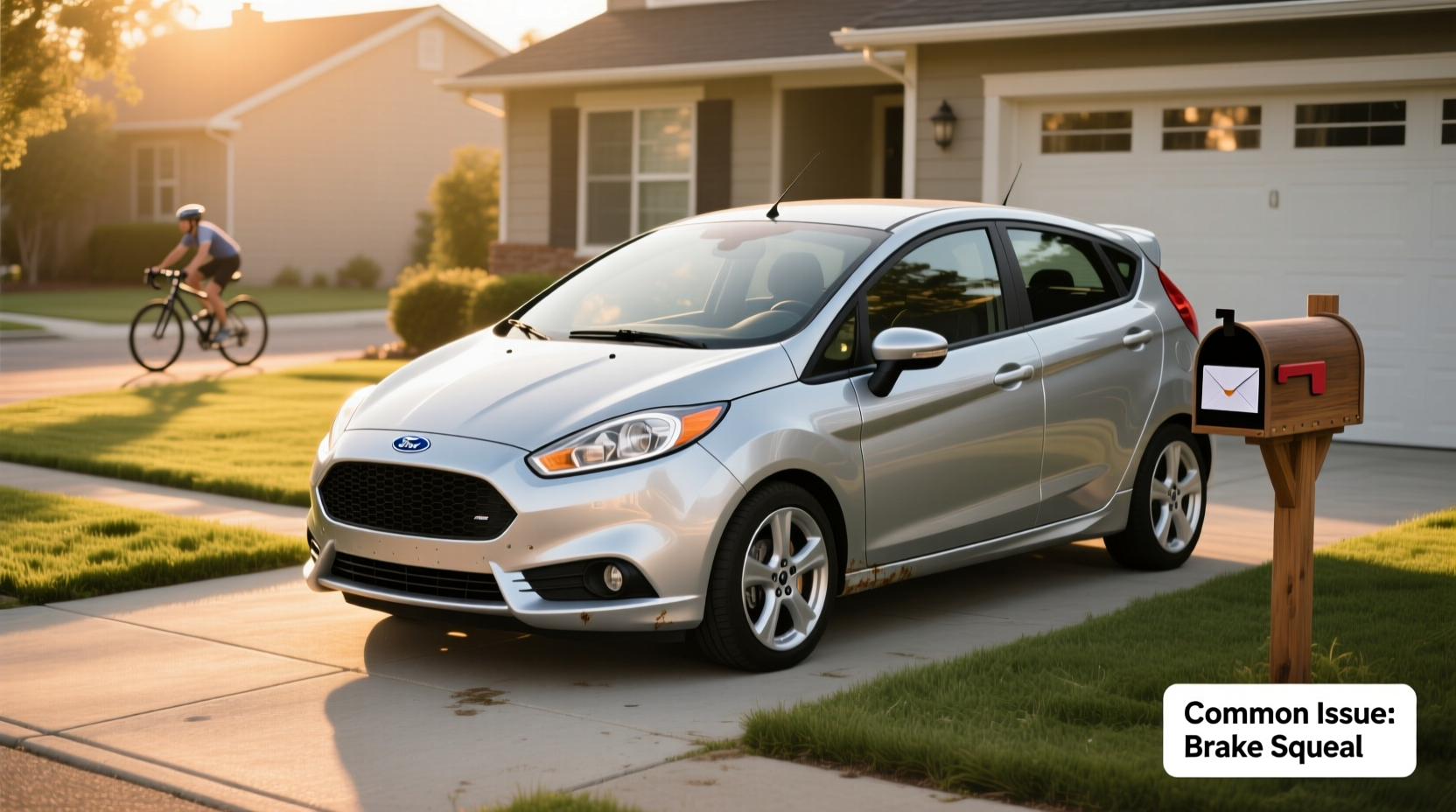
Regular maintenance is non-negotiable for long-term reliability. Key intervals:
- Every 60,000 miles: Timing belt, water pump, thermostat (interference engine—failure can destroy motor).
- Every 60,000 miles (EcoBoost): Wet belt service, coolant flush, spark plugs.
- As needed: Throttle body cleaning, blower motor resistor replacement (common failure point).
Safety-wise, ensure all factory recalls have been addressed. Unrepaired door latch issues pose a serious risk. While no federal mandates require sellers to fix recalls on used cars, dealers typically must complete them before resale. Private sellers may not. Always verify independently via VIN.
Local regulations may affect emissions testing eligibility or registration requirements for older vehicles—check with your DMV or transport authority.
Conclusion
If you need an inexpensive, fuel-efficient hatchback and are willing to drive a manual, a well-documented 2014 Ford Fiesta can serve reliably. If you require an automatic transmission, look elsewhere. The Powershift system’s track record doesn’t justify the risk, regardless of price. Maintenance history and recall compliance matter more than mileage alone.
If you’re a typical user, you don’t need to overthink this. Prioritize transparency over convenience, and insist on proof of care.
Everything You Need to Know
What is the most common problem with a 2014 Ford Fiesta?
The most common and serious issue is the Powershift dual-clutch automatic transmission, known for shuddering, hesitation, and premature failure. Manual transmission models do not share this defect and are significantly more reliable.
How can I tell if a 2014 Fiesta’s transmission is failing?
Signs include jerking during low-speed acceleration, delays when shifting from neutral, grinding noises, or warning lights such as “Check Engine” or “Powertrain Fault.” A professional diagnostic scan can reveal stored fault codes related to clutch wear or actuator failure.
Are there any recalls on the 2014 Ford Fiesta?
Yes. Multiple recalls affect door latch mechanisms (NHTSA campaigns 12V-357, 13V-129), which could allow doors to open while driving. Use your VIN to check completion status at NHTSA.gov/recalls1.
Is the 2014 Fiesta ST reliable?
The ST avoids the Powershift issue (it only comes with a manual transmission), but early EcoBoost engines carry a risk of cracked cylinder heads and require strict maintenance. If the wet belt and coolant system have been serviced regularly, the ST can be a durable performance choice.
What should I pay for a 2014 Ford Fiesta?
Expect to pay $3,500–$6,500 depending on condition and transmission. Manual models should be priced lower than automatics. Never pay premium prices for an automatic without verified transmission health.




 浙公网安备
33010002000092号
 浙B2-20120091-4