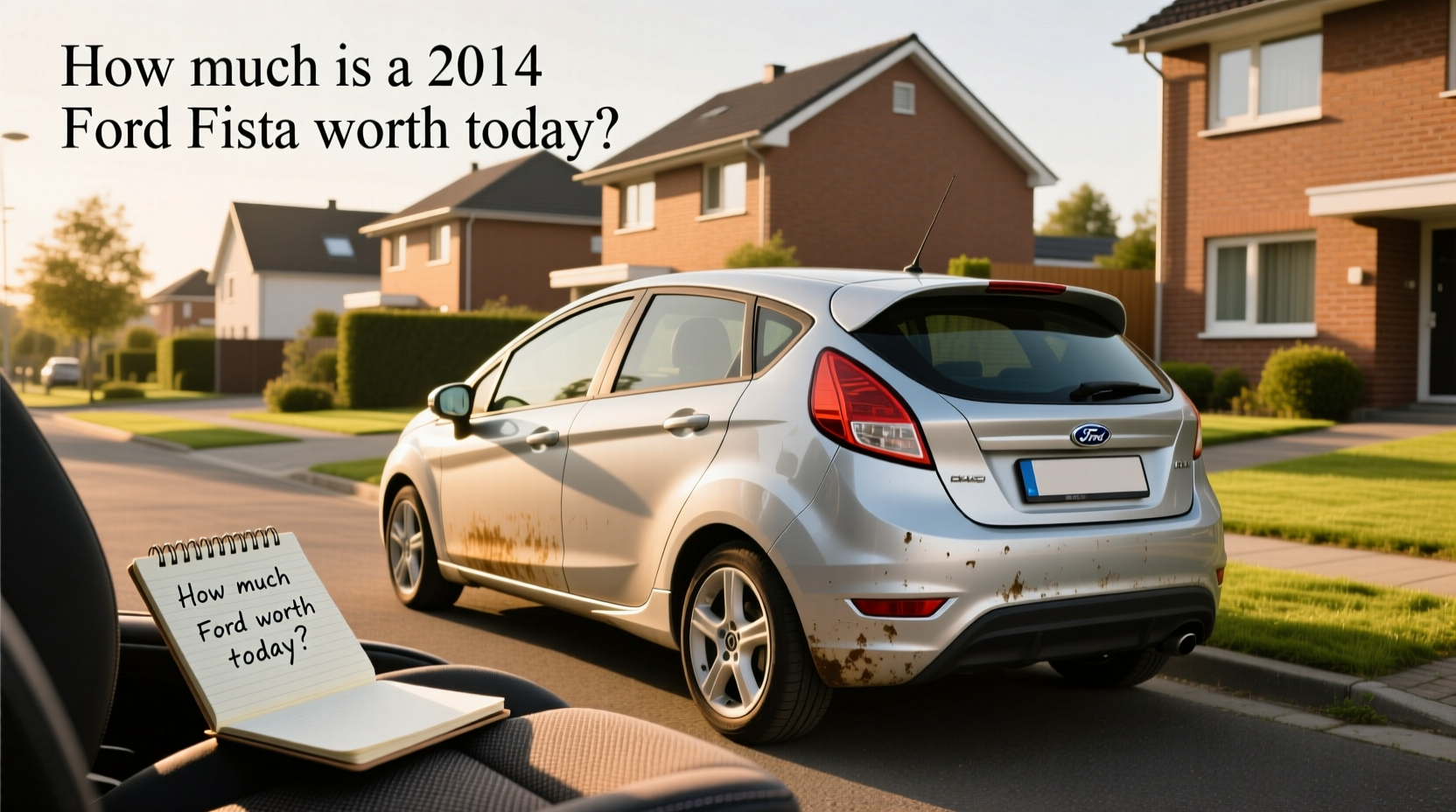
If you’re looking at a used 2014 Ford Fiesta, here’s what matters: trim level, mileage under 100,000 miles, and engine type. The S or SE hatchback with a 1.6L I4 may be worth $1,200–$3,000 in fair condition, while the ST or Titanium with the 1.0L EcoBoost can reach $5,000–$8,000 if well-maintained. If you’re a typical user, you don’t need to overthink this. Focus on service history and signs of rust—especially in northern climates. What to look for in a 2014 hatchback? Prioritize low-mileage EcoBoost models and avoid salvage titles. Over the past year, compact hatchbacks have seen stable demand due to fuel efficiency and urban maneuverability, making now a reasonable time to buy or sell.
About the 2014 Ford Fiesta Hatchback
The 2014 Ford Fiesta is a subcompact hatchback offered in both 3-door and 5-door configurations. It was marketed as an affordable, efficient city car with surprisingly engaging driving dynamics—especially in the performance-oriented ST trim. Available in multiple trims (S, SE, SEL, Titanium, and ST), it catered to budget buyers and enthusiasts alike. The base model came with a 1.6L four-cylinder engine, while higher trims introduced the turbocharged 1.0L EcoBoost three-cylinder—an engine praised for its responsiveness despite small displacement.
Ford equipped the Fiesta with standard features like air conditioning, power windows, and a USB port even in lower trims. Optional SYNC infotainment improved connectivity, though early versions had mixed reliability reports. Safety features included stability control, front airbags, and available side and curtain airbags. While not class-leading in crash tests, it performed adequately for its segment.
Why the 2014 Ford Fiesta Is Gaining Popularity Again
Lately, there's been renewed interest in older, reliable hatchbacks as urban drivers seek economical transportation amid rising fuel and insurance costs. The 2014 Fiesta fits that niche perfectly. Its tight turning radius, light steering, and compact footprint make it ideal for parking in dense areas. Additionally, parts are widely available and inexpensive compared to European rivals.
The ST variant has also gained cult status among entry-level performance fans. With 197 horsepower from its 2.0L turbocharged engine, it offers spirited acceleration and sharp handling—making it a sleeper in the hot hatch category. Enthusiast forums and social media groups have helped sustain demand, especially for clean examples.
This piece isn’t for keyword collectors. It’s for people who will actually use the product.
Types and Variants
The 2014 Fiesta came in several trims and body styles. Here’s a breakdown:
S Trim (Base Model)
- Pros: Lowest purchase price, simple mechanics, easy to repair
- Cons: Basic interior, no advanced tech, underpowered 1.6L engine
When it’s worth caring about: If you need a temporary commuter car on a strict budget.
When you don’t need to overthink it: If you plan to drive it long-term—upgrade to at least SE for better comfort.
SE and SEL Trims
- Pros: Added features like keyless entry, upgraded audio, optional navigation
- Cons: Minimal mechanical improvements over S trim
When it’s worth caring about: When comparing models with and without SYNC or alloy wheels.
When you don’t need to overthink it: Feature differences are mostly cosmetic—don’t pay extra unless you’ll use them.
Titanium Trim
- Pros: Leather seats, dual-zone climate control, rearview camera, EcoBoost engine option
- Cons: Higher depreciation, more electronics prone to failure
When it’s worth caring about: If you want premium feel without stepping into luxury brands.
When you don’t need to overthink it: The added cost rarely pays off in resale—only choose if you value daily comfort.
ST Performance Trim
- Pros: Turbocharged 2.0L engine, sport-tuned suspension, aggressive styling
- Cons: Firmer ride, higher insurance rates, steeper maintenance costs
When it’s worth caring about: For drivers who enjoy spirited backroad driving.
When you don’t need to overthink it: Daily commuters won’t benefit from the extra power—stick to EcoBoost sedans instead.
Key Features and Specifications to Evaluate
When assessing a 2014 Fiesta, focus on these five elements:
Engine Type
- 1.6L I4: Reliable but sluggish; common in S/SE trims
- 1.0L EcoBoost: Turbocharged three-cylinder; punchy and efficient
- 2.0L I4 (ST): High-output turbo; requires attentive maintenance
When it’s worth caring about: EcoBoost and ST engines hold value better.
When you don’t need to overthink it: Base 1.6L is fine for short commutes—if it runs well.
Mileage
Ideally under 100,000 miles. Above that, expect potential transmission wear, especially in automatics. Check service records for timing belt changes (if applicable) and oil change frequency.
When it’s worth caring about: High-mileage cars below $3,000 often become money pits.
When you don’t need to overthink it: Under 90k miles with full history? You’re likely safe.
Transmission
Most 2014 Fiestas have either a 5-speed manual or Powershift dual-clutch automatic—a known weak point. The Powershift can shudder during shifts and fail prematurely.
When it’s worth caring about: Avoid Powershift unless rebuilt or under warranty.
When you don’t need to overthink it: Manual transmission models are simpler and more durable.
Condition and Rust
Inspect wheel wells, door bottoms, and undercarriage—common rust zones in snowy regions. Interior wear is expected, but torn seats or malfunctioning HVAC reduce usability.
When it’s worth caring about: Structural rust affects safety and legality.
When you don’t need to overthink it: Surface rust can be treated—just factor in repair cost.
Service History
Full documentation increases trust. Look for regular oil changes, brake replacements, and recalls addressed (e.g., fuel line issues in some early 2014 batches).
When it’s worth caring about: Missing history raises red flags—assume worst-case maintenance.
When you don’t need to overthink it: If recent major services were done, minor gaps matter less.
Pros and Cons
✅ Pros: Fuel-efficient, easy to park, low insurance, fun-to-drive (especially ST), affordable parts
❗ Cons: Outdated tech, cramped rear seat, Powershift transmission risks, limited cargo space, soft resale after 10 years
How to Evaluate a 2014 Ford Fiesta: A Step-by-Step Guide
If you’re a typical user, you don’t need to overthink this. Follow these steps to make a confident decision.
Step-by-Step Checklist
- Verify VIN through Carfax or AutoCheck for accidents or title branding
- Inspect for rust, especially in northern U.S. or Canadian markets 📍
- Test drive with emphasis on transmission smoothness 🔧
- Request maintenance records—look for consistency 📋
- Compare pricing using KBB, Edmunds, or local listings 📊
- Have a pre-purchase inspection by an independent mechanic 🧰
Decision Flow
- Need cheap transportation? → Consider S/SE trim with manual transmission
- Want modern features? → Skip this model—tech is outdated
- Enjoy driving? → Prioritize ST trim with documented care
- Budget under $3,000? → Accept higher risk; insist on recent service
Recommendations by Scenario
- First-time buyer: SE hatchback, under 90k miles, manual, $2,500–$3,500
- City commuter: Titanium with EcoBoost, low mileage, $4,000–$5,500
- Enthusiast: ST model, full service history, $5,000–$7,500
Red Flags / What to Avoid
- Powershift automatic with jerky shifting ⚙️
- Salvage or flood title ❗
- No service history and high mileage (>120k) 🔍
- Rust near frame rails or suspension mounts 📍
- VIN mismatch or missing maintenance stamps 📝
Price & Market Insights
Value varies significantly by region, trim, and condition. In the U.S., trade-in values range from $1,000 (low-end S) to $5,000+ (well-kept ST). Retail prices may go up to $8,000 for rare, low-mileage examples. Kelley Blue Book 1 and Edmunds 2 provide appraisal tools based on ZIP code and condition.
In Europe, prices differ further. UK listings show 2014 Fiestas from £2,000 ($2,500) to £5,000 ($6,300), depending on engine and spec. German and Italian markets via AutoScout24 3 list similar ranges, with diesel variants slightly cheaper due to declining diesel demand.
If you’re a typical user, you don’t need to overthink this. Use online tools, adjust for local conditions, and compare nearby listings.

Top-Seller & Competitive Analysis
The 2014 Fiesta competes with other subcompact hatchbacks like the Honda Fit, Toyota Yaris, and Chevrolet Sonic. Below is a comparison:
| Model | Average Resale (USD) | Fuel Economy (MPG) | Reliability | Driving Experience |
|---|---|---|---|---|
| 2014 Ford Fiesta | $2,500–$5,000 | 29 city / 39 hwy | Mixed (Powershift concern) | Engaging (especially ST) |
| 2014 Honda Fit | $4,000–$6,500 | 33 city / 40 hwy | High | Practical, less sporty |
| 2014 Toyota Yaris | $3,000–$5,200 | 33 city / 41 hwy | High | Smooth, unexciting |
| 2014 Chevrolet Sonic | $2,000–$4,000 | 26 city / 35 hwy | Average | Decent, heavier feel |
Note: Prices may vary by region/model/seller. Always verify with local sources.
Customer Feedback Synthesis
Based on aggregated owner reviews from J.D. Power 4 and consumer forums:
Common Praises
- Fun to drive, especially ST version
- Fuel economy meets expectations
- Compact size aids city navigation
- Parts are affordable and widely available
Common Complaints
- Powershift transmission issues (shuddering, hesitation)
- Interior plastics feel cheap
- SYNC system lags or freezes
- Rear visibility hindered by thick pillars
Sourcing & Supplier Tips
Private sellers often offer better prices than dealers, but lack warranties. Certified pre-owned programs are expired for 2014 models, so all sales are “as-is.”
- Check Facebook Marketplace, Craigslist, or local classifieds for deals
- Use Autotrader UK 5 or AutoUncle Italy 6 for international comparisons
- Negotiate based on KBB Fair Purchase Price, not asking price
- Avoid online-only auctions unless you can inspect in person
Maintenance, Safety & Legal Considerations
Routine maintenance includes oil changes every 5,000–7,500 miles, brake inspections, and tire rotation. The 1.0L EcoBoost benefits from synthetic oil. Timing belt replacement (if equipped) should occur around 100,000 miles—verify with service records.
Safety-wise, the 2014 Fiesta earned a 4-star overall rating from NHTSA. It lacks modern driver aids like lane keep assist or automatic emergency braking. Confirm that airbags and ABS function during test drive.
Legally, ensure the title is clean and registration is transferable. Emissions testing requirements vary by state—check local rules before purchase. This piece isn’t for keyword collectors. It’s for people who will actually use the product.
Conclusion
If you need a low-cost, fuel-efficient city car and plan to keep it under three years, a 2014 Ford Fiesta in good condition—with manual transmission and low mileage—is a reasonable choice. If you're drawn to its sporty image, the ST trim delivers real driving excitement. But if you prioritize long-term reliability or tech features, consider newer models or more dependable brands. If you’re a typical user, you don’t need to overthink this. Focus on what the car does today, not what it promised a decade ago.




 浙公网安备
33010002000092号
 浙B2-20120091-4