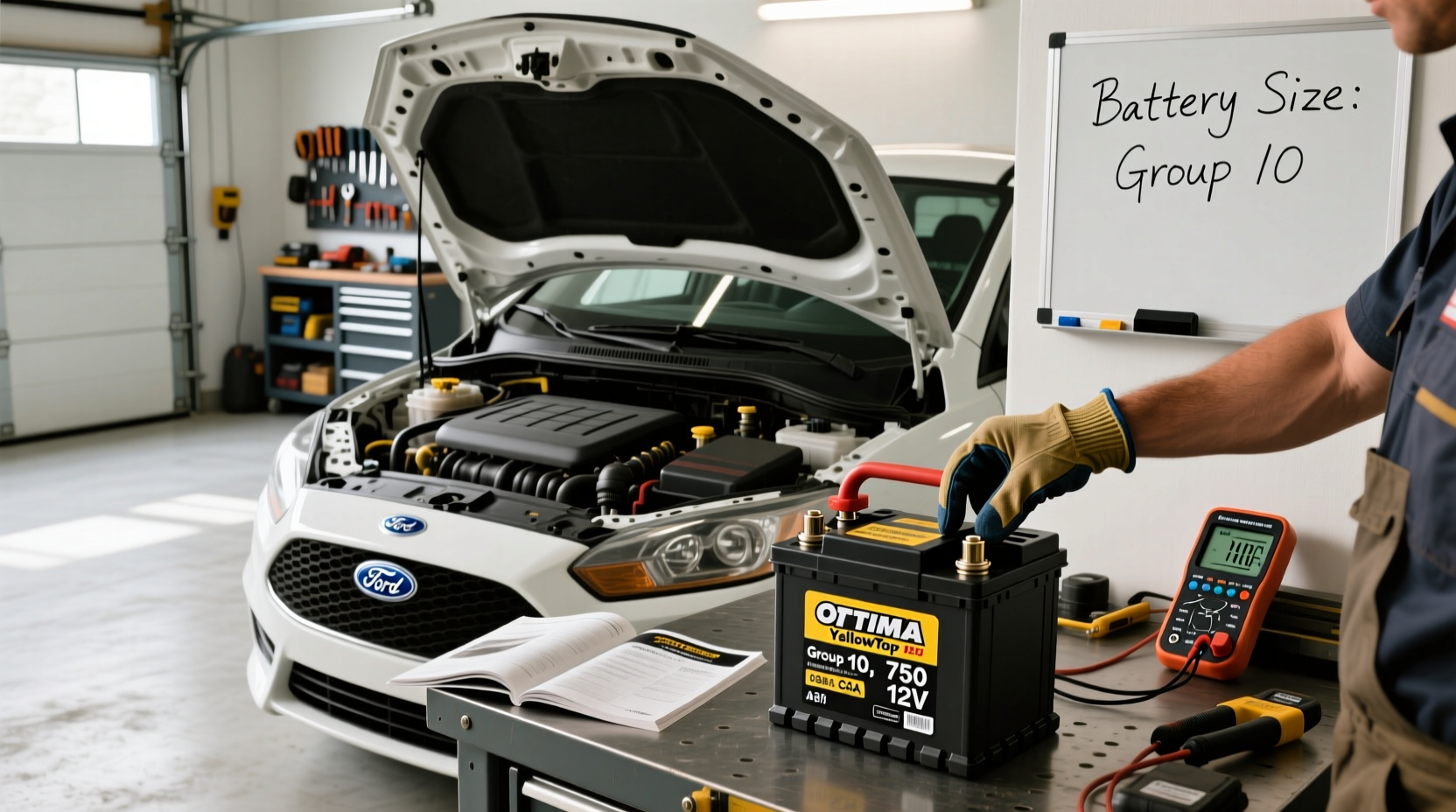
About the 2014 Ford Focus Car Battery
The battery in a 2014 Ford Focus powers the starter motor, ignition system, and all onboard electronics—from headlights and infotainment to advanced driver-assistance features. Unlike older vehicles, modern compacts like the Focus rely heavily on stable electrical systems, making battery reliability essential. Most 2014 models came equipped with either a flooded lead-acid or AGM (Absorbent Glass Mat) battery depending on trim and engine configuration, particularly if start-stop technology was included.
Typical use cases include daily commuting, city driving with frequent short trips, and highway travel. Short drives can prevent full recharging, increasing strain on the battery over time. Drivers in regions with extreme temperatures—especially below freezing—face additional challenges, as battery efficiency drops significantly in cold weather. Understanding your driving habits helps determine whether a standard flooded battery suffices or if an upgraded AGM model offers better longevity and performance.
Why Battery Selection Matters for the 2014 Ford Focus
Choosing the right battery isn’t just about replacing a dead unit—it's about maintaining vehicle reliability and avoiding roadside failures. With increased electronic loads from Bluetooth, navigation, cameras, and sensors, even minor power fluctuations can disrupt system operation. As original batteries age (typically lasting 3–5 years), owners seek replacements that match or exceed factory performance.
This has led to growing interest in high-CCA and long-reserve-capacity options, especially among drivers in northern U.S. states or mountainous regions. Additionally, awareness of AGM technology’s benefits—like deeper cycle tolerance and reduced maintenance—has made it a popular upgrade path. Search trends reflect this, with queries like 'what to look for in a Ford Focus car battery' and 'best battery for 2014 Ford Focus in cold climates' gaining traction.
Types and Variants
Most base-model 2014 Ford Focus vehicles originally used flooded batteries. These are cost-effective and widely available.
Pros: Lower upfront cost, easy recycling, compatible with standard charging systems.
Cons: Requires periodic water level checks (though many are maintenance-free), less durable in vibration-heavy environments, shorter lifespan under deep discharge cycles.
Used in higher trims or models with enhanced electrical systems, AGM batteries feature fiberglass mats that hold electrolyte, improving efficiency and durability.
Pros: Better resistance to vibration, longer lifespan, superior performance in stop-start driving, minimal gassing, maintenance-free.
Cons: Higher price, requires compatible charging system; improper charging may reduce life.
A mid-tier option between flooded and AGM, EFB improves cycle life and charge acceptance but is less common for this model year.
Pros: More robust than standard flooded, lower cost than AGM.
Cons: Not always recommended unless specified by OEM; limited availability.
Key Features and Specifications to Evaluate
To make an informed decision when selecting a replacement battery, focus on these measurable criteria:
- Group Size (📏 Physical Fit): Determines whether the battery fits securely in the tray. For the 2014 Focus, Group 34 is standard. Always verify dimensions before purchase.
- Cold Cranking Amps (CCA) ⚡: Measures starting power at 0°F. A minimum of 700 CCA is recommended. If you live in cold regions, consider 750+ CCA for improved reliability.
- Reserve Capacity (RC) 🕒: Indicates how long the battery can run essential systems without alternator support. Aim for 120 minutes or more, especially if using accessories while parked.
- Battery Type: Match or upgrade based on your vehicle’s needs. If your Focus has no start-stop system, flooded may suffice. Otherwise, AGM is preferred.
- Amp-Hour (Ah) Rating: Reflects total energy storage. The Motorcraft BAGM48H6760, for example, provides 70 Ah 2.
Always cross-check specifications with your owner’s manual or consult a trusted retailer using your VIN for precise compatibility.
Pros and Cons Summary
| Scenario | Recommended Choice | Avoid |
|---|---|---|
| Standard daily driving in mild climate | Flooded battery meeting Group 34, 700 CCA, 120 RC | Overpriced AGM unless needed |
| Cold weather areas (below 32°F regularly) | AGM or high-CCA flooded (750+ CCA) | Batteries rated below 700 CCA |
| Frequent short trips or accessory use | Higher RC (130+ min) or AGM | Low RC or aged stock batteries |
| Vehicles with heavy electrical load | AGM battery | Basic flooded types |
How to Choose the Right Battery: Step-by-Step Guide
Follow this checklist to ensure you select the optimal replacement:
- 📌 Confirm Your Vehicle’s Exact Requirements: Check your owner’s manual or the label on your current battery. Note group size, CCA, RC, and terminal orientation.
- 🔍 Determine Battery Type: Was your original battery AGM? Look for markings like “AGM,” “Dry Charged,” or “Calcium.” When in doubt, consult a professional.
- 🌡️ Assess Climate Conditions: If winter temperatures frequently fall below freezing, prioritize CCA over other specs.
- 🔌 Evaluate Electrical Load: Consider usage patterns—do you leave lights, dashcams, or inverters running with the engine off? Higher RC becomes critical.
- 🛒 Compare Options Across Retailers: Use online tools (e.g., Interstate Batteries, AutoZone) to filter by year, make, model, and engine 3.
- ✅ Verify Warranty & Return Policy: Look for at least a 2-year free-replacement warranty. Some brands offer pro-rated coverage up to 5 years.
- Installing a smaller group size that doesn’t secure properly
- Using a low-CCA battery in cold regions
- Mixing AGM with non-compatible charging systems without verification
- Purchasing expired or old-stock batteries (check date code stamped on case)
Price & Market Insights
Replacement battery prices vary significantly based on chemistry, brand, and warranty:
- Flooded Batteries: $80–$130
- AGM Batteries: $150–$220
- Premium Brands (Odyssey, Optima): $200+
Value isn’t solely determined by price. A mid-range AGM with strong CCA and RC often delivers better long-term value than a cheap flooded unit replaced every two years. Consider total cost per year of service. Regional differences exist due to shipping costs and local demand. Installation fees (if not DIY) typically range from $20–$50.
Top-Seller & Competitive Analysis
Popular choices among consumers include Motorcraft, Interstate, Optima, and DieHard. Below is a comparison of top contenders meeting 2014 Ford Focus requirements:
| Model | Group Size | CCA | RC (min) | Type | Warranty |
|---|---|---|---|---|---|
| Motorcraft BAGM48H6760 | 34 | 700 | 120 | AGM | 3 years free |
| Interstate MT-34 | 34 | 750 | 125 | Flooded | 2 years free + prorated |
| Optima YellowTop 34R | 34 | 720 | 100 | AGM | 3 years free |
| Duralast Gold Group 34 | 34 | 750 | 120 | AGM | 3 years free |
All listed models meet or exceed OEM specifications. The Motorcraft unit is OEM-specified by Ford 2, while others offer competitive CCA and warranty terms. Optima stands out for durability but has slightly lower RC. Duralast Gold provides solid value with strong overall specs.
Customer Feedback Synthesis
Analysis of verified buyer reviews reveals consistent themes:
- 👍 Frequent Praise: Reliable cold-weather starting, long lifespan (4+ years), secure fit in tray, hassle-free installation.
- 👎 Common Complaints: Unexpected early failure (often linked to undiagnosed parasitic drain), incorrect recommendations at retail counters, lack of post-installation registration guidance.
- ⚠️ Recurring Issue: Some users reported check-engine lights after replacement, resolved only after battery registration via scan tool.
Satisfaction correlates strongly with correct specification matching and proper post-install procedures.
Sourcing & Supplier Tips
You can source a compatible battery through several channels:
- 📍 Ford Dealership: Offers OEM parts and can perform battery registration. May be pricier but ensures compatibility and proper setup 2.
- 🛒 Specialty Retailers (AutoZone, O'Reilly, Advance Auto Parts): Provide fitment guides and core exchange programs. Staff training varies; double-check specs independently.
- 🌐 Online Retailers (Amazon, Walmart.com): Convenient with home delivery. Verify seller ratings and return policies. Be cautious of shipping delays or damaged units.
- 👥 Local Mechanic or Mobile Service: Can test existing battery, recommend replacements, and install with diagnostic tools.
For bulk purchases or resale, consider distributor partnerships with brands like East Penn (Interstate) or Clarios (DieHard). Always inspect packaging and date codes upon receipt.
Maintenance, Safety & Legal Considerations
Proper care extends battery life and prevents hazards:
- Keep terminals clean and corrosion-free using baking soda/water solution.
- Check voltage monthly during winter; anything below 12.4V indicates partial discharge.
- Disconnect during long storage to prevent drain.
- Wear gloves and eye protection when handling batteries—acid exposure risks exist.
- Dispose of old batteries responsibly at auto parts stores or recycling centers; most states mandate proper disposal.
No federal regulations govern consumer battery selection, but local environmental rules may apply to disposal. Always follow manufacturer guidelines for charging and jump-starting.
Conclusion
Selecting the right battery for your 2014 Ford Focus comes down to matching three core specs: group size (typically 34), cold cranking amps (minimum 700), and reserve capacity (120+ minutes). If you drive in cold climates or rely on electronics with the engine off, prioritize higher CCA or RC. For vehicles originally equipped with AGM, stick with AGM to maintain charging system integrity. While aftermarket options abound, verifying compatibility through your VIN or owner’s manual remains the best way to avoid fitment and performance issues. Ultimately, the ideal choice balances your driving conditions, budget, and long-term reliability goals.
FAQs
- What size battery does a 2014 Ford Focus take? Most 2014 Ford Focus models require a Group 34 battery. Always confirm with your owner’s manual or current battery label.
- Can I use a different group size battery? Only if it fits securely and matches terminal placement. Incorrect fit may cause vibration damage or connection issues.
- Do I need an AGM battery for my 2014 Ford Focus? If your original battery was AGM or your vehicle has start-stop technology, yes. Otherwise, a high-quality flooded battery is acceptable.
- How long should a car battery last in a Ford Focus? Typically 3 to 5 years, depending on climate, driving habits, and electrical load.
- Does the battery need to be registered after replacement? Some 2014 Ford Focus models require battery registration via OBD-II scanner to optimize charging. Consult your dealer or mechanic if unsure.




 浙公网安备
33010002000092号
 浙B2-20120091-4