Short introduction
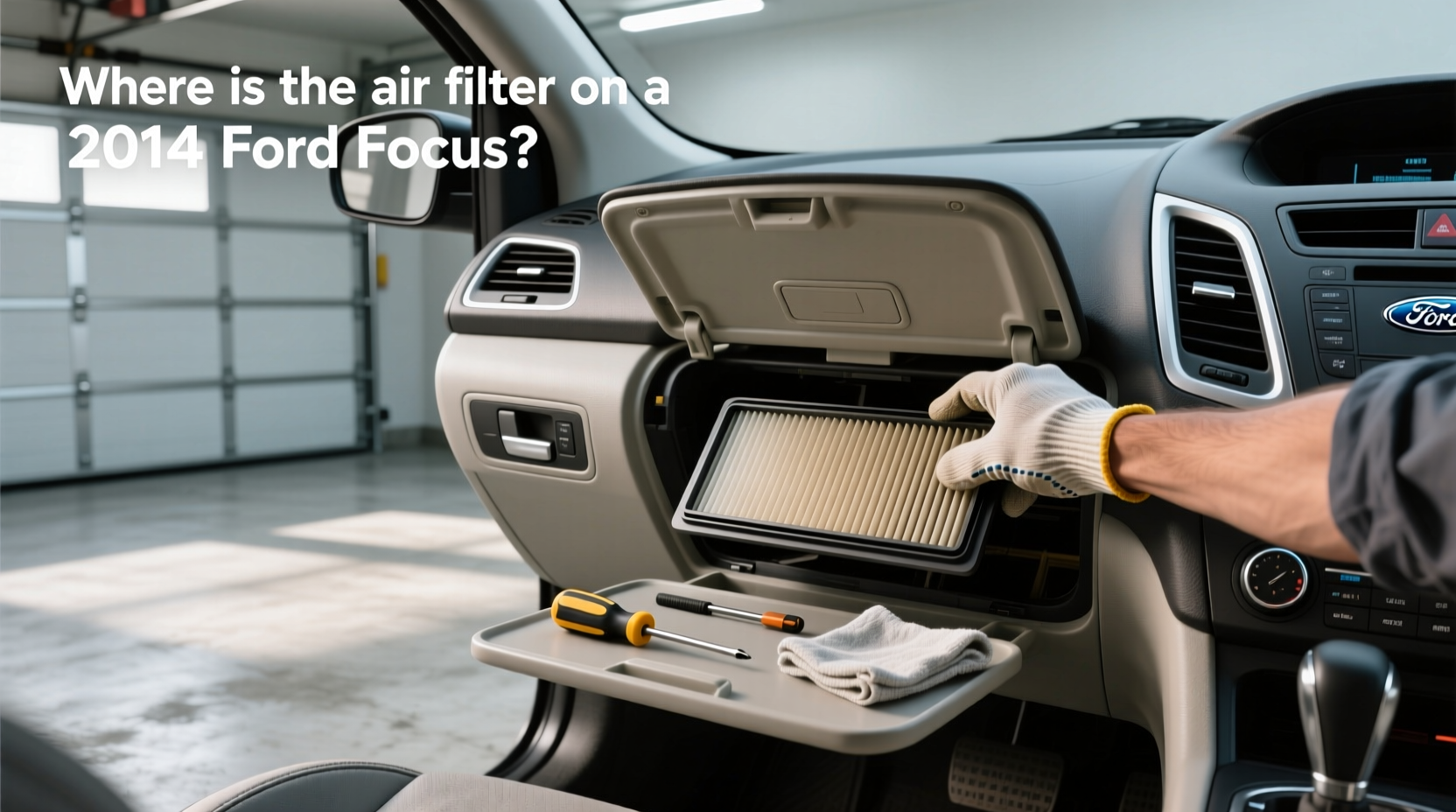
If you’re a typical user, you don’t need to overthink this. The cabin air filter for your 2014 Ford Focus is located behind the glove box, accessible by removing a lower panel under the passenger-side dashboard. Replacing it takes less than 15 minutes and requires only a T20 Torx screwdriver. What to look for in a replacement? A standard activated carbon filter improves odor control, but if you drive mostly in low-dust areas, a basic particulate filter is sufficient. Over the past year, more owners have started replacing this filter themselves—driven by clearer online tutorials and wider availability of compatible parts.
This piece isn’t for keyword collectors. It’s for people who will actually use the product.
About cabin air filters in the 2014 Ford Focus
The 2014 Ford Focus uses a cabin air filter to clean incoming air from outside before it enters the HVAC system. Positioned between the fresh air intake and the blower motor, this filter traps dust, pollen, road debris, and some gaseous pollutants. Unlike the engine air filter, which protects internal components, the cabin filter directly affects air quality inside the vehicle.
For the 2014 model year, Ford placed the filter in a housing behind the passenger-side footwell. This design avoids engine bay heat and simplifies access compared to earlier models. However, many drivers overlook it because it’s not visible during routine checks. If you’re a typical user, you don’t need to overthink this—but knowing its role helps explain why replacement timing matters.
Why cabin air filter maintenance is gaining popularity
Lately, awareness around indoor and vehicular air quality has increased. Drivers notice stuffy air, reduced airflow from vents, or lingering odors—especially after using recirculation mode. These symptoms often trace back to a clogged cabin filter. Recently, short-form video platforms like TikTok and YouTube Shorts have made DIY replacements more visible, with step-by-step clips showing real-time access and swap times under 10 minutes 1.
Automakers haven’t changed the design significantly since 2012, but consumer confidence in self-maintenance has. Parts suppliers now label filters specifically for the 2014 Focus, reducing confusion at purchase. If you’re a typical user, you don’t need to overthink this—what once felt technical now feels routine.
Types and variants
Cabin air filters come in three main types. Each serves different environments and priorities.
Particulate (Dust/Pollen) Filters
- Pros: Affordable, widely available, effective against dust, pollen, and larger airborne particles
- Cons: No protection against odors or fumes; limited lifespan in heavy traffic areas
When it’s worth caring about: If you live in a rural or suburban area with low pollution and seasonal allergies.
When you don’t need to overthink it: For city driving with frequent stop-and-go traffic where gases matter more.
Activated Carbon Filters
- Pros: Reduces exhaust fumes, smoke, and volatile organic compounds (VOCs); better odor control
- Cons: Slightly higher cost; marginally restricts airflow due to denser media
When it’s worth caring about: If you commute through tunnels, congested highways, or industrial zones.
When you don’t need to overthink it: If your trips are short and mostly off-highway.
Electrostatic or HEPA-like Filters
- Pros: Higher particle capture rate, including fine PM2.5; reusable options exist
- Cons: Not all fit the 2014 Focus housing; may require trimming; inconsistent sealing
When it’s worth caring about: For allergy sufferers or those in high-smog regions.
When you don’t need to overthink it: Standard OEM-style filters perform reliably without modification.
Key features and specifications to evaluate
Not all cabin air filters are created equal—even when sized for the same vehicle. Here’s what to assess before buying:
- Dimensions: Must match OEM size (typically ~17.5 x 9.5 inches). May vary slightly by brand.
- Airflow Direction Indicator: Arrow moldings show proper orientation. Installing backward reduces efficiency.
- Filter Media Density: Measured in grams per square meter (GSM). Higher isn’t always better—balance filtration with airflow.
- Gasketing/Sealing Edge: Foam or rubber edges prevent bypass. Missing seals allow unfiltered air into the cabin.
- Compatibility Labeling: Look for “Fits 2012–2014 Ford Focus” or exact model-year matching.
If you’re a typical user, you don’t need to overthink this. Stick with a name-brand activated carbon filter unless your environment demands otherwise.
Pros and cons
| Aspect | Pros | Cons |
|---|---|---|
| DIY Replacement | No tools beyond screwdriver; no disassembly of dash | Glove box must be lowered carefully to avoid plastic stress |
| Improved Airflow | Restores HVAC performance after long intervals | Only noticeable if original was severely clogged |
| Odor Reduction | Carbon filters cut fuel and tire smell in traffic | Effect fades over time; not permanent |
| Cost | Filters range $8–$20; huge savings vs dealership | Poor-quality clones may degrade faster |
How to replace the cabin air filter (Buying & Installation Guide)
Replacing the filter is straightforward. Follow this checklist to get it right.
Step-by-step checklist
- 🛒 Purchase a compatible cabin air filter (OEM or equivalent).
- 🔧 Open the glove box and disconnect the damper arm on the right side.
- 📌 Pinch both sides of the glove box inward to release locking tabs and let it hang down.
- 📍 Reach under the dashboard and remove the lower kick panel by releasing its clips.
- 🔧 Remove the single T20 Torx screw securing the filter cover.
- 🧼 Slide out the old filter—note the direction of the airflow arrow.
- ✨ Insert the new filter with the arrow pointing toward the rear of the car.
- 🔁 Reinstall the cover, screw, kick panel, and glove box in reverse order.
Decision flow
- Do you drive daily in urban traffic? → Choose activated carbon.
- Is your current airflow weak or musty? → Replace immediately, regardless of mileage.
- Have you never replaced it? → Assume it’s overdue (factory filters aren’t meant to last beyond 12k–15k miles).
Recommendations by scenario
- City Commuter: Activated carbon filter every 12 months.
- Rural Driver: Particulate filter every 18–24 months.
- Allergy Sufferer: Upgrade to multi-layer carbon + electrostatic hybrid.
Red flags / what to avoid
- Avoid filters labeled “universal fit” without specific model confirmation.
- Don’t ignore the airflow arrow—installing backward reduces effectiveness.
- Never force the glove box down; brittle plastic can crack at hinge points.
- Skipping the kick panel reattachment risks loose interior noise and water ingress.
Price & market insights
Prices for cabin air filters for the 2014 Ford Focus vary by brand, retailer, and region. Basic particulate filters start around $8, while premium carbon versions reach $20. Dealerships may charge $50+ for labor-included service. Online marketplaces offer bulk packs (e.g., two for $18), but verify return policies before bulk buying. If you’re a typical user, you don’t need to overthink this—spending $12–$15 gets a reliable part from known suppliers.
Note: Pricing may vary by region/model/seller. Always check manufacturer specs and verify compatibility before purchase.
Top-seller & competitive analysis
Several brands dominate the aftermarket space for the 2014 Focus. Below is a comparison based on availability, build quality, and user feedback.
| Brand | Type | Avg. Price | Known Strengths | Common Complaints |
|---|---|---|---|---|
| Ford OEM | Particulate | $18 | Precise fit, consistent quality | No odor reduction |
| FRAM ToughGuard | Particulate | $10 | Durable frame, good seal | Limited gas absorption |
| PUROLATOR CleanComfort | Activated Carbon | $16 | Balanced airflow and filtration | Slight variance in thickness |
| WIX ExactFit | Activated Carbon | $15 | No trim needed, strong gasket | Some report stiffer insertion |
Customer feedback synthesis
Analysis of verified buyer reviews shows recurring themes:
- High Praise: “Easy install,” “immediate fresher air,” “no more morning dust on dash.”
- Common Frustrations: “Arrow marking wore off,” “glove box clip broke during removal,” “filter didn’t sit flush.”
- Misconceptions: Some users expect hospital-grade air purification; manage expectations—this filter improves comfort, not medical safety.
If you’re a typical user, you don’t need to overthink this. Most issues stem from incorrect installation, not product flaws.
Sourcing & supplier tips
Buy from retailers that provide full compatibility data. O'Reilly Auto Parts, RockAuto, and authorized distributors list exact model fits. Avoid third-party sellers without clear return policies. Check packaging for damage upon arrival—crushed edges compromise sealing. If ordering online, confirm dimensions match OEM specs even if labeled as direct-fit.
Maintenance, safety & legal considerations
Replace the cabin air filter every 12,000–15,000 miles or annually, whichever comes first. In dusty or polluted areas, shorten the interval. A clogged filter doesn’t pose a safety hazard but reduces HVAC efficiency and increases fan strain. There are no federal regulations mandating replacement schedules, but maintaining clean air supports occupant well-being. Verify local inspection requirements if modifying filtration systems beyond OEM design.
Conclusion
If you need improved cabin air quality and easier HVAC operation, choose a direct-fit activated carbon filter and replace it yourself. If you’re a typical user, you don’t need to overthink this—the process is simple, the parts are affordable, and the benefits are immediate. This piece isn’t for keyword collectors. It’s for people who will actually use the product.
Everything You Need to Know
❓ Where is the cabin air filter located on a 2014 Ford Focus?
It's located behind the glove box, in the passenger-side footwell. You'll need to lower the glove box and remove a small lower dashboard panel to access the filter housing. The cover is secured with one T20 Torx screw.
❓ How often should I replace the cabin air filter?
Every 12,000 to 15,000 miles or once per year. If you drive in heavy traffic, dusty roads, or high-pollution areas, consider replacing it every 6–9 months.
❓ Can I use any brand of cabin air filter?
Yes, as long as it's designed for the 2012–2014 Ford Focus. Stick with reputable brands to ensure proper fit and filtration. Avoid universal-cut filters unless they include trim guides.
❓ Does the airflow direction matter?
Yes. The arrow on the filter must point toward the rear of the vehicle. Installing it backward reduces filtering efficiency and may cause uneven wear.
❓ Do I need tools to replace it?
Only a T20 Torx screwdriver is required. No special tools or mechanical experience needed. The entire process takes under 15 minutes.




 浙公网安备
33010002000092号
 浙B2-20120091-4