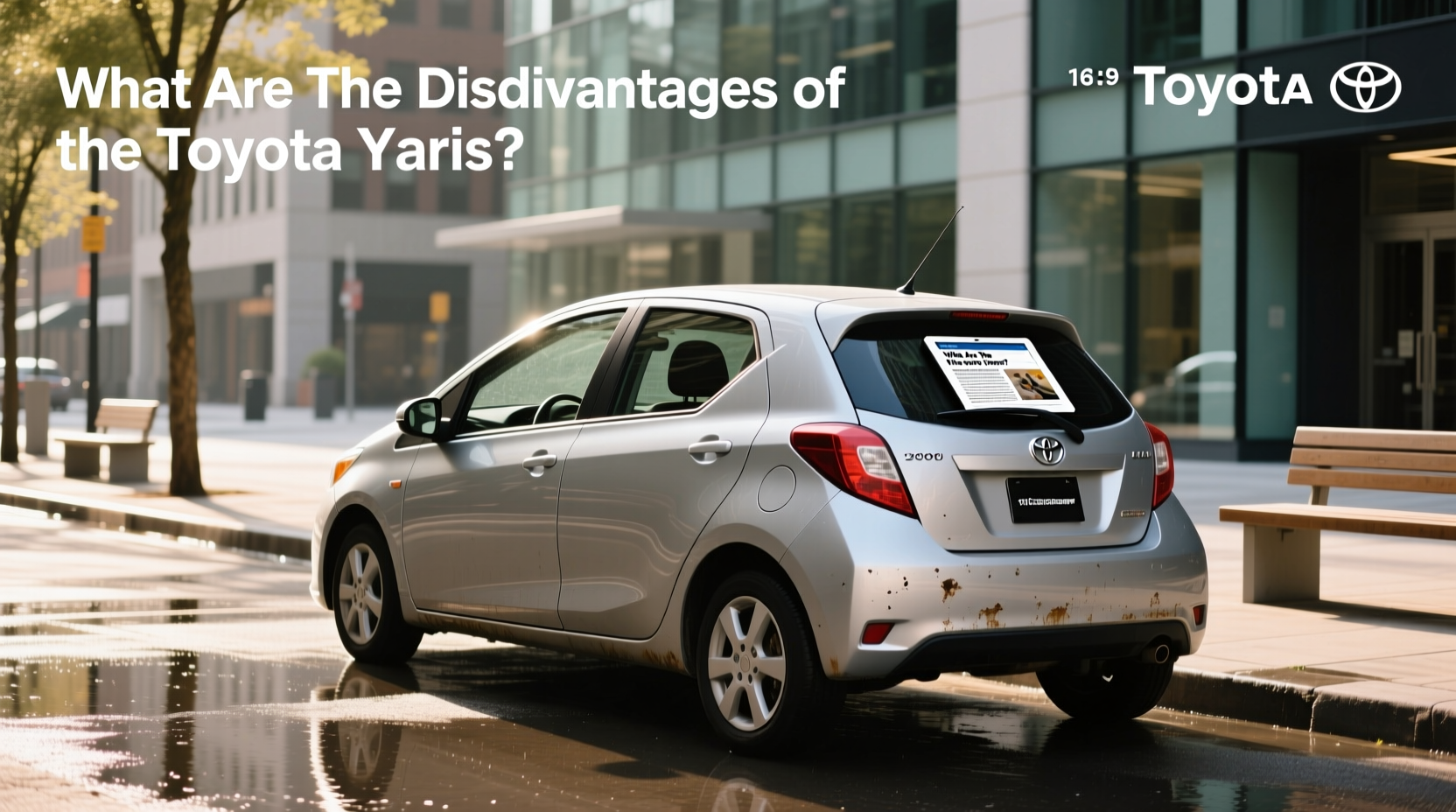
If you're looking for a compact, reliable commuter car with low running costs, the 2015 Toyota Yaris hatchback is worth considering. How to choose a used small hatchback comes down to balancing space, tech, and driving comfort against proven durability. For solo drivers or couples who prioritize fuel economy and ease of parking, this model delivers. But if you regularly carry adults in the back or want modern infotainment, it may fall short. Watch for a rattling dashboard and lack of telescoping steering wheel—two common owner complaints that don’t break reliability but affect daily comfort.
If you’re a typical user, you don’t need to overthink this. The 2015 Yaris isn’t built for excitement or luxury. It’s engineered for simplicity. Over the past year, rising fuel prices and urban congestion have made older efficient models like this one more visible in used markets. That doesn’t mean they’ve improved—but it does mean buyers are re-evaluating what matters in a daily driver.
About the 2015 Toyota Yaris Hatchback
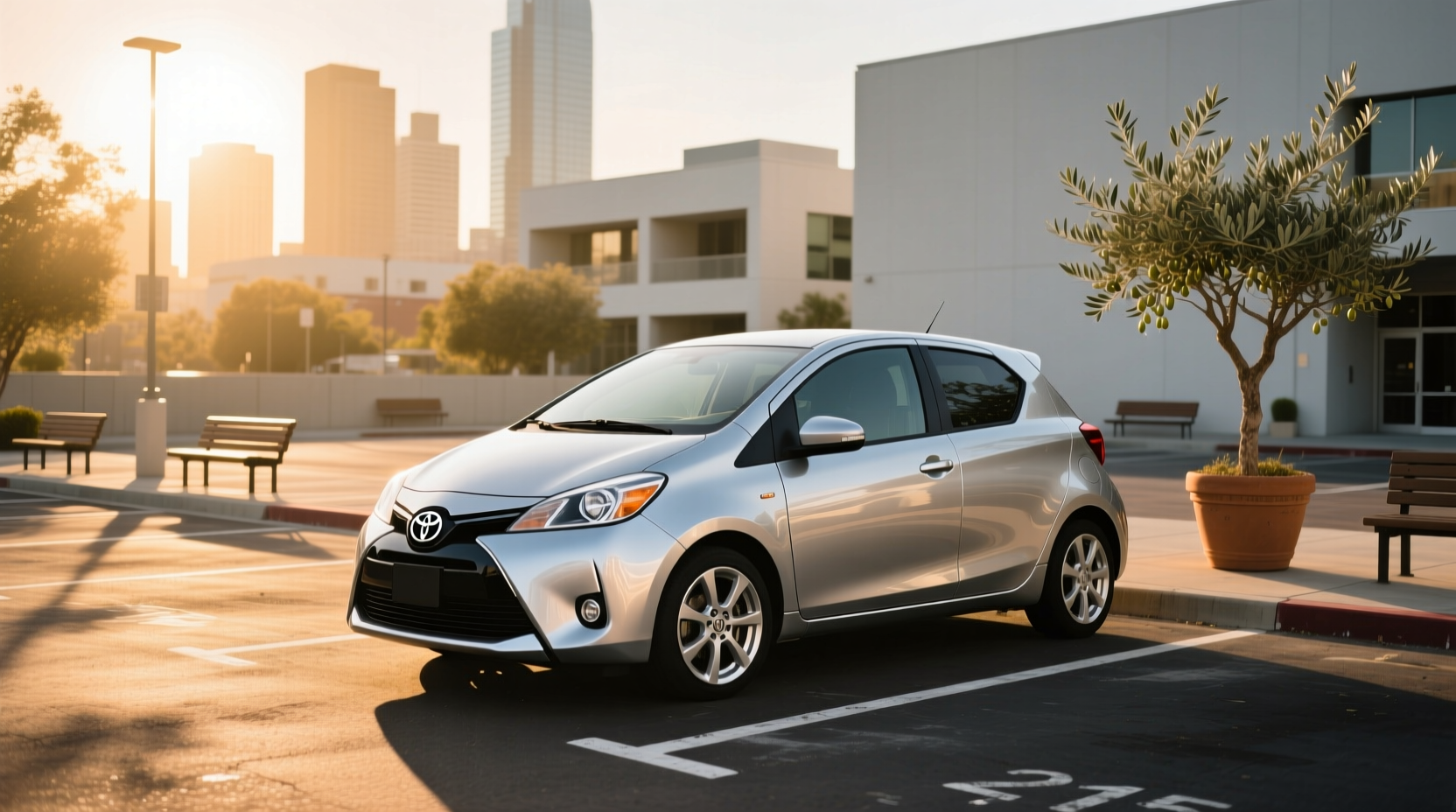
The 2015 Toyota Yaris hatchback is part of the third generation (XP130) launched globally in 2011. In most markets, it received minor updates by 2015, including revised bumpers, headlights, and interior trim. It's available in three- and five-door configurations, though the five-door hatchback is most common in North America and Europe. Under the hood, it uses a carryover 1.5-liter four-cylinder engine producing 106 horsepower and 103 lb-ft of torque 1. Transmission options include a five-speed manual or a four-speed automatic.
This model targets budget-conscious buyers, first-time car owners, or those needing a secondary urban vehicle. Its footprint makes it ideal for tight streets and narrow parking spots. While not designed for long highway trips or performance driving, it aims to fulfill basic transportation needs with minimal maintenance hassle.
Why the 2015 Yaris Is Gaining Popularity
Lately, economic uncertainty and higher living costs have pushed more people toward affordable, dependable transportation. The 2015 Yaris benefits from this shift—not because it’s new or improved, but because its core strengths align with current priorities: low purchase price, predictable maintenance, and strong fuel efficiency.
Used car values have stabilized compared to peak pandemic levels, making older compacts like the Yaris accessible again. Additionally, younger drivers entering the market often seek vehicles under $10,000 with decent safety ratings and no major reliability red flags. The Yaris fits that niche, especially when comparing long-term ownership costs to newer subcompact SUVs with higher depreciation.
This piece isn’t for keyword collectors. It’s for people who will actually use the product.
Types and Variants
The 2015 Yaris was offered in several trim levels depending on region:
- L (Base): Minimal features, steel wheels, manual windows/mirrors
- LE: Adds cruise control, power accessories, upgraded audio
- S (Sport): Unique styling, rear spoiler, sport-tuned suspension (in some regions)
- RS: Limited-run variant with firmer ride and visual upgrades
Transmission choices remain consistent across trims: five-speed manual or four-speed automatic. No CVT was available in 2015.
| Variant | Pros | Cons |
|---|---|---|
| L | Lowest price, simplest to maintain | Few comforts, basic radio only |
| LE | Better convenience features, retains value slightly better | Still lacks key modern tech |
| S / RS | Improved looks, slightly stiffer handling | Ride quality suffers; rare in used market |
If you’re a typical user, you don’t need to overthink this. The LE trim offers the best balance unless you want maximum savings or plan to modify the car.
Key Features and Specifications to Evaluate
When assessing a 2015 Yaris, focus on these areas:
- Engine and Drivetrain: The 1.5L engine is known for longevity but feels underpowered. Check for smooth acceleration and absence of knocking.
- Transmission Response: The 4-speed automatic shifts slowly and can feel jerky. If present, test drive thoroughly.
- Cabin Materials: Hard plastics dominate. Look for cracks or fading, which indicate age or sun exposure.
- Infotainment System: Base models have AM/FM/CD; optional Entune system adds Bluetooth and basic apps. Neither is fast or intuitive.
- Steering Wheel Adjustability: Only height adjustment is available—no telescoping. This limits driver positioning, especially for taller users.
When it’s worth caring about: If you're over 6 feet tall or spend hours driving, the fixed steering column becomes a real issue.
When you don’t need to overthink it: For short commutes and occasional use, the layout works fine for average builds.
Pros and Cons
| Category | Advantages | Drawbacks |
|---|---|---|
| Reliability ✅ | Proven engine-transmission combo with high mileage potential | Some report dash rattles or suspension noise after years of use |
| Fuel Economy ⛽ | Manual: up to 35 mpg highway; automatic: ~32 mpg | Real-world results depend heavily on driving style |
| Maneuverability 📍 | Tight turning radius, easy parking, light steering | Lightweight build leads to noticeable body roll |
| Interior Space 👥 | Adequate for two adults up front | Rear seat cramped; not suitable for regular adult passengers |
| Cargo Capacity 🚚 | Decent for size when rear seats folded | Small trunk opening and shallow depth limit usability |
| Technology 🌐 | Bluetooth availability improves connectivity | No Apple CarPlay/Android Auto; slow touchscreen response |
If you’re a typical user, you don’t need to overthink this. Prioritize condition and service history over trim-specific features.
How to Buy a Used 2015 Yaris Hatchback
Follow this checklist to avoid costly oversights:
Step-by-Step Checklist
- Verify full service history — Look for oil changes every 5,000–7,000 miles.
- Inspect for dashboard rattles — Press gently around vents and glovebox while engine runs.
- Test all electrical functions — Windows, locks, HVAC, and radio responsiveness matter.
- Drive on mixed roads — Listen for suspension clunks over bumps and transmission hesitation during acceleration.
- Check tire wear pattern — Uneven wear may signal alignment or strut issues.
- Review accident reports — Use VIN to pull records via free tools like NICB’s VinCheck.
Decision Flow
- Need ultra-low cost + reliability → Consider base L or LE with manual transmission
- Carry passengers weekly → Look elsewhere; rear space is inadequate
- Want modern tech integration → Skip this model; interfaces are outdated
- Live in dense city → Strong candidate due to size and fuel economy
Recommendations by Scenario
- First-time buyer: Choose LE trim with manual transmission for lower insurance and better control.
- Urban commuter: Automatic version acceptable despite inefficiency; prioritize parking sensors if available.
- Secondary car: Any trim works if stored properly and driven occasionally.
Red Flags / What to Avoid
- Dash rattle that won’t resolve: May indicate poor repair attempts or structural fatigue.
- Missing maintenance records: High-risk without proof of timing belt/water pump replacement.
- Aftermarket stereo installed poorly: Can interfere with factory wiring or drain battery.
- Signs of flood damage: Musty smell, corrosion under seats, or silt in cabin air filter.
If you’re a typical user, you don’t need to overthink this. Focus on mechanical health, not cosmetic perfection.
Price & Market Insights
As of now, prices for a used 2015 Yaris hatchback vary widely by region, mileage, and condition. In the U.S., expect $5,000–$8,500 for well-maintained examples. Canadian listings may run slightly higher due to colder climate impact on rust. European markets often list below €6,000, though right-hand-drive versions in the UK can command premiums.
Pricing may vary by region/model/seller. Always check local classifieds and compare multiple sources before committing. Private-party sales typically offer better value than dealerships, though certified pre-owned programs provide added warranty coverage.
Top-Seller & Competitive Analysis
The 2015 Yaris competes with other subcompacts from the same era:
| Model | Fuel Economy (Combined) | Reliability Reputation | Common Complaints |
|---|---|---|---|
| Toyota Yaris 2015 | 32 mpg (auto) | Excellent | Outdated transmission, cramped rear |
| Honda Fit 2015 | 34 mpg (auto) | Very Good | Noisy engine, firm ride |
| Ford Fiesta 2015 | 30 mpg (auto) | Fair | Transmission issues, interior squeaks |
| Nissan Versa 2015 | 30 mpg (auto) | Average | Soft brakes, dull steering |
The Honda Fit stands out for versatility with its Magic Seat cargo system. However, the Yaris wins on predicted long-term reliability and resale consistency. Ford and Nissan models offer livelier driving dynamics but come with higher risk of mechanical faults as they age.

Customer Feedback Synthesis
Aggregating consumer reviews from KBB, Edmunds, and RAC Drive 234, common themes emerge:
- Highly praised: Long-term reliability, ease of parking, low fuel costs
- Frequently criticized: Lack of power, especially uphill or merging; dated interior design; persistent dashboard creaks
- Mixed reactions: Ride comfort—some find it absorbent, others say it feels too light at highway speeds
Owners who treat the Yaris as a no-frills commuter express high satisfaction. Those expecting refinement or tech parity with newer cars tend to regret their purchase.
Sourcing & Supplier Tips
When sourcing a used 2015 Yaris:
- Prefer private sellers with full documentation over auction imports.
- Avoid vehicles imported from Japan unless verified for rust treatment and compliance.
- If buying online, arrange an independent pre-purchase inspection through services like Lemon Squad or YourMechanic.
- Confirm return policy if purchasing from a digital retailer—many offer 7-day windows.
Verify retailer return policy and inspect vehicle history report before transfer.
Maintenance, Safety & Legal Considerations
The 2015 Yaris lacks advanced driver aids like lane departure warning or automatic emergency braking. Standard safety includes dual front airbags, ABS, and stability control. Crash test ratings were average for its time—check IIHS or Euro NCAP databases for specific scores in your region.
Maintenance needs are straightforward: replace spark plugs every 100,000 miles, coolant every 5 years, and inspect brake pads annually. Timing belt replacement is recommended around 90,000 miles—critical to prevent engine damage.
Always confirm local regulations regarding emissions testing and registration requirements. These may vary by region/model/seller.
Conclusion
If you need a simple, economical car for city driving and value long-term dependability over comfort or tech, the 2015 Toyota Yaris hatchback remains a logical choice. If you regularly transport adults or demand responsive performance, consider alternatives. The decision hinges not on specs alone, but on how closely your usage matches its narrow strengths.




 浙公网安备
33010002000092号
 浙B2-20120091-4