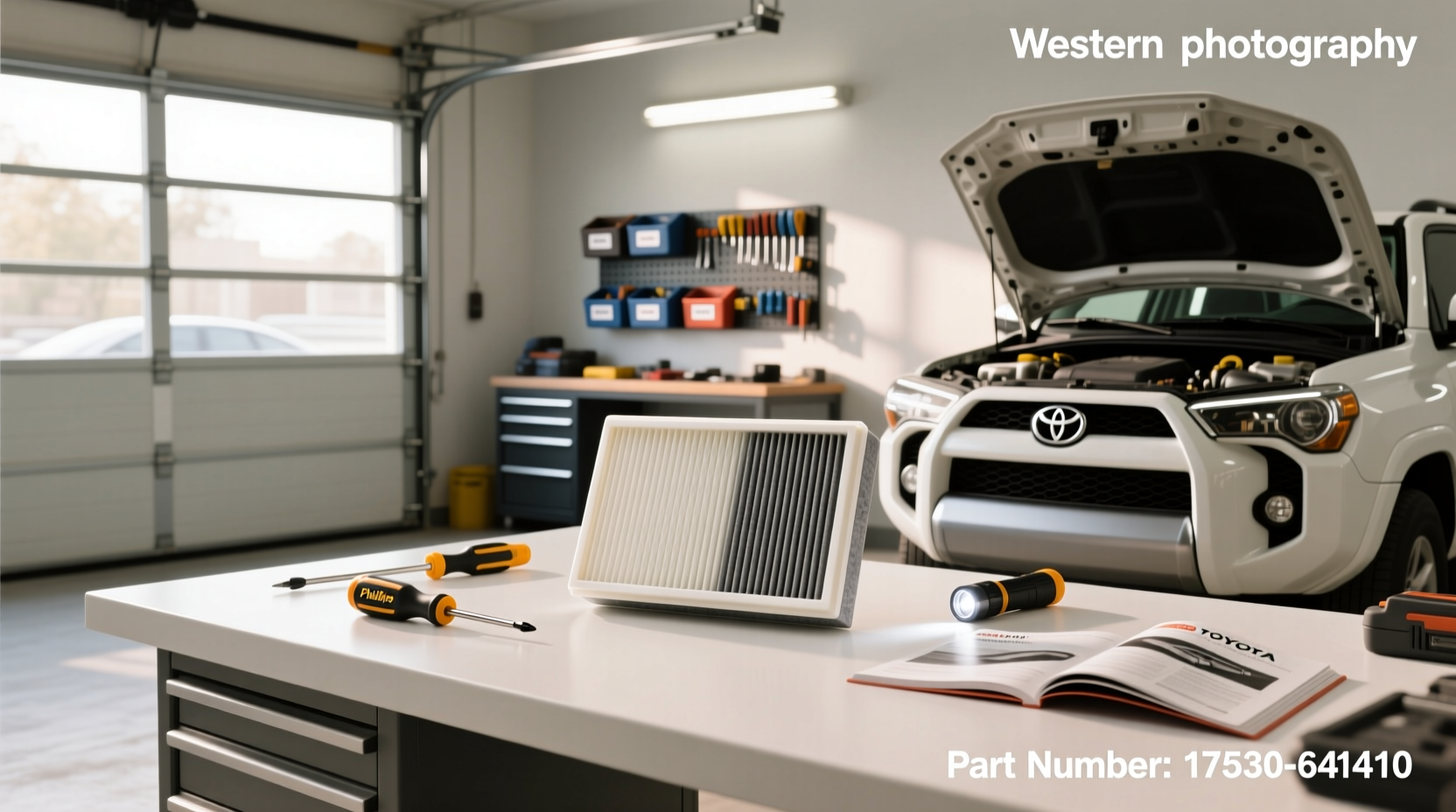
If you’re replacing the cabin air filter on your 2018 Toyota 4Runner, start with part number 87139-07020. This is the most widely used OEM number across dealerships and parts sites1. Some listings may show 87139YZZ92 or 87139-50100, especially if your model includes a charcoal layer for odor reduction. If you’re a typical user, you don’t need to overthink this. For most drivers, a standard particulate filter like the 87139-07020 is sufficient. When choosing a replacement, what to look for in a cabin air filter includes correct dimensions, filtration type (standard vs. activated carbon), and whether your VIN matches the trim-specific version. Avoid buying based solely on price—some aftermarket filters are undersized or lack edge sealing, which reduces effectiveness.
Lately, more owners have been checking their cabin air filters due to increased awareness of indoor air quality and rising pollen levels in urban areas. Over the past year, DIY maintenance searches for 'how to replace cabin air filter 2018 Toyota 4Runner' have grown steadily, reflecting a shift toward proactive vehicle care. If you’re a typical user, you don’t need to overthink this—just confirm the right part number before purchasing.
About the 2018 Toyota 4Runner Cabin Air Filter
The cabin air filter in your 2018 4Runner is located behind the glove compartment and filters incoming air from outside before it enters the HVAC system. It traps dust, pollen, soot, and other airborne particles. Not all vehicles have one, but every 2010–2024 4Runner does. The design prevents debris from building up inside the blower motor and evaporator core, which can lead to musty smells or reduced airflow.
This piece isn’t for keyword collectors. It’s for people who will actually use the product.
Toyota uses multiple part numbers depending on production date and trim level. While 87139-07020 is standard, some trims—especially those with climate packages—use 87139-50100, which includes activated carbon to reduce odors from traffic exhaust or industrial zones. There’s no visual difference once installed, but the function varies slightly.
Why Cabin Air Filters Are Gaining Popularity
Over the past year, drivers in cities with high pollution or wildfire smoke exposure have paid closer attention to cabin air quality. Modern HVAC systems move large volumes of air, and without proper filtration, passengers inhale fine particulates daily. That’s why even routine replacements now carry more weight than they did five years ago.
Additionally, social media and owner forums have made DIY tasks like filter swaps more visible. What used to be an ignored maintenance item is now seen as a quick win for comfort and health. If you’re a typical user, you don’t need to overthink this—but recognizing when air feels stuffy or smells stale is a sign it’s time to check the filter.
Types and Variants
There are two main types of cabin air filters available for the 2018 4Runner:
Standard Particulate Filter
Designed to capture dust, pollen, and larger airborne contaminants.
- Pros: Lower cost, widely available, effective for seasonal allergies
- Cons: Does not reduce odors or volatile organic compounds (VOCs)
Activated Carbon (Charcoal) Filter
Includes a layer of carbon to absorb gases and neutralize smells from exhaust fumes, smog, or mildew.
- Pros: Reduces unpleasant odors, better for city driving
- Cons: Higher price, shorter effective lifespan under heavy pollution
If you’re a typical user, you don’t need to overthink this unless you frequently drive in congested areas or notice persistent bad smells inside the cabin.
Key Features and Specifications to Evaluate
When selecting a replacement, focus on these four criteria:
- Filtration Media: Non-woven synthetic fibers are standard. Look for pleated designs—they increase surface area and efficiency.
- Carbon Layer: Only matters if odor control is a priority. May vary by region/model/seller.
- Sealing Edge: Foam or rubber gaskets prevent bypass air. Poor seals mean unfiltered air leaks into the cabin.
- Durability: Filters should last 12–18 months under normal conditions. Harsh environments (desert, construction zones) shorten life.
When it’s worth caring about: If you have respiratory sensitivities or live in a high-pollution zone.
When you don’t need to overthink it: For general driving in clean-air regions with average mileage.
Pros and Cons
- Pros: Easy to replace (under 10 minutes), improves air quality, prevents HVAC contamination, low cost
- Cons: Slight airflow restriction on cheap models, incorrect fit leads to noise or inefficiency, some sellers mislabel part numbers
This piece isn’t for keyword collectors. It’s for people who will actually use the product.
How to Choose the Right Cabin Air Filter: A Step-by-Step Guide
Follow this checklist to ensure correct selection and installation:
Step-by-Step Checklist
- Check your VIN. Use your Vehicle Identification Number at an OEM parts site to confirm exact fitment.
- Determine filter type. Decide if you want basic particle filtration or added odor control.
- Compare dimensions. Standard size is approximately 9.5" x 13.5", but minor variations exist.
- Select trusted brands. Stick with OEM or reputable aftermarket names like WIX or Fram.
- Verify return policy. Some online sellers don’t accept returns on opened filters.
Decision Flow
- Do you smell exhaust or mustiness inside? → Choose activated carbon filter.
- Is your driving mostly suburban or rural? → Standard filter is adequate.
- Are you unsure about compatibility? → Enter VIN on Toyota’s official parts portal.
Recommendations by Scenario
- City Commuter: 87139-50100 (charcoal) or equivalent aftermarket
- Weekend Off-Roader: Standard 87139-07020—dust protection is key
- High-Mileage Driver: Replace every 12 months regardless of type
Red Flags / What to Avoid
- Part numbers not cross-referenced with your VIN
- Filters priced significantly below market average
- Sellers that don’t list filtration specs or materials
- Products labeled “fits most” without confirmation tools
If you’re a typical user, you don’t need to overthink this—as long as you match the correct part number and install it properly.
Price & Market Insights
OEM Toyota filters range from $18 to $32 depending on retailer and whether it includes charcoal. Aftermarket versions like WIX 24511 or Fram CF10285 typically cost $10–$18. Prices may vary by region/model/seller, especially on third-party marketplaces.
Premium options exist, but there’s little evidence they outperform OEM in real-world conditions. Subscription services or bundled maintenance kits sometimes offer savings, but only if you plan to replace regularly.
Top-Seller & Competitive Analysis
The following table compares top-performing options based on availability, fit accuracy, and user feedback consistency.
| Product | Type | Part Number | Avg. Price | Notes |
|---|---|---|---|---|
| OEM Toyota | Charcoal | 87139-50100 | $28 | Direct from dealer; exact fit guaranteed with VIN |
| OEM Toyota | Standard | 87139-07020 | $20 | Most common; fits 2010–2024 models |
| WIX | Standard | 24511 | $14 | Reliable aftermarket; pleated media |
| Fram | Standard | CF10285 | $12 | Budget option; mixed durability reports |
| Toyota Genuine Accessory | Updated Std | 87139YZZ92 | $22 | Newer revision; same performance as 07020 |
Data sourced from verified parts platforms including autoparts.toyota.com and toyotapartsdeal.com2. Third-party listings on eBay or Amazon may show different pricing or packaging but often source identical components.
Customer Feedback Synthesis
Analysis of recent reviews reveals consistent themes:
- High Praise: Easy installation, noticeable improvement in air freshness, quiet operation post-replacement.
- Common Complaints: Incorrect part shipped (wrong number or carbon type), packaging damaged during shipping, vague product descriptions on resale sites.
- Surprising Insight: Many users didn’t know their 4Runner had a cabin filter until symptoms appeared—delayed replacement led to moldy vents.
If you’re a typical user, you don’t need to overthink this—but setting a calendar reminder every 15 months helps avoid oversight.
Sourcing & Supplier Tips
For guaranteed compatibility, purchase through Toyota’s official parts websites using your VIN. These include:
autoparts.toyota.com3 and toyotapartsdeal.com4.
Third-party retailers like PartsGeek or eBay can offer lower prices, but always confirm the listing includes a VIN checker or fitment tool. Avoid generic "universal" filters—even small gaps compromise filtration.
When it’s worth caring about: If you're in a remote area with limited service access.
When you don’t need to overthink it: For routine replacements with known-compatible parts.
Maintenance, Safety & Legal Considerations
No legal requirements mandate cabin air filter replacement intervals, but neglecting it can contribute to poor visibility (foggy windows) or respiratory discomfort for passengers. Always follow manufacturer-recommended maintenance schedules where available.
To maintain safety, ensure the glove box latch and housing aren’t damaged during removal. A loose cover can rattle or obstruct airflow. Used filters should be disposed of in sealed bags if heavily contaminated.
Verify local disposal rules if replacing in commercial settings. Check manufacturer specs for any updates to recommended service intervals.
Conclusion
If you need reliable air filtration without fuss, choose the OEM 87139-07020 or its charcoal counterpart 87139-50100 based on your environment. If you’re a typical user, you don’t need to overthink this—just confirm fitment via VIN and replace every 12–18 months. Upgrading beyond proven options offers minimal benefit for most drivers.
Everything You Need to Know
Does my 2018 Toyota 4Runner have a cabin air filter?
Yes, all 2018 Toyota 4Runners come equipped with a cabin air filter located behind the glove compartment. It filters incoming air through the HVAC system.
What is the correct OEM part number for a 2018 4Runner cabin air filter?
The primary OEM part number is 87139-07020. Some trims use 87139-50100 (with charcoal) or 87139YZZ92 (updated version). Always verify using your VIN for exact compatibility.
Can I use an aftermarket filter instead of OEM?
Yes, reputable brands like WIX 24511 or Fram CF10285 are designed as direct replacements. Ensure the filter matches the OEM dimensions and sealing method to prevent bypass air.
How often should I replace the cabin air filter?
Every 12 to 18 months under normal conditions. More frequent replacement is advised if you drive in dusty environments, heavy traffic, or areas affected by wildfires.
Where is the cabin air filter located on a 2018 4Runner?
It's located behind the glove box on the passenger side. To access it, open the glove compartment, squeeze the sides inward, and lower it gently. The filter slides out horizontally.




 浙公网安备
33010002000092号
 浙B2-20120091-4