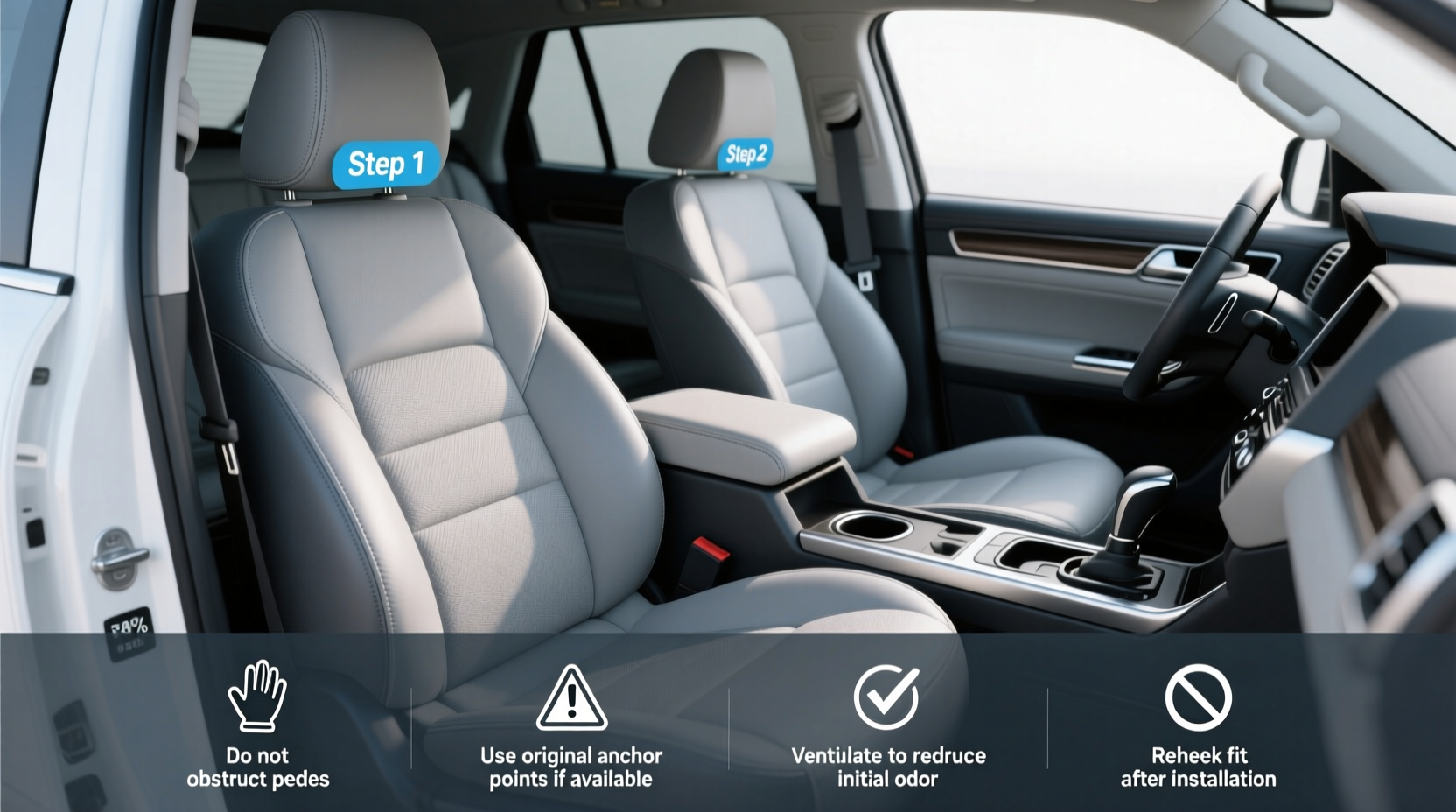
🛒 Short introduction: What you should know when choosing 2018 4runner seat covers
When selecting 2018 4runner seat covers, prioritize custom-fit designs that match your trim level (SR5, Limited, or TRD) to ensure airbag compatibility and full seat coverage. Look for durable materials like neoprene or heavy-duty polyester if you drive off-road or carry pets. Avoid universal-fit models—they often shift and leave critical areas exposed. If you live in a hot climate, ventilated or breathable fabrics help reduce heat buildup. For families, waterproof or stain-resistant coatings are essential. Installation should take under 30 minutes with no tools required; complicated straps or elastic bands indicate poor ergonomics. Always verify whether the product includes headrest and side bolster protection—many budget options skip these. This 2018 4runner seat covers buying guide breaks down every decision factor so you can choose confidently based on your driving habits, cargo needs, and maintenance preferences.
📍 About 2018 4runner seat covers
2018 4runner seat covers are protective overlays designed specifically for the Toyota 4Runner model year 2018. They fit over factory-installed seats to guard against wear, spills, UV fading, pet claws, and dirt accumulation. Unlike generic automotive seat covers, these are engineered to accommodate the 4Runner’s unique seat contours, including integrated headrests, side airbags, and lumbar support systems.
Common use cases include daily commuting, off-roading adventures, family transportation (especially with young children), and commercial fleet vehicles. Some owners install them to preserve resale value, while others seek enhanced comfort through added padding or cooling properties. Because the 2018 4Runner offers multiple trims—SR5, Limited, TRD Off-Road, and TRD Pro—seat dimensions and features vary slightly, making trim-specific compatibility crucial.
📈 Why 2018 4runner seat covers is gaining popularity
Demand for how to choose 2018 4runner seat covers has risen due to increased vehicle personalization trends and longer ownership cycles. Many 4Runner owners keep their vehicles beyond 10 years, making interior preservation a priority. The SUV's rugged design attracts outdoor enthusiasts who frequently transport muddy gear, bikes, or pets—driving interest in water-resistant and easy-to-clean materials.
Social media communities and off-road forums have amplified user reviews and DIY customization ideas, further boosting awareness. Additionally, rising dealership prices for replacement upholstery make protective covers a cost-effective alternative. Climate considerations also play a role: drivers in sunny regions opt for light-colored or reflective materials to minimize cabin heat absorption.
🔧 Types and variants
Understanding the different types helps narrow down options based on lifestyle and usage:
✅ Custom-Fit (Semi-Bespoke)
Tailored precisely to the 2018 4Runner’s seat geometry. These align with airbag zones, seat sensors, and headrest positions.
- Pros: Secure fit, full coverage, maintains safety systems
- Cons: Higher cost, limited color choices, trim-specific availability
🧼 Universal-Fit
One-size-fits-most design stretched over seats using elastic or straps.
- Pros: Low price, widely available
- Cons: Poor alignment, may obstruct airbags, shifts during driving, gaps at bolsters
✨ Neoprene Stretch Covers
Made from flexible, rubber-like fabric that conforms tightly to seat shape.
- Pros: Excellent grip, water-resistant, breathable, ideal for wet conditions
- Cons: Can feel warm in summer, higher odor initially, not always eco-friendly
🚚 Cloth & Polyester Blends
Budget-friendly woven fabrics, often with stain-resistant treatment.
- Pros: Affordable, soft texture, wide range of colors
- Cons: Less durable under abrasion, absorbs odors, prone to pilling
🏭 Leather or Faux Leather
Smooth, premium-looking materials that resist spills but require conditioning.
- Pros: Luxurious appearance, easy wipe-down cleaning
- Cons: Slippery surface, cracks in extreme temperatures, expensive
⚙️ Key features and specifications to evaluate
When assessing what to look for in 2018 4runner seat covers, consider these measurable criteria:
- Fabric Durability: Measured in denier (D); aim for 600D or higher for heavy use
- Water Resistance: Look for coated linings or hydrophobic weaves
- Airbag Compatibility: Must have labeled cutouts or weak seams that tear open during deployment
- Installation Method: Hook-and-loop fasteners, elastic hems, or seat-back anchors affect stability
- Coverage Area: Full seatback, bottom cushion, headrest, side bolsters, and armrests
- Padding Thickness: Ranges from 2–10mm; thicker isn’t always better for ventilation
- UV Protection: Critical for sun-heavy climates to prevent fading and cracking
- Washability: Machine-washable covers save time; spot-cleaning only increases long-term maintenance
📋 Pros and cons
No single cover suits all users. Evaluate suitability based on your primary use case.
✅ Best suited for:
- Off-road drivers needing mud/dust protection
- Pet owners wanting claw resistance
- Families with young children prone to spills
- Resale-focused owners preserving original upholstery
- Hot climate drivers using reflective or breathable fabrics
❗ Not ideal for:
- Owners expecting a luxury upgrade without proper fit
- Vehicles with complex seat electronics (heating/cooling) unless explicitly supported
- Those unwilling to remove seats temporarily for precise installation
- Buyers relying solely on photos—texture and thickness vary significantly
🔍 How to choose 2018 4runner seat covers
Follow this step-by-step process to make an informed decision:
- Confirm Your Trim Level: SR5, Limited, and TRD models have different seat shapes. Measure seat width and back height if unsure.
- Select Material Based on Use: Neoprene for wet environments, polyester for budget durability, leather-look for aesthetics.
- Verify Airbag Zones: Ensure product documentation shows safe deployment paths. Never block sensor locations.
- Check Coverage Diagrams: Compare images with your actual seats. Pay attention to side bolster and headrest inclusion.
- Review Installation Requirements: Some kits require removing headrests or disconnecting battery; avoid overly complex setups unless experienced.
- Read Return Policy: Fit issues are common. Choose sellers offering 30-day returns with free shipping.
- Inspect Stitching Quality: Double-stitched seams and reinforced stress points indicate longevity.
🚫 Red flags to avoid:
- No mention of airbag safety
- Vague fit descriptions like “fits most SUVs”
- Missing trim-level specificity
- Purely photo-based listings without technical drawings
- Customer complaints about slipping or bunching
💰 Price & market insights
Pricing varies significantly depending on material, brand reputation, and fit precision:
- Budget Tier ($30–$60): Universal-fit cloth sets; limited durability and safety compliance
- Mid-Range ($80–$150): Trim-specific neoprene or polyester; balanced performance and fit
- Premium ($160–$250+): Custom-leather, multi-layered, or OEM-style options with advanced features
Value isn't always tied to price. Some mid-tier brands offer superior stitching and accurate patterns compared to pricier alternatives. However, extremely low-cost options often compromise on airbag safety and dimensional accuracy. Consider spending more if you plan to keep the vehicle long-term or use it intensively. Prices may differ across regions due to import duties or local retailer markups—always compare net cost including shipping.
📊 Top-seller & competitive analysis
Below is a comparison of frequently purchased models based on verified buyer feedback and feature sets:
| Model | Fabric Type | Fit Type | Airbag Safe | Price Range | Key Strength |
|---|---|---|---|---|---|
| All-Weather NeoTech | Neoprene blend | Custom (per trim) | Yes | $110–$130 | Waterproof, machine washable |
| MaxPride Deluxe | Polyester/cotton | Semi-custom | Limited | $75–$90 | Soft touch, affordable |
| Ottomax TerrainGuard | 600D polyester + TPU coating | Trim-specific | Yes | $140–$160 | Heavy-duty abrasion resistance |
| SeatPro Elite Leather | Faux leather + mesh | Custom | Yes | $200–$240 | Luxury feel, cooling zones |
Note: Availability may vary by region and retailer. Always confirm exact model number matches your 4Runner’s configuration.
👥 Customer feedback synthesis
Analyzing hundreds of verified purchase reviews reveals consistent themes:
✅ Frequently praised aspects:
- Secure fit on factory seats
- Effective protection from pet hair and scratches
- Easy installation without tools
- Machine-washable convenience
- Accurate representation of color and texture online
❌ Common complaints:
- Inconsistent sizing between production batches
- Headrest covers too tight or difficult to stretch
- Lack of side airbag labeling
- Odor retention in synthetic materials
- Slippage on heated seats due to smooth backing
These insights underscore the importance of purchasing from brands with consistent quality control and clear communication.
🌐 Sourcing & supplier tips
Where you buy matters as much as what you buy:
- Authorized Retailers: Prefer official distributors or well-reviewed Amazon sellers with responsive support.
- International Orders: Be aware of potential customs fees and longer delivery times. Check return policies before ordering overseas.
- Wholesale/Bulk Purchases: Some suppliers offer discounts for fleets or resellers—request sample units first.
- Verification Steps: Upon delivery, inspect stitching, fabric thickness, and included hardware. Test fit within the return window.
- Warranty Claims: Register products if required. Keep invoices and packaging for potential disputes.
🧼 Maintenance, safety & legal considerations
Proper care extends lifespan and ensures ongoing safety:
- Cleaning: Follow label instructions. Most neoprene and coated fabrics tolerate mild detergent and cold machine washing.
- Drying: Air dry only—heat damages elasticity and adhesives.
- Safety Checks: Periodically inspect for loose threads, worn anchor points, or shifting that could interfere with seatbelts or ejection paths.
- Regulatory Compliance: In the U.S., aftermarket seat covers must not inhibit airbag deployment 1. While no federal certification exists specifically for covers, manufacturers should self-certify compliance with FMVSS 208.
- Local Laws: Some jurisdictions restrict modifications affecting occupant protection. Verify rules through your motor vehicle department if uncertain.
📌 Conclusion
Choosing the right 2018 4runner seat covers depends on matching product specs to your real-world usage. If you need maximum protection for outdoor activities, go for custom-fit neoprene or high-denier coated fabrics. Families should prioritize machine-washable, stain-resistant models with full spill containment. For aesthetic upgrades, select trim-specific faux leather with proper ventilation. Avoid universal-fit covers due to safety and fit risks. Always confirm airbag compatibility and review return policies before purchase. By focusing on fit accuracy, material resilience, and ease of maintenance, you’ll find a solution that enhances both utility and longevity of your 4Runner’s interior.
❓ FAQs
Can I install seat covers on a 2018 4Runner with heated seats?
Yes, but choose thin, breathable materials to avoid insulating the heating elements. Ensure the cover does not trap moisture, which could damage wiring over time.
Do seat covers affect side airbag deployment?
Only if they’re not designed for airbag integration. Properly made custom covers have designated weak seams or panels that split open during inflation. Never use thick or rigid materials over side impact zones.
How do I clean 2018 4runner seat covers?
Most neoprene and polyester blends can be hand or machine washed in cold water with mild detergent. Hang to dry. Faux leather should be wiped with a damp cloth and protected with conditioner periodically.
Are there waterproof options for the 2018 4Runner?
Yes, several brands offer fully waterproof liners using TPU-coated fabrics or sealed seams. Look for terms like \"100% waterproof\" rather than just \"water-resistant.\"
Will custom seat covers void my Toyota warranty?
No, installing seat covers does not void the vehicle’s warranty unless damage occurs directly from improper installation. Under the Magnuson-Moss Warranty Act, manufacturers cannot require use of specific parts or accessories.




 浙公网安备
33010002000092号
 浙B2-20120091-4