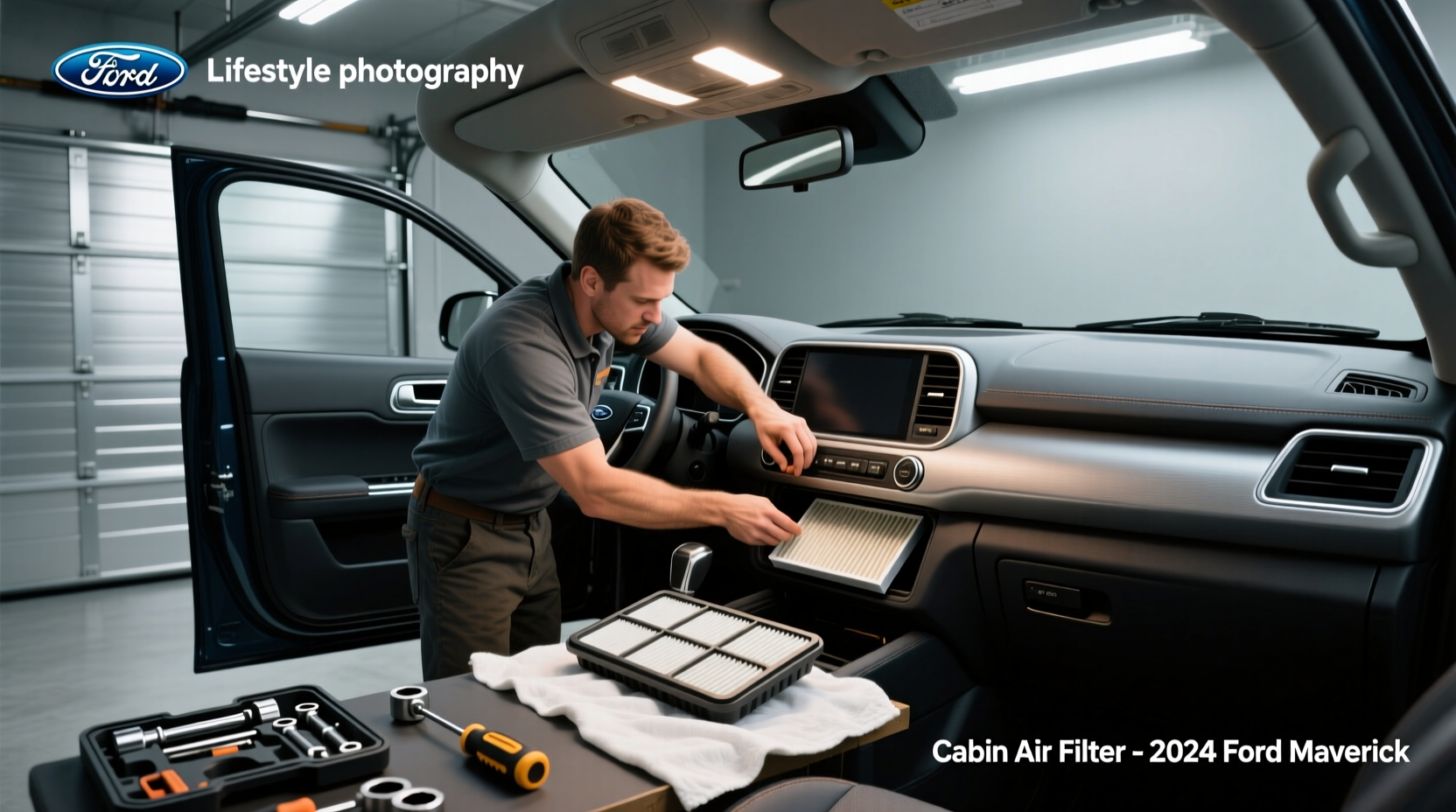
If you’re a typical user, you don’t need to overthink this. Replacing the cabin air filter in a 2024 Ford Maverick is a five-minute job that requires no tools—just lower the glovebox, unclip the housing, swap the filter with airflow arrow facing down, and reassemble. What to look for in a replacement? OEM-equivalent filtration (activated carbon if you want odor reduction), correct size (roughly 12 x 8 inches), and a clear directional indicator. Avoid filters without airflow markings—they increase risk of backward installation, which reduces efficiency. Over the past year, more owners have started doing this themselves after noticing stale air or reduced HVAC performance.
Short introduction
Replacing the cabin air filter in your 2024 Ford Maverick isn’t just maintenance—it’s one of the fastest ways to improve interior air quality and HVAC output. If you’re a typical user, you don’t need to overthink this. The process is consistent across hybrid and gas models, takes under 10 minutes, and doesn’t require special tools. How to choose the right replacement? Match the physical dimensions, confirm it’s labeled for 2022–2024 Mavericks, and ensure the packaging shows an airflow direction arrow. Mistakes usually come from installing the filter backward or failing to fully reseat the glovebox damper arm, leading to rattles.
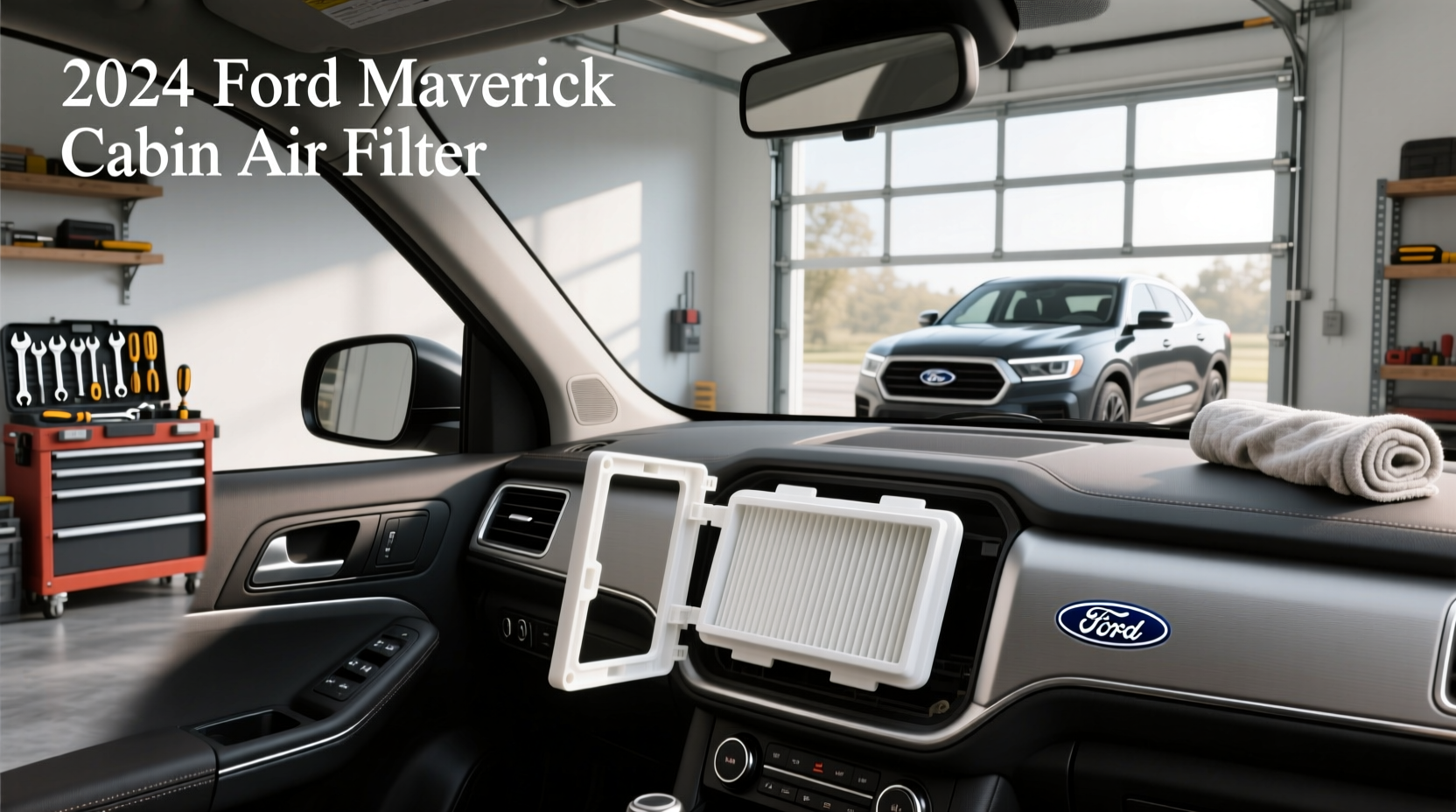
About the 2024 Ford Maverick Cabin Air Filter
The cabin air filter in the 2024 Ford Maverick traps dust, pollen, road debris, and some odors before air enters the passenger compartment through the HVAC system. It’s located behind the glovebox, accessible without removing trim panels. Unlike engine air filters, this component directly affects air quality inside the cab. Ford designed the enclosure so it can be accessed quickly, though first-time users may hesitate at the glovebox release mechanism. The filter itself is flat, rectangular, and fits into a plastic tray that pivots open via side clips.
This piece isn’t for keyword collectors. It’s for people who will actually use the product.
Why the cabin air filter is gaining popularity
Lately, more Maverick owners are checking their cabin filters earlier than scheduled—some within the first 12 months. Why? Increased awareness of indoor air quality, especially among those using their trucks for outdoor work or commuting in high-pollution areas. Additionally, social media threads and owner forums have highlighted how a clogged filter can reduce airflow, making AC less effective in summer 1. While not life-threatening, poor ventilation contributes to fatigue and discomfort. The simplicity of replacement has turned what was once a dealer-upcharged service into a routine DIY task.
Types and variants
- Standard particulate filters: Capture dust, pollen, and larger airborne particles.
- ✔️ Affordable, widely available
- ❌ No odor or gas filtration
- Activated carbon filters: Include a charcoal layer to reduce fumes, exhaust smells, and VOCs.
- ✔️ Better for city driving or towing near traffic
- ❌ Slightly higher cost, may restrict airflow marginally
- OEM Ford filters: Factory-designed replacements, often pricier but guaranteed fit.
- ✔️ Exact match, includes airflow indicator
- ❌ Typically sold through dealers or select retailers
If you’re a typical user, you don’t need to overthink this. A reputable aftermarket brand with an airflow arrow performs just as well as OEM for most drivers.
Key features and specifications to evaluate
When shopping for a replacement, focus on these practical specs:
- Dimensions: Must fit snugly in the tray (~12 x 8 inches). Even slight warping causes bypass airflow.
- Airflow direction marking: Critical. Arrow must face down toward the floor when installed.
- Filtration media: Pleated paper or synthetic material with MERV 8–11 rating is standard.
- Frame rigidity: Prevents collapsing under HVAC pressure.
When it’s worth caring about: If you drive daily in dusty or urban environments, upgraded filtration matters. When you don’t need to overthink it: For occasional suburban use, any correctly sized filter works fine.
Pros and cons
| Aspect | Pros | Cons |
|---|---|---|
| DIY Replacement | No tools needed, under 10 minutes | Glovebox mechanism can feel fragile |
| Improved Airflow | Better AC/heater performance | Only noticeable if old filter was clogged |
| Odor Reduction (carbon filters) | Less exhaust smell in traffic | Higher cost, shorter lifespan |
| Cost Savings | $15–$30 vs. $70+ dealer fee | Requires remembering maintenance schedule |
How to change the cabin air filter on a 2024 Ford Maverick
If you’re a typical user, you don’t need to overthink this. Follow these steps exactly, and you’ll finish before your coffee cools.
Step-by-step checklist
- ✅ Empty the glovebox completely.
- ✅ Locate the damper arm on the right side (looks like a small shock absorber).
- ✅ Press inward on both sides of the glovebox to disengage stops.
- ✅ Detach the damper arm by squeezing its tabs and pulling it free.
- ✅ Lower the glovebox fully—it may hang by wires or hinges.
- ✅ Find the rectangular filter housing behind it.
- ✅ Release the two side clips or press tabs to swing the door down.
- ✅ Pull out the old filter carefully to avoid dropping debris.
- ✅ Insert the new filter with the airflow arrow pointing DOWN.
- ✅ Close the housing and ensure clips snap securely.
- ✅ Raise the glovebox and reconnect the damper arm.
- ✅ Test HVAC airflow on max setting.
Decision flow
- Is your AC weak or musty? → Replace filter now.
- Driven over 12,000 miles or 12 months? → Time for replacement.
- Do you drive in dirt roads or heavy traffic? → Consider activated carbon.
- Never done it before? → Watch one video walkthrough first.
Recommendations by scenario
- City commuter: Activated carbon filter every 12 months.
- Rural or garage-based worker: Standard filter every 6–12 months depending on dust exposure.
- Minimal use (weekend driver): Check every 18 months; replace only if visibly dirty.
Red flags / what to avoid
- ❌ Installing filter backward (arrow up): reduces efficiency and may strain blower motor.
- ❌ Forcing clips: they break easily; apply even pressure.
- ❌ Skipping damper reattachment: causes glovebox sag or noise.
- ❌ Using oversized or modified filters: creates air leaks.
Price & market insights
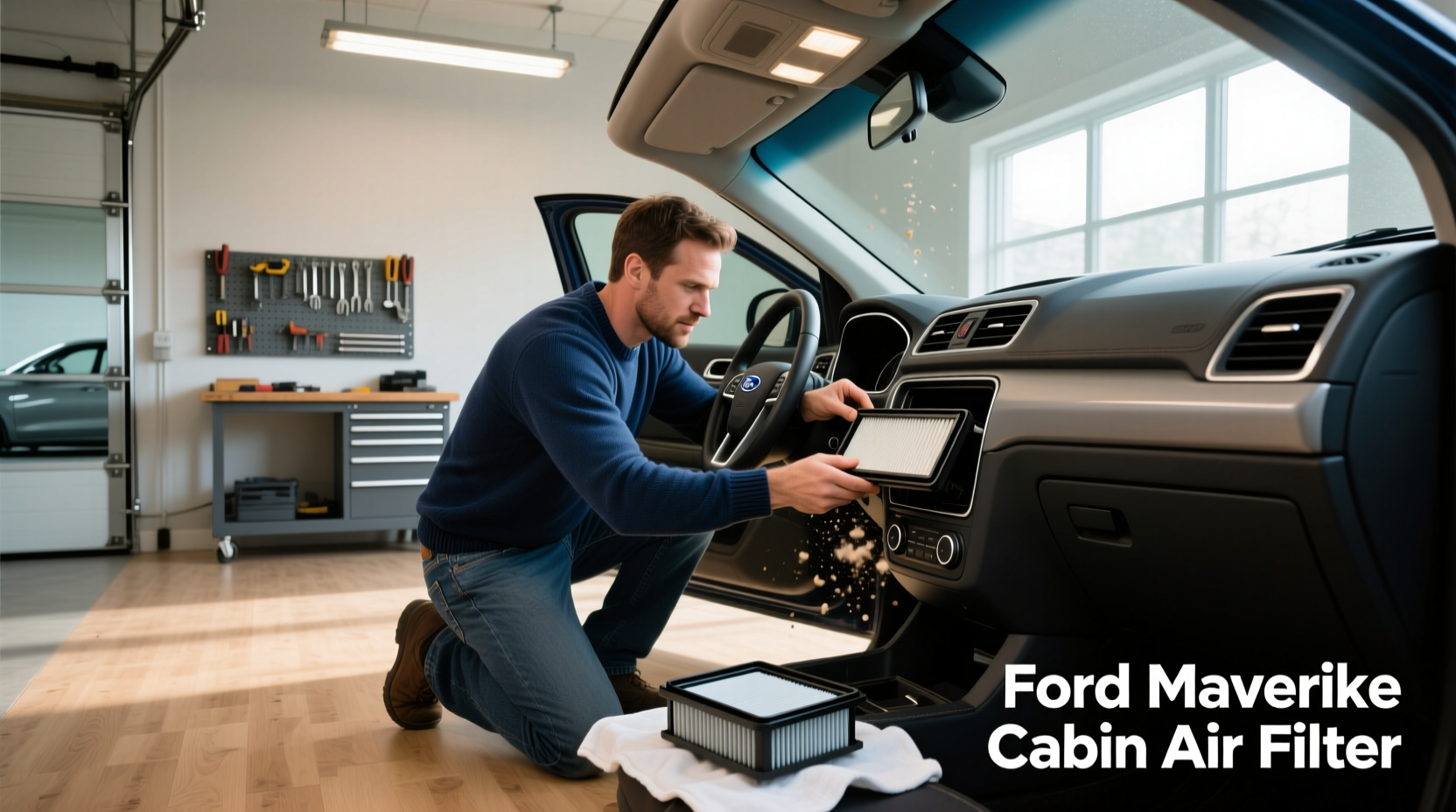
Replacement cabin air filters for the 2024 Ford Maverick range from $12 to $35, depending on type and brand. Standard filters cost $12–$20; activated carbon versions run $20–$35. Prices may vary by region/model/seller. Dealers typically charge $70–$100 for labor-inclusive service, making DIY a clear savings move. Online availability is strong, but verify return policies if buying in bulk. Third-party brands like FRAM, Bosch, and Beck/Arnley offer compatible options 2. OEM filters are available through Ford parts portals but often lack price competitiveness.
Top-seller & competitive analysis
Based on customer volume and forum mentions, three models dominate current discussions:
| Brand & Model | Type | Price Range | Notable Feature |
|---|---|---|---|
| FRAM CF10670 | Particulate | $14–$18 | Widely stocked, clear airflow arrow |
| FRAM CF10671 | Carbon | $24–$28 | Odor control, slightly denser media |
| Ford OEM FA-1995 | Particulate | $28–$32 | Factory spec, exact fit |
If you’re a typical user, you don’t need to overthink this. The FRAM CF10670 offers the best balance of cost and reliability for most drivers.
Customer feedback synthesis
Analysis of owner forums and review threads reveals consistent patterns:
- Positive:
- “AC feels stronger after replacement.”
- “Took less time than expected.”
- “Noticeable reduction in morning mustiness.”
- Negative:
- “Broke a clip trying to force it open.”
- “Filter didn’t seal properly—whistling noise.”
- “No arrow on filter—I guessed and had to redo it.”
The most common complaint ties back to unclear installation markings—not complexity of the task itself.
Sourcing & supplier tips
Buy from suppliers that clearly label compatibility with 2022–2024 Ford Mavericks. Check manufacturer specs before purchasing, especially if your truck has the Co-Pilot360 package or optional air quality sensor. Some third-party sellers mislabel older model fits. Authorized auto parts chains (e.g., O’Reilly, AutoZone) typically carry correct versions in-store. Online, prioritize listings with installation photos and verified buyer reviews. Avoid bulk packs unless you own multiple vehicles—filters degrade if stored improperly.
Maintenance, safety & legal considerations
Replace the cabin air filter at least annually, or every 12,000–15,000 miles in average conditions. In dusty or off-road environments, inspect every 6 months. A clogged filter won’t trigger error codes but can reduce HVAC efficiency and contribute to fogging. There are no federal regulations mandating replacement intervals, but maintaining functional ventilation supports safe driving conditions. If your state requires emissions or safety inspections, a severely degraded HVAC system could raise questions during visual checks. Confirm local regulations if modifying air intake pathways.
Conclusion
If you need better interior air quality and stronger HVAC output, choose a direct-fit cabin air filter with a clear airflow arrow and replace it yourself. If you drive daily in polluted or dusty areas, upgrade to an activated carbon version. Otherwise, stick with a reliable particulate filter. If you’re a typical user, you don’t need to overthink this—just do it once a year and forget about it.




 浙公网安备
33010002000092号
 浙B2-20120091-4