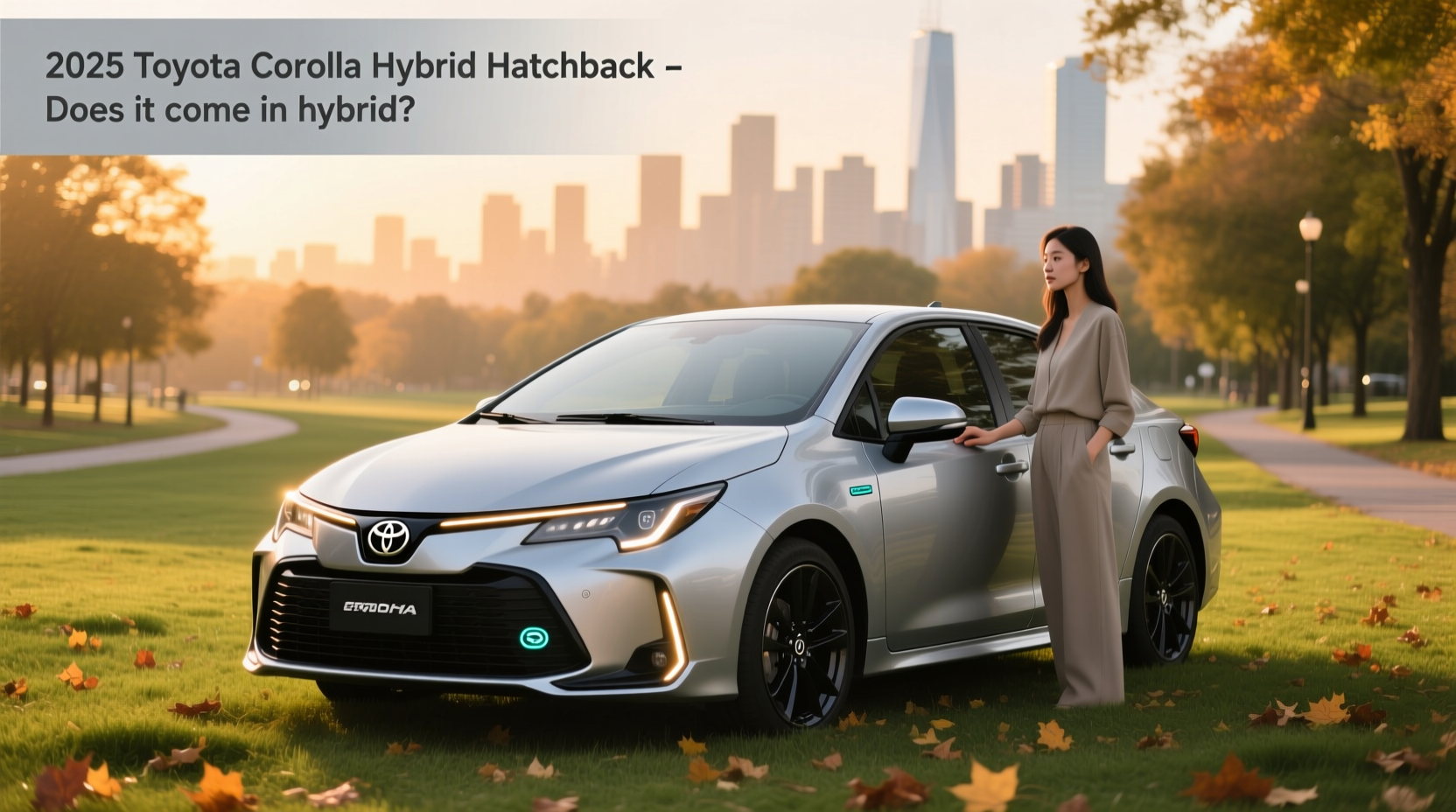
If you’re trying to decide between the 2025 Toyota Corolla Hybrid and the Corolla Hatchback, here’s the bottom line: the hybrid is only available as a sedan, while the hatchback comes with a gasoline engine only. If your priority is maximum fuel efficiency—especially for city driving or long commutes—the Corolla Hybrid sedan (up to 53 MPG city) is the clear winner. If you value cargo flexibility, a sportier design, or daily load versatility, the gas-powered Corolla Hatchback makes more sense. How to choose? Start by deciding whether MPG or utility matters more. Don’t get caught in the trap of thinking there’s a hybrid hatchback—there isn’t, at least not for 2025. And if you’re a typical user, you don’t need to overthink this.
About the 2025 Toyota Corolla Lineup
The Toyota Corolla has evolved into two distinct vehicles under the same name: the Corolla Hybrid (sedan body style) and the Corolla Hatchback (gasoline-only, five-door). Though they share the Corolla name and Toyota reliability, they serve different needs. The hybrid model focuses on efficiency and comfort, while the hatchback emphasizes driving dynamics and cargo adaptability.
This split approach isn’t new, but it’s become more pronounced in 2025. Over the past year, automakers have sharpened their focus on segment-specific tuning—hybrids for efficiency seekers, sportier models for drivers who prioritize engagement. Toyota’s strategy reflects that shift: instead of one do-it-all Corolla, there are now two well-defined options. If you’re a typical user, you don’t need to overthink this. Pick based on your primary use case, not minor feature differences.
This piece isn’t for keyword collectors. It’s for people who will actually use the product.
Why the Corolla Hybrid and Hatchback Are Gaining Popularity
Lately, buyers have shown stronger preferences for either extreme: maximum efficiency or maximum usability. The Corolla Hybrid appeals to urban commuters, ride-share drivers, and cost-conscious families who want low fuel bills. The hatchback draws younger drivers, active lifestyles, and those who regularly carry gear, pets, or sports equipment.
Toyota hasn’t merged the two models because doing so would compromise both. A hybrid hatchback would require battery packaging that eats into cargo space. Meanwhile, adding sport-tuned suspension and a larger engine to the hybrid sedan would reduce fuel economy. By keeping them separate, Toyota avoids watered-down compromises.
Another factor: rising fuel prices and insurance costs have made efficient sedans more attractive again. At the same time, SUVs dominate the market, leaving room for compact, agile alternatives like the hatchback that offer some utility without the size.
Types and Variants
2025 Corolla Hybrid (Sedan)
- Trims: LE, SE, XLE
- Powertrain: 1.8L four-cylinder + electric motor, front- or all-wheel drive
- Fuel Economy: Up to 53/46/50 MPG (FWD), 44/40/42 MPG (AWD)
Pros: Excellent fuel efficiency, smooth ride, standard Toyota Safety Sense 3.0, quiet cabin.
Cons: Less cargo space than hatchback, less engaging driving feel, no performance trim.
2025 Corolla Hatchback (Gasoline)
- Trims: SE, FX (special edition), XSE
- Powertrain: 2.0L Dynamic Force engine, 169 hp, front-wheel drive
- Fuel Economy: 32/41/35 MPG (combined)
Pros: Sporty handling, larger cargo area (24.6 cu ft behind rear seats), hands-free power liftgate (on XSE), available special FX trim with blacked-out styling.
Cons: Lower MPG than hybrid, no AWD option, fewer driver assists standard on base trims.
If you’re a typical user, you don’t need to overthink this. The choice isn’t about which car is better overall—it’s about which one fits your life.
Key Features and Specifications to Evaluate
When comparing the two models, focus on these dimensions:
- Fuel Economy: Matters most if you drive over 12,000 miles per year or spend significant time in traffic. The hybrid saves hundreds annually in fuel.
- Cargo Space: Hatchback offers 24.6 cu ft vs. 13 cu ft in the sedan. If you haul groceries, strollers, or gear weekly, this difference is meaningful.
- Driving Dynamics: The hatchback has a stiffer suspension, quicker steering, and a more responsive throttle. It feels more connected to the road.
- Safety Tech: Both include automatic emergency braking and lane departure warning. But higher trims add adaptive cruise and blind-spot monitoring.
- Infotainment: 8-inch touchscreen standard, Apple CarPlay/Android Auto compatible. No major differences between models.
When it’s worth caring about: If your commute includes tight parking, frequent stops, or highway congestion, fuel economy becomes a daily burden—or relief. When you don’t need to overthink it: If you drive less than 8,000 miles a year, the savings from the hybrid may not justify the price difference.
Pros and Cons
| Model | Pros | Cons |
|---|---|---|
| Corolla Hybrid Sedan | High MPG, smooth ride, strong resale, available AWD, quiet interior | Limited trunk space, less fun to drive, taller step-in height |
| Corolla Hatchback (Gas) | Versatile cargo area, sporty tuning, lower starting price, unique FX trim | No hybrid option, no AWD, lower fuel economy |
If you’re a typical user, you don’t need to overthink this. Prioritize the feature that impacts your daily routine most—not the one that looks best on paper.
How to Choose the Right Model: A Buying Guide
Follow this checklist to make a confident decision:
Step-by-Step Checklist
- Assess your annual mileage. Over 12,000 miles? Lean toward the hybrid.
- Evaluate cargo needs. Do you regularly carry bulky items? The hatchback’s rear opening and fold-down seats matter.
- Test drive both. Note how each feels in stop-and-go traffic and on winding roads.
- Compare total cost of ownership. Include fuel, insurance, maintenance, and depreciation.
- Check local incentives. Some regions offer tax credits for hybrids—verify eligibility.
Decision Flow
- If fuel economy is your top concern → Corolla Hybrid Sedan
- If cargo space or driving enjoyment matters more → Corolla Hatchback
- If you want AWD → Only available on Hybrid LE and XLE trims
- If budget is tight → Base hatchback starts slightly lower than base hybrid
Recommendations by Scenario
- Urban commuter: Hybrid sedan. Frequent stops and starts maximize regenerative braking benefits.
- Suburban family: Depends. If carpooling and grocery runs dominate, hatchback. If long commutes, hybrid.
- Young professional: Hatchback, especially the FX trim. Styling and versatility align better.
- Ride-share driver: Hybrid. Lower operating costs directly impact earnings.
Red Flags / What to Avoid
- Assuming the hatchback will get hybrid MPG. It won’t. The 2.0L engine is efficient for a gas car but can’t match the hybrid.
- Overvaluing trim features. Leather seats or sunroofs don’t change core functionality.
- Ignoring real-world fuel data. EPA estimates are useful, but check owner-reported MPG on forums.
- Skipping the test drive. The hatchback’s firmer ride may not suit everyone.
If you’re a typical user, you don’t need to overthink this. Focus on what changes your day-to-day experience, not what sounds good in a brochure.
Price & Market Insights
Starting MSRP for the 2025 Corolla Hybrid sedan is around $25,000, while the hatchback starts near $24,600. Higher trims and AWD add $2,000–$4,000. Prices may vary by region/model/seller due to dealer fees, inventory levels, and local demand.
Recently, some dealers have added modest markups on hybrids due to high demand, while hatchbacks often come with incentives. Always verify final out-the-door pricing before committing. Check manufacturer specs and compare quotes from multiple dealers to avoid overpaying.

Top-Seller & Competitive Analysis
The Corolla Hybrid sedan outsells the hatchback by a wide margin, reflecting broader market trends favoring fuel efficiency and comfort. Still, the hatchback holds a loyal niche among enthusiasts and practical users who prefer its form factor.
| Model | MPG (Combined) | Cargo (cu ft) | AWD Option | Starting Price |
|---|---|---|---|---|
| Corolla Hybrid Sedan | 50 | 13.0 | Yes | $25,000 |
| Corolla Hatchback | 35 | 24.6 | No | $24,600 |
| Honda Civic Sedan (Hybrid) | 48 | 14.8 | No | $25,400 |
| Mazda3 Hatchback | 33 | 20.1 | No | $25,950 |
The Honda Civic Hybrid offers similar efficiency but lacks AWD. The Mazda3 provides a premium interior and sharp handling but at a higher price and without hybrid efficiency. The Corolla Hybrid’s combination of AWD availability and top-tier MPG gives it a unique edge.
Customer Feedback Synthesis
Based on recent owner reviews and dealer feedback:
- Highly praised: Hybrid’s fuel economy, reliability, and smooth acceleration. Hatchback’s cargo space and responsive engine.
- Common complaints: Hybrid’s limited trunk hampers larger items. Hatchback’s lack of hybrid option frustrates efficiency-minded buyers. Base infotainment screen is slow to respond.
- Surprising positives: Long-term durability reports remain strong across both models. Resale value holds well, especially for hybrid trims.
If you’re a typical user, you don’t need to overthink this. Real-world satisfaction aligns closely with initial expectations—choose accordingly.
Sourcing & Supplier Tips
To get the best deal:
- Request quotes from at least three dealers.
- Check Toyota’s official website for current lease specials and APR offers.
- Verify inventory status online to avoid long waits.
- Negotiate the total out-the-door price, not monthly payments.
- Confirm return policy if buying online through a virtual showroom.
Prices and availability may vary by region/model/seller. Always check manufacturer specs before finalizing.
Maintenance, Safety & Legal Considerations
Both models require similar maintenance: oil changes every 5,000–10,000 miles, tire rotations, and brake inspections. Hybrid batteries are covered under an 8-year/100,000-mile warranty (varies by state; confirm local regulations).
Safety ratings are strong: both earn Top Safety Pick honors from the IIHS. Standard Toyota Safety Sense 3.0 includes pre-collision braking, pedestrian detection, and lane-keeping assist.
No legal restrictions apply to either model. However, some cities offer HOV lane access or parking discounts for hybrids—check local programs.
Conclusion
If you need maximum fuel efficiency and daily comfort, choose the 2025 Corolla Hybrid sedan. If you prioritize cargo space, versatility, and a sportier drive, go with the Corolla Hatchback. There’s no single ‘better’ option—only the one that fits your routine. If you’re a typical user, you don’t need to overthink this. Pick the model that solves your biggest pain point, then drive it for years with confidence.
Everything You Need to Know
Does the 2025 Corolla hatchback come in hybrid?
No, the 2025 Toyota Corolla Hatchback is only available with a gasoline engine. The hybrid powertrain is currently offered only on the Corolla Sedan. This distinction has remained consistent through recent model years.
What is the fuel economy of the 2025 Corolla Hybrid?
The front-wheel-drive Corolla Hybrid achieves up to 53 MPG city, 46 highway, and 50 combined. All-wheel-drive models get 44 city, 40 highway, and 42 combined. Real-world results may vary by region/model/seller and driving conditions.
Is the Corolla Hatchback more fun to drive than the Hybrid Sedan?
Many drivers report that the hatchback feels more engaging due to its stiffer suspension, lower center of gravity, and responsive 2.0L engine. The hybrid sedan prioritizes smoothness and quiet operation over sportiness.
Can I get all-wheel drive on the Corolla Hatchback?
No, all-wheel drive is not available on the 2025 Corolla Hatchback. It is only offered on select trims of the Corolla Hybrid Sedan (LE and XLE). If AWD is important, the hybrid sedan is your only Corolla option.
How much cargo space does the Corolla Hatchback offer?
The 2025 Corolla Hatchback provides 24.6 cubic feet of cargo space behind the rear seats and expands to 47.0 cubic feet with the rear seats folded. This compares to 13.0 cubic feet in the Corolla Hybrid Sedan.




 浙公网安备
33010002000092号
 浙B2-20120091-4