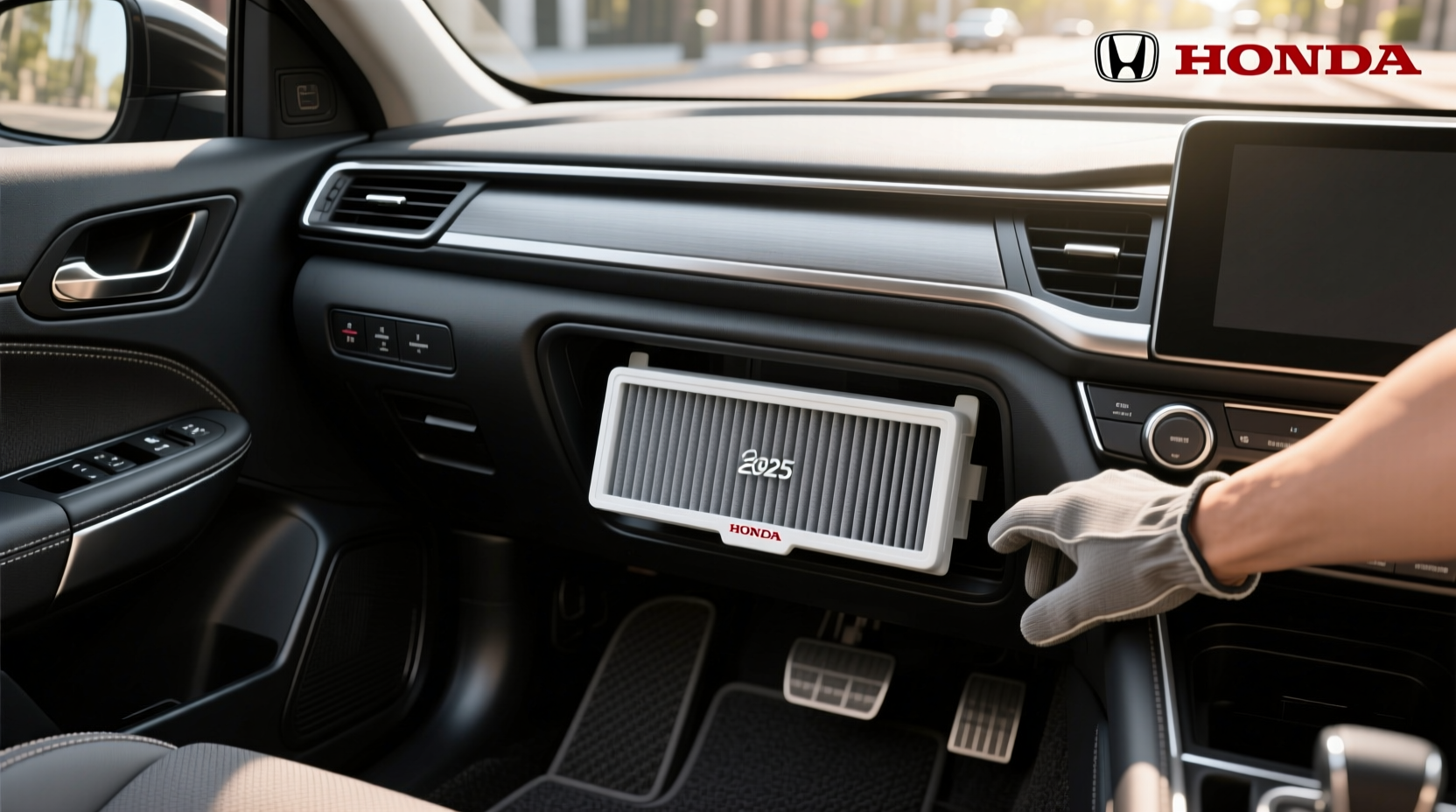
If you’re replacing the cabin air filter on your 2025 Honda CR-V, here’s what matters: the filter is behind the glove box, requires no tools, and takes under 15 minutes. When choosing a replacement, focus on correct dimensions (roughly 9.8 x 8.7 inches), ensure the airflow arrow points down during installation, and avoid overpriced branded filters unless your region has high pollution or allergens. If you’re a typical user, you don’t need to overthink this. Most aftermarket options perform similarly if they meet OEM specs. Over the past year, more owners have switched to activated carbon filters for odor reduction—especially in urban areas with heavy traffic.
This piece isn’t for keyword collectors. It’s for people who will actually use the product.
About the 2025 Honda CR-V Cabin Air Filter
The cabin air filter in the 2025 Honda CR-V cleans the air entering the vehicle’s HVAC system, trapping dust, pollen, pollutants, and some odors before they reach the interior. Located behind the glove compartment, it's designed for tool-free access, allowing most drivers to replace it without professional help. The system uses a flat-panel filter that slides into a plastic housing after lowering the glove box. This design has remained consistent across recent CR-V generations, including hybrid trims, making part compatibility relatively straightforward between 2023–2025 models.

Why This Matters Now
Lately, air quality concerns—from wildfire smoke to urban smog—have made cabin filtration more visible to everyday drivers. While not new, the routine maintenance of the cabin air filter is gaining attention as a low-cost way to improve comfort and reduce allergy symptoms. Recently, automakers like Honda have emphasized cabin air care in owner communications, aligning with broader consumer interest in health-conscious vehicle upkeep. For 2025 CR-V owners, especially those in densely populated or high-dust environments, maintaining a clean filter directly affects airflow strength, AC efficiency, and interior odor control.
If you’re a typical user, you don’t need to overthink this. Unless you drive frequently on unpaved roads or live near industrial zones, standard particulate filters are sufficient for most conditions.
Types and Variants
Cabin air filters for the 2025 CR-V come in two main types:
Standard Particulate Filters
- Traps dust, pollen, and larger airborne particles
- Inexpensive ($8–$15)
- Widely available from multiple brands
- No performance trade-offs
- Does not reduce odors or gases
- Limited protection against smoke or VOCs
Activated Carbon Filters
- Reduces odors from traffic, exhaust, and industrial emissions
- Offers better protection in polluted cities
- Slight improvement in air freshness perception
- Higher cost ($15–$25)
- Slightly restricted airflow in lower-quality versions
- Shorter effective lifespan under heavy pollution
If you’re a typical user, you don’t need to overthink this. Choose activated carbon only if you notice persistent smells or drive often in congested areas.
Key Features and Specifications to Evaluate
When selecting a replacement filter, prioritize these features:
- Dimensions: Must match OEM size (~250mm x 220mm). Even slight deviations can cause gaps that let unfiltered air through.
- Airflow Direction Arrow: Always install with the arrow pointing downward—this aligns with the CR-V’s duct orientation.
- Filter Media Density: Higher density isn’t always better. Overly dense filters may restrict airflow, reducing HVAC efficiency.
- Frame Seal Quality: Look for foam or rubber gaskets that create an airtight seal around the edges.
- Compatibility Labeling: Verify fit for 2023–2025 CR-V (including hybrid variants).
When it’s worth caring about: If you have allergies, drive in dusty regions, or notice weak airflow from vents.
When you don’t need to overthink it: For routine replacement in average driving conditions, any reputable brand with correct sizing works.
Pros and Cons
- Tool-free replacement process
- Accessible location behind glove box
- Consistent design across model years
- Wide availability of compatible filters
- Noticeable improvement in air quality post-replacement
- Glove box damper can be fragile during removal
- Arrow direction is not intuitive—easy to install backward
- Poor seals on cheap filters reduce effectiveness
- Carbon filters may need earlier replacement
How to Replace the Cabin Air Filter on a 2025 Honda CR-V
Follow this step-by-step guide to replace your filter efficiently and safely.
Step-by-Step Checklist
- 🛒 Empty the glove box completely.
- 📍 Locate the damper arm on the right side—press it back to disengage.
- 🔧 Gently squeeze both sides of the glove box inward to release retaining clips.
- Lower the glove box fully to expose the filter housing.
- Press the latches on both sides of the rectangular cover to release it.
- Remove the old filter, noting the airflow arrow direction (should point down).
- Insert the new filter with the arrow facing downward.
- Reattach the cover until it clicks securely.
- Lift the glove box back into position and re-engage the side clips.
- Reconnect the damper arm.
Decision Flow
- Are you experiencing musty odors or reduced airflow? → Replace now.
- Is it been 12 months or 15,000 miles since last change? → Replace now.
- Do you drive mostly in clean, rural areas? → Standard filter is fine.
- Do you commute in city traffic or near construction? → Consider activated carbon.
Recommendations by Scenario
- City Driver: Use activated carbon filter every 12 months.
- Rural/Highway Driver: Standard filter every 15,000–20,000 miles.
- Allergy Sufferer: High-efficiency particulate filter (HEPA-style) if compatible; otherwise, carbon + frequent changes.
- Hybrid Owner: Same procedure and specs as gas models.
Red Flags / What to Avoid
- ❌ Installing the filter backward (arrow up instead of down)—reduces efficiency.
- ❌ Forcing the glove box clips—can break the plastic retainers.
- ❌ Using filters labeled for older CR-V generations without verifying dimensions.
- ❌ Skipping damper reconnection—glove box won’t stay closed properly.
- ❌ Assuming all 'premium' filters are better—some overprice without performance gains.
If you’re a typical user, you don’t need to overthink this. Stick to known-fit filters and follow the visual cues in replacement videos.
Price & Market Insights
Replacement cabin air filters for the 2025 CR-V vary in price based on type, brand, and retailer. Standard filters typically range from $8 to $15, while activated carbon versions go from $15 to $25. Prices may vary by region/model/seller, especially at dealerships versus online marketplaces. Multi-packs (2–3 filters) often offer better value for long-term owners. Note that dealership labor charges for this service are usually unnecessary—since it’s a 10-minute DIY job, paying for installation rarely makes sense unless bundled with other maintenance.
Top-Seller & Competitive Analysis
Below is a comparison of widely available cabin air filters compatible with the 2025 Honda CR-V:
| Brand | Type | Price Range | Key Advantage | Consideration |
|---|---|---|---|---|
| Honda OEM | Particulate / Carbon | $18–$22 | Guaranteed fit and seal | Pricier than equivalents |
| FRAM Fresh Breeze | Carbon | $16–$20 | Balanced odor and particle control | Slight airflow resistance noted |
| ACDelco PF593 | Particulate | $10–$14 | Reliable performance, low cost | No odor reduction |
| Pull & Bear (Aftermarket) | Carbon | $12–$16 | Competitive pricing | Mixed durability reports |
| Denso 7795 | Carbon | $18–$24 | OE supplier for many automakers | Premium price |
If you’re a typical user, you don’t need to overthink this. Denso and FRAM offer strong balance between cost and reliability.
Customer Feedback Synthesis
Analysis of user reviews and video comment sections reveals consistent themes:
- 高频好评: Easy DIY process, noticeable improvement in air smell and flow, clear instructions in tutorial videos.
- 常见抱怨: Backward installation due to unclear arrow markings, difficulty reattaching damper arm, poor sealing with off-brand filters leading to whistling noises.
- Surprise Insight: Some users report buying carbon filters expecting major odor elimination but found only mild improvement—managing expectations is key.
This piece isn’t for keyword collectors. It’s for people who will actually use the product.
Sourcing & Supplier Tips
Buy from suppliers that provide dimensional specs and compatibility lists. Reputable auto parts retailers—both physical and online—often include fitment guides. When purchasing online, check return policies in case the filter doesn’t fit as expected. If unsure, compare your old filter to product images before ordering. Avoid listings without clear manufacturer details or customer reviews. For verified compatibility, check manufacturer specs directly or consult your dealer’s parts portal using your VIN.
Maintenance, Safety & Legal Considerations
Replacing the cabin air filter poses no safety risks when done correctly. Avoid using sharp tools near the glove box housing to prevent damage. Ensure the glove box is securely reattached before driving. There are no legal requirements for cabin filter type or replacement frequency—this is a maintenance choice, not a compliance issue. However, a clogged filter can strain the HVAC blower motor over time, potentially leading to higher repair costs. Confirm local service center practices if outsourcing, but verify they follow factory procedures.
Conclusion
If you need reliable, clean cabin air without hassle, choose a correctly sized particulate or carbon filter based on your environment—and replace it every 12–15 months. If you’re a typical user, you don’t need to overthink this. The 2025 CR-V’s design makes filter replacement simple, effective, and entirely within reach of most owners.
Everything You Need to Know
❓ Where is the cabin air filter located on a 2025 Honda CR-V?
The cabin air filter is located behind the glove box. To access it, empty the glove box, release the side clips and damper arm, then lower it fully to expose the filter housing.
❓ How often should I change the cabin air filter in my 2025 CR-V?
Honda recommends inspecting the filter every 15,000 miles and replacing it as needed. In average conditions,更换 every 12–15 months is sufficient. If you notice musty smells or weak airflow, replace it sooner.
❓ Does the airflow arrow on the filter point up or down?
The airflow arrow should point downward. This aligns with the direction of air movement in the CR-V’s HVAC system. Installing it backward may reduce filtering efficiency.
❓ Can I use an aftermarket cabin air filter instead of OEM?
Yes, many aftermarket filters fit and perform well. Ensure they match the correct dimensions and have a good edge seal. Brands like FRAM, ACDelco, and Denso are commonly used and reliable.
❓ Do I need an activated carbon filter for my CR-V?
Only if you want improved odor reduction. If you drive in heavy traffic, near industrial areas, or notice exhaust smells, a carbon filter helps. For general use, a standard particulate filter is adequate.




 浙公网安备
33010002000092号
 浙B2-20120091-4