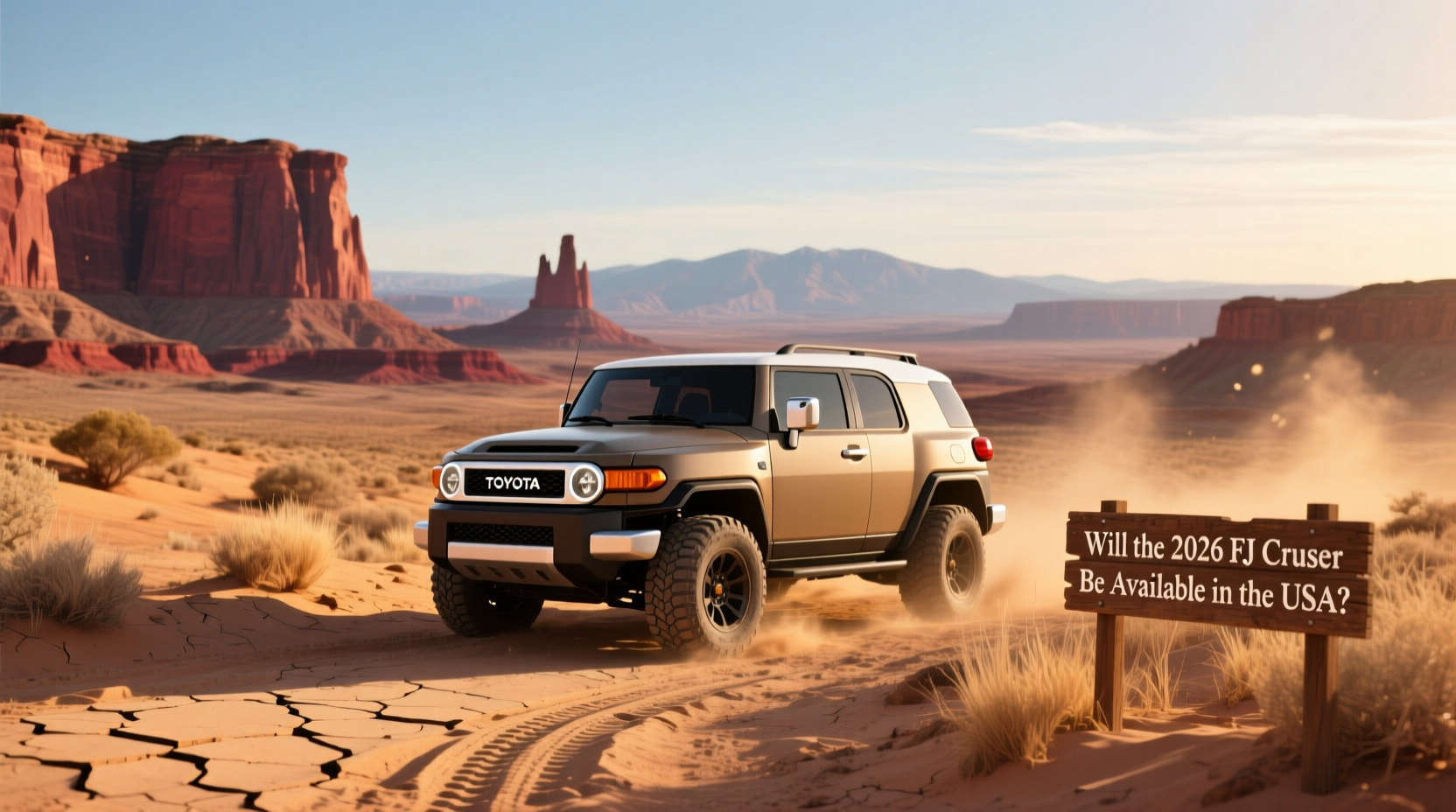
If you’re asking how to choose a compact off-road SUV with heritage style and trail capability, skip the 2026 Toyota Land Cruiser FJ—it’s not coming to the U.S. Instead, focus on proven models like the Jeep Wrangler, Ford Bronco, or even used FJ Cruisers still on the market. The new FJ is built on Toyota’s IMV platform in Thailand 1, subject to a 19% import tariff under the “chicken tax,” making it economically unviable for American pricing. If you’re a typical user, you don’t need to overthink this: no official plans exist for U.S. or European sales 2. While rumors persist about a Land Cruiser pickup based on the Hilux, that concept remains separate—and equally unlikely due to similar trade barriers.
About the Toyota Land Cruiser FJ
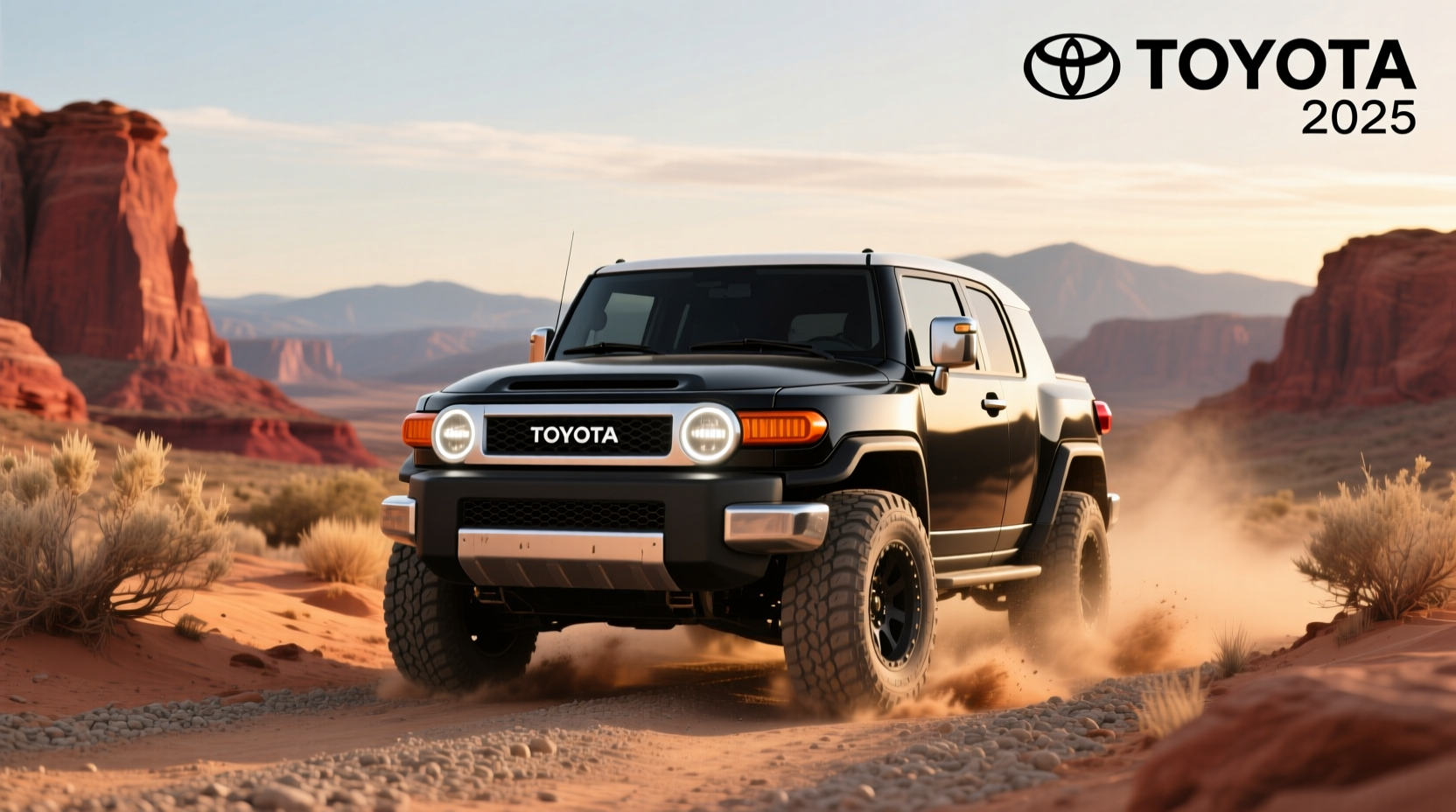
The 2026 Toyota Land Cruiser FJ (sometimes called the "Baby Land Cruiser") is a compact, body-on-frame SUV designed for rugged use in emerging markets. It revives the classic FJ styling cues—boxy shape, round headlights, two-tone paint—but scales down the size and cost compared to full-size Land Cruisers. Unlike the hybrid-powered J250 series sold in North America, this model uses a conventional internal combustion engine and shares its architecture with the Hilux and Innova, manufactured primarily in Thailand.
This vehicle targets regions where fuel is cheaper, roads are rougher, and smaller vehicles are more practical. Markets include Southeast Asia, Africa, Latin America, the Middle East, and Japan. Its positioning is clear: affordable durability over luxury or electrification. If you’re a typical user, you don’t need to overthink this—it wasn’t engineered for U.S. emissions standards, safety regulations, or consumer expectations around tech and powertrains.
Why the FJ Is Gaining Popularity
lately, interest in small, analog off-roaders has surged. Over the past year, social media clips from TikTok and YouTube have highlighted the FJ’s charm in remote terrain 3 4. Enthusiasts praise its simplicity, low-end torque, and mechanical feedback—qualities often lost in larger, computer-heavy SUVs. In countries where reliability trumps infotainment, the FJ fills a real gap.The emotional draw is strong: freedom, adventure, minimalism. But the practical signal matters more. As urban congestion increases and outdoor recreation grows, compact 4x4s offer maneuverability without sacrificing capability. However, this trend hasn’t shifted Toyota’s stance on U.S. availability. The disconnect between enthusiast desire and economic reality creates tension—but not enough to override tariffs and volume projections.
Types and Variants
The global FJ lineup includes several trims focused on utility and regional adaptation:
- Base Work Trim: Steel wheels, manual transmission, vinyl flooring – built for fleets and rural operators.
- Mid-Level Outdoor: Adds roof rails, fog lights, fabric seats, and optional rear locker.
- Limited Heritage Edition: Two-tone paint, retro badges, upgraded audio – aimed at personal buyers who value aesthetics.
| Variant | Pros | Cons |
|---|---|---|
| Work Trim | Durable, low maintenance, lowest price | Spartan interior, no advanced driver aids |
| Outdoor | Balanced features, better comfort | Premium adds $2k+ depending on region |
| Heritage Edition | Strong visual appeal, collectible potential | Limited availability, higher depreciation risk if not maintained |
Key Features and Specifications to Evaluate
When assessing whether a compact off-roader fits your needs, consider these factors—and know when each truly matters.
Powertrain and Drivetrain
When it’s worth caring about: If you frequently tow, drive at high elevation, or expect snow, engine output and gearing matter. The FJ’s likely 2.7L I4 or 2.8L diesel offers modest horsepower but strong low-RPM torque.
When you don’t need to overthink it: For light trails and daily driving, most modern compact 4x4s perform similarly. If you’re a typical user, you don’t need to overthink this—focus on drivetrain layout (part-time 4WD vs full-time) instead of minor hp differences.
Ground Clearance & Approach Angles
When it’s worth caring about: Rock crawling or deep rut navigation demands clearance above 8.5 inches and approach angles over 30°. The FJ delivers here thanks to short overhangs.
When you don’t need to overthink it: On graded forest roads or occasional dirt paths, any capable SUV suffices. Don’t pay extra for extreme geometry unless you’ll use it weekly.
Interior Space and Cargo
When it’s worth caring about: Families or gear-heavy adventurers need usable rear seating and secure storage. The FJ’s upright design helps, but third-row options don’t exist.
When you don’t need to overthink it: Solo travelers or couples using roof racks can ignore minor cabin differences. Prioritize seat adjustability and door seal quality over cubic feet metrics.
Pros and Cons
✅ Pros: Proven mechanicals, excellent off-road geometry, easy repairs in remote areas, nostalgic design
❌ Cons: No U.S. availability, lacks hybrid option, limited safety tech, subject to import tariffs
How to Choose a Compact Off-Roader (Buying Guide)
Even if the FJ isn’t an option, choosing the right small 4x4 requires clarity. Follow this checklist:
Step-by-Step Checklist
- Evaluate primary use: daily commute + weekend trail? Overlanding? Fleet operation?
- Determine must-have features: locking differentials, low-range transfer case, recovery points
- Set budget including taxes, registration, and modifications
- Research local service network for preferred brand
- Test drive in real conditions—not just paved lots
Decision Flow
- If you want U.S.-available new models → Look at Jeep Wrangler, Ford Bronco, Toyota 4Runner
- If you want classic FJ looks → Consider used 2007–2014 FJ Cruiser (still reliable)
- If you plan international travel or relocation → Explore gray-market imports (verify compliance first)
- If you prioritize fuel efficiency and tech → Wait for next-gen hybrids or electric compact SUVs
Recommendations by Scenario
- Adventure newbie: 2025 Jeep Wrangler Sport – widely supported, good balance
- Overlander: Modified Toyota 4Runner TRD Pro – durable, large aftermarket
- Urban commuter who camps: Subaru Outback Wilderness – AWD capable, efficient
- Collector/investor: Well-maintained used FJ Cruiser – values rising slowly
Red Flags / What to Avoid
- Dealers claiming “special orders” for non-U.S.-spec FJs—these are scams
- Aftermarket conversions labeled as “factory models”
- Vehicles without proper NHTSA/DOT compliance documentation
- Unverified online listings with prices far below market average
Price & Market Insights
Pricing varies significantly by region and trim. In Thailand, base models start around $25,000 USD equivalent. In Australia or South Africa, fully loaded versions reach $38,000. These figures do not include shipping, duties, or conversion costs for U.S. registration—which could double total expense.
In the U.S., used FJ Cruisers (discontinued in 2014) sell between $28,000 and $45,000 depending on mileage and mods. Values have stabilized after initial collector spikes. New compact off-roaders like the Bronco start near $35,000, giving buyers modern warranties and dealer support.
Top-Seller & Competitive Analysis
No direct competitor matches the FJ’s blend of retro style and ruggedness—but alternatives dominate where the FJ isn’t sold.
| Model | Availability | Strengths | Weaknesses |
|---|---|---|---|
| Jeep Wrangler | Global (incl. U.S.) | Extensive customization, strong resale | Fuel economy, highway noise |
| Ford Bronco | North America, select exports | Advanced 4x4 systems, removable tops | Complex electronics increase repair cost |
| Used FJ Cruiser | U.S. pre-owned market | Simplicity, iconic look, Toyota reliability | Aging fleet, parts scarcity increasing |
| Mahindra Thar | India, select export markets | Very low cost, authentic off-road DNA | Not U.S.-legal, basic interiors |
Customer Feedback Synthesis
Based on owner forums and review sites, common themes emerge:
- Highly praised: Ease of modification, confidence on trails, straightforward mechanics
- Frequently criticized: Ride harshness on pavement, poor fuel economy (<17 mpg), lack of modern connectivity
- Neutral observations: Resale holds value well *if* well-maintained; otherwise depreciates fast
Sourcing & Supplier Tips
If importing personally:
- Use licensed brokers familiar with DOT/NHTSA rules
- Verify eligibility under Show or Display exemption (limited cases)
- Factor in 6–12 months for processing and compliance work
- Consider buying in Canada or Mexico where some models are available
If buying used domestically:
- Check VIN history via manufacturer portal
- Inspect for frame rust and differential leaks
- Avoid heavily modified examples unless you know the build quality
Maintenance, Safety & Legal Considerations
Mechanical simplicity means lower routine costs—oil changes, tire rotations, brake jobs are straightforward. However, sourcing specific suspension or driveline parts may take weeks if not stocked locally.
Safety-wise, the FJ lacks standard AEB, lane keep, or blind spot monitoring. Older models scored poorly in IIHS tests. Always verify current local requirements before operating modified or imported vehicles.
To confirm legality: check NHTSA’s Imported Vehicle Program page or consult a certified compliance specialist. Rules may vary by state and model year.
Conclusion
If you need a compact, capable off-roader available today in the U.S., choose the Jeep Wrangler or Ford Bronco. If you love the FJ’s look and don’t mind older tech, a well-cared-for used FJ Cruiser remains viable. If you’re a typical user, you don’t need to overthink this—the 2026 Land Cruiser FJ won’t be here, and waiting for it distracts from better choices already on the lot.
This piece isn’t for keyword collectors. It’s for people who will actually use the product.
Everything You Need to Know
Will the 2026 Toyota FJ Cruiser be sold in the United States?
No. Toyota has confirmed there are no plans to bring the 2026 Land Cruiser FJ to the U.S. market. It is being produced in Thailand for sale in Japan, Asia, Africa, Latin America, and the Middle East.
Why isn’t the new FJ Cruiser coming to America?
Mainly due to the 19% import tariff on light trucks (known as the "chicken tax") and mismatched market preferences. The U.S. favors larger, hybrid-equipped SUVs, while the FJ is small, ICE-only, and built overseas.
Is there a chance a Land Cruiser pickup will come to the U.S.?
Possible, but unlikely soon. Rumors suggest a Land Cruiser-badged pickup based on the Hilux, but it would face the same tariff issues. Any launch would require domestic production to be viable.
Can I import a 2026 FJ Cruiser myself?
Technically yes, but only after it turns 25 years old unless it meets strict compliance standards. Private imports before then are extremely costly and complex—often exceeding $75,000 all-in.
What are the best alternatives to the FJ Cruiser in the U.S.?
The Jeep Wrangler, Ford Bronco, and Toyota 4Runner offer similar off-road ability and enthusiast appeal. Used FJ Cruisers (2007–2014) also remain a solid option if properly maintained.




 浙公网安备
33010002000092号
 浙B2-20120091-4