🛒 Short Introduction
When choosing a 5 point plus child car seat anti escape system, prioritize secure harness design, proper fit for your vehicle, and compliance with recognized safety standards such as FMVSS 213 (U.S.) or ECE R44/04 or i-Size (Europe). A true '5 point plus' system typically includes a five-point harness enhanced with additional containment features—such as shoulder shields, chest clips, or torso locks—to reduce the risk of a child wriggling free during travel. This guide will help you understand how to choose a 5 point plus child car seat anti escape system by evaluating critical factors like harness adjustability, ease of installation, crash test performance, and real-world usability.
Avoid models with complex harness routing or flimsy padding that compresses over time. Look for adjustable headrests, energy-absorbing foam, and LATCH or ISOFIX compatibility. If your child has a history of attempting to escape restraints, consider high-back booster seats with built-in locking clips or convertible seats with reinforced side wings. Always verify manufacturer specifications and ensure the seat fits securely in your specific vehicle before purchase.
📍 About 5 Point Plus Child Car Seat Anti Escape System
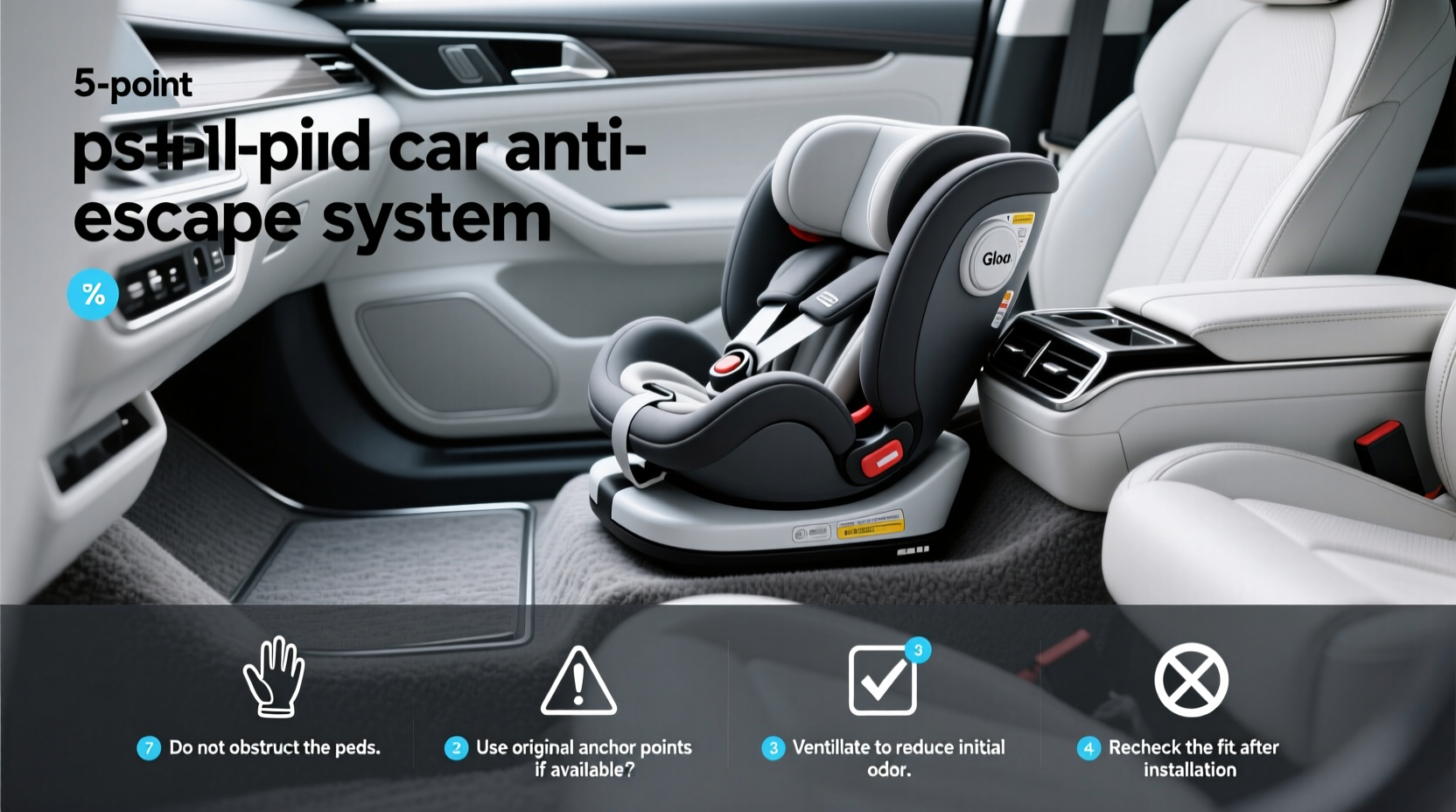
A 5 point plus child car seat anti escape system refers to an advanced child restraint configuration that builds upon the standard five-point harness (two shoulder straps, two hip straps, and one crotch strap) by adding supplementary mechanisms designed to prevent children from unstrapping themselves or slipping out during transit.
The 'plus' component may include features such as:
- ✨ Reinforced chest clips positioned at armpit level
- ✨ Shoulder cup extensions or padded guards
- ✨ Adjustable torso locks that limit upper body movement
- ✨ Locking harness covers that require adult manipulation to release
These systems are commonly integrated into convertible car seats, all-in-one seats, and some high-back boosters. They are primarily intended for children aged 2–7 years who have outgrown infant carriers but still require full-body support and behavioral containment due to active tendencies or special needs.
📈 Why 5 Point Plus Child Car Seat Anti Escape System Is Gaining Popularity
Parents and caregivers are increasingly seeking solutions for children who attempt to remove their seatbelts mid-drive—a dangerous behavior that compromises safety in the event of sudden stops or collisions. Traditional five-point harnesses can be defeated by determined toddlers using finger dexterity or body contortion.
This growing demand has led manufacturers to innovate with added physical barriers and ergonomic designs that maintain comfort while increasing retention. According to consumer trend data, searches related to 'car seat escape prevention' have risen steadily over the past five years1, reflecting increased awareness about proper restraint use.
Families managing neurodiverse children (e.g., those with ADHD or sensory processing differences) also benefit from these enhanced systems, which provide consistent positioning without constant supervision.
🔧 Types and Variants
Different configurations offer varying levels of protection and adaptability:
Convertible Seats with Anti-Escape Features
Designed to transition from rear-facing to forward-facing use.
- ✅ Pros: Long-term use (birth to ~65 lbs), robust harness systems
- ❌ Cons: Bulkier size, heavier weight, may not fit smaller vehicles
All-in-One (3-in-1 or 4-in-1) Seats
Can be used rear-facing, forward-facing, and as a booster.
- ✅ Pros: Extended usability, often include modular anti-escape components
- ❌ Cons: Complexity in setup, higher price point
High-Back Booster Seats with Harness Add-Ons
Some models accept optional harness attachments for younger or high-risk users.
- ✅ Pros: Lightweight, easier to transfer between cars
- ❌ Cons: Limited harness strength compared to dedicated convertible seats
Special Needs Adapted Seats
Medically inspired designs with extra anchoring points and postural supports.
- ✅ Pros: Maximum containment, customizable fit
- ❌ Cons: Requires professional assessment, limited availability
⚙️ Key Features and Specifications to Evaluate
To effectively assess a 5 point plus child car seat anti escape system, examine the following technical and functional aspects:
- Harness Adjustability: Look for no-rethread harnesses with multiple height settings.
- Chest Clip Design: Should sit at armpit level; avoid clips that are too low or difficult to operate.
- Head & Side Support: Deep side wings with EPS or EPP foam improve both comfort and impact absorption.
- Installation Method: Choose between LATCH (U.S.), ISOFIX (international), or seatbelt-only depending on your vehicle compatibility.
- Weight & Height Limits: Ensure the seat accommodates your child’s current and projected growth for at least 2–3 years.
- Machine-Washable Covers: Essential for hygiene and long-term maintenance.
- Anti-Slip Base or Foot Pads: Prevents seat shifting during abrupt maneuvers.
Also consider ease of cleaning, availability of replacement parts, and whether the harness remains tight after repeated use.
📋 Pros and Cons
Where It Excels
- 👥 Reduces risk of self-unbuckling in active children
- 🛡️ Maintains proper harness position during dynamic motion
- 🧼 Easy-to-clean materials and removable inserts
- 🔄 Grows with the child through multiple stages (in all-in-one models)
Limits and Drawbacks
- ❗ May cause discomfort if improperly adjusted (e.g., pinched straps)
- ❗ Not a substitute for attentive parenting—children may still find ways to loosen straps
- ❗ Some 'anti-escape' features are gimmicky and lack independent testing
- ❗ Installation errors remain common even with advanced systems
🔍 How to Choose 5 Point Plus Child Car Seat Anti Escape System
Follow this step-by-step process when selecting a model:
- Assess Your Child’s Age, Weight, and Behavior: Children under 40 lbs should remain in a harnessed seat. Frequent escape attempts justify investing in advanced containment.
- Measure Your Vehicle’s Rear Seat: Check width, seat angle, and LATCH anchor locations. Many anti-escape seats are wider than standard models.
- Verify Safety Standards: Confirm compliance with FMVSS 213 (U.S.), CMVSS (Canada), or ECE R44/04 / UN R129 (i-Size) in Europe.
- Test Harness Security: Try releasing the chest clip and shoulder pads yourself—these should require deliberate adult effort.
- Check Adjustability Range: The headrest and harness should accommodate at least 6 inches of growth.
- Evaluate Installation Simplicity: Opt for color-coded paths, lock-offs, or automatic tensioning if you install/remove frequently.
- Review Return Policy: Purchase from retailers offering returns—even if opened—as fit issues are common.
• Vague claims like 'escape-proof' without mechanical details
• Non-standard harness geometries that alter force distribution
• Third-party add-ons (e.g., aftermarket harness covers) not approved by the manufacturer
• Seats exceeding recommended expiration dates (typically 6–10 years from manufacture)
💰 Price & Market Insights
Pricing varies significantly based on region, brand reputation, and included technology:
- Budget Tier ($80–$130): Basic anti-escape features like improved chest clips; suitable for occasional use.
- Mid-Range ($130–$250): Includes adjustable headrests, superior foam, and reliable harness locks; best value for most families.
- Premium ($250+): Advanced side-impact protection, steel-reinforced frames, premium fabrics, and intuitive installation aids.
Prices may differ across regions due to import regulations and local certification requirements. Always compare specs—not just price—when assessing value. Note that higher cost does not always correlate with better safety performance in real-world scenarios.
📊 Top-Seller & Competitive Analysis
Below is a comparison of widely available models featuring verified 5 point plus anti escape systems:
| Model | Harness Type | Weight Limit | Key Anti-Escape Feature | Approx. Price |
|---|---|---|---|---|
| Britax One4Life ClickTight | 5-point + buckle guard | 5–120 lbs | SecureGuard clip, ClickTight install | $270 |
| Graco 4Ever DLX | 5-point + adjustable harness | 40–120 lbs (harnessed) | 6-position headrest, InRight LATCH | $220 |
| Diono Radian 3RXT | 5-point + deep shell | 5–100 lbs | Narrow footprint, SIP+ side protection | $380 |
| Cosco Scenera NEXT | 5-point (basic) | 5–40 lbs | Minimalist; no advanced escape prevention | $60 |
Note: While Cosco lacks true 'plus' features, it's included for contrast. Britax and Diono lead in structural containment, whereas Graco offers strong versatility.
📌 Customer Feedback Synthesis
Based on aggregated reviews from major retail platforms and parenting forums:
Frequent Praises
- “My 3-year-old can’t reach the chest clip anymore—huge relief.”
- “Easy to clean after spills and accidents.”
- “Installs tightly in my SUV with no wobble.”
- “Grew with my child for over four years.”
Common Complaints
- “Cover is hard to reattach after washing.”
- “Too wide for three seats across.”
- “Harness stiffens over time and is hard to tighten.”
- “Instructions were confusing—had to watch YouTube videos.”
Recurring themes involve difficulty with harness maintenance and space constraints in compact vehicles.
🚚 Sourcing & Supplier Tips
When purchasing:
- 🛒 Buy from authorized dealers to ensure authenticity and access to recalls.
- 📦 Avoid secondhand seats unless you know the full history (no crashes, recalls, or expired date).
- 📎 For bulk purchases (daycares, transport services), contact distributors directly for certifications and warranty terms.
- 🔍 Inspect each unit for cracked plastic, frayed webbing, or missing labels before first use.
- 🌍 International buyers: Verify voltage compatibility (if heated models) and regulatory markings (e.g., ECE vs. FMVSS).
If importing, confirm that the model meets your country’s mandatory standards—some regions prohibit non-certified imports.
🧼 Maintenance, Safety & Legal Considerations
Proper upkeep ensures longevity and effectiveness:
- 🧽 Clean harness straps only with mild soap and water—never bleach or machine wash.
- 🔋 Replace any part showing wear, especially after a moderate or severe crash.
- 📅 Follow manufacturer expiration dates (usually molded into base or frame).
- ⚖️ While no universal law mandates 'anti-escape' features, all jurisdictions require children to be secured according to weight/height guidelines.
- 🔍 Regularly check that the harness lies flat, the chest clip is at armpit level, and there is no slack.
To stay compliant, periodically review local transportation authority guidance and register your product for recall notifications.
✅ Conclusion
Selecting the right 5 point plus child car seat anti escape system depends on your child’s size, behavior, and your vehicle’s layout. If your toddler consistently unbuckles during rides, prioritize models with robust chest clips, deep side wings, and tool-free harness adjustment. Mid-range convertible or all-in-one seats from reputable brands often deliver the best balance of security, durability, and value.
If you need maximum containment for a high-mobility child, consider specialized designs like the Diono Radian series. For budget-conscious buyers, ensure basic five-point harness integrity before expecting added escape resistance. Always test fit the seat in your car and consult certified child passenger safety technicians if unsure.
❓ FAQs
What does '5 point plus' mean in a car seat?
A '5 point plus' system enhances a standard five-point harness with additional features like locking chest clips, shoulder guides, or torso restraints to help prevent children from loosening or escaping the harness.
Are anti escape car seats safe?
Yes, when they meet federal safety standards and are used correctly. However, added components must not interfere with proper harness fit or create new pinch points.
Can I add an anti escape device to my current car seat?
Only if approved by the manufacturer. Aftermarket products may void warranties or compromise safety by altering force distribution during a crash.
How do I know if the anti escape system works?
Test it manually—your child should not be able to unbuckle or slip out while seated. Also review independent crash test results and user reports.
Do all convertible seats have anti escape features?
No. While most have secure harnesses, only select models include enhanced containment like locking clips or extended shields. Always check product specifications carefully.




 浙公网安备
33010002000092号
 浙B2-20120091-4